
How can we help today?
Choose an option to see quick actions and get help faster.UV Coil Purifier Service in Auburn, KY
UV Coil Purifier Service in Auburn, KY
Enhance your home's air quality with a UV coil purifier in Auburn, KY. Contact us for installation and financing options. Ensure clean, allergen-free air today!
Is Your Home's Air Quality Compromised?
Worried about allergens, mold spores, and bacteria circulating through your home’s ductwork and breathing air? A UV coil purifier can significantly reduce these biological irritants and protect your family's health, particularly in the humid climate experienced in Auburn, KY. Contact us today to discuss installation options or financing availability for your indoor air quality upgrade.
- Achieve cleaner indoor air by neutralizing microscopic pathogens with advanced UV technology.
- Reduce potential allergens and bacteria fast and effectively before they circulate through your vents.
- Enjoy peace of mind with our certified and trusted service protocols designed for residential HVAC systems.
All services are fully licensed and come with a satisfaction guarantee to ensure the system performs exactly as intended.
Ensure Pure Air with UV Coil Purifiers
Biological contaminants are a persistent threat to indoor air quality. Your HVAC system, specifically the evaporator coil, provides a dark, damp environment that is ideal for the growth of mold, mildew, and bacteria. As air passes over the coil to be cooled or heated, it can pick up these microorganisms and distribute them into every room of your house. This process not only lowers air quality but can also restrict airflow, forcing your system to work harder and consume more energy.
Carter Heating and Cooling specializes in the installation and servicing of UV coil purifiers designed to halt this growth at the source. Unlike standard air filters that trap particulate matter like dust and pollen, UV purifiers utilize ultraviolet light energy to scramble the DNA of microorganisms. This prevents them from reproducing and effectively kills them. By focusing on the coil—the heart of the air handler—we prevent the formation of biofilm, a slimy layer of bacterial growth that insulates the coil and reduces heat exchange efficiency.
Implementing this technology is a proactive move for homeowners who notice persistent musty odors or have family members suffering from respiratory issues. It transforms the HVAC unit from a potential breeding ground for contaminants into a self-cleaning asset. The result is a home environment that feels fresher and places less strain on the heating and cooling equipment.
Comprehensive Service Breakdown: From Installation to Maintenance
When you commission a UV coil purifier service, the goal is immediate sanitation and long-term system protection. The service encompasses a thorough evaluation of the current HVAC configuration to determine the optimal placement and intensity of the UV lamp.
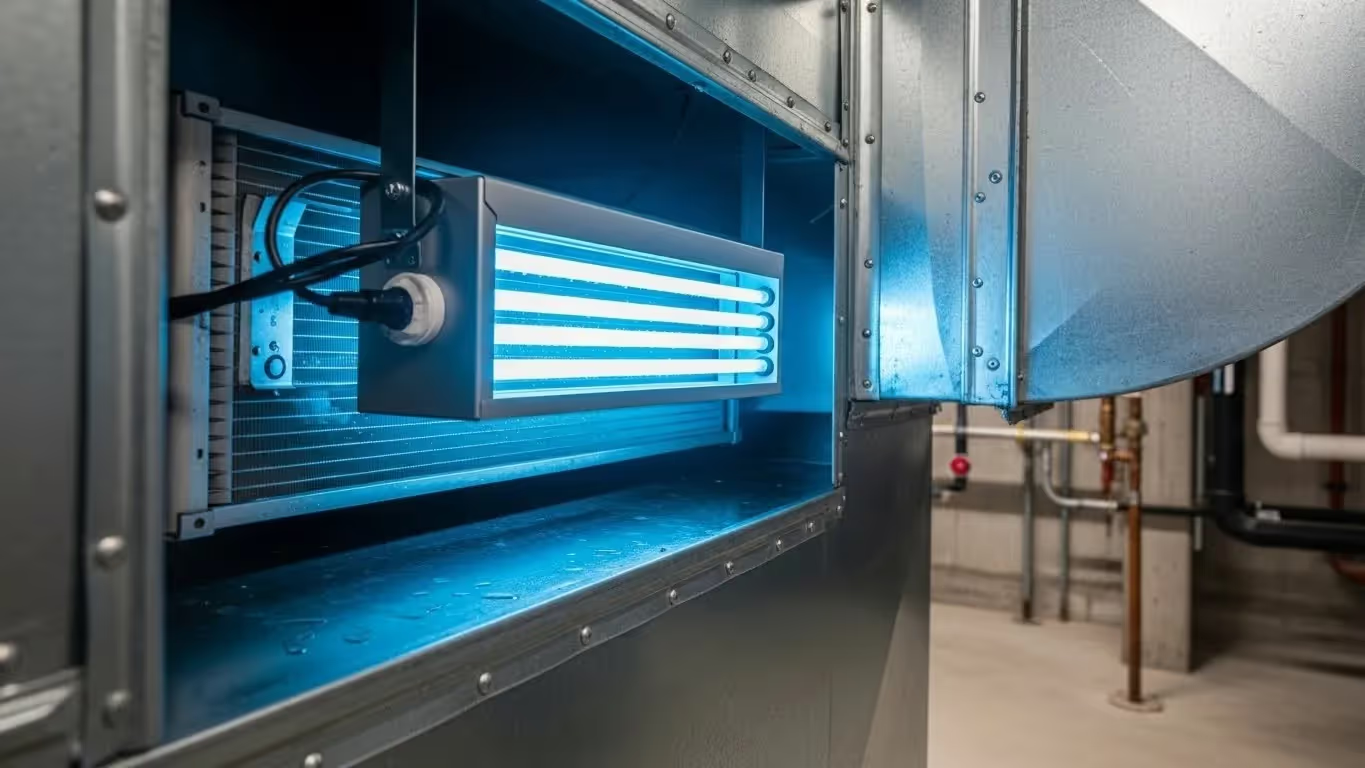
The core of the service involves the integration of a UV-C lamp directly inside the air handler or plenum. This is not a plug-and-play appliance that sits in the corner of a room; it is a hardwired component of your central air system. The service typically includes:
- System Assessment: Technicians evaluate the physical space above or below the evaporator coil to ensure the UV light can illuminate the entire surface area without damaging non-UV-resistant components like certain wiring or drain pans.
- Surface Preparation: Before installation, the existing coil often requires a deep cleaning. Installing a light over an already dirty coil is less effective. The service ensures the coil is free of existing debris so the light can maintain a sterile surface moving forward.
- Electrical Integration: The UV unit is wired directly into the HVAC system’s power supply. This ensures the light operates in tandem with the blower motor or runs continuously, depending on the specific model and sanitization goals.
- Safety Configuration: UV-C light is harmful to human eyes and skin. Professional installation includes the placement of sight glass or viewports that allow homeowners to verify the bulb is lit without direct exposure. Safety interlock switches are also installed to cut power to the light if the access panel is opened.
Maintenance is the secondary phase of this service. UV bulbs lose intensity over time, even if they appear to remain lit. This degradation reduces their germicidal capability. Service visits involve testing the output of the lamp and replacing bulbs annually or every two years, depending on the manufacturer's specifications — join our maintenance plan to stay covered. Technicians also wipe down the bulb to remove any dust that may have settled, as even a thin layer of dust can block the UV energy from reaching the coil.
Your Installation Journey: Step-by-Step
Understanding the installation process helps homeowners prepare for the upgrade. The procedure is technical and involves handling high-voltage electricity and sensitive HVAC components. We adhere to a strict protocol to ensure safety and efficacy.
- First, the technician performs a safety disconnect of the HVAC unit to ensure no power is flowing to the system. This is a critical safety step before opening the air handler cabinet.
- Next, the technician identifies the mounting location. The light must be positioned to shine directly on the evaporator coil and drain pan, as these are the wettest areas where mold is most likely to grow.
- Subsequently, the technician cuts a precise opening in the ductwork or cabinet to mount the unit. If the system uses a magnetic mount, they will position it securely inside. For bracket mounts, pilot holes are drilled, and the assembly is screwed into place.
- Following the physical mounting, the wiring phase begins. The technician connects the UV system’s ballast to the 24V transformer or a 120V/240V power source, ensuring the voltage matches the equipment specifications.
- Then, safety stickers and viewports are applied to the exterior of the ductwork. This alerts future service providers to the presence of UV radiation and allows for safe inspection.
- Finally, the system is powered back on. The technician verifies operation through the viewport and checks for any light leakage from the ductwork. If the light is wired to the blower, the system is cycled on and off to ensure the UV unit responds correctly.
Deciding on Upgrade vs. Repair: A Helpful Guide
Homeowners often face the decision of whether to repair an existing air quality accessory or upgrade to a new UV coil purifier system. Additionally, there is the question of whether a UV light is a necessary addition or if a simple coil cleaning will suffice. Making the right choice depends on the age of your system, the severity of contamination, and your long-term goals for indoor air quality.
When to Choose Installation or Upgrade:
- Persistent "Dirty Sock" Syndrome: If your home smells musty whenever the AC kicks on, despite regular filter changes, bacteria are likely growing on the coil. A simple cleaning provides only temporary relief. An upgrade to a UV system provides a permanent solution by continuously sanitizing the coil.
- High Humidity Levels: In areas with high moisture, coils stay wet longer. If you find yourself frequently scheduling coil cleanings due to mold buildup, installing a UV purifier is more cost-effective than repeated manual cleanings.
- System Age and Efficiency: If you have a relatively new HVAC system (under 10 years old), protecting the coil with UV light extends the unit's lifespan and maintains factory-level efficiency. It is a protective investment.
When to Focus on Repair or Maintenance Only:
- Loose Connections or Ballast Failure: If an existing UV system stops working, it may not need total replacement. Often, the ballast (the power supply) or the bulb is the issue. If the mounting hardware is intact, a component repair is the logical path.
- End-of-Life HVAC Systems: If the entire heating and cooling system is over 15 years old and nearing replacement, investing in a high-end UV installation might not be prudent. In this scenario, it is often better to wait and install the purifier simultaneously with the new air handler to ensure perfect compatibility.
Adapting to Auburn's Climate: Optimizing Your Air Quality
The local climate in Auburn, KY, presents specific challenges that make UV coil purifiers a highly relevant technology for homeowners. The region experiences distinct seasonality that directly impacts how HVAC systems behave and what grows inside them.
- Managing Summer Humidity: Summer months, particularly July, see average highs reaching the mid-80s to low 90s with substantial humidity. During this period, your air conditioner runs frequently, causing the evaporator coil to be constantly wet with condensation. This persistent moisture, combined with darkness inside the cabinet, creates the perfect incubator for mold and bacterial slime. UV purifiers are essential during these months to irradiate the coil and prevent growth that thrives in humid conditions.
- Spring Rainfall and Spore Counts: With annual precipitation averaging around 50 inches, and March and April being particularly wet, the outdoor mold spore count spikes significantly in the spring. As you enter and exit your home, or through natural infiltration, these spores enter the ductwork. A UV system acts as a defensive barrier, neutralizing spores that settle on the coil before they can colonize the system.
- Winter Sealing and Recirculation: While winters can drop to the mid-20s, the primary issue during the heating season is that homes are sealed tight to conserve heat. This lack of ventilation means indoor pollutants are recirculated repeatedly. While the coil may be dry during heating (unless you have a heat pump), the UV light continues to sterilize the surfaces, ensuring that when the spring thaw arrives, the system is clean and ready for cooling.
Local humidity control is not just about comfort; it is about biology. By integrating UV technology, Carter Heating and Cooling helps residents counteract the effects of the heavy regional precipitation and humidity on their indoor environment.
Why Choose Us: Technical Expertise and Reliability
Selecting a service provider for UV coil purifiers requires looking for technical proficiency and adherence to safety codes. This equipment involves radiation and high voltage, meaning proper handling is non-negotiable.
- Licensed and Certified Technicians: We employ technicians who understand the specific wiring diagrams and airflow dynamics of modern HVAC systems. Incorrect installation can lead to melted drain pans or UV damage to wiring insulation. Our team knows exactly where to position lamps to maximize kill rates while protecting equipment integrity.
- Holistic Air Quality Approach: We do not view the UV light as a standalone product but as part of the total HVAC ecosystem. Our assessment includes checking airflow static pressure to ensure the addition of the device does not impede system performance.
- Transparent Service Protocols: From the initial assessment to the final safety check, our process is clear and documented. We verify that the specific UV spectrum (UV-C) is used, as this is the only wavelength effective against microbial DNA.
- Local Experience: Understanding the specific load calculations and humidity issues prevalent in the region allows us to recommend the correct intensity and number of lamps for your specific square footage and duct design.
We focus on delivering measurable improvements to your indoor air quality through precise installation and dedicated support.
Call Now
Ready to eliminate mold and bacteria from your HVAC system? Contact us today to schedule your UV coil purifier service.

Great Service at a Fair Price
Veterans Discount


Senior Discount

Law Enforcement

Fire fighters/ems

Hear From Your Neighbors!
Hear from your neighbors to see how our commitment to dependable service and lasting comfort has made a difference in their homes.