
How can we help today?
Choose an option to see quick actions and get help faster.Heating Inspection in Auburn, KY
Heating Inspection in Auburn, KY
Heating Inspection in Auburn, KY
Feeling the Heat? Get Your Heating System Inspected Today!
Struggling with an unreliable heating system performance or worried that the humidity in Auburn has compromised your unit while it sat idle can be more than just uncomfortable; it can be costly and dangerous. Ensure your system is efficient, safe, and ready to handle the temperature shifts with a thorough inspection from Carter Heating and Cooling. Contact us today to schedule your comprehensive heating safety check.
- Immediate inspection slots available – don’t wait for the first frost or system failure to become unbearable.
- Certified technicians ensure your heating system operates at peak efficiency and complies with all safety standards.
- Clear, upfront pricing with no hidden costs or surprise fees.
All services are backed by a satisfaction guarantee to ensure peace of mind.
Why Regular Heating Inspections Are Your Best Bet Against Auburn’s Humidity
The climate in this region presents unique challenges for HVAC equipment. While the winters require reliable heat, the humid subtropical climate of Auburn, KY, means your system often sits dormant or, in the case of heat pumps, works overtime during the humid summer months. This fluctuation creates a specific set of risks that only a professional inspection can identify and mitigate.
Neglecting a heating system is not merely a matter of comfort; it is a financial and safety gamble. Over time, moisture from high humidity levels can cause corrosion within the heat exchanger or electrical components. If left unchecked, this corrosion leads to reduced efficiency, higher energy bills, and potentially hazardous carbon monoxide leaks. A professional inspection acts as a comprehensive audit of the system’s health. It identifies minor wear and tear before it escalates into a catastrophic breakdown during a cold snap.
Furthermore, manufacturer warranties almost always require proof of annual maintenance. Without a documented inspection, you may find yourself liable for the full cost of replacing expensive parts that would otherwise be covered. By scheduling a professional evaluation, you protect the validity of your warranty while extending the operational lifespan of the equipment.
What to Expect from Your Inspection: Timeliness, Transparency, Thoroughness
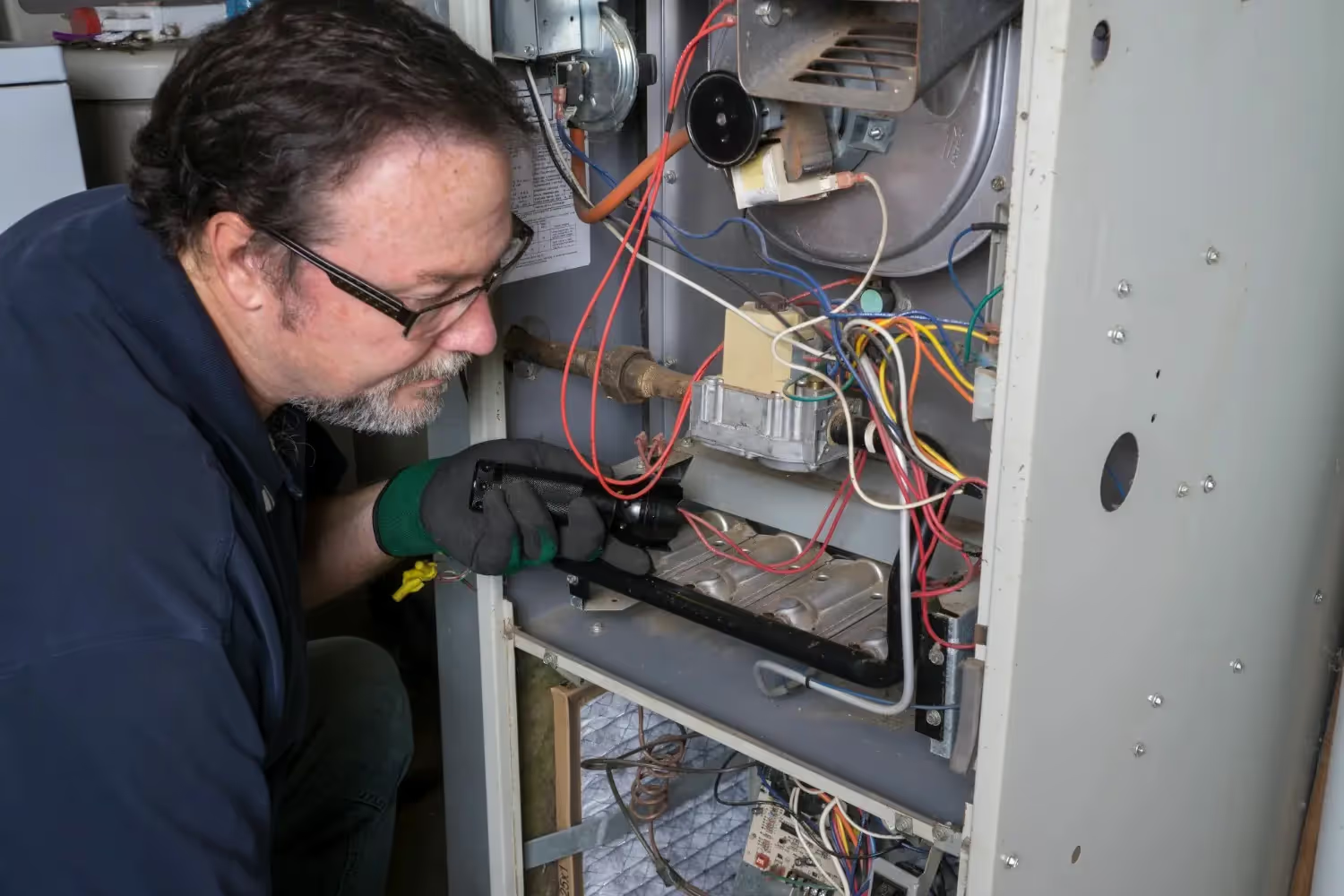
When you book a service, you need to know exactly what is happening inside your home. A proper heating inspection is not a quick glance at the filter; it is a rigorous, multi-point examination of the system’s mechanics, electronics, and safety features. The goal is to return the unit to factory specifications and ensure it operates safely for the season ahead.
Here is what a comprehensive heating inspection entails:
- Heat Exchanger Analysis: The technician will inspect the heat exchanger for cracks, rust, or separation. This is the most critical safety step, as a compromised exchanger can leak exhaust gases into your living space.
- Burner and Ignition Assembly Cleaning: Dirty burners result in improper combustion, which lowers efficiency and increases soot buildup. The assembly is cleaned and adjusted for the correct flame color and stability.
- Electrical Connection Tightening: Vibration from the system can loosen electrical connections over time. This leads to voltage fluctuations that can burn out motors or damage control boards. Technicians tighten and test all voltage and amperage draws.
- Thermostat Calibration: The thermostat is the brain of your heating system. Testing ensures it is reading the indoor temperature accurately and communicating correctly with the furnace or heat pump.
- Safety Control Testing: Every modern heater has safety switches designed to shut the unit down if it overheats or if the flame goes out. These limits and switches are manually tested to ensure they engage properly during an emergency.
- Blower Motor and Belt Inspection: The blower moves air through your home. Technicians check the motor for bearing wear, inspect the belt for cracks (if applicable), and clear debris from the blower wheel to improve airflow.
- Flue and Venting check: Ensuring that exhaust gases are venting properly to the exterior of the home is vital. Blockages in the flue pipe from birds’ nests or debris can force dangerous fumes back indoors.
Our Inspection Process: Detailed, Efficient, and Educative
A professional service call should be seamless and respectful of your time and property. The process begins the moment the appointment is booked and continues until you have a full understanding of your heating system’s condition.
- Arrival and Protection: Technicians arrive within the scheduled window, fully equipped with the necessary diagnostic tools. Upon entry, shoe covers and drop cloths are used to protect your flooring and maintain the cleanliness of your home.
- System Audit: The technician performs the physical inspection, utilizing advanced diagnostic gear to measure pressure, temperature rise, and electrical output. This data provides a concrete baseline of how the system is performing compared to its design specifications.
- Findings and Report: Once the physical check is complete, you receive a detailed report. This is not just a receipt; it is a health card for your furnace. The technician will explain any red flags, such as parts that are nearing the end of their lifecycle or efficiency losses that are inflating your utility bills.
- Recommendations without Pressure: If repairs are needed, they are presented with clear options. You will understand which repairs are urgent for safety and which are preventative. This empowers you to make decisions based on facts rather than sales pressure.
Deciding Between Repair and Replacement: What’s Cost-effective for You
One of the most valuable outcomes of a heating inspection is clarity on the future of your system. Homeowners in Auburn often face the difficult decision of whether to pour more money into repairs or to invest in a modern, more efficient replacement. A professional inspection provides the data needed to make this calculation accurately.
Consider the "50% Rule." If the cost of the necessary repairs approaches 50% of the value of a new system, replacement is generally the smarter financial move. However, other factors play a role in this decision.
- System Age: Most gas furnaces last between 15 and 20 years, while heat pumps may last 10 to 15 years. If your unit is nearing the end of this window and requires a major repair—like a blower motor or compressor—replacement offers a better return on investment.
- Frequency of Breakdowns: If you have required multiple service calls in the last two years, the system is likely becoming a money pit. An inspection helps determine if these are isolated incidents or symptoms of total system failure.
- Efficiency Ratings: Older units often operate at 60% to 70% AFUE (Annual Fuel Utilization Efficiency). Modern systems can reach upwards of 95%. Upgrading can result in significant monthly savings that offset the cost of installation over time.
- Home Comfort Levels: If your current system leaves cold spots in certain rooms or struggles to maintain the set temperature on freezing nights, it may be undersized or losing compression. An inspection will reveal if the unit is simply no longer capable of meeting the heating load of your home.
Auburn’s Weather and Your Heating System: Local Insights
The local environment plays a significant role in how heating systems age and degrade. In Auburn, KY, the weather patterns dictate specific maintenance needs that might not be relevant in drier or colder climates.
- Humidity and Rust: The high humidity levels during the spring and summer can be brutal on metal components. When a furnace sits idle in a damp basement or attic for months, condensation can form on the burners and inside the cabinet. This leads to rust that flakes off and clogs the gas jets when the system is finally turned on in autumn.
- The "Shoulder Season" Strain: We often experience warm days and cold nights in the transition months. This causes systems to cycle on and off frequently (short-cycling), which puts immense stress on the starter capacitor and ignition systems. Ensuring these components are robust is a key part of the inspection.
- Vegetation and Airflow: For those with heat pumps, the rapid growth of vegetation in our climate can quickly choke the outdoor unit. Leaves, grass clippings, and pollen can block the condenser coils, reducing the system's ability to pull heat from the outside air. Cleaning this debris is essential for maintaining efficiency.
Why Choose Us: Local Experts Committed to Comfort
Finding a service provider who understands the specific heating needs of this area is essential. You need a team that looks beyond the thermostat to understand the building science of your home.
- Local Expertise: Understanding local building codes and utility requirements is part of the job. Technicians are familiar with the specific installation standards required in the area, ensuring that every system check complies with local regulations.
- Advanced Diagnostics: Utilizing the latest thermal imaging and combustion analysis tools allows for the detection of issues that are invisible to the naked eye. This technology prevents guesswork and ensures that every diagnosis is backed by data.
- Comprehensive Care: The focus is on the entire system, including ductwork and airflow. A furnace can only work as well as the ducts allow, and inspecting for leaks or disconnects is part of a holistic approach to home heating.
- Respect for Your Home: Technicians are trained to leave the workspace cleaner than they found it. From wearing protective gear to cleaning up debris, the service is designed to be minimally intrusive.
When you require a heating inspection that is thorough, professional, and focused on your long-term safety, Carter Heating and Cooling delivers results you can trust.
Don't wait for a breakdown to leave you in the cold. Schedule your professional heating inspection today and ensure your home stays warm and safe all winter long.
Detailed Heating Inspections That Identify Performance Issues Early
Plan with confidence using thorough heating inspection in Auburn, KY, services from Carter Heating and Cooling. We evaluate heat exchangers, gas connections, safety controls, and system output—then provide a full condition report. Inspections are ideal before system upgrades or after signs of performance decline.
Request a Complete Heating Inspection with Certified System Evaluation

Great Service at a Fair Price
Veterans Discount


Senior Discount

Law Enforcement

Fire fighters/ems

Hear From Your Neighbors!
Hear from your neighbors to see how our commitment to dependable service and lasting comfort has made a difference in their homes.