
How can we help today?
Choose an option to see quick actions and get help faster.Furnace Maintenance in Auburn, KY
Furnace Maintenance in Auburn, KY
Furnace Maintenance in Auburn, KY
Stay Warm This Winter with Trusted Furnace Maintenance
Facing unexpected furnace breakdowns as the cold approaches can leave your home uncomfortable and unsafe. Ensure your home remains warm and cozy with prompt and professional furnace maintenance services by contacting our team to schedule your inspection today.
Carter Heating and Cooling provides comprehensive tune-ups designed to catch small issues before they evolve into expensive repairs. Homeowners in Auburn, KY, know that winter temperatures can drop significantly, making a reliable heating system a necessity rather than a luxury. Neglecting routine care often results in reduced efficiency and sudden mechanical failures right when the heat is needed most.
- Ensure your furnace operates efficiently with a complete system check-up.
- Reduce your energy bills with timely maintenance and tuning.
- Prevent unexpected breakdowns with our annual maintenance plans.
All services are fully licensed, insured, and backed by a satisfaction guarantee.
Comprehensive System Inspection and Tuning
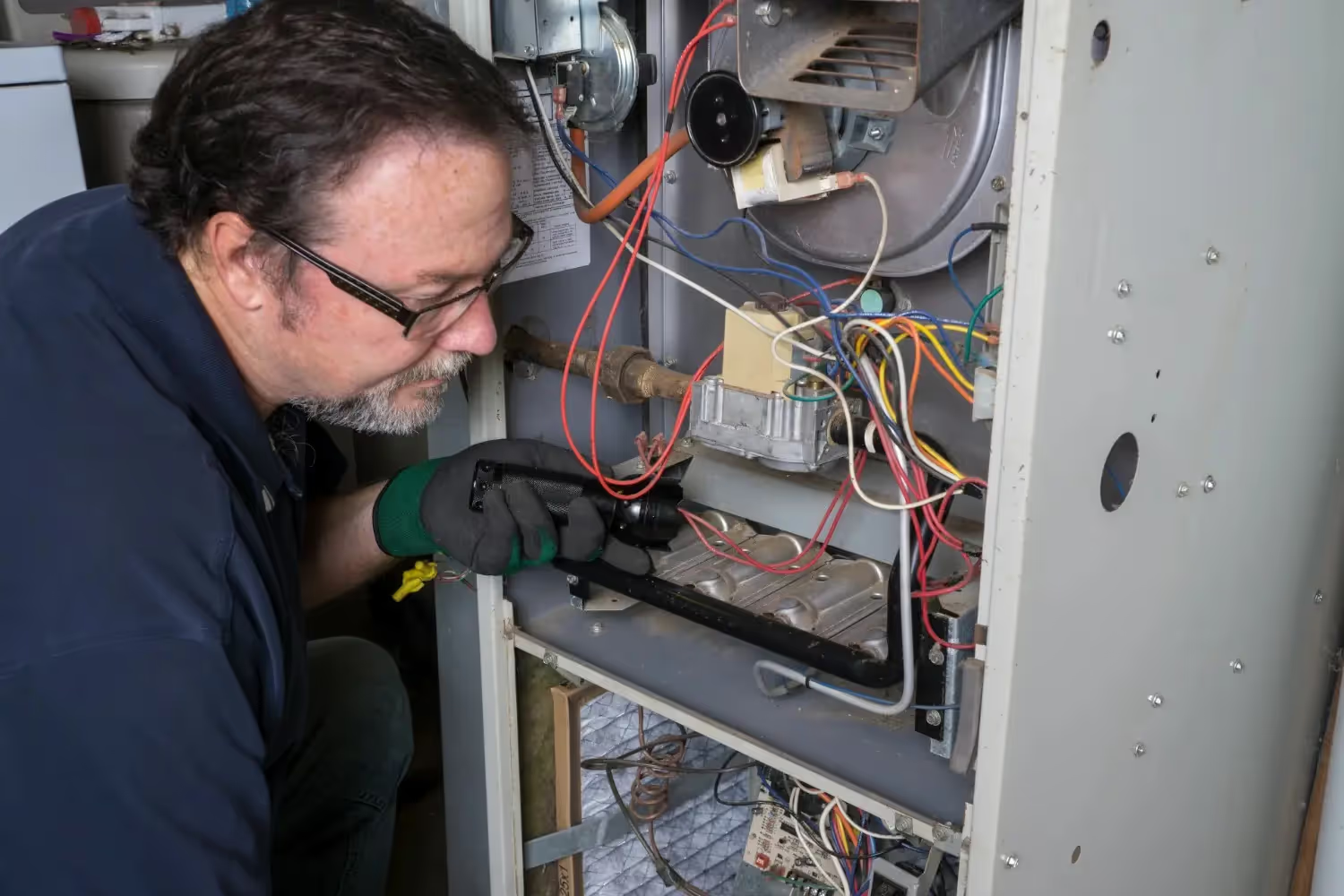
A professional furnace tune-up goes far beyond a simple filter change. It involves a rigorous inspection of the entire heating assembly to verify that every component is functioning within manufacturer specifications. When a technician arrives at your property, the goal is to optimize the system for peak performance and verify safe operation for the season ahead.
Modern furnaces are complex machines involving electrical, gas, and airflow systems that must work in perfect synchronization. Over time, vibration can loosen electrical connections, and combustion byproducts can build up on sensitive components. A thorough maintenance visit addresses these wear-and-tear items systematically.
Critical Component Cleaning and Adjustment
The core of the maintenance visit focuses on the components that directly impact heat generation and distribution. Dirt and debris are the enemies of furnace efficiency. Even a thin layer of dust on the blower motor or fan blades can increase electrical resistance, causing the motor to run hotter and fail prematurely.
- Burner Assembly Cleaning: The burners are inspected for rust, corrosion, and misalignment. Technicians clean these components to ensure proper combustion, which maximizes heat output and minimizes fuel waste.
- Flame Sensor Cleaning: The flame sensor is a safety device that tells the furnace gas is burning. If it becomes coated in carbon buildup, it will shut the furnace down unnecessarily. Cleaning this sensor prevents nuisance lockouts.
- Blower Motor Inspection: The blower motor is responsible for circulating air throughout the home. Technicians check the amperage draw to ensure it is not overworking and lubricate bearings if the motor requires it.
- Thermostat Calibration: The thermostat is the brain of the operation. Testing ensures that the temperature reading on the wall matches the actual temperature in the room, preventing the system from running longer than necessary.
Safety Checks and Heat Exchanger Analysis
Safety is the most critical aspect of furnace maintenance. Gas furnaces produce carbon monoxide (CO) as a byproduct of combustion. Under normal circumstances, this gas is vented safely outdoors. However, cracks in the heat exchanger or blockages in the flue pipe can allow this dangerous gas to leak into the living space.
- Heat Exchanger Inspection: This component separates the combustion gas from the breathable air. Technicians visually inspect it for cracks, rust holes, or separation at the seams.
- Carbon Monoxide Testing: Detectors are used to verify that no CO is escaping the unit.
- Flue and Venting Check: The venting system is examined for blockages, such as bird nests or soot buildup, which could restrict airflow and cause back-drafting.
- Safety Switch Verification: Limit switches and rollout switches are tested to ensure they effectively shut the unit down in the event of overheating or flame rollout.
Executing the Maintenance Workflow
Understanding the process of a professional maintenance visit helps homeowners prepare and know what to expect. The workflow is designed to be thorough yet efficient, minimizing disruption to the daily routine while ensuring no stone is left unturned regarding the heating system's health.
The process begins with a functional test. Before opening the cabinet, the technician runs the furnace to listen for unusual noises—like banging, screeching, or rattling—which can indicate loose parts or bearing failure. This baseline operation test helps direct the focus of the inspection.
The Step-by-Step Tuning Process
- Initial Assessment: The technician arrives and assesses the area around the furnace, ensuring there are no combustible materials stored too close to the unit and that air intake vents are unobstructed.
- Power Down and Interior Access: Power to the unit is cut for safety. The cabinet panels are removed to expose the blower, burners, and electronics.
- Electrical Tightening: All electrical connections are tightened. Loose wires can cause arcing, which damages control boards and can lead to intermittent heating issues.
- Filter Evaluation: The air filter is checked. If it is clogged, it restricts airflow, which is the leading cause of furnace overheating. Recommendations are made for replacement or a specific filter type based on the home’s needs.
- Ignition System Testing: Whether the furnace uses a hot surface ignitor or a spark ignition, this component is tested for resistance and proper operation. A weak ignitor is a common cause of "no heat" calls in the middle of winter.
- Gas Pressure Measurement: The gas pressure entering the manifold is measured. If the pressure is too low, the furnace won't heat effectively; if too high, it can overheat the heat exchanger. Adjustments are made to match the manufacturer's rating plate.
- Final Operation and Reporting: After cleaning and adjustments, the system is reassembled and run through a full heating cycle. The temperature rise (the difference between supply and return air temperature) is measured to confirm efficiency. A detailed report of findings is then provided.
Determining When to Repair or Replace
During a routine maintenance visit, technicians may uncover issues that go beyond simple cleaning or adjustment. While the goal of maintenance is to extend the life of the current unit, there comes a point where repair costs outweigh the benefits of keeping an aging system running. Making the decision to repair or replace relies on data, safety, and financial logic.
The age of the system is the primary factor. Furnaces typically last between 15 and 20 years. If a unit in Auburn is approaching the 15-year mark and requires a significant repair—such as a blower motor or control board replacement—it is often more financially prudent to invest that money into a new, high-efficiency system rather than patching a dying one — apply for HVAC financing today.
Assessing Repair Viability
- The 50% Rule: A common industry standard suggests that if the cost of the repair is 50% or more of the cost of a new system, replacement is the better option.
- Frequency of Breakdowns: If the furnace has required multiple repairs in the last two years, it indicates that internal components are failing in succession. Continuing to repair it is often "throwing good money after bad."
- Rising Energy Bills: As furnaces age, they lose efficiency. If energy bills have been steadily climbing despite regular filter changes, the internal wear on the unit may be irreversible.
- Safety Violations: A cracked heat exchanger is an immediate red flag. Because of the risk of carbon monoxide poisoning, a cracked heat exchanger almost always necessitates a system replacement, as replacing just the part is labor-intensive and costly relative to a new unit.
- Comfort Consistency: If some rooms are freezing while others are hot, or if the furnace runs constantly without satisfying the thermostat, the system may be undersized or nearing the end of its operational life.
Regional Considerations for Heating Systems
Operating a furnace in Kentucky presents specific challenges due to the local climate profile. Auburn experiences a temperate climate with distinct seasonality. While winters are generally mild compared to northern states, lows frequently drop into the 20s °F, and occasional snow and ice storms are not uncommon. This means the furnace must be capable of handling rapid temperature drops.
Furthermore, the spring and summer months in this region experience higher humidity and precipitation. This moisture can linger in basements or crawl spaces where furnaces are often located. High humidity can accelerate rust and corrosion on the furnace cabinet and internal electrical components during the off-season. Routine maintenance in the fall is essential to identify and mitigate any corrosion that developed during the humid months before the system is fired up for winter.
Local Utilities and Regulations
- Code Compliance: Local building codes in the region dictate specific requirements for venting and gas piping. Professional maintenance ensures that the system remains compliant with these local safety standards, which is particularly important if the homeowner plans to sell the property.
- Utility Efficiency: Local utility providers often encourage high-efficiency operation to reduce strain on the grid during peak winter months. A well-maintained furnace draws less amperage and uses less gas, aligning with energy conservation goals.
- Ventilation Safety: With the potential for ice accumulation, external vents must be checked to ensure they are not susceptible to being blocked by snow drifts or falling ice, which can cause dangerous back-drafting of exhaust gases.
Carter Heating and Cooling understands these local nuances and tailors the maintenance checklist to address the specific environmental factors affecting homes in the area.
Why Choose Professional Technician Services
Attempting to service a modern furnace without proper training and tools can lead to dangerous situations and voided warranties. Professional technicians carry the necessary certifications and specialized diagnostic equipment to assess the health of a heating system accurately.
Manufacturers of heating equipment typically require proof of annual maintenance by a licensed professional to keep the warranty valid. If a major part fails and the homeowner cannot prove the system was maintained, they may be liable for the full cost of the replacement part. Professional service provides this documentation, protecting the homeowner's investment — read our reviews.
- Advanced Diagnostic Tools: Professionals use combustion analyzers to measure oxygen, carbon dioxide, and carbon monoxide levels in the flue gas. This data provides an exact readout of the furnace's efficiency and safety, something that cannot be determined by visual inspection alone.
- Electrical Expertise: Modern furnaces are heavily reliant on electronics. Technicians are trained to read wiring diagrams and use multimeters to troubleshoot complex electrical faults that could damage the control board if mishandled.
- Airflow Optimization: Improper airflow is a leading cause of comfort complaints. Technicians have the tools to measure static pressure within the ductwork, identifying restrictions that a homeowner might miss.
- Safety Protocols: Handling natural gas and high-voltage electricity requires strict adherence to safety protocols. Professionals are trained to spot gas leaks and electrical hazards that pose immediate risks to the household.
Secure Your Home Comfort
Waiting until the first freezing night to test your heating system is a gamble that often results in emergency service calls and uncomfortable waits. Proactive maintenance ensures that your furnace is clean, safe, and ready to handle whatever the winter weather brings. By addressing wear and tear early, you extend the lifespan of your equipment and keep your energy costs under control.
Don't let a preventable issue leave you in the cold. Carter Heating and Cooling is ready to provide the thorough inspection and tuning your system requires for reliable performance.
Contact us today to schedule your comprehensive furnace maintenance service.

Great Service at a Fair Price
Veterans Discount


Senior Discount

Law Enforcement

Fire fighters/ems

Hear From Your Neighbors!
Hear from your neighbors to see how our commitment to dependable service and lasting comfort has made a difference in their homes.