

How can we help today?
Choose an option to see quick actions and get help faster.Heat Pump Installation in Auburn, KY
Heat Pump Installation in Auburn, KY
Discover the benefits of professional heat pump installation in Auburn tailored to your home's needs. Ensure year-round comfort with high-efficiency HVAC systems. Sign up now!
High Energy Bills and Inconsistent Indoor Temperatures?
Are rising utility costs and uneven heating or cooling making you reconsider your current HVAC setup? Carter Heating and Cooling installs high-efficiency heat pumps tailored to Auburn’s diverse climate to resolve comfort issues permanently. Contact us today to schedule your system assessment and estimate.
- Experience noticeable comfort improvements and energy savings within the first month.
- Custom installations performed by certified technicians with extensive field experience.
- Take advantage of local rebates to significantly reduce installation costs.
All installations include a full warranty and strict adherence to local building codes for your peace of mind.
What to Expect from Professional Heat Pump Installation
Installing a heat pump is a significant upgrade that replaces both your air conditioner and your furnace with a single, efficient unit. This dual-functionality makes the installation process unique compared to traditional HVAC replacements. When you invest in a new system, you are purchasing year-round climate control that moves heat rather than generating it, leading to substantial efficiency gains.
The scope of a professional installation goes far beyond simply swapping out equipment. It begins with a comprehensive evaluation of the home’s thermal envelope. Technicians assess insulation levels, window efficiency, and ductwork integrity to ensure the new unit is sized correctly. A system that is too large will short-cycle, leading to humidity issues and premature wear, while a system that is too small will run continuously without reaching the desired temperature.
A complete installation package typically includes the removal and disposal of the old condenser and air handler. The service also covers the modification of the plenum to fit the new coil, the installation of a new concrete or composite pad for the outdoor unit, and the upgrading of electrical disconnects and whips to meet current safety standards. Furthermore, a new digital thermostat optimized for heat pump algorithms is often installed to maximize the system's variable-speed capabilities.
Residents in Auburn, KY, benefit from systems designed to handle the specific humidity levels of the region. Modern heat pumps offer superior dehumidification during the summer months compared to standard air conditioners. During the installation, technicians configure blower speeds to optimize moisture removal, ensuring that the indoor environment remains crisp and cool rather than cold and clammy.
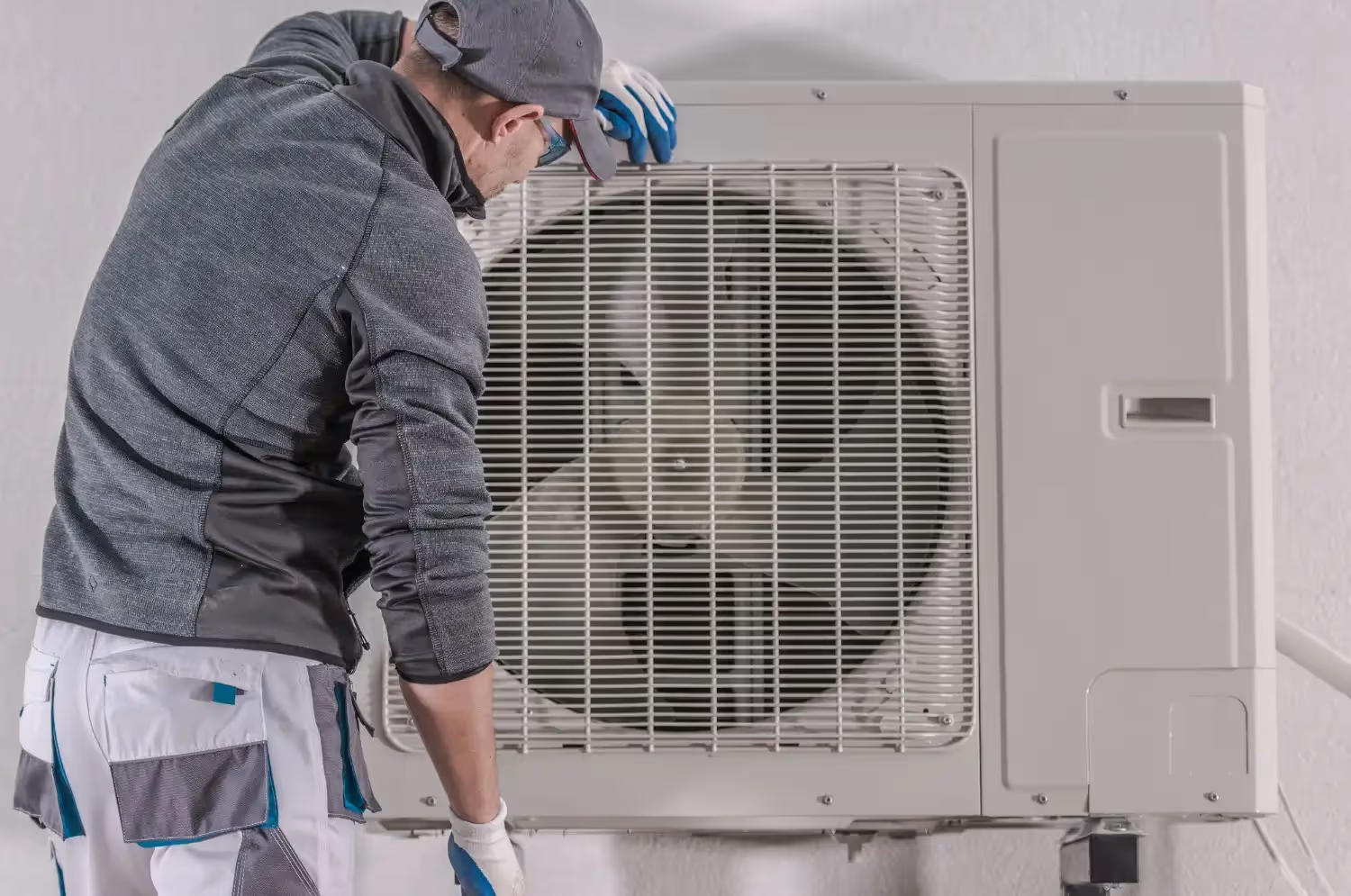
The Systematic Approach to System Replacement
A successful heat pump installation relies on a strict, step-by-step protocol. Cutting corners during this phase results in efficiency losses that no amount of maintenance can fix later. The process is designed to protect the equipment and ensure the system operates at its rated SEER2 and HSPF2 efficiency levels from day one.
- The process begins with a Manual J load calculation. This calculation determines the exact heating and cooling requirements of the structure based on square footage, orientation, and insulation factors.
- Next, the existing equipment is safely decommissioned. Technicians recover any remaining refrigerant from the old lines in compliance with EPA regulations to prevent environmental contamination.
- Once the old unit is removed, the installation team inspects and prepares the installation site. This involves leveling the ground for the outdoor condenser and verifying that the indoor air handler location has sufficient clearance for maintenance access.
- The new indoor air handler is then positioned and connected to the existing ductwork. If the existing ducts are leaking or sized incorrectly, modifications are made at this stage to ensure proper airflow and static pressure.
- Following the indoor setup, the outdoor condenser is set on the pad. Technicians braze the copper refrigerant lines using nitrogen purging. Flowing nitrogen through the lines during brazing prevents oxidation and soot buildup inside the copper, which can clog sensitive expansion valves.
- After the lines are connected, the system undergoes a pressure test with nitrogen to check for leaks. This is followed by a deep vacuum evacuation to remove all moisture and non-condensables from the refrigerant circuit, measured in microns.
- Finally, the system is charged with the precise amount of refrigerant required by the manufacturer. The unit is powered on, and technicians perform a commissioning sequence, measuring temperature splits, voltage, and amperage to verify performance.
Determining When to Replace Versus Repair
Homeowners often struggle with the decision to repair an aging system or invest in a new installation. While repairs can extend the life of a unit, there is a financial tipping point where replacement becomes the more prudent economic choice. Continuing to patch a failing system often results in throwing good money after bad, especially as energy efficiency standards continue to rise.
The primary factor in this decision is the age of the equipment. Heat pumps generally have a lifespan of 10 to 15 years. If a system is over 12 years old and requires a major repair, such as a compressor or reversing valve replacement, investing in a new unit is usually recommended. Older units operate at lower efficiency levels, meaning you are paying more monthly for electricity even when the system is running correctly.
Frequency of breakdown is another critical indicator. If a system requires professional attention more than once a year, reliability has been compromised. Frequent refrigerant leaks, electrical failures, or motor burnouts suggest that the internal components are degrading simultaneously. A new installation eliminates the uncertainty of sudden breakdowns during extreme weather.
Consider the cost of the repair relative to the value of the system. A general industry rule is the "50% rule": if the cost of the repair approaches 50% of the cost of a new system, replacement is the better option. Additionally, older systems utilizing R-22 refrigerant are becoming prohibitively expensive to service due to the phase-out of that refrigerant. Upgrading to a modern system utilizing R-410A or newer eco-friendly refrigerants ensures future serviceability and lower maintenance costs.
Adapting Installation to Local Requirements and Climate
Installing a heat pump in this region requires specific attention to local climate patterns and regulatory codes. The weather here is characterized by hot, humid summers and winters that can dip below freezing. This specific climate profile demands a heat pump with a high Heating Seasonal Performance Factor (HSPF).
- Defrost Cycle Management: In this region, frost can accumulate on the outdoor coil during winter operation. A properly installed system must have a functioning defrost board and sensors. Technicians elevate the outdoor unit on "snow legs" or risers to ensure that the unit remains above the average snow line and that meltwater drains away freely without refreezing on the pad.
- Supplemental Heating: While modern heat pumps are efficient down to very low temperatures, backup heating is necessary for the coldest nights. Installations typically involve setting up electric heat strips within the air handler. These strips engage only when the heat pump cannot meet the thermostat's demand, acting as emergency heat.
- Electrical Permitting: Upgrading to a heat pump, especially if switching from gas or adding electric backup heat, often places a higher load on the home's electrical panel. Technicians coordinate with local inspectors to ensure the breaker panel amperage is sufficient and that wire gauges meet the National Electrical Code (NEC) requirements for the new equipment.
- Condensate Management: High summer humidity means the system will generate significant condensate. Carter Heating and Cooling ensures that drain lines are properly pitched, trapped, and vented. Float switches are installed to shut the system down in case of a clog, preventing water damage to ceilings or floors.
Advanced Technology and System Efficiency
Modern heat pumps utilize technology that was unavailable just a decade ago. Understanding these advancements helps homeowners appreciate the value of a new installation. The most significant shift is the move from single-stage compressors to variable-speed or inverter-driven compressors.
A single-stage system operates at 100% capacity whenever it is on. It blasts air until the thermostat is satisfied and then shuts off. This "all or nothing" approach leads to temperature swings and high energy consumption during startup. In contrast, inverter-driven systems can modulate their output, running at lower speeds to maintain a constant temperature. This results in quieter operation, better humidity control, and significantly lower energy bills.
Smart thermostat integration is another key component of modern installations. These devices communicate directly with the heat pump, monitoring performance data and adjusting operation based on weather forecasts and user habits. This level of connectivity allows for remote diagnostics, where technicians can often identify issues before the homeowner notices a drop in comfort.
Ductwork modifications are frequently required to accommodate these high-efficiency systems. Modern equipment is more sensitive to static pressure than older units. If the existing ducts are undersized or pinched, the new high-efficiency blower motor will work harder, consuming more energy and potentially failing prematurely. A professional installation always includes a static pressure test to verify that the air distribution system can support the new equipment.
Why Specialized Installation Matters
The longevity and efficiency of a heat pump are determined more by the quality of the installation than the brand of the equipment. Even the highest-rated Tier 1 equipment will fail if installed incorrectly. Specialized installers understand the physics of refrigeration and airflow, ensuring that every connection is secure and every setting is optimized.
Proper refrigerant charging is a prime example of where expertise matters. An undercharged system will freeze up, while an overcharged system places excessive strain on the compressor. Specialized tools are used to weigh in the exact charge required, rather than relying on guesswork. This precision ensures the system delivers the heating and cooling capacity promised on the specification sheet.
Post-installation support is equally important. A dedicated service provider handles the registration of warranties, ensuring that parts and labor are covered for the maximum duration. They also provide homeowner education, teaching users how to operate their new thermostat, how often to change filters, and how to keep the outdoor unit clear of debris. — read our customer reviews
Choosing a specialized provider ensures that the investment in a new heat pump delivers returns in the form of comfort and savings for years to come. From navigating local permits to performing complex load calculations, the focus is always on delivering a solution that fits the specific needs of the home and the homeowner.
Secure Your Comfort and Efficiency Today
A failing or inefficient HVAC system impacts your finances and your daily life. Upgrading to a modern heat pump provides a reliable solution for year-round temperature control, effectively managing both the humid summers and chilly winters common in Auburn. By prioritizing proper sizing, professional installation, and intelligent system design, you ensure that your home remains a sanctuary of comfort regardless of the weather outside.
Carter Heating and Cooling is ready to help you transition to a more efficient, reliable heating and cooling solution.
Schedule your comprehensive heat pump consultation now.

Great Service at a Fair Price
Veterans Discount


Senior Discount

Law Enforcement

Fire fighters/ems

Hear From Your Neighbors!
Hear from your neighbors to see how our commitment to dependable service and lasting comfort has made a difference in their homes.