

How can we help today?
Choose an option to see quick actions and get help faster.Ductless Inspection in Brownsville, KY
Ductless Inspection in Brownsville, KY
Ensure your ductless HVAC in Brownsville runs efficiently with our professional inspection services. Schedule your detailed system checkup today and stay comfortable year-round.
Beat the Heat and Cold with Reliable Ductless HVAC Inspection
Struggling with inconsistent temperatures in your home? It may be time for a ductless HVAC system inspection. If your mini-split system isn't performing up to par, contact us to schedule a comprehensive evaluation or inquire about our flexible financing options.
For homeowners in Brownsville, maintaining a comfortable indoor environment requires a heating and cooling system that operates efficiently year-round. Ductless mini-splits are robust machines, but without regular professional eyes on the components, efficiency drops and breakdown risks rise. Carter Heating and Cooling provides thorough inspections designed to uncover hidden issues before they become expensive repairs.
- Quick and thorough inspections to diagnose and fix issues efficiently.
- Professional advice on maintenance to enhance system longevity.
- Flexible financing options to ensure affordable care.
Licensed and insured technicians are ready to assist, with easy financing options to make your HVAC care stress-free.
Comprehensive System Analysis: What Is Included
A ductless inspection is far more than a simple filter change. It involves a granular analysis of both the indoor air-handling units and the outdoor compressor to ensure the entire system communicates and functions as a cohesive unit. When you book a professional inspection, the goal is to verify that the equipment is safe, clean, and operating at the manufacturer's specified efficiency ratings.
The scope of a proper inspection covers the critical mechanical and electrical components that drive the inverter technology found in modern mini-splits. Because these systems do not rely on ductwork, the inspection focuses heavily on the air handlers mounted on your walls or ceilings and the refrigerant lines connecting them to the outside.
Indoor Unit Checkpoints
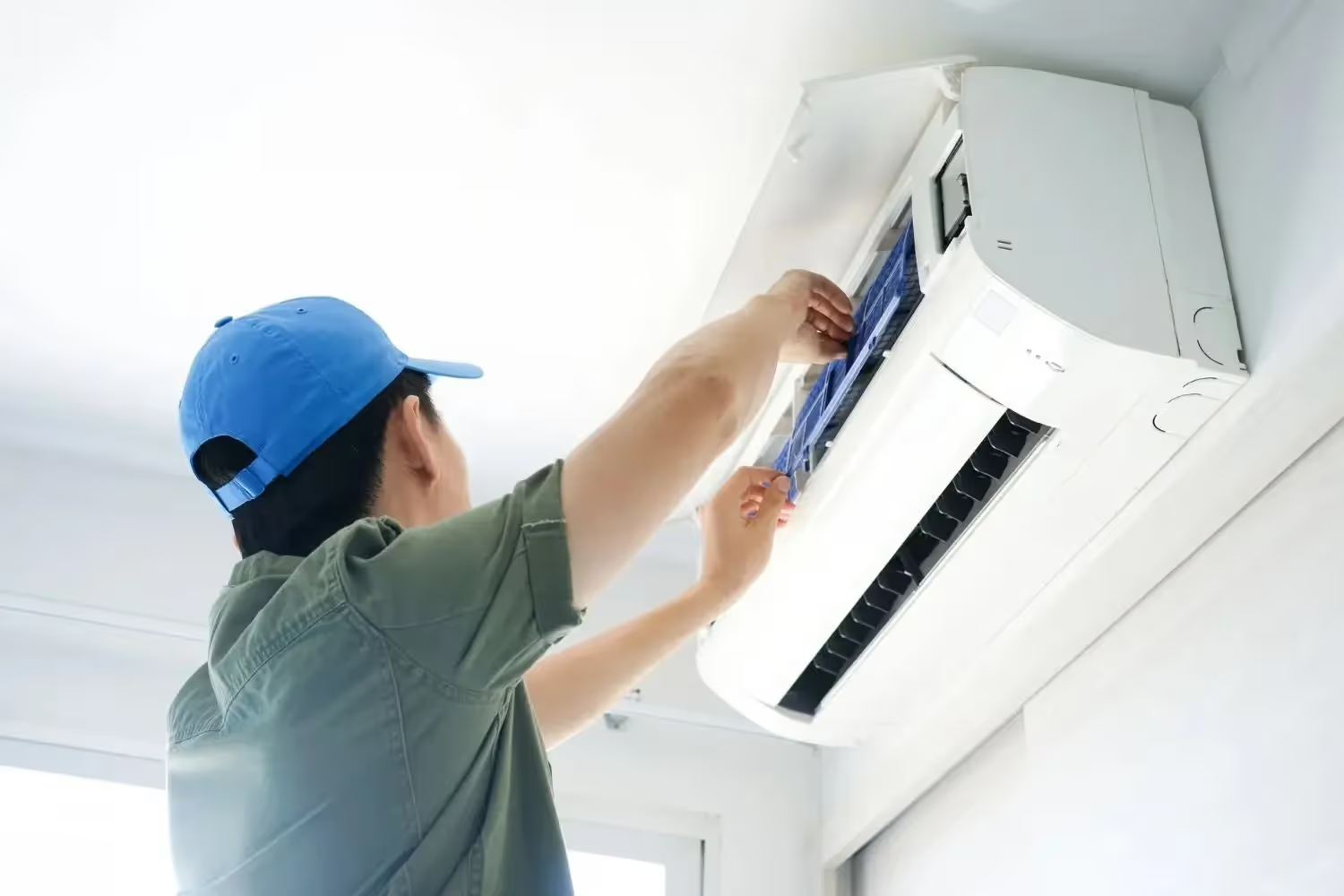
- Blower Wheel Examination: The blower wheel inside a ductless head is prone to accumulating dust and mold. Technicians inspect this component for buildup which can unbalance the fan, cause noise, and restrict airflow.
- Evaporator Coil Condition: The coil is inspected for dirt and debris. Even a thin layer of dust can act as an insulator, preventing the system from absorbing heat in the summer or releasing it in the winter.
- Drain Line Clearance: Mini-splits naturally dehumidify the air. We check the condensate drain line to ensure it is free of algae or blockages that could cause water to back up and damage your drywall or flooring.
- Vane and Louver Operation: The motorized vanes that direct airflow are tested to ensure they move smoothly and respond correctly to remote commands.
- Filter Assessment: While homeowners often clean their own filters, technicians check for damage or deep-seated clogging that standard cleaning might miss.
Outdoor Unit and System-Wide Checks
- Refrigerant Charge Verification: Ductless systems are critically sensitive to refrigerant levels. We measure the charge to ensure it matches the exact factory specifications. Being undercharged or overcharged can destroy the compressor.
- Compressor Amperage and Voltage: Electrical connections are tightened, and the voltage is measured to ensure the inverter compressor is ramping up and down correctly without drawing excessive power.
- Reversing Valve Test: For heat pumps, the reversing valve is the component that switches the system from cooling to heating. This is tested to ensure a smooth transition between modes.
- Flare Connection Inspection: The connection points where refrigerant lines meet the unit (flares) are checked for signs of oil, which indicates a leak.
The Inspection Process Step-by-Step
Understanding the flow of a service visit helps homeowners prepare and know what to expect. The process is designed to be non-intrusive while providing a deep dive into the health of the HVAC equipment. The technician operates methodically, moving from the interior of the home to the exterior unit, gathering data at every step.
- Initial Performance Run: The technician starts by turning on the system to observe its current operation. They listen for unusual noises, such as rattling or grinding, and feel the airflow temperature to get a baseline reading of performance.
- Electrical Safety Shutdown: Before opening any panels, power is cut to the unit to ensure safety. This allows the technician to open the electrical compartments and inspect wiring for signs of burning, fraying, or loose connections.
- Component Isolation and Testing: Individual components like the fan motor and sensors are tested. The technician uses multimeters and gauges to read resistance and pressure, comparing these numbers against the technical manual for your specific model.
- Cleaning and Clearing: If minor obstructions are found in the drain line or on the outdoor coil, these are addressed immediately to facilitate proper testing.
- Re-Engagement and Verification: Power is restored, and the system is run through a full cycle. The technician verifies that the temperature split (the difference between air going in and air coming out) is within the optimal range.
- Final Report and Consultation: The visit concludes with a clear explanation of findings. You receive a report detailing the health of the system, any immediate repairs needed, and recommendations for future care.
Deciding Between Repair and Replacement
During an inspection, issues may be discovered that require a decision: should you invest in a repair or replace the unit entirely? This decision often depends on the age of the unit, the cost of the repair, and the system's recent performance history. Ductless systems generally have a lifespan of 15 to 20 years with proper maintenance, but major component failures can alter that timeline.
Repair is usually the right choice when:
- The system is less than 10 years old and has been well-maintained.
- The warranty is still active and covers the cost of parts like compressors or control boards.
- The repair cost is less than 50% of the value of a new system.
- The issue is an isolated event, such as a failed sensor or a rodent-chewed wire, rather than a systemic failure.
Replacement becomes necessary when:
- The unit utilizes outdated refrigerant (like R-22) which is prohibitively expensive and difficult to source.
- The compressor has failed on a unit older than 12 years. Replacing a compressor is labor-intensive and expensive; often, the cost approaches that of a new outdoor unit.
- You are experiencing frequent breakdowns. If you are calling for service multiple times a year, the cumulative cost of repairs will quickly outpace the monthly cost of financing a new, high-efficiency system.
- Efficiency has dropped significantly. If your energy bills are rising despite the system running constantly, the internal wear may be irreversible.
Carter Heating and Cooling technicians provide honest assessments based on the data collected during the inspection. The goal is to provide a solution that makes financial sense for your household in the long run.
Regional Considerations for HVAC Efficiency
Operating a ductless system in Brownsville, KY, presents specific challenges due to the local climate. The region experiences a humid subtropical climate, meaning summers are not just hot but incredibly humid, while winters can bring freezing temperatures and snowfall. These environmental factors directly impact how often a system should be inspected and what technicians look for.
- Humidity and Drainage: The high humidity levels in the summer mean your ductless system is working overtime to pull moisture out of the air. This results in a high volume of condensate water passing through the drain lines. In this region, algae and mold growth in drain lines is a common issue that leads to water leaks. Regular inspections ensure these lines are clear before the peak humidity hits, preventing water damage to interior walls.
- Vegetation and Debris: The lush environment and distinct seasons mean ample falling leaves, pollen, and grass clippings. The outdoor condenser unit relies on unrestricted airflow to disperse heat. If local vegetation overgrows the unit or if debris packs into the coil fins, the system effectively suffocates. This raises the internal pressure and shortens the life of the compressor.
- Pest Intrusion: As temperatures drop in the winter, small animals and insects often seek warmth inside the outdoor compressor housing. Mice can chew through electrical wiring, and insects can bridge electrical contactors, causing short circuits. An inspection identifies and clears these nests before they cause electrical failure.
- Voltage Fluctuations: In some areas surrounding Brownsville, power delivery can occasionally fluctuate during storms or high-demand periods. Ductless mini-splits use sophisticated inverter boards that are sensitive to "dirty power." Checking the condition of surge protectors and the stability of the electrical supply is a vital part of the local inspection protocol.
Why Professional Inspection is Mandatory
Many homeowners attempt to maintain their systems by simply washing the filters. While this is a good practice, it does not substitute for a professional inspection. Modern ductless systems are complex pieces of technology that rely on precise communication between the indoor and outdoor units. A visual check by an untrained eye cannot detect a refrigerant leak, a failing capacitor, or a motor that is drawing too many amps.
- Warranty Protection: Most manufacturers require proof of regular professional maintenance to keep the warranty valid. If a major component fails and you cannot prove the system was inspected by a licensed professional, the manufacturer may deny the claim. This leaves you responsible for the full cost of the part.
- Specialized Tools: Technicians utilize specialized tools that are not available to the average consumer. This includes manifold gauges for pressure readings, psychrometers for measuring air properties, and leak detectors that can sense escaping refrigerant at minute levels.
- Safety Assurance: Dealing with high-voltage electricity and pressurized refrigerant requires certification and safety training. Attempting to service the internal components of a mini-split without proper training carries significant risks of injury or damage to the equipment.
Securing Your Home Comfort
A ductless mini-split is an investment in your home’s comfort and energy efficiency. Protecting that investment requires more than reactive repairs; it demands proactive, professional attention. By scheduling a professional inspection, you ensure that your system is prepared to handle the sweltering heat of July and the freezing chill of January without interruption.
Waiting until the system fails results in emergency service calls, higher repair bills, and uncomfortable days spent without climate control. A scheduled inspection provides a detailed roadmap of your system's health, allowing you to budget for maintenance and avoid surprises.
Ensure your system is running at peak performance. Request a quote for your ductless inspection today.

Great Service at a Fair Price
Veterans Discount


Senior Discount

Law Enforcement

Fire fighters/ems

Hear From Your Neighbors!
Hear from your neighbors to see how our commitment to dependable service and lasting comfort has made a difference in their homes.