

How can we help today?
Choose an option to see quick actions and get help faster.Heating Installation in Brownsville, KY
Heating Installation in Brownsville, KY
Heating Installation in Brownsville, KY
Is Your Furnace Failing to Keep Up With Dropping Temperatures?
In Brownsville, consistent home heating isn't just a comfort—it's a necessity. Whether your old system is failing or you need a robust solution for our chilly winters, quick and efficient heating installation is crucial to avoiding a freeze-out. Contact us today to schedule your assessment or discuss 0% financing options.
- Experience a same-day heating installation to keep your home warm immediately.
- Enjoy peace of mind with a 1-year warranty on all new installations.
- Benefit from 0% financing options to manage costs without stress.
Fully licensed and compliant with Kentucky HVAC standards, we ensure a hassle-free service that restores safety and warmth to your property.
What to Expect From a Modern Heating System Installation
Replacing a heating system is a significant investment in your property’s infrastructure. It is not merely swapping one box for another; it is an upgrade to your home’s energy management and comfort profile. Modern heating technology has advanced rapidly, meaning a new unit installed today operates differently than one manufactured fifteen years ago. When you move forward with a new installation, you are securing higher efficiency ratings, quieter operation, and more precise temperature control.
Carter Heating and Cooling focuses on delivering a turnkey solution. The goal is to minimize disruption to your daily routine while maximizing the performance of the new equipment. When you authorize a new installation, the scope of work covers every component required to make the system run safely and efficiently. This includes the removal of the old unit, the reconfiguration of gas or electrical connections, and the calibration of the new machinery to match the specific airflow requirements of your home.
Residents in Brownsville can expect a comprehensive approach that prioritizes long-term reliability over quick fixes. A proper installation ensures that the Annual Fuel Utilization Efficiency (AFUE) ratings advertised by manufacturers are actually achieved in your home. Poor installation practices can reduce system efficiency by up to 30%, meaning you pay for high-performance equipment but receive standard performance results. The installation package typically includes:
- Site Preparation and Protection: Technicians prepare the workspace to prevent damage to flooring and surrounding areas, ensuring the home remains clean throughout the process.
- Existing System Removal: Safe disconnection and disposal of the old furnace or heat pump, adhering to environmental regulations regarding refrigerant and metal recycling.
- System Sizing and Selection: Verification that the selected unit matches the heating load calculation of the specific property, preventing short-cycling or under-heating.
- Ductwork Inspection and Modification: Checking the plenum and immediate duct connections to ensure they can handle the airflow of the new, more powerful blower motor.
- Venting and Exhaust Safety: Installing or upgrading flue pipes to ensure carbon monoxide and combustion gases are safely expelled from the home.
- Thermostat Integration: Installing a matching thermostat or calibrating an existing smart thermostat to communicate effectively with the new heating stages.
- Final Commissioning: A rigorous series of tests to verify static pressure, temperature rise, and gas pressure before the job is marked complete.
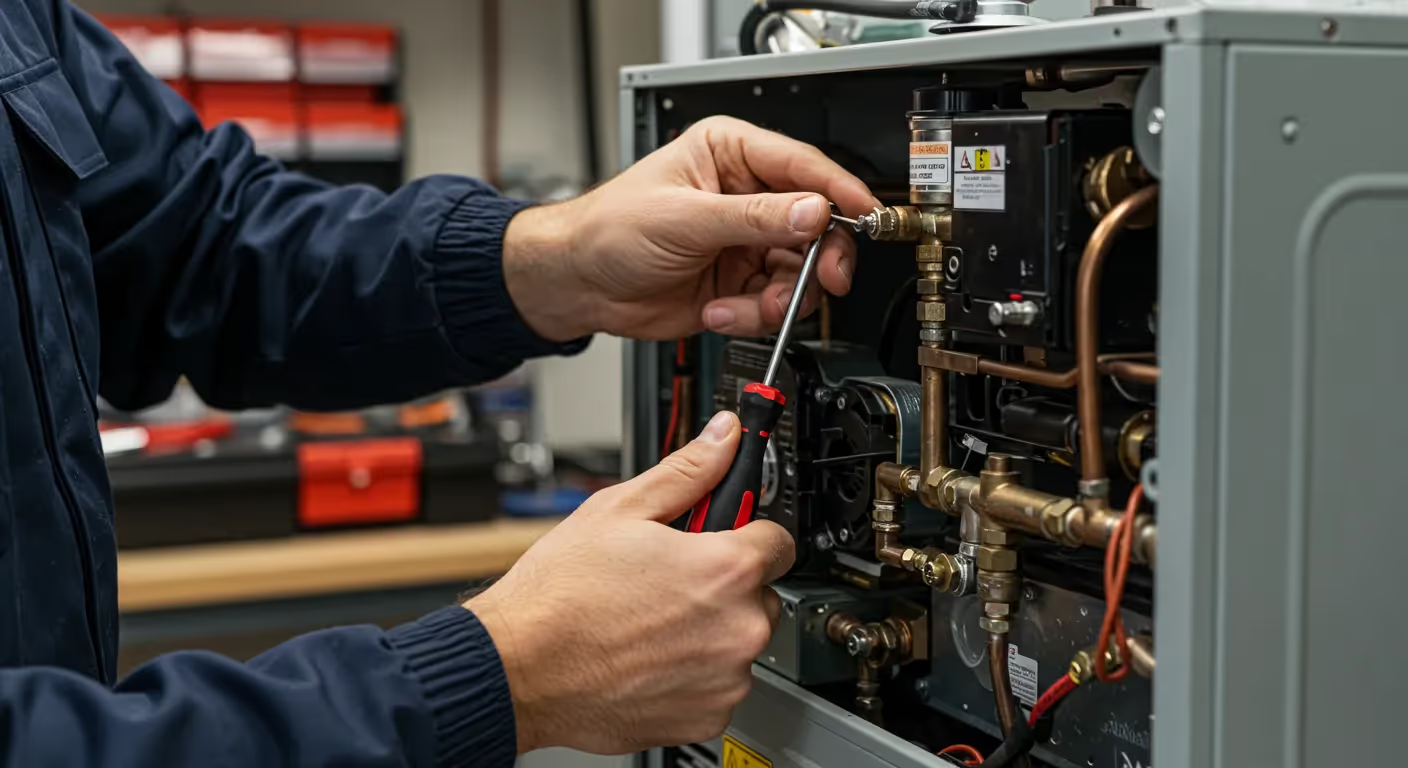
The Heating Installation Process Step-by-Step
Understanding the installation timeline helps homeowners prepare for the service day. While every home has unique structural challenges, a standardized protocol ensures consistency and safety. The installation process is designed to be efficient, typically completing within a single day for standard replacements.
This workflow eliminates guesswork and ensures that every safety check is performed in the correct order.
- Load Calculation and Assessment: First, a technician does not simply look at the size of the old unit. Instead, a Manual J load calculation is performed. This calculation considers the square footage, insulation levels, window quality, and orientation of the home. This step is vital because an oversized unit will cycle on and off too frequently, leading to wear and tear, while an undersized unit will run continuously without ever reaching the set temperature.
- Removal of the Old Infrastructure: Next, the crew shuts off power and gas supplies to the existing unit. The old equipment is disconnected. If it is a gas furnace, the gas lines are capped temporarily for safety. If it is a heat pump, the refrigerant is pumped down and recovered into approved cylinders to prevent atmospheric venting. The old unit is then physically removed from the basement, attic, or crawlspace.
- Positioning and Connection: Then, the new unit is brought into position. For furnaces, it is leveled to ensure proper drainage of condensate (for high-efficiency models) and smooth operation of the blower. For heat pumps, the outdoor pad is inspected and leveled. The technicians then reconnect the primary systems. This involves hardwiring the electrical connections, sweating the copper refrigerant lines (for heat pumps), or piping the gas lines with a sediment trap to protect the gas valve.
- Venting and Drainage: Subsequently, attention turns to the exhaust. For high-efficiency furnaces (90% AFUE and above), PVC piping is installed to vent combustion gases and intake fresh air. This requires precise sloping to ensure condensate drains back to the unit properly. For standard efficiency units, the metal flue is inspected for rust or blockages and reconnected.
- System Commissioning and Testing: Finally, the system is powered on. This is not just flipping a switch; it involves a start-up procedure. Technicians measure the gas pressure at the manifold to ensure the flame burns clean and hot. They measure the "temperature rise"—the difference in temperature between the air entering the return and the air leaving the supply—to confirm it falls within the manufacturer's specifications. Static pressure is measured to verify the ductwork is not restricting airflow.
Deciding When to Replace Your Heating Unit vs. Repairing It
One of the most difficult decisions for a homeowner is determining whether to pour more money into a failing system or invest in a replacement. There is a tipping point where repair costs outweigh the value of the existing equipment. Making this decision requires a logical analysis of the unit's history, safety status, and current performance.
A simple rule of thumb often used in the industry is the "50% Rule." If the cost of the repair approaches 50% of the value of a new system, replacement is generally the smarter financial move. However, other factors also weigh heavily on this decision.
- Age of the Equipment: Furnaces generally last 15 to 20 years, while heat pumps typically last 10 to 15 years. If your system is within this age range or older, parts will become obsolete and more expensive. A major component failure, such as a cracked heat exchanger or a blown compressor, in a unit of this age signals the end of its useful life.
- Frequency of Breakdowns: Consider the frequency of service calls over the last two winters. If you are calling for repairs annually or multiple times a season, the system is becoming unreliable. These cumulative repair costs—often hundreds of dollars per visit—can quickly equal the monthly payments for a new, warrantied system.
- Rising Energy Bills: As heating systems age, they lose efficiency. Parts wear down, friction increases in motors, and heat exchangers become coated with soot. If your energy bills have spiked despite normal usage, your system is working harder to produce the same amount of heat. Replacing it with a high-efficiency model can often lower monthly utility bills enough to offset a portion of the installation cost.
- Safety Concerns: This is the most critical factor. If a technician discovers a cracked heat exchanger, the unit must be replaced immediately. A cracked heat exchanger can leak carbon monoxide into the living space, posing a severe health risk. There is no safe repair for this specific failure; replacement is the only responsible option.
- Uneven Heating and Comfort Issues: If some rooms are boiling while others remain freezing, or if the house feels humid and clammy, the current system may be improperly sized or the blower motor may be failing. A new installation corrects sizing issues, restoring balanced comfort throughout the home.
Navigating Heating Needs in Brownsville’s Climate
The local climate in this region dictates specific requirements for heating infrastructure. Brownsville experiences four distinct seasons, with winters that can bring freezing temperatures, ice, and occasional heavy snowfall. The heating system is not an optional appliance; it is a life-safety system during the coldest weeks of January and February.
Homeowners here must consider the specific fuel sources and efficiency ratings that work best for Kentucky winters. While heat pumps are excellent for moderate days, the deep freezes often require a system with a supplemental heat source, such as electric heat strips or a dual-fuel setup (heat pump with a gas furnace backup).
- Permitting and Code Compliance: Kentucky has strict codes governing HVAC installations to ensure safety. All installations must meet state regulations regarding gas piping, electrical wiring, and venting. Professional installers handle the acquisition of necessary permits. This is critical for homeowners, as unpermitted work can void home insurance policies and cause issues when selling the property in the future.
- Utility Considerations: Depending on your specific location within the area—whether closer to the city center or in more rural outskirts—access to natural gas may vary. For homes without natural gas lines, the choice often falls between propane furnaces or high-efficiency electric heat pumps. Understanding the local utility rates helps in selecting the system that will be most economical to run.
- Seasonal Maintenance Cycles: Because of the moderate precipitation and humidity shifts in the region, heating systems are prone to rust and moisture-related issues if not properly maintained. The transition from the humid summer to the dry, cold winter puts stress on components. Installation services often account for this by recommending specific filtration or humidity control add-ons to protect the equipment and indoor air quality.
Why Professional Installation Matters for Long-Term Efficiency
The longevity of a heating system is determined on the day it is installed. The most expensive, high-tech furnace will fail prematurely if the installation does not adhere to strict technical standards. The difference between a system that lasts 10 years and one that lasts 20 years is often the quality of the workmanship during the initial setup — read our customer reviews to verify our quality.
Expert installation prevents common "hidden" problems that drain wallets over time. For example, improper refrigerant charging in heat pumps can increase electricity usage by 10% to 20%. Leaky duct connections at the plenum can result in heating the attic or crawlspace rather than the living area. Professional installers use diagnostic tools to seal the system tight, ensuring that the energy you pay for is delivered directly to your rooms.
Furthermore, warranty validation depends on professional installation. Manufacturers of major heating brands require proof that the unit was installed by a licensed contractor. Without this proof, they may deny claims for parts replacements, leaving the homeowner responsible for expensive repairs. Carter Heating and Cooling ensures that all paperwork, warranty registrations, and compliance checks are filed correctly, protecting the investment from day one.
Secure Your Comfort With Reliable Heating Solutions
Don't wait until the first snowstorm to address a failing heating system. Proactive installation guarantees that your home remains a warm, safe sanctuary regardless of the weather outside. From selecting the right size unit to the final safety check, professional service ensures efficiency and reliability for years to come.
Take control of your home’s temperature and energy bills today. Contact us now to schedule your heating installation quote and secure your home’s comfort for the winter.

Great Service at a Fair Price
Veterans Discount


Senior Discount

Law Enforcement

Fire fighters/ems

Hear From Your Neighbors!
Hear from your neighbors to see how our commitment to dependable service and lasting comfort has made a difference in their homes.