

How can we help today?
Choose an option to see quick actions and get help faster.Air Filtration Installation in Brownsville, KY
Air Filtration Installation in Brownsville, KY
Discover the benefits of professional air filtration installation in Brownsville, KY, to improve indoor air quality. Learn how to breathe cleaner air today!
Eliminate Indoor Pollutants and Breathe Cleaner Air Today
If you are noticing increased dust accumulation, lingering odors, or worsening allergy symptoms inside your home, your current HVAC setup may lack the necessary filtration power to maintain a healthy environment. Homeowners in Brownsville, KY often face humidity-driven air quality issues that require specialized attention, and we are ready to help you solve these problems immediately—call us to discuss financing options or schedule an assessment.
Carter Heating and Cooling provides comprehensive installation services that integrate seamlessly with your existing heating and cooling equipment to capture microscopic contaminants effectively.
- Capture up to 99% of airborne particles, including mold spores and pet dander.
- Protect your HVAC equipment from dust buildup, extending the system's lifespan.
- Experience a noticeable reduction in allergy triggers within hours of installation.
All installations are fully compliant with local safety codes and come with comprehensive manufacturer warranties for your peace of mind.
Why Effective Air Filtration is Essential for Your Health
Indoor air quality is often significantly more polluted than outdoor air. In modern, energy-efficient homes, better insulation seals air inside, which is great for temperature control but detrimental for ventilation. Pollutants such as volatile organic compounds (VOCs), bacteria, viruses, and fine particulate matter become trapped and recirculate through the ductwork multiple times a day. Without a dedicated whole-home filtration system, your lungs essentially become the filter.
The climate in this region further complicates indoor air quality. The humid subtropical weather brings high moisture levels, particularly in the summer months. This humidity creates an ideal breeding ground for biological growth, such as mold and mildew, inside ductwork and on coil surfaces — check our HVAC FAQs. Standard one-inch fiberglass filters are designed primarily to protect the furnace equipment, not to purify the air you breathe. They are often incapable of trapping these smaller, more dangerous biological contaminants.
Installing a dedicated filtration system addresses these invisible threats directly. High-efficiency systems, such as media air cleaners or electronic air cleaners, have a much larger surface area and higher MERV (Minimum Efficiency Reporting Value) ratings. This allows them to trap smaller particles without restricting airflow to the point of damaging your HVAC system. By addressing these pollutants at the source, you reduce the risk of respiratory issues, headaches, and fatigue associated with poor air quality.
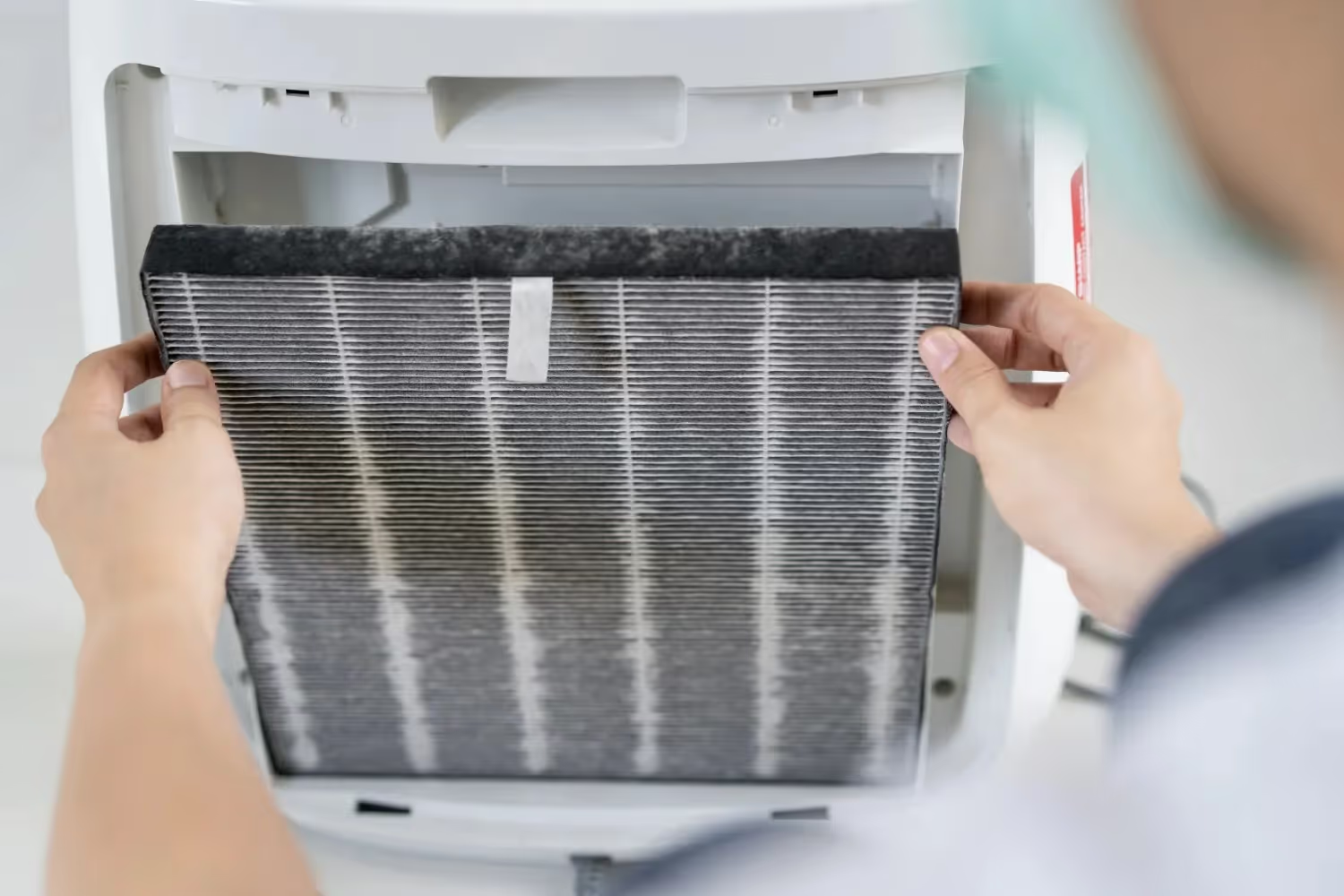
Our Air Filtration Installation Process: What to Expect
When you choose professional installation, you are investing in a permanent solution rather than a temporary fix. The process begins with a thorough evaluation of your current HVAC system’s static pressure and physical configuration. We do not believe in a one-size-fits-all approach; the filtration unit must be matched to the blower capacity of your furnace or air handler to ensure it cleans the air without straining the motor.
The scope of installation typically involves modifying the return air drop—the metal ductwork connected to your furnace—to accommodate the new, larger filtration cabinet. This is a precise fabrication job that ensures an airtight seal. Gaps or leaks around a filter rack render the filter useless, as air will always follow the path of least resistance, bypassing the filter entirely if possible. Our installation guarantees that 100% of the air circulating through your system passes through the filtration media.
Timeline expectations are straightforward. In most residential scenarios, a complete retrofit and installation can be completed in a single day. This includes the removal of old filter racks, the installation of the new media cabinet or electronic system, and the necessary testing to verify performance. We arrive with all necessary materials, including sheet metal transitions, sealants, and the filtration unit itself, ensuring no delays once the work begins.
Step-by-Step Air Filtration System Installation
A professional installation is a multi-stage process designed to integrate the new equipment seamlessly into your home's infrastructure. We adhere to a strict protocol to ensure safety, efficiency, and cleanliness throughout the project.
System Assessment and Sizing
The technician measures the available space in the utility room, attic, or crawlspace. They calculate the static pressure of the existing ductwork to determine the maximum MERV rating your blower motor can handle. This step prevents the installation of a filter that is too restrictive, which could cause the coil to freeze or the motor to overheat.
Site Preparation and Safety Checks
Power to the HVAC system is turned off at the breaker panel to ensure safety. The workspace is prepped with drop cloths to protect flooring. If the unit is located in a tight space, the technician may need to temporarily disconnect gas lines or drain lines to access the return air drop.
Ductwork Modification
The existing return drop is cut or removed to create space for the new filtration cabinet. This often requires custom sheet metal fabrication on-site. The metal is cut to precise dimensions to ensure the new cabinet fits perfectly between the return duct and the furnace or air handler.
Mounting the Filtration Cabinet
The new filtration unit is mechanically fastened to the furnace and the return duct. Leveling is critical here to ensure the door operates smoothly and the seal remains tight. The technician uses heavy-gauge screws and metal cleats to secure the unit, ensuring it does not vibrate or rattle during operation.
Sealing and Insulation
Once mechanically secured, all seams and joints are sealed with professional-grade mastic sealant or aluminum foil tape. This step is vital to prevent "air bypass," where unfiltered air is pulled into the system through small cracks. If the unit is in an unconditioned space, like an attic, the metal transitions are insulated to prevent sweating and condensation.
Filter Installation and Calibration
The high-efficiency media filter or electronic cells are inserted into the cabinet. If the system is electronic or includes UV lights, the electrical connections are wired into the HVAC system’s power supply, often interlocked with the blower motor so the purifier runs only when air is moving.
Final Testing and Airflow Verification
Power is restored, and the system is cycled on. The technician uses a manometer to measure the pressure drop across the new filter to confirm it is within manufacturer specifications. The airflow is checked at supply registers to ensure the new filter has not significantly reduced the volume of air reaching your rooms.
Deciding Between Air Filter Replacement and Repair
Homeowners often face a decision between repairing an existing electronic air cleaner or replacing it with a modern, high-efficiency media cabinet. Understanding when to invest in a new installation versus maintaining an old system is key to long-term satisfaction and air quality.
Obsolescence of Electronic Parts
Many older homes have electronic air cleaners installed decades ago. these units (often called "zappers") rely on electrically charged plates to trap dust. Over time, the power packs fail, and replacement parts become prohibitively expensive or unavailable. If your electronic cleaner is no longer buzzing or popping, it is likely acting as a simple, inefficient flow-through screen. In this case, retrofitting the cabinet with a thick media filter or replacing the entire unit is the most cost-effective solution.
Maintenance Fatigue
Old electronic systems require frequent, labor-intensive cleaning. The collection plates must be washed, dried, and reinstalled regularly to maintain efficiency. If you find yourself neglecting this maintenance, the system is not working. Modern media air cleaners require a simple filter swap once every 6 to 12 months. If you prefer low-maintenance reliability, replacing a repair-prone electronic unit with a high-capacity media system is the right choice.
Changes in Health Requirements
If a household member has developed new respiratory conditions, asthma, or severe allergies, a standard repair of an old system may not suffice. Older technology may not be capable of trapping the particulate size necessary to provide relief. Installing a modern HEPA bypass system or a MERV 16 media cabinet provides a significant upgrade in filtration capability that a simple repair cannot match.
System Efficiency and Airflow Issues
If your HVAC system is struggling to push air, an old, clogged, or improperly sized filter system might be the culprit. Repairing the HVAC unit without addressing the restriction caused by the filtration system is a waste of money. Replacing the filtration setup with a wider, deeper cabinet can lower static pressure, improve airflow, and reduce the strain on your blower motor, effectively paying for itself in energy savings and avoided repairs.
Local Permitting and Seasonal Considerations for Installation
In Brownsville, local building codes and utility regulations play a role in how HVAC modifications are performed. While a simple filter change is a maintenance task, installing a new whole-home filtration system is considered an alteration to the mechanical system.
Permitting and Electrical Codes
If the new filtration system requires hardwiring—such as UV germicidal lights or electronic air purifiers—the installation must adhere to local electrical codes. This ensures that the circuit is not overloaded and that all wiring is safely enclosed. Our team handles the verification of these requirements, ensuring that your installation is safe and compliant.
Humidity Management
The local climate dictates that filtration systems must be robust against moisture. In high-humidity seasons, standard cardboard-framed filters can sometimes absorb moisture and collapse, causing system blockages. We recommend and install systems with rigid frames or plastic rails designed to withstand the humidity levels typical of the region.
Seasonal Timing for Installation
While installation can occur year-round, the ideal times are during the "shoulder seasons" of spring and autumn. During these windows, you are less reliant on your heating or cooling system, making it convenient to turn the system off for the few hours required for installation. However, if you are suffering from seasonal allergies, immediate installation in spring is often prioritized to catch pollen before it circulates through the home. Winter installations are also common to combat the dry, dusty air associated with heating season.
Why Choose Us: Our Commitment to Quality and Service
Selecting the right contractor for air filtration installation is just as important as selecting the right equipment. Carter Heating and Cooling distinguishes itself through a technical, data-driven approach to indoor air quality. We do not guess; we measure.
Our technicians are trained to look at the home as a complete system. We understand how changing a filter affects static pressure, how duct sizing impacts filtration efficiency, and how to seal a system to prevent bypass. We arrive in fully stocked trucks, ready to handle unexpected ductwork challenges without delaying the project.
We prioritize clean workspaces. Cutting into ductwork creates metal shavings and dust; our team uses drop cloths and vacuums to ensure your home is left cleaner than we found it. We provide transparent, upfront explanations of the work to be done, ensuring you understand exactly what you are paying for and how to operate your new system — read our reviews.
- Expert Consultation: We assess your specific health needs and home layout.
- Precision Installation: Custom sheet metal work for a perfect fit.
- Post-Installation Support: We show you how to change filters and maintain the system.
Improve your home's health and comfort today. Contact us now to schedule your air filtration installation and start breathing cleaner air immediately.

Great Service at a Fair Price
Veterans Discount


Senior Discount

Law Enforcement

Fire fighters/ems

Hear From Your Neighbors!
Hear from your neighbors to see how our commitment to dependable service and lasting comfort has made a difference in their homes.