
How can we help today?
Choose an option to see quick actions and get help faster.Furnace Service in Brownsville, KY
Furnace Service in Brownsville, KY
Furnace Service in Brownsville, KY
Restore Your Home's Warmth with Reliable Furnace Solutions
Dealing with a furnace breakdown during a sudden cold snap in Brownsville can disrupt your entire household routine and compromise your safety. You need immediate, professional intervention to diagnose the failure and restore heat before the temperature inside drops further; contact us today to schedule your service or inquire about financing options.
- Certified technicians are ready to tackle any furnace issue on all makes and models.
- Flexible financing options ensure your heating needs are met without immediate financial strain.
- Comprehensive diagnostics and repairs are performed to restore efficiency and safety.
All services are backed by robust warranties and are fully compliant with local Kentucky safety codes.
Expert Furnace Repair and Maintenance
A malfunctioning heating system often presents signs well before a complete shutdown occurs. Homeowners in Brownsville, KY often notice uneven heating across different rooms, unusual banging or whistling noises from the mechanical room, or a sudden spike in utility bills without a change in usage. These are indicators that internal components are struggling to operate, leading to decreased efficiency and potential safety hazards such as carbon monoxide leaks.
Carter Heating and Cooling addresses these issues by performing a thorough analysis of the entire heating envelope. The focus is not merely on swapping out a broken part but on understanding why the failure occurred. Whether the issue stems from a clogged filter restricting airflow, a failing ignition control, or a cracked heat exchanger, the goal is to provide a permanent solution rather than a temporary patch. High-quality service ensures that the furnace operates at the manufacturer's rated efficiency, extending the lifespan of the unit and maintaining a comfortable indoor environment throughout the winter months.
What Our Furnace Services Include: From Quick Fixes to Major Installations
Professional furnace service encompasses a wide range of technical tasks designed to keep a heating system running safely and efficiently. The scope of work covers the entire lifecycle of the unit, from the initial installation to emergency repairs and routine preventative maintenance.
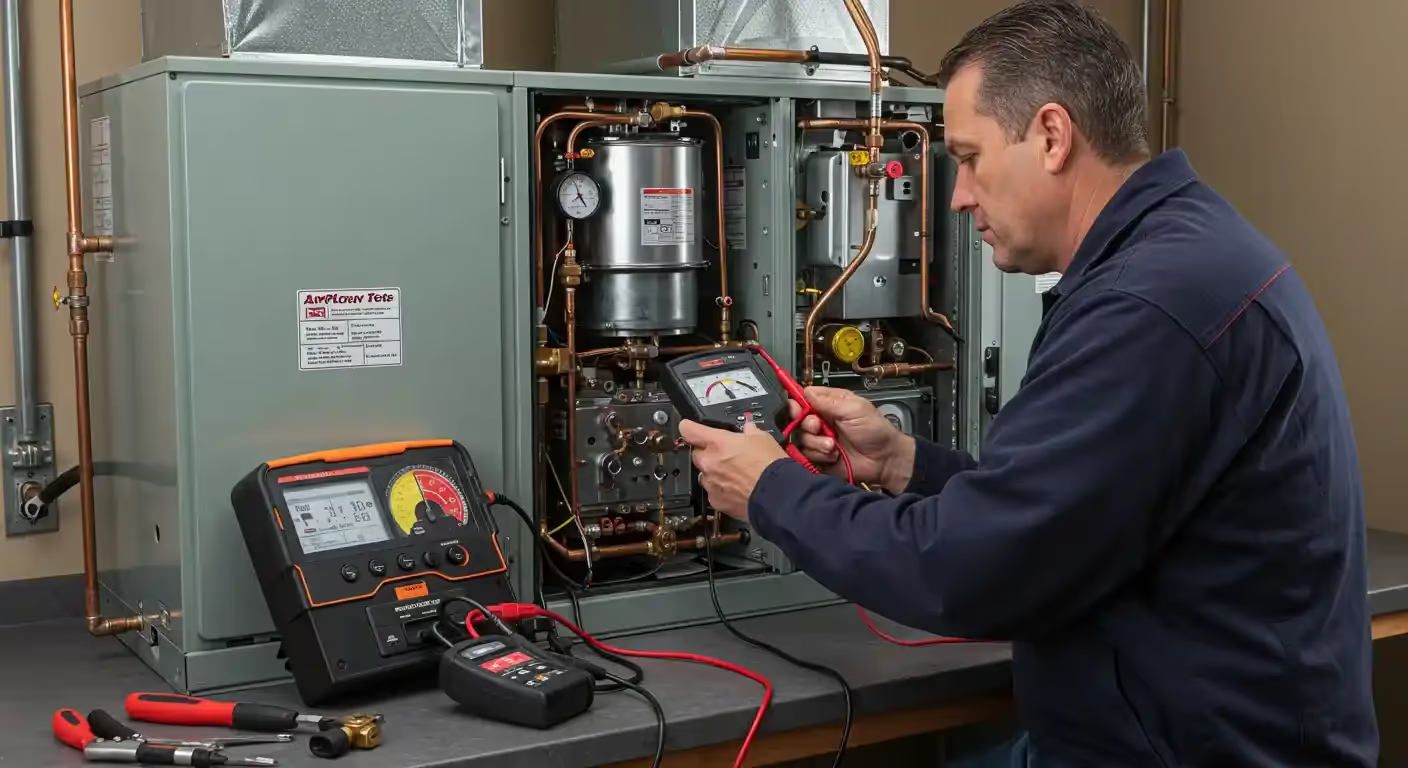
- Precision Diagnostics and Troubleshooting: Technicians utilize advanced diagnostic tools to read error codes and test electrical components. This includes checking the voltage and amperage on motors, testing the limit switch, and verifying the integrity of the flame sensor. Accurate diagnostics prevent unnecessary part replacements and ensure the root cause is addressed.
- Comprehensive Repair Services: Repairs cover all critical components of gas and electric furnaces. Common services include replacing worn-out blower motors, fixing faulty thermostats, swapping out damaged igniters or pilot lights, and sealing leaking ductwork. Technicians carry a stock of common parts to facilitate same-day repairs whenever possible.
- Preventative Maintenance and Tuning: Regular maintenance is essential for longevity. Services include cleaning the burner assembly to ensure proper combustion, inspecting the heat exchanger for cracks, tightening electrical connections, and lubricating moving parts. This proactive approach helps identify potential failures before they result in a breakdown.
- System Replacement and Upgrades: When a system is beyond repair, services include full removal and disposal of the old unit. This is followed by the installation of high-efficiency models that meet current energy standards. The process includes assessing the existing ductwork and gas lines to ensure compatibility with the new equipment.
- Air Quality Integration: Furnace service often overlaps with indoor air quality. Technicians can install and service whole-home humidifiers, high-efficiency media air cleaners, and UV light purification systems directly into the existing HVAC framework to combat the stale air often associated with winter heating.
Your Step-by-Step Guide to Furnace Installation
Replacing a furnace is a significant investment in your home’s infrastructure. A structured installation process ensures that the new unit performs exactly as intended, providing consistent heat and optimal energy efficiency. The process is systematic, adhering to manufacturer specifications and safety protocols.
- Load Calculation and Sizing: The process begins with a Manual J load calculation. This engineering calculation takes into account the square footage of the home, insulation levels, window types, and local climate data. This step ensures the new furnace is neither undersized (which causes it to run constantly) nor oversized (which leads to short-cycling and premature wear).
- Site Preparation and Safety Checks: Before the new unit is brought in, the installation area is prepped. Technicians lay down drop cloths to protect flooring and ensure the workspace is clear. The existing gas line, electrical circuit, and venting system are inspected to ensure they meet current code requirements for the new equipment.
- Removal of the Existing Unit: The old furnace is disconnected from the gas supply, electrical power, and plenum. It is carefully removed from the property for proper disposal. During this stage, the technicians inspect the exposed ductwork for any signs of mold, damage, or leaks that were previously hidden.
- Installation of the New Furnace: The new unit is positioned and leveled to ensure proper drainage of condensate (for high-efficiency models) and smooth operation. The plenum is reconnected, often requiring custom sheet metal work to ensure an airtight seal. Gas lines are reconnected using new drip legs and shut-off valves where necessary.
- Venting and Electrical Connection: Proper venting is critical to prevent carbon monoxide buildup. Technicians install or adapt the flue pipes, ensuring they maintain the correct slope for exhaust gases. Electrical connections are made, including the low-voltage wiring for the thermostat and safety controls.
- Commissioning and Testing: Once physically installed, the system is commissioned. This involves adjusting the gas pressure to the manifold, measuring the temperature rise (the difference between supply and return air temperature), and testing all safety switches. The system is run through a full cycle to verify performance.
Deciding Between Furnace Repair or Replacement: What You Need to Know
One of the most common dilemmas homeowners face is determining whether to invest in a repair or commit to a full system replacement. Making the right financial decision requires balancing the immediate cost of repair against the long-term efficiency and reliability of a new unit.
- The Age of the System: Furnaces typically last between 15 and 20 years. If a unit is approaching or has surpassed the 15-year mark, parts may be becoming obsolete or expensive to source. A major failure in an older unit often signals that other components are likely to fail soon, making replacement a more prudent financial choice.
- The 50% Rule: A general industry standard is the 50% rule. If the cost of the necessary repair approaches 50% of the value of a brand-new system, replacement is generally recommended. Investing half the cost of a new machine into an old one that has no warranty is rarely a sound investment.
- Frequency of Breakdowns: If the furnace has required multiple service calls in the last two years, it has become unreliable. The cumulative cost of frequent minor repairs often exceeds the monthly payment of a financed new system. Chronic reliability issues also pose a risk of failure during extreme weather.
- Energy Efficiency Considerations: Older furnaces often operate at 60% to 70% AFUE (Annual Fuel Utilization Efficiency), meaning 30% to 40% of the energy paid for is wasted. Modern high-efficiency units operate at 90% to 98% AFUE. If utility bills are steadily rising despite normal usage, upgrading to a higher efficiency model can result in significant monthly savings that offset the installation cost over time.
- Safety Concerns: Issues such as a cracked heat exchanger can allow carbon monoxide to mix with the indoor air. This is a non-negotiable "red tag" situation where the furnace must be shut down immediately. In cases where safety is compromised, replacement is the only responsible option.
Navigating Heating Requirements and Seasonal Considerations
Operating a heating system in Kentucky requires attention to specific regional factors. The humid subtropical climate means that humidity control is a year-round concern, not just a summer issue. During the heating season, proper management of indoor humidity is vital for comfort and health. If a furnace dries out the air too much, it can cause respiratory issues and damage wood furniture; conversely, excess humidity in the transition seasons can lead to mold growth in ductwork.
Local building codes and permit requirements also play a major role in furnace work. In Brownsville and the surrounding areas, changing a furnace often requires a permit to ensure the work meets fire and safety standards. This includes verifying that the flue liner is the correct size for the appliance and that combustion air requirements are met. Professional service providers manage the permitting process, ensuring that the installation passes all municipal inspections.
Furthermore, utility infrastructure varies across the region. While natural gas is common, some properties rely on propane or electric heat pumps with backup furnace strips. Understanding the specific fuel source and its delivery pressure is crucial for safe operation. Technicians must be familiar with the nuances of local utility providers to configure gas valves and pressure switches correctly for the specific energy supply available at the property.
Why Choose Us: Local Expertise and Guaranteed Satisfaction
Selecting a service provider for heating needs comes down to trust, technical capability, and reliable support. Homeowners require a partner who understands the technical demands of modern HVAC equipment and offers the financial flexibility to make necessary upgrades.
- Qualified and Certified Technicians: The team consists of fully licensed professionals who undergo continuous training. This ensures competence with the latest heating technologies, including modulating gas valves and variable-speed blower motors. Certifications provide assurance that the work adheres to strict industry standards.
- Comprehensive Financing Options: Heating emergencies rarely happen at convenient times. Partnerships with financial institutions like Wells Fargo allow for flexible payment plans. This accessibility ensures that safety and comfort do not have to be compromised due to budget constraints, allowing for immediate installation or major repairs.
- Warranty and Workmanship Guarantees: Every installation and repair is backed by strong warranties. This coverage protects the homeowner from defects in parts and ensures that if an issue arises post-service, it is rectified without additional cost. Standing behind the work is a core component of the service offering.
- Compliance and Safety Focus: Adherence to all local codes and safety regulations is strictly maintained. From pulling the necessary permits to performing final safety checks on gas connections, every step is taken to ensure the home remains safe and compliant with insurance requirements.
Secure the comfort and safety of your home this season with professional heating services from Carter Heating and Cooling. Schedule your furnace inspection or repair today

Great Service at a Fair Price
Veterans Discount


Senior Discount

Law Enforcement

Fire fighters/ems

Hear From Your Neighbors!
Hear from your neighbors to see how our commitment to dependable service and lasting comfort has made a difference in their homes.