

How can we help today?
Choose an option to see quick actions and get help faster.Mini Split Inspection in Brownsville, KY
Mini Split Inspection in Brownsville, KY
Struggling with your mini split in Brownsville? Our certified technicians provide thorough inspections and effective solutions. Schedule your service today!
Stressed by an Unreliable Mini Split System?
Don't let a malfunctioning mini split system leave you uncomfortable in Brownsville's varied climate. Whether it's the freezing winters or the sweltering summer heat, an uninspected unit can lead to sudden breakdowns, higher energy bills, and poor air quality. Carter Heating and Cooling ensures your unit runs perfectly all year round with comprehensive evaluations designed to catch issues before they become emergencies. Contact us today to schedule your comprehensive inspection or inquire about our financing options.
Our inspection service is designed to provide immediate clarity and results:
- Ensure year-round reliability with our thorough, multi-point inspection process.
- Receive immediate solutions with same-day service availability for urgent diagnostic needs.
- Gain long-term peace of mind with verifiable reports and extended warranty options.
All services are fully licensed, meeting Kentucky's stringent HVAC standards to ensure safety and compliance.
Comprehensive System Evaluation and Diagnostics
A mini split inspection is more than just a quick glance at the filters; it is a deep dive into the electromechanical health of your ductless system. Homeowners in Brownsville rely on these systems for both heating and cooling, meaning the equipment rarely gets a break. Our inspection protocol is rigorous, covering the indoor air handling units, the outdoor compressor, and the vital line sets connecting them. We assess the system’s ability to transfer heat effectively and maintain the precise temperature control you expect from ductless technology.
The evaluation breaks down into specific technical checkpoints. We examine the refrigerant charge to ensure it matches the manufacturer's specifications. Incorrect refrigerant levels, whether too low from leaks or too high from improper installation, can destroy a compressor. We also analyze electrical consumption. By measuring the amperage and voltage of the compressor and fan motors, we can identify components that are straining to operate. This data often predicts a failure weeks or months before it happens, allowing for preventative repairs rather than emergency replacements.
Included in our standard inspection service:
- Refrigerant Pressure Analysis: We connect gauges to measure operating pressures and subcooling/superheat levels to verify the thermodynamic cycle is efficient.
- Electrical Connection Tightening: Loose wires cause arcing and overheating. We torque all electrical connections at the disconnect box, indoor unit, and outdoor condenser.
- Condensate Drain Testing: We flush the drain lines to ensure moisture is properly removed, preventing water damage to your walls and mold growth inside the unit.
- Blower Wheel and Fan Inspection: We check for dust buildup on the blower wheel, which can severely restrict airflow and cause the system to freeze up.
- Coil Condition Check: Both evaporator and condenser coils are inspected for debris, impact damage, or corrosion that hinders heat transfer.
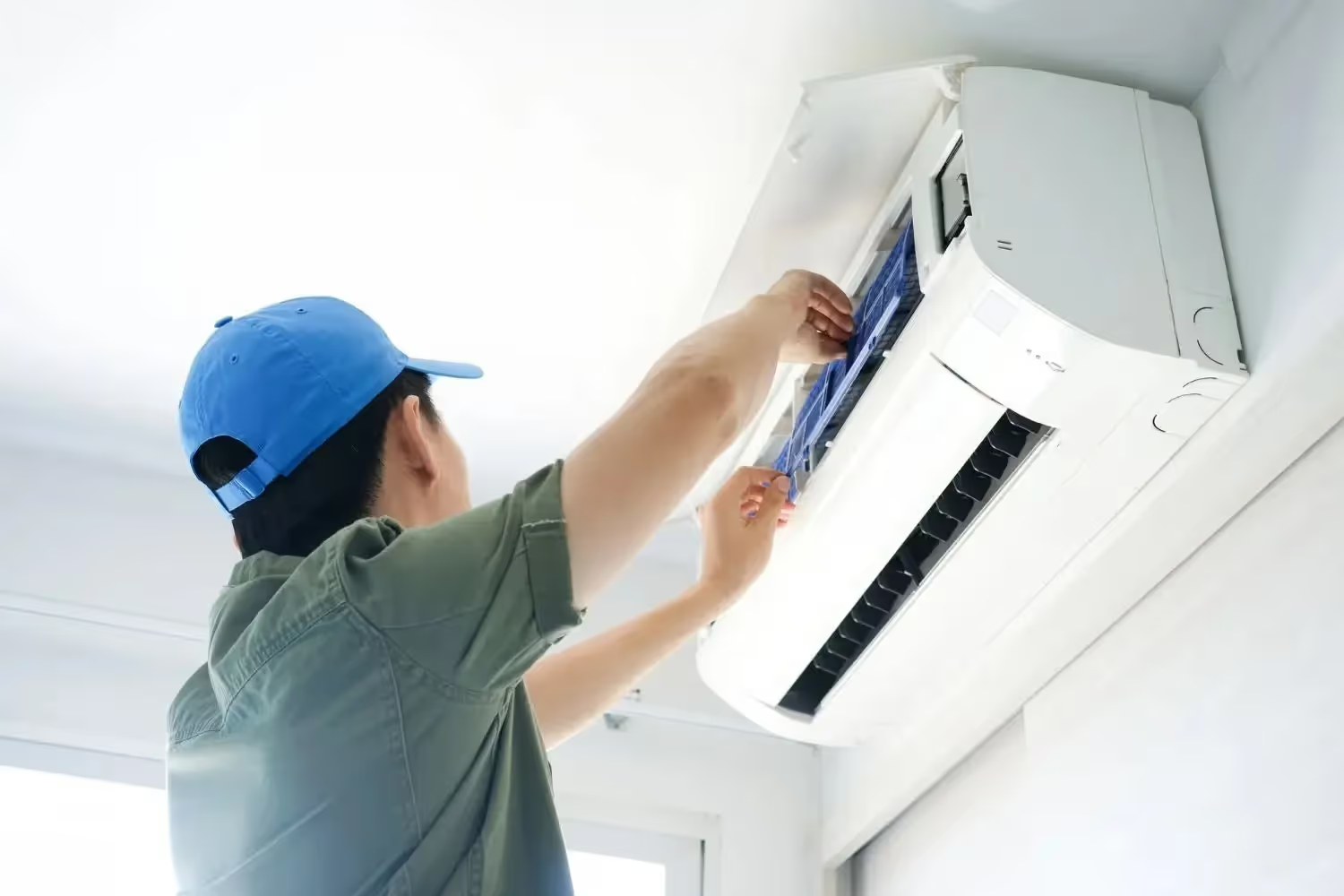
The Inspection Workflow: What to Expect
We have streamlined the inspection process to be as non-intrusive and efficient as possible for Brownsville residents. The goal is to provide you with a definitive answer regarding the health of your system without disrupting your day. When you book a service, the timeline moves quickly from scheduling to diagnosis.
The process begins with a functional test. Before opening the unit, the technician operates the system in both heating and cooling modes (weather permitting) to listen for irregular sounds and observe airflow patterns. Short cycling, grinding noises, or lukewarm air output provide immediate clues to underlying issues. Following this, the physical disassembly begins. The technician removes the casing of the indoor unit to access the filters and coils, followed by a thorough examination of the outdoor unit's compressor and reversing valve.
The workflow proceeds as follows:
- First, the technician arrives within the scheduled window and performs an initial site survey to check for airflow obstructions around the outdoor unit.
- Next, the electrical panel and service disconnect are inspected for safety hazards, corrosion, or signs of overheating.
- Then, the technician cleans accessible filters and clears minor debris from the outdoor coil to ensure accurate diagnostic readings.
- After the physical check, we run the system through a full operational cycle to monitor temperature differentials (Delta T) across the indoor coil.
- Finally, you receive a detailed health report outlining the current status of the system, any immediate repairs needed, and recommendations for optimizing efficiency.
This structured approach ensures that no component is overlooked. You are not left guessing about the condition of your heating and cooling equipment. The report you receive is a decision-making tool, providing the data necessary to decide between a simple tune-up, a repair, or planning for a future replacement.
Deciding Between Repair and Replacement
An inspection often serves as the turning point where a homeowner must decide whether to continue investing in an aging system or to upgrade. Mini splits are durable, but they are not immortal. Understanding when to pivot from repair to replacement can save thousands of dollars in the long run. Our inspection report provides the raw data needed to make this financial calculation.
Age is the primary factor. If a system is approaching or has exceeded the 15-year mark, major repairs such as compressor replacements or control board failures are often not cost-effective. At this stage, parts may be scarce, and the efficiency of the unit is likely far below modern standards. A new unit could lower energy consumption by 30% or more, offsetting the installation cost over time.
Consider replacement if the inspection reveals the following:
- The 50% Rule: If the cost of the repair approaches 50% of the value of a new system, replacement is generally the smarter financial move.
- Refrigerant Type: If your system uses older R-22 refrigerant, which is phased out and extremely expensive, a leak usually signals the end of the unit’s viable life.
- Compressor Failure: The compressor is the heart of the system. If it has failed or is grounded, and the unit is out of warranty, replacement is almost always recommended.
- Multiple Major Component Failures: If the inspection finds that both the blower motor and the control board are failing simultaneously, the cascading issues suggest the unit has reached the end of its duty cycle.
However, if the unit is under ten years old and the issue is an isolated component—such as a bad capacitor, a faulty sensor, or a clogged drain line—repair is typically the correct path. Carter Heating and Cooling provides honest assessments based on the physics of the machine, not sales quotas.
Local Climate Impact on Mini Split Performance
Operating a mini split in Brownsville requires specific attention to regional environmental factors. The local climate swings from humid, muggy summers to freezing winters, placing a bi-modal load on HVAC equipment. This constant switching between heating and cooling modes can stress the reversing valve, a component unique to heat pumps that physically changes the direction of refrigerant flow.
Humidity control is a critical aspect of inspections in this area. During the summer, the mini split acts as a dehumidifier. If the condensate drain line is clogged with algae or biological growth—common in humid Kentucky summers—the unit cannot remove moisture effectively. This leads to a clammy indoor environment and potential water damage. Our inspection prioritizes the drainage system to ensure the unit can handle the heavy latent heat load of July and August.
Winter operation presents a different set of challenges. When temperatures drop below freezing, the outdoor unit must enter a "defrost cycle" to melt ice off the coils. If the sensors controlling this cycle fail, the outdoor unit can turn into a block of ice, stopping heat transfer entirely. We verify the operation of defrost sensors and boards to ensure your heat doesn't fail during a cold snap.
Local considerations include:
- Vegetation and Debris: Brownsville’s leafy environment means outdoor units are prone to being choked by leaves, grass clippings, and pollen, requiring strict cleaning protocols.
- Voltage Fluctuations: Regional power grids can experience fluctuations during storms. We check that your system’s surge protection and capacitors are capable of handling these variances without damaging sensitive inverter boards.
- Pest Intrusion: As weather cools, small animals often seek warmth inside the outdoor condenser. We inspect for chewed wires and nesting materials that can cause short circuits.
Why Professional Inspection Beats DIY
While homeowners can clean their own air filters, a true mini split inspection requires certified expertise and specialized tools. Ductless systems are technically complex, utilizing inverter-driven compressors and sophisticated electronic communication between indoor and outdoor units. A visual check by an untrained eye will miss the subtle electrical and thermodynamic warning signs that a professional technician detects immediately.
One of the most critical aspects of professional inspection is the handling of high-voltage electricity and pressurized refrigerant. Mini splits operate on 220-240 volts, which is lethal if mishandled. Furthermore, checking refrigerant levels without losing gas or introducing non-condensables (like air or moisture) into the lines requires EPA-certified handling procedures. An improper DIY check can permanently damage the compressor or void the manufacturer's warranty.
Professional differentiators include:
- Warranty Preservation: Most manufacturers require proof of annual professional maintenance to keep the parts warranty valid. Skipping this can lead to denied claims later.
- Inverter Technology Expertise: Unlike traditional HVAC, mini splits use variable-speed inverters. Diagnosing these requires specific training to interpret error codes and frequency readings.
- Tooling Accuracy: We use calibrated digital manifolds, micron gauges, and sensitive leak detectors that are far more accurate than standard analog tools.
Investing in a professional inspection is an investment in asset protection. It shifts the management of your HVAC system from reactive (fixing it when it breaks) to proactive (keeping it running efficiently). This approach lowers the total cost of ownership by extending the lifespan of the equipment and keeping monthly utility bills in check.
Secure Your Comfort Today
The reliability of your heating and cooling system should not be a gamble. With the extreme weather shifts common in this region, a mini split inspection is the only way to guarantee your home remains a sanctuary against the elements. You receive detailed insights, improved efficiency, and the security of knowing your system is safe to operate.
Don't wait for a breakdown to think about your HVAC system. Ensure your mini split is ready for the season ahead. Contact us today to schedule your inspection and experience the difference professional care makes for your home comfort.

Great Service at a Fair Price
Veterans Discount


Senior Discount

Law Enforcement

Fire fighters/ems

Hear From Your Neighbors!
Hear from your neighbors to see how our commitment to dependable service and lasting comfort has made a difference in their homes.