
How can we help today?
Choose an option to see quick actions and get help faster.Heating Service in Brownsville, KY
Heating Service in Brownsville, KY
Heating Service in Brownsville, KY
Uneven Temperatures and Rising Energy Bills Signal Heating Failure
Does your home feel cold even with the heat on? You might be facing heating system efficiency issues that require immediate professional attention to restore comfort and safety. Contact us today to schedule a diagnostic visit, book a repair, or inquire about available financing options for system upgrades.
Heating systems often give subtle warning signs before a complete breakdown. You may notice that certain rooms in your Brownsville home remain chilly while others overheat, or perhaps the furnace is making unusual rattling noises during startup. These symptoms usually indicate underlying mechanical or airflow problems that reduce efficiency and increase monthly utility costs. Ignoring these signs can lead to more expensive repairs or premature system failure during the coldest months of the year.
Our approach focuses on identifying the root cause of performance drops rather than applying temporary patches.
- Expert diagnosis to pinpoint and resolve heating inefficiencies quickly.
- Professional advice on maintaining optimal indoor temperatures year-round.
- Reliable repair services ensuring your heating system operates at peak performance.
All services are fully licensed and compliant with Kentucky HVAC regulations, ensuring your system meets all safety and code requirements.
Diagnosing and Resolving Heating Malfunctions
When a heating system fails to maintain the set temperature, the issue often stems from a specific component failure or a breach in the airflow cycle. In the Brownsville area, where winter lows dip into the upper 20s and low 30s, a reliable heater is a necessity, not a luxury. Homeowners frequently encounter issues such as short-cycling, where the unit turns on and off too frequently without reaching the target temperature. This places immense strain on the heat exchanger and blower motor.
Carter Heating and Cooling approaches every service call with a systematic diagnostic process. We utilize advanced testing equipment to measure static pressure, gas pressure, and electrical voltage. This data allows technicians to separate minor calibration issues from serious mechanical failures. Whether the system is a gas furnace, an electric furnace, or a heat pump, the goal is to restore the unit to manufacturer specifications.
Common issues addressed during a service visit include:
- Ignition Failure: Faulty igniters, pilot lights, or flame sensors prevent the burners from engaging, leaving the house cold.
- Airflow Restrictions: Clogged filters, blocked vents, or collapsed ductwork restrict warm air distribution and cause the system to overheat.
- Thermostat Miscommunication: Wiring issues or calibration errors can cause the system to read indoor temperatures incorrectly.
- Blower Motor Fatigue: A struggling motor cannot circulate air effectively, leading to weak airflow at the registers.
- Refrigerant Leaks: For heat pumps, low refrigerant levels reduce the system's ability to extract heat from the outside air.
Comprehensive Heating Services: What Is Included
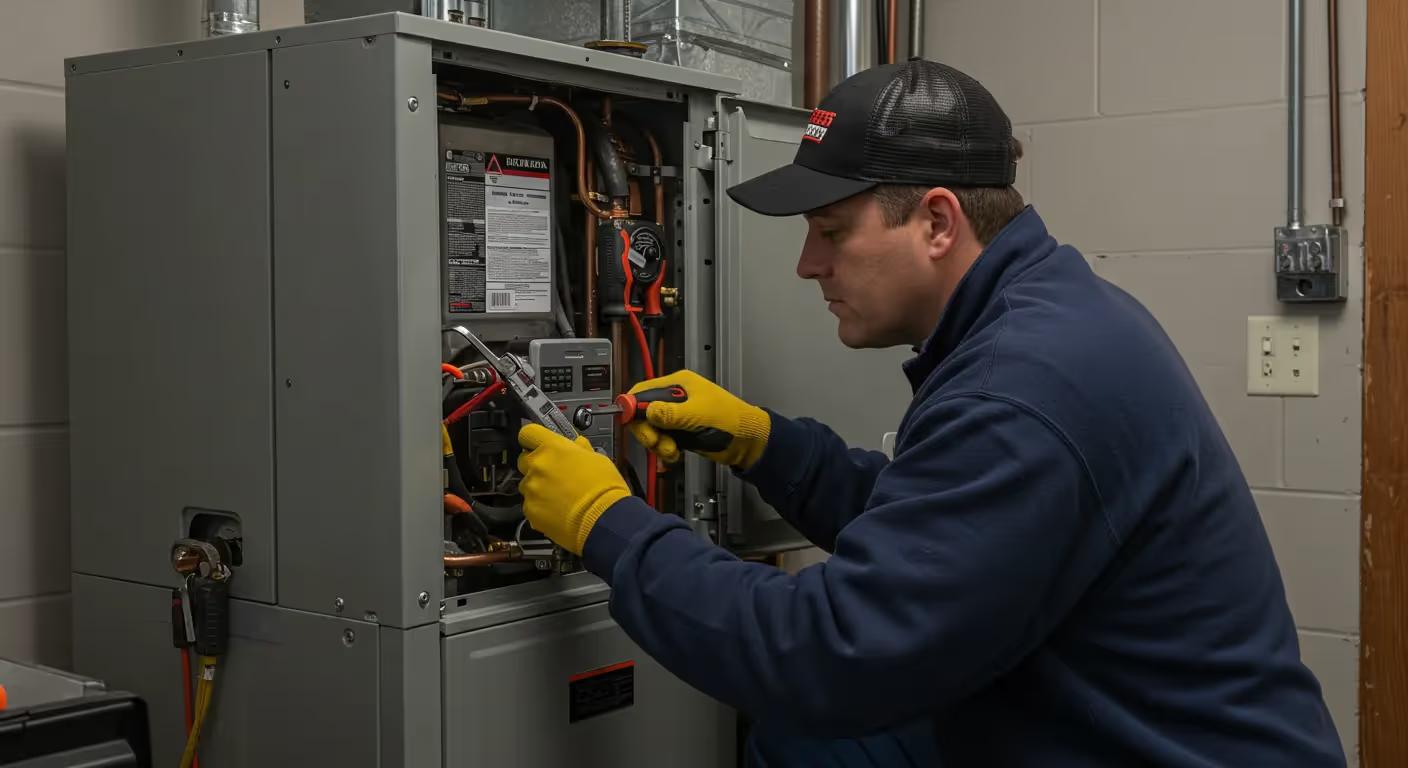
A professional heating service goes beyond a simple filter change. It involves a deep inspection and tuning of the system’s critical components to ensure safety and efficiency. When you book a service, you are paying for a certified technician to physically inspect the internal workings of the heating unit. The objective is to ensure that every kilowatt of electricity or therm of gas is converted into usable heat for the home.
The service protocol is designed to be thorough and transparent. Technicians arrive equipped to handle repairs on the spot, carrying common parts to minimize downtime. The scope of work typically covers the combustion chamber, the electrical panel, and the air handling assembly.
Key inclusions in a standard heating service:
- Heat Exchanger Inspection: technicians examine the heat exchanger for cracks or corrosion, which is critical for preventing carbon monoxide leaks.
- Burner Assembly Cleaning: The burners are removed and cleaned to ensure an even, efficient flame.
- Safety Switch Testing: Limit switches, rollout switches, and pressure switches are tested to verify they will shut the system down in an emergency.
- Electrical Connection Tightening: Loose connections create resistance and heat, which can damage components; all wiring is inspected and tightened.
- Blower Wheel Cleaning: Dust buildup on the blower wheel acts as a drag on the motor; cleaning it improves airflow and efficiency.
- Gas Pressure Calibration: For gas furnaces, the manifold pressure is adjusted to match the manufacturer's specifications for optimal fuel usage.
- Condensate Line Clearing: For high-efficiency furnaces and heat pumps, condensate drains are cleared to prevent water damage and system lockouts.
The Step-by-Step Heating Installation Process
Installing a new heating system is a major construction project within your home. It requires precise calculation, fabrication, and assembly to ensure the new unit functions correctly with your existing ductwork and electrical infrastructure. An improper installation can reduce the efficiency of a new unit by up to 30%, negating the benefits of the upgrade.
The process begins with an evaluation of the home's thermal characteristics. This ensures the new unit is neither too large nor too small. An oversized unit will short-cycle and wear out quickly, while an undersized unit will run continuously without ever keeping the house warm.
The installation workflow follows a strict sequence:
- Load Calculation: A Manual J load calculation is performed to determine the exact heating requirements based on square footage, insulation levels, and window orientation.
- Site Preparation: The work area is prepped with drop cloths to protect flooring, and the old unit is safely disconnected from gas and electrical lines.
- System Removal: The existing furnace or heat pump is removed and hauled away for proper disposal and recycling.
- Ductwork Modification: If necessary, the transition sheet metal between the unit and the main plenum is fabricated to ensure an airtight fit.
- Unit Placement: The new unit is leveled and secured to minimize vibration and noise during operation.
- Connection: Gas lines, electrical wiring, and flue pipes are connected according to local building codes.
- Commissioning: The system is fired up, and technicians measure temperature rise, gas flow, and static pressure to verify performance.
- User Training: The homeowner is shown how to operate the new thermostat and how to perform basic maintenance like changing filters.
Deciding Between Heating System Repair or Replacement
Homeowners often struggle with the decision to repair an aging unit or invest in a new system. This decision should be based on data, specifically the age of the unit, the cost of the repair, and the system's recent performance history. While repairs can extend the life of a heater, there is a tipping point where throwing money at an old system becomes financially unwise.
Generally, if a heating system is over 15 years old, it is approaching the end of its serviceable life. Technology has advanced significantly in the last decade, and modern units offer AFUE (Annual Fuel Utilization Efficiency) ratings that far exceed older models. A furnace from 2005 might operate at 70% efficiency, meaning 30 cents of every dollar spent on gas is wasted. Modern units can achieve up to 98% efficiency.
Consider the following factors when making your decision:
- The 50% Rule: If the cost of the repair approaches 50% of the value of a new system, replacement is generally the better financial option.
- Frequency of Breakdowns: If the system has required multiple repairs in the last two years, it is likely that other components will fail soon.
- Rising Energy Bills: A steady increase in heating costs without a corresponding increase in usage suggests the internal components are degrading.
- Comfort Issues: If some rooms are always cold or the air feels dry and stale, a new system with variable-speed technology can resolve these comfort issues.
- Safety Concerns: Any sign of a cracked heat exchanger is an immediate red flag requiring system replacement due to carbon monoxide risks.
When you consult with Carter Heating and Cooling regarding a replacement, the focus is on long-term value and reliability rather than a quick sale. The goal is to provide a solution that stabilizes your indoor climate for the next two decades.
Regional Climate Factors Affecting Heating Efficiency
The climate in Brownsville and the surrounding region presents specific challenges for heating equipment. While winters are cold, the humidity remains a factor throughout the year. The area sees significant precipitation, particularly in March and April, which can affect outdoor heat pump units.
High humidity levels mean that a heating system must do more than just warm the air; it must also help manage moisture levels to prevent mold growth and maintain structural integrity. In the transition months, when temperatures fluctuate between the 40s and 60s, a system that is not properly calibrated may struggle to maintain a consistent indoor environment.
Local considerations for heating maintenance include:
- Heat Pump Defrost Cycles: In freezing temperatures with high humidity, frost builds up on the outdoor coil. The system must effectively enter a defrost cycle to remove this ice. Failure to do so can crush the coil and ruin the compressor.
- Moisture Control: Wet springs can lead to rust and corrosion on outdoor components. Regular cleaning and inspection of the cabinet integrity are essential to prevent premature rot.
- Permitting and Codes: All HVAC work in the region must adhere to specific safety codes regarding gas line sizing and electrical grounding. Ensuring compliance prevents issues when selling the home or filing insurance claims.
- Dual Fuel Options: Given the moderate but occasionally severe winters, dual-fuel systems (pairing an electric heat pump with a gas furnace) are often an excellent solution for the region, leveraging efficiency during mild days and raw power during deep freezes.
Operational Excellence and Technical Precision
Choosing a service provider involves looking for technical competence and operational reliability. The focus should be on finding a partner who understands the specific thermal dynamics of homes in this area. A quality service provider prioritizes technical training, ensuring that every technician is up to date on the latest diagnostic protocols and repair techniques.
We do not believe in guesswork. Every recommendation is backed by diagnostic data. When a part is condemned, it is because it has failed a specific test, not because of a hunch. This precision saves homeowners money by avoiding unnecessary parts replacements and ensuring that the actual problem is solved the first time.
The commitment to service extends to respect for your property. Technicians use shoe covers, lay down mats, and clean up the workspace thoroughly upon completion. The only evidence of a service visit should be a comfortably heated home and a detailed service report.
Why homeowners rely on professional heating services:
- Safety Verification: Detailed checks of safety switches and gas lines protect the household.
- Efficiency Gains: Tuning the system restores lost efficiency, lowering operational costs.
- Longevity: Regular professional care significantly extends the lifespan of the equipment.
- Warranty Preservation: Most manufacturer warranties require proof of annual professional maintenance to remain valid.
If your heating system is showing signs of age, making strange noises, or simply failing to keep your home warm, do not wait for a complete breakdown in the middle of a freeze. Secure your comfort and safety with professional intervention.
Restore Comfort, Lower Costs, and Protect Your Home Today
Don’t let an underperforming heating system compromise your comfort or safety when temperatures drop. Carter Heating and Cooling is ready to deliver fast, professional solutions that restore reliable warmth, improve energy efficiency, and give you peace of mind. Whether you need an expert diagnostic, a precision repair, or guidance on upgrading to a high-efficiency system with flexible financing, our licensed technicians are here to help. We understand the demands of Brownsville’s climate and tailor every solution for long-term performance. Call Carter Heating and Cooling today to schedule your service and take control of your home’s comfort before the next cold snap arrives.

Great Service at a Fair Price
Veterans Discount


Senior Discount

Law Enforcement

Fire fighters/ems

Hear From Your Neighbors!
Hear from your neighbors to see how our commitment to dependable service and lasting comfort has made a difference in their homes.