
How can we help today?
Choose an option to see quick actions and get help faster.Furnace Inspection in Brownsville, KY
Furnace Inspection in Brownsville, KY
Furnace Inspection in Brownsville, KY
Stressed About Your Furnace’s Performance?
Not sure if your furnace is running at its best? Worry less with our top-rated furnace inspection services available now in Brownsville; call us today or apply for financing to ensure your home stays warm this season.
You need a heating system that operates safely and reliably when temperatures drop. A professional inspection provides the data you need to make informed decisions about your home comfort.
- Get a detailed inspection scheduled quickly to minimize downtime.
- Receive an extensive report on your furnace’s health, safety status, and efficiency levels.
- Benefit from expert recommendations for maintenance or upgrades based on actual system performance.
All services are guaranteed with licensed technicians committed to your satisfaction.
Why Regular Furnace Inspections are Critical
Neglecting your heating system is one of the leading causes of premature failure and unexpected breakdowns during the coldest months of the year. While a furnace may appear to be running normally, internal components degrade over time due to thermal stress, vibration, and normal wear and tear. A professional inspection is not merely a glance at the unit; it is a comprehensive safety audit designed to protect your property and your health.
Safety is the primary driver for annual inspections. Gas furnaces burn fuel to generate heat, a process that produces exhaust gases, including carbon monoxide (CO). If the heat exchanger—the component that separates the combustion process from the air you breathe—develops cracks or corrosion, these dangerous gases can leak into your living space. These cracks are often invisible to the naked eye and require specialized tools and training to detect. Regular assessment ensures that the combustion process is contained and venting correctly.
Efficiency is the second major factor. A system that has not been inspected or tuned often works harder than necessary to maintain the set temperature. Issues such as dirty burners, restricted airflow, or uncalibrated thermostats force the unit to run longer cycles. This increases energy consumption and drives up utility bills. By identifying and correcting these minor inefficiencies, you ensure the system converts fuel to heat as economically as possible.
Warranty preservation is another consideration for homeowners in Brownsville. Most furnace manufacturers require proof of annual professional maintenance to keep the warranty valid. If a major component fails and you cannot demonstrate a history of regular inspections, the manufacturer may deny the claim, leaving you responsible for the full cost of the repair.
What's Included in Your Furnace Inspection?
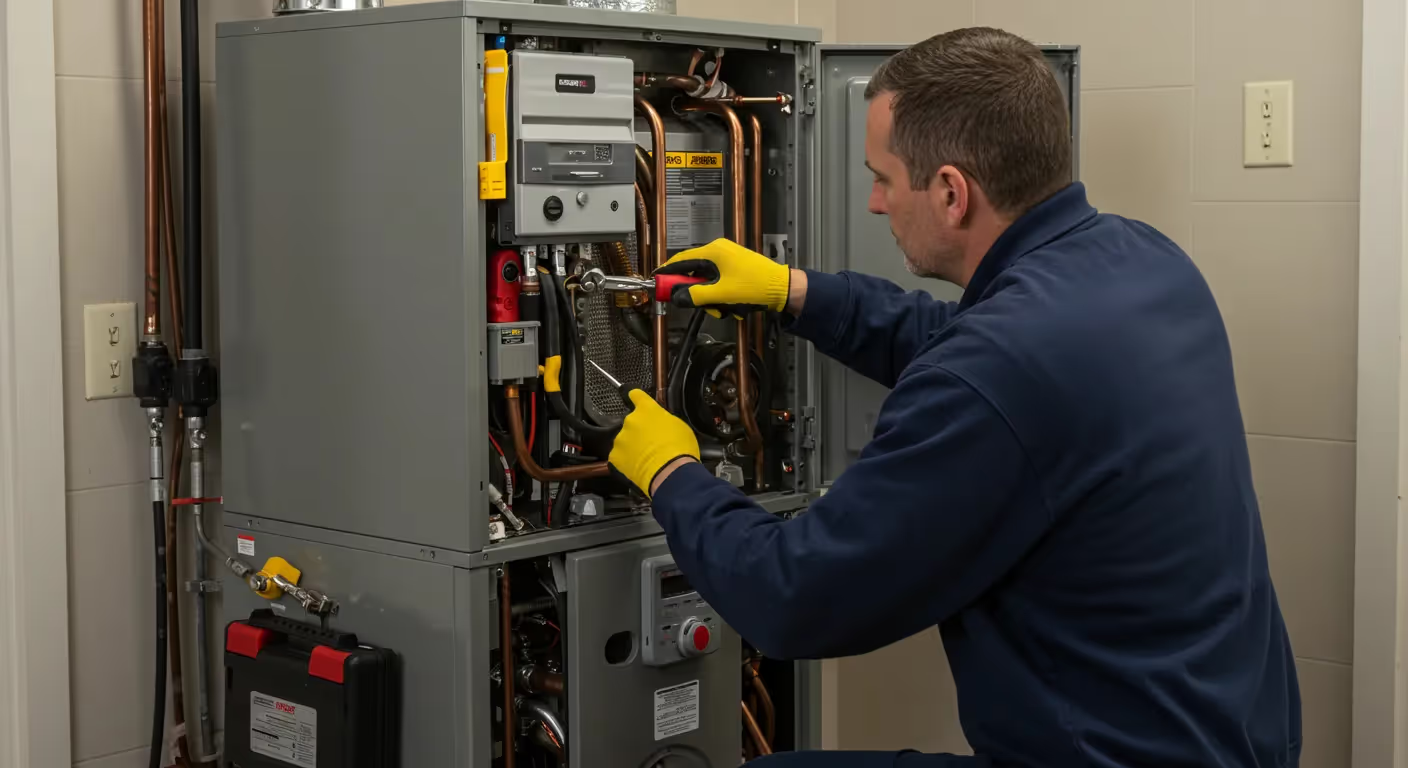
A thorough furnace inspection involves a systematic examination of the entire heating system. The goal is to verify that every component is functioning within the manufacturer’s specifications. This process goes far beyond changing a filter. It requires a licensed technician to physically test, measure, and inspect the critical mechanical and electrical parts of the unit.
The Combustion System
The heart of a gas furnace is the combustion area. Technicians focus heavily here to ensure safety and proper firing.
- Inspect the heat exchanger for cracks, rust, or separation.
- Check the burners for proper ignition and flame color (a blue flame indicates efficient combustion; yellow can indicate a problem).
- Test the gas pressure to ensure it matches the unit’s specifications.
- Verify the operation of the pilot light or hot surface igniter.
- Examine the flue pipe and venting system for blockages, leaks, or corrosion that could impede exhaust flow.
Electrical Components and Controls
Modern furnaces rely heavily on electronics to manage the heating cycle. Loose connections or worn parts can cause intermittent failures.
- Tighten all electrical connections and measure voltage and amperage on motors.
- Test the thermostat for calibration and communication with the unit.
- Inspect the safety controls, including the high-limit switch, which prevents the unit from overheating.
- Check the flame sensor to ensure it accurately detects when the fire is lit.
Airflow and Blower Assembly
Proper airflow is essential for transferring heat from the furnace to your rooms. Restricted airflow causes overheating and reduces efficiency.
- Inspect the blower motor and wheel for dust buildup and proper rotation.
- Lubricate moving parts if the motor is not a sealed bearing type.
- Check the belt condition and tension (on belt-driven motors).
- Assess the condition of the air filter and the filter housing.
- Verify that supply and return air plenums are sealed and not leaking air.
Understanding Your Furnace Inspection Results
Once the inspection is complete, you receive a detailed status report. This document categorizes the findings to help you prioritize your next steps. Understanding this report is vital for planning your budget and ensuring home safety.
- Immediate Safety Hazards: These are critical issues that pose a direct threat to your home or health. If a technician discovers a cracked heat exchanger or a significant gas leak, the unit may need to be shut down immediately. In the industry, this is often referred to as "red-tagging" a unit. Operating a furnace with these defects carries a high risk of fire or carbon monoxide poisoning. Corrective action, whether a major repair or a system replacement, is non-negotiable in these scenarios.
- Operational Deficiencies: These findings indicate that the system is working, but not properly. Examples include a weak capacitor, a dirty flame sensor, or a blower motor drawing too many amps. While the furnace might still heat your home, these parts are likely to fail soon, potentially causing a breakdown on a freezing night. addressing these issues proactively prevents emergency service calls later.
- Efficiency Recommendations: These are optional improvements that help the system run better but are not safety-critical. This might include recommendations for a higher-quality filtration system, duct cleaning, or a programmable thermostat upgrade. These suggestions focus on long-term comfort and energy savings rather than immediate repair needs.
Carter Heating and Cooling ensures that every report is explained clearly, allowing you to ask questions and understand the technical condition of your equipment before making any financial commitment.
Deciding Between Repair or Replacement: Insights and Tips
One of the most difficult decisions a homeowner faces following an inspection is whether to pour money into repairs or invest in a new system. This decision relies on several variables, including the age of the unit, the cost of the repair, and the anticipated remaining lifespan of the furnace.
- The Age Factor: The average lifespan of a gas furnace is typically between 15 and 20 years. If your unit is approaching or has surpassed the 15-year mark, major repairs are often not cost-effective. Parts become harder to source, and the efficiency of the unit is likely far below modern standards. Conversely, if the unit is under 10 years old, repair is usually the most logical path unless the cost is astronomical.
- The Cost of Repair vs. Replacement: A common industry benchmark used to aid decision-making is the "$5,000 Rule." Multiply the age of the furnace by the estimated cost of the repair. If the total exceeds $5,000, replacement is generally the wiser investment. For example, if a 12-year-old furnace requires a $500 repair (12 x 500 = 6,000), it may be time to replace. If a 5-year-old furnace needs a $600 repair (5 x 600 = 3,000), repairing is the better option.
- Efficiency Gains: Older furnaces often operate at 70% to 80% AFUE (Annual Fuel Utilization Efficiency), meaning 20 to 30 cents of every dollar spent on gas goes up the chimney. Modern high-efficiency units can reach ratings of 95% to 98%. If your current bills are high, the monthly savings from a new unit can offset the cost of installation over time.
- Frequency of Breakdowns: If you find yourself calling for service multiple times a year, the system has likely become unreliable. The cumulative cost of frequent minor repairs often exceeds the monthly payment of a financed new system. A one-time inspection that reveals multiple failing components is a strong signal that the unit has reached the end of its serviceable life.
Local Climate Considerations for Furnace Efficiency
The climate in this region specifically impacts how heating systems degrade and perform. Brownsville falls into a humid subtropical zone, which presents unique challenges for HVAC equipment compared to drier, colder climates.
- Humidity and Rust: The area receives substantial rainfall, averaging between 50 and 55 inches annually. High humidity levels, even in the shoulder seasons of spring and fall, can lead to moisture accumulation within the system components. This is particularly true for furnaces located in unconditioned spaces like crawl spaces, attics, or basements. Metal components, including the cabinet, burners, and electrical contacts, are susceptible to premature oxidation and rust. An inspection must verify that moisture has not compromised the structural integrity of the unit.
- Temperature Fluctuations: Our winters are generally mild but are punctuated by short, sharp freezes. This leads to "short cycling," where the furnace turns on and off frequently to maintain temperature. Short cycling puts significant stress on the igniter and the blower motor. Unlike systems in the deep north that run continuously, local systems endure constant start-stop stress, which can wear out electronic controls faster.
- Severe Weather Impact: Spring and summer storms often bring lightning and power surges. Even if the furnace is off during a summer storm, it is still connected to the electrical grid. Surges can damage the circuit board, which may go unnoticed until you try to turn the heat on in late autumn. Furthermore, localized flooding can impact basement or crawl space units. If water has ever risen around the base of your furnace, a professional inspection is mandatory before operation to ensure safety controls have not been water-damaged.
Why Choose Us: Our Commitment and Expertise
Selecting a service provider is about trust and technical competency — read our reviews. You need a team that understands the specific make and model of your equipment and treats your home with respect. We do not rely on guesswork; we rely on diagnostic data and industry best practices.
- Licensed and Trained Technicians: Every technician on our team undergoes rigorous training to stay current with the latest furnace technologies and safety codes. We are equipped to handle all major brands and models, ensuring that the inspection is accurate regardless of the equipment age.
- No-Hype Assessments: We believe in providing direct, honest answers. If a system can be repaired safely, we will provide that option. We do not push for replacements when a simple fix will restore functionality. Our reports are factual, giving you the power to choose the solution that fits your budget and long-term plans.
- Comprehensive System Checks: We do not cut corners. Our inspection process follows a strict checklist to ensure no component is overlooked. From the thermostat on your wall to the flue pipe on your roof, we trace the entire heating cycle to guarantee your system is ready for whatever the weather brings.
If you want peace of mind knowing your heating system is safe, efficient, and ready for the cold, do not wait for a breakdown to occur. Proactive maintenance is the key to consistent comfort and lower energy bills.
Secure your appointment for a furnace inspection today and ensure your home remains warm and safe all winter long.

Great Service at a Fair Price
Veterans Discount


Senior Discount

Law Enforcement

Fire fighters/ems

Hear From Your Neighbors!
Hear from your neighbors to see how our commitment to dependable service and lasting comfort has made a difference in their homes.