

How can we help today?
Choose an option to see quick actions and get help faster.Heat Pump Tune-up in Brownsville, KY
Heat Pump Tune-up in Brownsville, KY
Experience improved heat pump performance with our professional maintenance services in Brownsville. Schedule a tune-up today to ensure year-round comfort!
Eliminate Inefficient Heat Pump Performance
Is your heat pump failing to provide the comfort you need during Brownsville’s varying seasonal extremes? A professional tune-up can enhance efficiency and extend the life of your system, ensuring your home remains comfortable regardless of the weather outside. Contact us today to schedule a comprehensive system analysis and restore your peace of mind.
Carter Heating and Cooling specializes in thorough preventative maintenance designed to catch small issues before they evolve into costly breakdowns.
- Ensure optimal operational efficiency with a comprehensive check-up.
- Reduce unexpected breakdown risks with preventive maintenance.
- Extend your heat pump's lifespan through expert servicing.
All services are performed by certified technicians, with extended warranties available to guarantee your peace of mind.
Comprehensive Heat Pump Maintenance Scope
A heat pump is a sophisticated piece of equipment that handles both heating and cooling duties, meaning it works twice as hard as a standalone furnace or air conditioner. Because it operates nearly year-round, components wear down faster, and calibration drifts over time. A professional tune-up is not merely a visual inspection; it is a rigorous process of cleaning, testing, and calibrating the system to manufacturer specifications.
When a technician arrives at your property, the focus is on restoring the unit to factory-fresh conditions to the extent possible. This service goes far beyond changing a filter. It involves a systematic examination of the three main categories of heat pump operation: electrical, mechanical, and airflow.
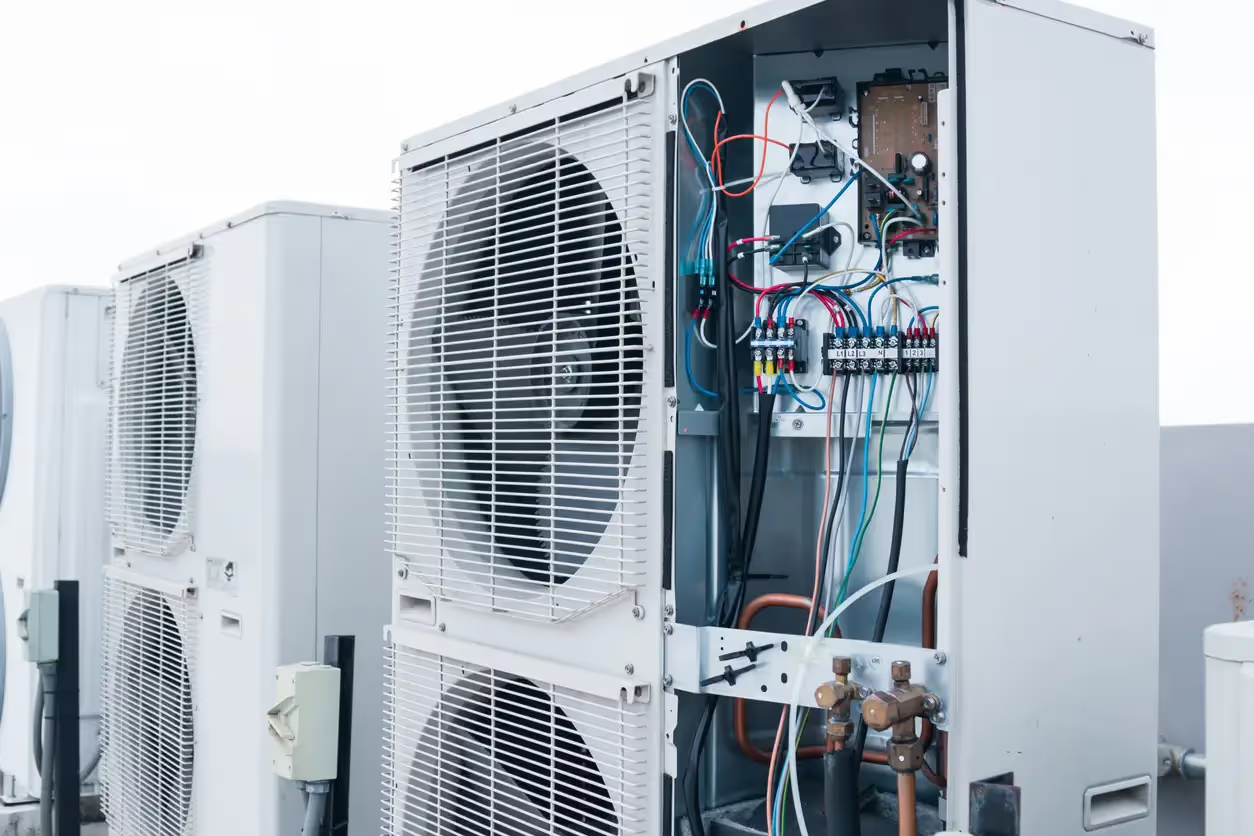
Electrical Component Testing and Safety
Electrical failure is a leading cause of heat pump malfunctions. Over time, vibrations can loosen connections, and heat can degrade wires. During a maintenance visit, technicians perform the following electrical checks:
- Tighten all electrical connections to prevent arcing and overheating, which can melt wires and damage the compressor.
- Measure voltage and amperage on all motors and the compressor to ensure they are drawing the correct amount of power.
- Inspect the defrost board and controls to verify the system can correctly switch between heating and cooling modes.
- Test the capacitor capabilities to ensure they can provide the necessary starting torque for the motors.
- Check the thermostat calibration to ensure the temperature reading matches the actual room temperature, preventing the system from overworking.
Mechanical and Refrigerant Analysis
The mechanical components are the heart of the system. If the refrigerant levels are incorrect or the moving parts are not lubricated, the system efficiency plummets.
- Monitor refrigerant pressure levels to detect leaks or improper charge, which is critical for heat pump efficiency.
- Measure superheat and subcooling to guarantee the refrigerant is changing states effectively within the coils.
- Lubricate all moving parts, such as fan motor bearings, to reduce friction and electricity consumption.
- Inspect the reversing valve, a critical component specific to heat pumps that allows the unit to switch the directional flow of refrigerant.
- Check the compressor contactor for pitted or burned surfaces that could impede power flow.
Airflow and Coil Cleaning
Proper airflow is non-negotiable for a heat pump. If air cannot move across the coils, heat exchange cannot happen, leading to high energy bills and potential system freezing.
- Clean the outdoor condenser coil to remove dirt, grass clippings, and debris that act as insulation and trap heat.
- Inspect the indoor evaporator coil for dust buildup or mold growth that restricts airflow and reduces indoor air quality.
- Check the blower motor and wheel for debris accumulation that can throw the wheel off balance and cause noise.
- Evaluate the condition of the air filter and recommend replacement if it is clogged.
- Clear the condensate drain line to prevent water backups that can trigger safety switches or cause water damage to the home.
The Operational Process and Timeline
Understanding what happens during a service appointment helps homeowners plan their day. A standard high-quality tune-up typically requires between 60 to 90 minutes per unit, depending on the accessibility of the equipment and the level of cleaning required.
The process begins with a discussion about any specific comfort issues you have noticed, such as hot or cold spots in the home or unusual noises. Following this, the technician proceeds to the thermostat to check system operation in both modes. The majority of the work takes place at the outdoor unit and the indoor air handler.
Upon completion, you receive a detailed report of the system’s health. This report categorizes the findings into three areas:
- Items that are in good working order.
- Items that require monitoring but do not need immediate action.
- Critical issues that require repair to prevent immediate failure.
This transparency allows you to make informed decisions about your property without pressure. The goal is to leave you with a system that operates quietly, effectively, and efficiently.
Comparing Repair vs. Replacement
Homeowners often face the dilemma of whether to continue maintaining an aging unit or to invest in a replacement. A tune-up is the best time to evaluate the longevity of your current system. While maintenance extends the life of the equipment, there is a distinct point where replacement becomes the more financially sound option.
When to Prioritize Repair and Maintenance
If your system is under ten years old and has been generally reliable, maintenance and minor repairs are usually the correct path.
- The unit is still under a manufacturer’s warranty, covering the cost of major parts.
- The cost of the repair is less than 50% of the value of the system.
- The system uses modern refrigerant (R-410A) and does not require an expensive retrofit.
- You plan to move in the near future and simply need the system to operate correctly for the sale.
- The breakdown is an isolated incident caused by a specific part failure rather than systemic wear and tear.
When to Consider System Replacement
As heat pumps age, their efficiency drops significantly compared to modern standards. Keeping an old unit running can sometimes cost more in energy bills and repairs than the monthly payment on a new system.
- The heat pump is over 12 to 15 years old, nearing the end of its expected service life.
- The system requires frequent repairs, or "one thing after another" keeps breaking.
- You are facing a major component failure, such as a compressor or leaking coil, out of warranty.
- Your energy bills are rising despite weather usage remaining consistent.
- The system uses obsolete refrigerant (R-22), which has become prohibitively expensive to restock.
- The indoor environment is uncomfortable, with high humidity levels or inconsistent temperatures.
Local Climate Considerations in Brownsville
Operating a heat pump in Brownsville, KY, presents specific challenges due to the regional climate. The area experiences hot, humid summers with temperatures frequently reaching the upper 80s and low 90s, alongside mild but occasionally freezing winters. This dual demand places significant stress on heat pumps, which must perform effectively in both extremes.
Managing Humidity and Rainfall
Brownsville sees approximately 50 inches of annual rainfall, with spring and early summer being particularly wet. This moisture load affects heat pump performance in two ways.
• First, high outdoor humidity means the system must work harder in summer to remove latent heat (moisture) from inside the home. If the coils are dirty, the system cannot dehumidify effectively, leading to a clammy indoor environment.
• Second, the wet spring season accelerates the growth of organic matter like algae and mold on the outdoor condenser coils. A tune-up in the spring is essential to clear this biological growth before the high heat of summer arrives.
Thunderstorms and Electrical Surges
The region is susceptible to thunderstorms, particularly in the transition seasons. These storms bring lightning and power fluctuations. Heat pumps contain sensitive electronics, including circuit boards and variable speed motors.
- Regular maintenance checks the grounding and the tightness of electrical connections.
- Loose connections create resistance, which generates heat; when combined with a power surge, this can be catastrophic for the equipment.
- Technicians can also inspect surge protectors or recommend installation if the system is currently unprotected against local grid fluctuations.
Winter Defrost Cycles
While winters are generally mild, temperatures do drop below freezing. Heat pumps utilize a defrost cycle to melt ice off the outdoor coil during winter operation. If the defrost sensors or control board are drifting out of calibration, the unit may ice up completely, stopping heat production. Carter Heating and Cooling technicians verify the defrost operation to ensure your home stays warm during the occasional cold snaps without relying excessively on expensive emergency heat strips.
Why Professional Service Matters
Attempting to service a heat pump without professional training can lead to dangerous situations and voided warranties. Heat pumps involve high-voltage electricity, high-pressure refrigerant gases, and rapidly rotating components. Professional technicians possess the specific gauges, meters, and tools required to diagnose issues that are invisible to the naked eye.
Accurate Refrigerant Charging
One of the most critical aspects of heat pump efficiency is the refrigerant charge.
- Undercharged systems cannot absorb enough heat from the outside air in winter or reject enough heat in summer.
- Overcharged systems run with dangerously high pressures that can destroy the compressor valves.
- Precise charging requires calculating the target superheat and subcooling based on the indoor and outdoor ambient conditions at the exact moment of service.
Warranty Compliance
Most equipment manufacturers require proof of annual maintenance to keep warranties valid. If a compressor fails in year four of a ten-year warranty, the manufacturer may request service records.
- A professional invoice serves as legal proof that the system was maintained according to the terms of the warranty.
- Skipping professional maintenance puts the homeowner at risk of paying full price for parts that should have been covered.
Optimization for Energy Savings
The primary reason most homeowners schedule a tune-up is to control energy costs. A neglected heat pump can consume 10% to 25% more energy than a well-maintained unit. Because the system runs for a large portion of the year in Brownsville, that inefficiency compounds quickly on monthly utility bills.
Dirty coils act as insulators. When the outdoor coil is dirty, the system struggles to release heat in the summer and absorb heat in the winter. This forces the compressor to run at higher pressures and for longer durations to achieve the thermostat setpoint. By cleaning the transfer surfaces and ensuring proper airflow, the system moves heat with less electrical resistance.
Furthermore, correct airflow is vital. If a filter is clogged or a blower wheel is dirty, the volume of air moving over the indoor coil decreases. In summer, this can cause the coil to freeze into a block of ice. In winter, it causes the system to overheat and shut down on high-limit safeties. Regular airflow adjustments ensure the system operates within its designed temperature rise and fall parameters, maximizing every kilowatt of electricity purchased.
Secure Your Comfort and Efficiency
Your heat pump is the most utilized appliance in your home, responsible for your comfort through humid summers and chilly winters. Waiting for a breakdown results in discomfort, higher repair bills, and the stress of emergency scheduling. Proactive care is the only way to ensure consistent performance and lower operational costs.
Take control of your home’s climate today. A professional inspection identifies hidden issues, optimizes energy consumption, and extends the operational life of your investment. Reach out to our team now to book your heat pump tune-up and ensure your system is ready for the season ahead.

Great Service at a Fair Price
Veterans Discount


Senior Discount

Law Enforcement

Fire fighters/ems

Hear From Your Neighbors!
Hear from your neighbors to see how our commitment to dependable service and lasting comfort has made a difference in their homes.