

How can we help today?
Choose an option to see quick actions and get help faster.Smart Thermostat Inspection in Oakland, KY
Smart Thermostat Inspection in Oakland, KY
Discover efficient ductless HVAC solutions with Carter Heating and Cooling in Oakland. Schedule your home assessment today for tailored climate control.
Eliminate Uncomfortable Temperature Fluctuations With Precision Ductless Systems
Whether you are trying to effectively heat your home through the chilly winters or need a reliable respite from the humid Kentucky summers, your comfort should not be a luxury dependent on outdated ductwork. Carter Heating and Cooling provides rapid, efficient ductless solutions that deliver targeted climate control to Oakland homes without the invasive construction associated with traditional HVAC retrofits. Contact us immediately to schedule a site assessment or call to discuss our available financing options.
We understand that homeowners require a system that solves inconsistent room temperatures immediately. Our installation process focuses on minimizing disruption while maximizing energy efficiency.
- Experience immediate relief from hot and cold spots with same-day or next-day installation capabilities.
- Enjoy significantly lower energy bills by utilizing high-efficiency inverter technology that adjusts to demand.
- Tailor your home's comfort zone with multi-room control systems that allow different temperatures in different spaces.
All installations are backed by comprehensive labor warranties and flexible financing options to ensure your project fits your budget.
Comprehensive Ductless Solutions: What Is Included
When you commit to a ductless mini-split installation, you are purchasing a complete climate control ecosystem designed to bypass the inefficiencies of central air ductwork. The primary advantage of this system is the separation of the noisy compressor from the indoor handling unit, connected only by a small conduit. This design eliminates the energy loss associated with duct leakage, which can account for up to 30% of energy consumption in traditional forced-air systems.
A standard installation package includes the outdoor condenser unit, which houses the compressor and acts as the heat exchanger. This unit is compact and typically sits on a concrete pad or is mounted to the exterior wall using specialized brackets to keep it elevated above potential snow lines or debris. Inside the home, you receive one or more air handling units. While the high-wall mount is the most common, options also include floor-mounted consoles or ceiling cassettes, depending on the architectural constraints of the room.
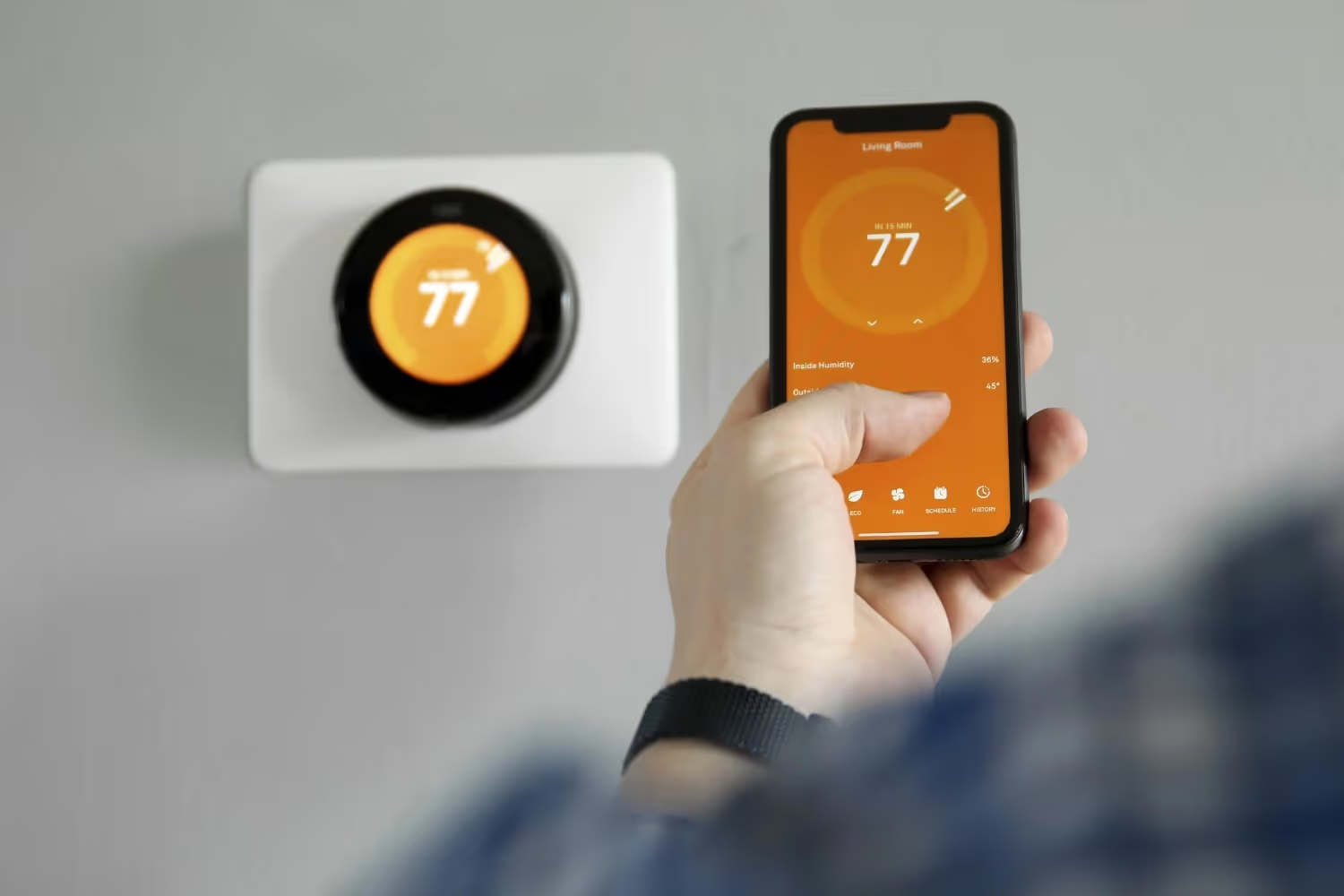
The connection between these two main components is the line set—a pair of insulated copper pipes that circulate refrigerant, accompanied by power wiring and a condensate drain line. We encase these exterior lines in durable line hide covers to protect them from weather damage and UV rays, ensuring a clean aesthetic on the side of your home. You also receive a handheld remote control or a wall-mounted thermostat interface, allowing for precise temperature management, dehumidification modes, and fan speed adjustments.
The Installation Process: From Assessment to Operation
We follow a rigorous, technical protocol to ensure your system operates at peak efficiency for years to come. Unlike window units that leave gaps for air leakage, a permanent ductless installation creates a sealed, secure, and highly efficient thermal barrier.
- Load Calculation and Site Selection: The process begins with a calculation of the heating and cooling load required for the specific room or zone. We assess square footage, insulation levels, window orientation, and local climate data for Oakland. We then identify the optimal wall placement for the indoor unit to ensure even air distribution and proper drainage.
- Structural Preparation: Technicians install a heavy-duty mounting plate on the interior wall, ensuring it is perfectly level. This is critical for the proper operation of the condensate drain; an unlevel unit can lead to water leakage inside the home. A three-inch hole is drilled through the wall to the exterior, angled slightly downward to facilitate gravity drainage.
- Line Set and Electrical Connection: The refrigerant lines, control wire, and drain tubing are bundled and fed through the wall penetration. Outside, these lines are connected to the condenser unit. We utilize a torque wrench to tighten flare nuts to manufacturer specifications, preventing refrigerant leaks that compromise performance.
- Pressure Testing and Evacuation: Before releasing refrigerant into the system, we perform a nitrogen pressure test to confirm the integrity of the sealed system. Following this, a vacuum pump removes all moisture and air from the lines. This step is non-negotiable; moisture inside the lines can freeze or cause acid formation, destroying the compressor.
- System Startup and Calibration: Once the vacuum holds, we release the refrigerant and power up the system. We test all operating modes—cooling, heating, dry, and fan-only—and verify that the temperature differential between intake and discharge air meets technical standards.
Determining When Replacement Beats Repair
Homeowners often struggle with the decision to repair an existing window unit, an older mini-split, or a failing central system versus investing in a new ductless installation — read our blog for more tips. There are specific technical markers that indicate a replacement is the more financially sound decision.
If your current cooling method relies on window units, you are likely overpaying for electricity. Window units typically have low efficiency ratings and compromise home security by leaving windows unlocked or easily accessible. Furthermore, the noise output of a window unit is significantly higher than a split system. Replacing these with a permanent ductless solution offers a return on investment through utility savings and increased property value.
For existing older mini-splits, the decision often comes down to the compressor and the availability of refrigerant. If your system utilizes R-22 refrigerant (which is phased out), a major repair involving a refrigerant leak or compressor failure is rarely cost-effective. The cost of the obsolete refrigerant alone often approaches the down payment on a modern, R-410A or R-32 system.
Additionally, consider the age of the technology. Modern ductless systems utilize inverter-driven compressors. Unlike older rotary compressors that simply turn on and off—causing energy spikes and temperature swings—inverter compressors ramp up and down smoothly to maintain a constant temperature. If your current system lacks this technology, upgrading provides immediate comfort and efficiency gains.
Navigating Local Requirements and Climate Factors
Installing mechanical systems in Kentucky requires adherence to specific local codes and an understanding of the regional climate profile. The humidity levels in our region during summer can be oppressive, meaning your system must be sized not just for sensible cooling (lowering temperature) but also for latent cooling (removing moisture). A unit that is oversized will cool the room too quickly without running long enough to dehumidify, leaving the space feeling clammy. We size units precisely to balance temperature drop with humidity control.
- Electrical Permitting and Safety: Local codes typically require a dedicated electrical circuit for the outdoor unit. This involves installing a disconnect box within sight of the condenser unit to ensure safety during maintenance. We ensure all wiring meets the National Electrical Code (NEC) standards enforced in the area, preventing circuit overloads and fire hazards.
- Winter Performance Considerations: While summers are hot, winters in the region can drop below freezing. Not all heat pumps are created equal. We select units with "low ambient" heating capabilities. These systems are designed to extract heat from the outside air even when temperatures dip significantly, ensuring you have a reliable primary heat source without needing backup electric strips.
- Condensate Management: Given the humidity, the system will generate a significant amount of condensate water. We route drain lines away from the home’s foundation or walkways to prevent algae growth or slip hazards. In some installation scenarios where gravity drainage isn't possible, we install condensate pumps to move the water to an appropriate drain location.
Technical Advantages of Zoned Configurations
One of the most compelling reasons to choose this technology is the ability to create distinct climate zones. In a traditional forced-air system, a single thermostat dictates the temperature for the entire house. This often leads to "thermostat wars" or energy waste as you cool empty rooms just to make the living room comfortable.
With a multi-zone ductless setup, a single outdoor compressor can support up to eight indoor units, depending on the model. Each indoor unit operates independently. You can keep the master bedroom at a cool 68 degrees for sleeping while the unoccupied guest room remains at 78 degrees. This granularity of control is impossible with standard central HVAC without expensive zoning retrofits.
This approach is particularly effective for homes with additions, finished basements, or second stories that always seem hotter than the ground floor. By placing a dedicated air handler in these problem areas, you bypass the limitations of your existing ductwork, which may not have been designed to handle the extra load of a renovation or the physics of rising heat.
Understanding Efficiency Ratings and ROI
When evaluating your options, you will encounter metrics like SEER (Seasonal Energy Efficiency Ratio) and HSPF (Heating Seasonal Performance Factor). These are not just marketing numbers; they are direct indicators of your future operating costs.
Federal standards mandate minimum efficiency ratings, but ductless systems generally far exceed these minimums. A standard central air conditioner might have a SEER rating of 14 or 16. Our high-performance ductless units can reach SEER ratings of 20, 25, or even higher.
The higher the SEER, the less electricity the unit requires to provide the same amount of cooling. For a homeowner in Oakland, moving from a 10-SEER window unit to a 22-SEER mini-split can cut cooling costs by more than half. The inverter technology plays a massive role here. Because the compressor rarely runs at 100% capacity once the room reaches the set temperature, it sips electricity rather than guzzling it. This efficiency extends to heating as well, where the system transfers heat rather than generating it, offering a much lower cost of operation compared to electric baseboard heaters or space heaters.
Maintenance Protocols for Longevity
To protect your investment and ensure the warranty remains valid, specific maintenance tasks must be performed. Ductless systems have different maintenance needs than central systems due to the location of the air handlers and the density of the filtration mesh.
- Filter Maintenance: The filters in a ductless head are located directly behind the front panel. Because these units process air right in the living space, they capture significant amounts of dust and dander. These reusable mesh filters should be rinsed and dried monthly to prevent airflow restriction, which can freeze the coil and reduce efficiency.
- Coil Cleaning: Over time, the evaporator coil inside the home and the condenser coil outside can accumulate grime. This layer of dirt acts as an insulator, preventing the refrigerant from absorbing or releasing heat effectively. Professional deep cleaning involves using a bib kit to wash the interior coils without making a mess, restoring the unit to factory performance levels.
- Blower Wheel Inspection: The cylindrical fan inside the wall unit can collect dust on its blades, throwing it off balance and causing noise or vibration. Periodic inspection and cleaning of the blower wheel ensure whisper-quiet operation.
Optimizing Home Comfort
Choosing the right system involves more than just picking a brand; it requires a professional assessment of your home's thermal envelope and your family's usage patterns. Whether you are converting a garage into a workshop, treating a hot sunroom, or outfitting a historic home that lacks space for ducts, we have the technical expertise to design a solution that fits.
By opting for a professional installation, you avoid the pitfalls of amateur sizing and improper refrigerant handling. You gain a partner in home comfort that understands the specific challenges of the local weather patterns.
Carter Heating and Cooling is dedicated to providing superior climate control solutions that offer lasting value and immediate comfort. Improve your home's energy efficiency and eliminate temperature battles today.
Upgrade Your Home Comfort with Precision Control
A ductless mini-split system offers immediate relief from fluctuating temperatures, lower energy bills, room-by-room control, and whisper-quiet performance. With expert sizing, careful installation, and strong warranties, Carter Heating and Cooling ensures your upgrade delivers lasting comfort and efficiency.
Contact us now to secure your installation date and take control of your indoor climate.

Great Service at a Fair Price
Veterans Discount


Senior Discount

Law Enforcement

Fire fighters/ems

Hear From Your Neighbors!
Hear from your neighbors to see how our commitment to dependable service and lasting comfort has made a difference in their homes.