
How can we help today?
Choose an option to see quick actions and get help faster.Emergency Repair in Oakland, KY
Emergency Repair in Oakland, KY
For immediate heating and cooling repairs in Oakland, KY, rely on our expert technicians. Available 24/7, no hidden fees. Contact us now for emergency help!
When your HVAC system fails unexpectedly, it is more than a mere inconvenience; it becomes a crisis that threatens your home’s safety and comfort. In Oakland, KY, where seasonal extremes can be harsh, a broken furnace in January or a failed AC in July requires immediate professional attention. For urgent assistance, contact us today for emergency service.
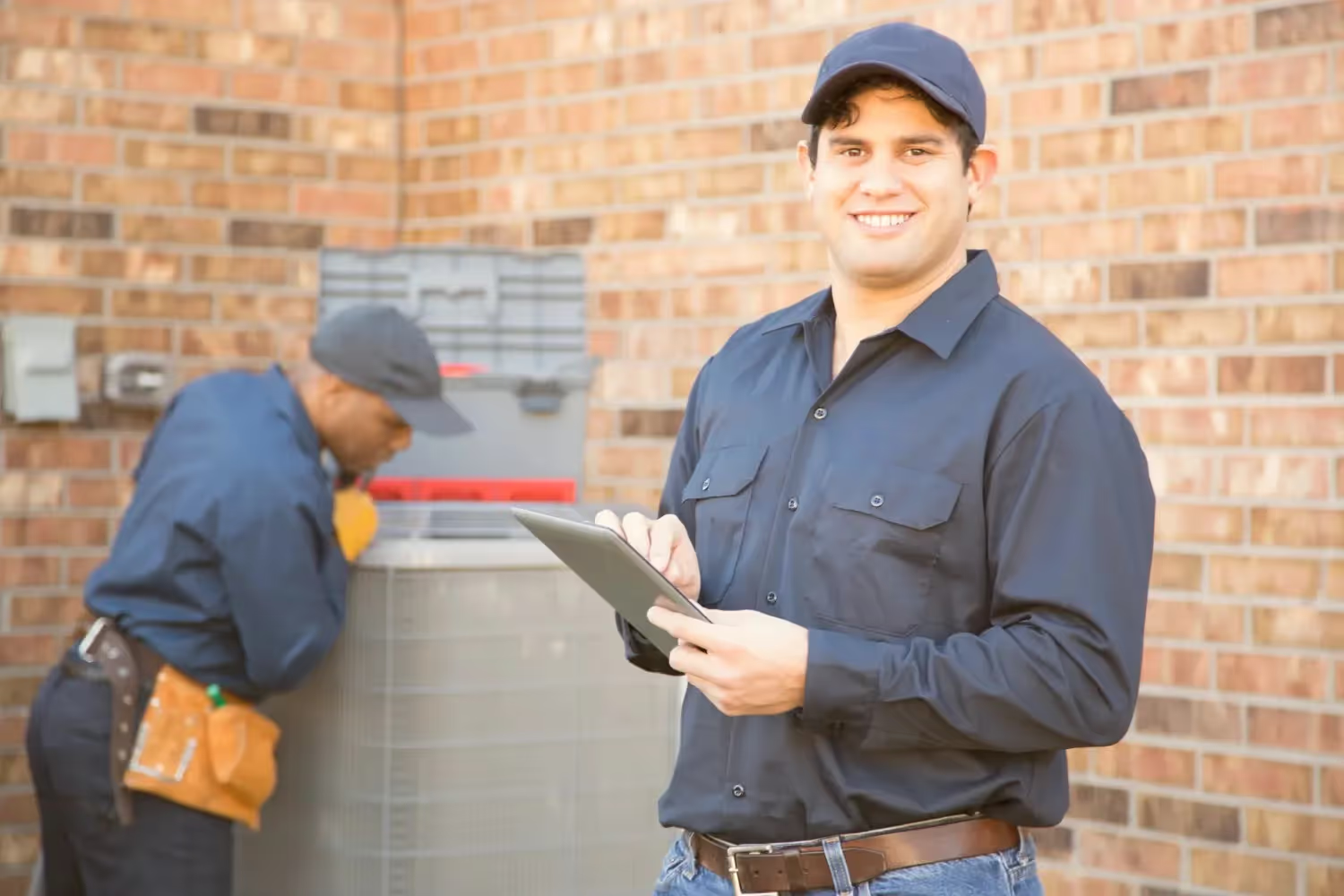
Carter Heating and Cooling provides rapid, dependable service to resolve your emergency swiftly and restore your home environment:
- Immediate 24/7 response to emergency repair calls regardless of the hour.
- Expert technicians onsite to diagnose and fix the issue.
- No hidden charges, straightforward service pricing provided before work begins.
Fully licensed and insured for peace of mind, with transparent pricing and quality guarantees.
What to Expect from Emergency Repair Services
When a heating or cooling system malfunctions during extreme weather, the priority shifts from general maintenance to rapid triage and stabilization. Emergency repair service differs from standard service calls because the timeline is accelerated. The goal is to address immediate safety hazards, prevent damage to the home (such as frozen pipes during a heating failure), and restore liveable temperatures as quickly as possible.
Residents in Oakland can expect a streamlined approach where the technician arrives with a fully stocked vehicle aimed at resolving common failure points in a single visit. This service covers a wide array of critical system failures. This includes furnaces that refuse to ignite, air conditioners blowing warm air, refrigerant leaks, electrical failures within the unit, and strange odors indicating burning components or gas leaks.
The scope of an emergency visit focuses on the root cause of the breakdown. Technicians do not waste time on upsells or unrelated cosmetic issues. They focus on the mechanical and electrical integrity of the system. Whether it is a capacitor failure that has stopped the condenser fan or a cracked heat exchanger that poses a carbon monoxide risk, the focus is on neutralizing the threat and getting the system back online.
Cooling System Emergencies
During the humid summers characteristic of this region, a cooling failure is a health risk. Emergency services for cooling systems typically address:
- Refrigerant Leaks: Low refrigerant levels often indicate a leak that can freeze up the evaporator coil and damage the compressor.
- Electrical Component Failure: Blown capacitors, contactors, or fuses often cause the outdoor unit to stop running even while the indoor fan blows warm air.
- Condensate Drain Clogs: If the drain line blocks, water can back up, triggering a safety float switch that shuts the system down to prevent water damage to your home.
- Frozen Evaporator Coils: Airflow restrictions or low refrigerant can cause the coil to turn into a block of ice, halting all cooling capacity.
Heating System Emergencies
Winter failures carry the risk of freezing plumbing and severe discomfort. Emergency heating repairs generally involve:
- Ignition Failures: Modern furnaces use hot surface igniters or spark igniters; if these fail, the furnace will not produce heat.
- Flame Sensor Issues: If the sensor becomes dirty or fails, the system will shut down gas flow as a safety precaution.
- Blower Motor Failure: If the motor that circulates air fails, heat builds up in the exchanger, causing the system to limit out and shut down to prevent overheating.
- Thermostat Loss of Communication: Sometimes the issue is not the unit itself, but the control center failing to signal the equipment.
The Emergency Repair Process: How It Works
Understanding the sequence of events during an emergency call helps reduce anxiety during a stressful situation. The process is designed to be efficient, transparent, and focused on results.
- Initial Triage and Dispatch: When a request is logged, the dispatch team assesses the severity of the issue. Priority is often given to situations involving complete system failure during extreme temperatures or potential safety risks like gas odors. A technician is routed to the home with details regarding the symptoms described.
- On-Site Diagnostics: Upon arrival, the technician performs a systematic evaluation. This involves using advanced diagnostic tools such as multimeters to check electrical flow, combustion analyzers for furnaces, and manifold gauges for refrigerant pressure. The objective is to isolate the specific component that has failed. Carter Heating and Cooling technicians are trained to look beyond the symptom to ensure the underlying cause is identified.
- Clear Explanation and Quote: Once the problem is identified, the technician provides a clear explanation of what is wrong and presents options for repair. This includes a breakdown of parts and labor. Work does not commence until the homeowner approves the specific repair plan. This ensures there are no surprise costs at the end of the service.
- Execution of Repair: The technician proceeds with the repair using OEM (Original Equipment Manufacturer) or high-quality universal parts. This might involve replacing a compressor, swapping out an igniter, clearing a condensate trap, or repairing electrical wiring. The focus is on a permanent fix rather than a temporary patch, whenever possible.
- System Testing and Validation: After the repair is complete, the system is not just turned on; it is tested. The technician measures temperature differentials (the difference between air going in and coming out) to ensure the unit is heating or cooling effectively. They also check safety limits and cycle the system to ensure it starts and stops correctly.
- Site Cleanup: The service area is left clean. Old parts, packaging, and debris are removed by the technician.
Repair vs. Replace: Making the Right Decision Under Pressure
In an emergency situation, the pressure to simply "fix it now" is high. However, pouring money into a failing asset is not always the most prudent financial decision. Homeowners must weigh the immediate cost of repair against the long-term reliability of the system. Technicians provide data to help make this decision, but knowing the criteria beforehand is helpful.
- The 50% Rule: A common industry standard is the 50% rule. If the cost of the emergency repair approaches or exceeds 50% of the value of a new system, replacement is generally the better option. For example, replacing a compressor in an old unit is a major expense. If that cost is half the price of a brand-new, high-efficiency unit with a warranty, repair is rarely recommended.
- Age of the Equipment: HVAC systems have a finite lifespan. Air conditioners generally last 10 to 15 years, while furnaces may last 15 to 20 years.
- If a unit is over 12 years old and requires a major repair, replacement should be strongly considered.
- Older units use outdated refrigerants (like R-22) which are expensive and difficult to source. Investing in a system that uses modern refrigerant is often more cost-effective.
- Frequency of Breakdowns
- If the system has required multiple repairs over the last two years, it has likely entered the "breakdown phase" of its lifecycle. An emergency repair today may fix the immediate issue, but another component is likely to fail soon. Cumulative repair costs often exceed the monthly investment of a new system.
- Safety Concerns:Safety is the ultimate dealbreaker. If a furnace has a cracked heat exchanger, it cannot be repaired safely; it must be replaced to prevent carbon monoxide poisoning. Similarly, if a system has severe electrical issues that pose a fire hazard, replacement is the only responsible path.
Local Factors Impacting HVAC Systems in Oakland
Operating heating and cooling equipment in Oakland, KY presents specific challenges due to the regional climate and infrastructure. Understanding these local factors explains why systems fail and how repairs are approached.
- Seasonal Humidity and Heat Load: The region experiences significant humidity during the summer months. This places a heavy latent load on air conditioners, meaning they must work harder to remove moisture from the air before they can effectively lower the temperature. This strain frequently leads to capacitor failures and frozen coils if airflow is even slightly restricted. Emergency repairs often involve adjusting the system to handle this humidity load better.
- Winter Freeze and Ice Risks: Winters can bring freezing rain and ice storms. For homes utilizing heat pumps, ice accumulation on the outdoor unit can impede the defrost cycle. If the defrost board fails or the sensors are damaged by ice, the unit can turn into a block of ice, causing emergency heating failure. Technicians must be adept at safely de-icing units and restoring the defrost control logic.
- Electrical Infrastructure and Surges: Storms in the area can lead to power surges or "dirty power" fluctuations. These electrical inconsistencies can fry sensitive circuit boards in modern, high-efficiency HVAC equipment. Many emergency calls are the result of storm damage to the electrical components of the furnace or AC. Installing surge protectors during a repair is often recommended to prevent recurrence.
- Permitting and Regulations: When an emergency repair escalates to a full system replacement, local codes come into play. Proper installation requires adherence to safety standards regarding gas piping, electrical connections, and venting. Professional service providers ensure that any major work complies with local regulations, preventing future liability or safety issues for the homeowner.
Why Professional Execution Matters
Attempting DIY repairs during an emergency or hiring unqualified help can exacerbate the problem. Modern HVAC systems are complex machines integrating high-voltage electricity, combustible gases, and high-pressure refrigerants. Professional execution ensures that the immediate crisis is resolved without creating secondary hazards:
- Specialized Tooling: Proper diagnosis requires more than guesswork. Professionals carry specialized tools like leak detectors, manometers, and thermal imaging cameras to pinpoint issues that are invisible to the naked eye. This precision avoids the "parts cannon" approach where random parts are replaced in hopes of a fix.
- Access to Parts: Professional services maintain relationships with local supply houses and carry common failure parts on their trucks. This logistics network is crucial for same-day service. A homeowner attempting a fix may have to wait days for a part to ship, whereas a technician often has the required component on hand or can acquire it within hours.
- Warranty Preservation: Most HVAC manufacturers require proof of professional service to maintain the equipment warranty. Unauthorized repairs can void these warranties, leaving the homeowner liable for expensive replacements in the future. Professional repairs come with documentation that preserves the validity of the manufacturer’s coverage.
- Safety Protocols: Handling refrigerant requires EPA certification. handling natural gas connections requires specific licensing. Professional technicians adhere to strict safety protocols to ensure that the home is safe for occupancy immediately after the repair is finished. This includes checking for gas leaks after furnace work and ensuring proper electrical grounding after AC repairs.
Securing Your Home Comfort
A heating or cooling emergency disrupts life and poses genuine risks to property and health. The goal of emergency service is to minimize downtime and restore normalcy with speed and precision. By relying on experienced technicians who understand the specific climate challenges of the region, homeowners can ensure their systems are repaired correctly and sustainably.
When critical systems fail, time is of the essence. Don't let a breakdown compromise the safety or comfort of your home. Secure professional, rapid repair services to get your system back up and running immediately.

Great Service at a Fair Price
Veterans Discount


Senior Discount

Law Enforcement
Fire fighters/ems
Hear From Your Neighbors!
Hear from your neighbors to see how our commitment to dependable service and lasting comfort has made a difference in their homes.