

How can we help today?
Choose an option to see quick actions and get help faster.Furnace Maintenance in Oakland, KY
Furnace Maintenance in Oakland, KY
Furnace Maintenance in Oakland, KY
Is Your Heating System Prepared for the Winter Freeze?
As temperatures drop across Oakland, KY, an unmaintained furnace becomes a liability that can lead to unexpected breakdowns and uncomfortable nights. If your heating system is showing signs of inefficiency or you simply want to prevent a mid-winter emergency, reach out to our team immediately to schedule a comprehensive inspection or discuss financing for system upgrades.
Winter weather in this region puts significant strain on heating equipment. Without proper calibration and cleaning, components wear out faster, energy bills spike, and the risk of safety hazards increases. Professional maintenance is the only way to ensure your unit operates at peak performance when you need it most.
- Secure same-day furnace inspections to identify issues before they cause failure.
- Prevent costly emergency breakdowns through proactive seasonal tuning.
- Optimize your system for maximum energy efficiency to keep utility costs manageable.
Licensed technicians ensure all work complies with local building codes and manufacturer warranty requirements.
Your Immediate Solution to Furnace Reliability
Homeowners often wait until the furnace stops working to call for service, but the most effective solution to heating problems is preventative care. A furnace is a complex machine involving combustible gases, high-voltage electricity, and moving mechanical parts. Over time, vibration loosens connections, soot builds up on burners, and filters become clogged. These minor issues compound into major system failures if left unaddressed.
Carter Heating and Cooling provides a thorough maintenance service designed to catch these small problems before they require expensive repairs. The goal is to restore the system to factory specifications. This involves more than just a quick visual check; it requires testing safety switches, measuring gas pressure, and ensuring proper airflow. By addressing the root causes of inefficiency—such as dirty coils or worn belts—you extend the lifespan of the equipment and ensure consistent warmth throughout the home.
Comprehensive Maintenance Services: What to Expect
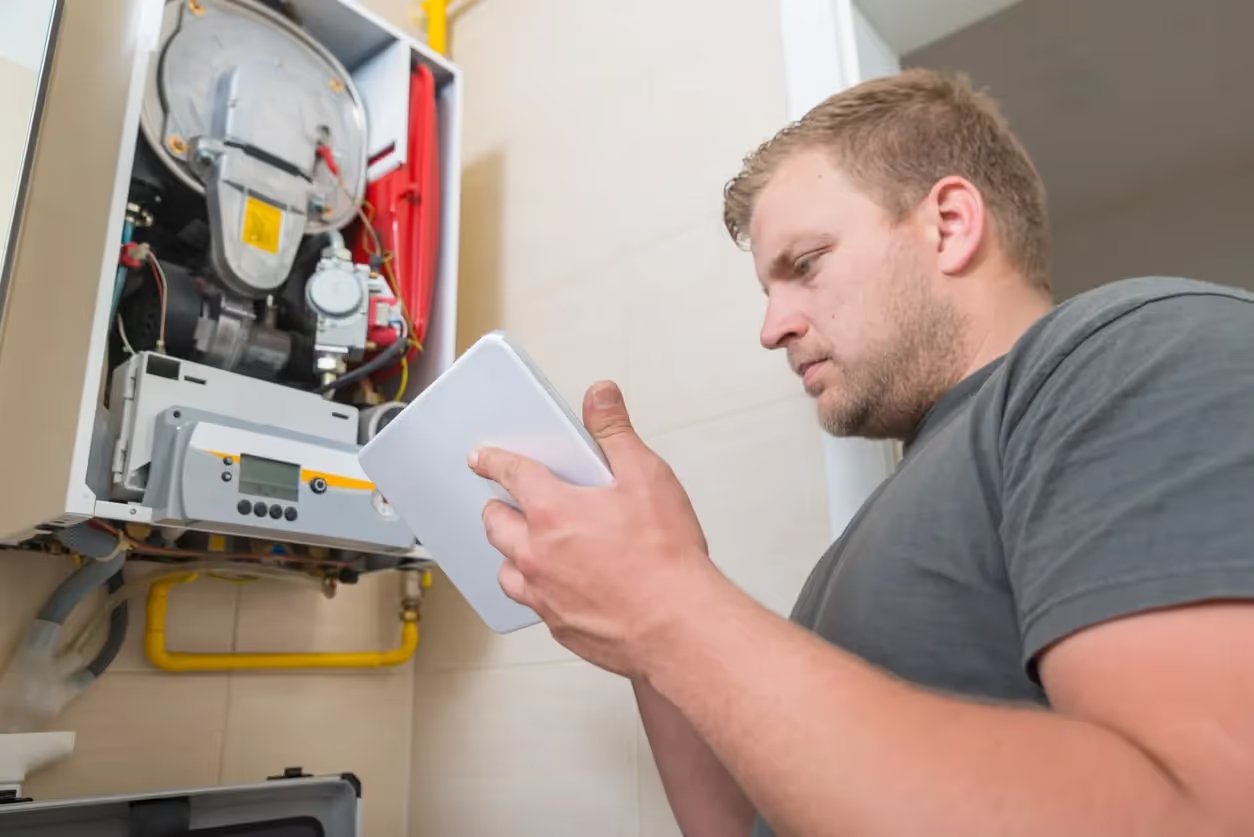
When you schedule a maintenance visit, the focus is on a complete system audit. This service is designed to cover every critical component of the furnace, ensuring that the entire heating loop functions correctly. A professional tune-up is a detailed process that involves cleaning, testing, and calibrating.
Here is a breakdown of the specific components addressed during a standard maintenance visit:
- Heat Exchanger Inspection: The heat exchanger is the critical component that separates breathing air from combustion gases. Technicians inspect this metal chamber for cracks or corrosion. Even hairline cracks can allow carbon monoxide to leak into the living space. Visual inspection and combustion analysis are used to verify the integrity of this vital part.
- Burner Assembly Cleaning: Dirty burners result in improper combustion. This not only wastes fuel but can also cause soot buildup, which acts as an insulator and reduces heat transfer. The assembly is removed and cleaned to ensure a clean, blue flame, which indicates efficient fuel usage.
- Blower Motor and Capacitor Testing: The blower motor is responsible for circulating warm air through the ductwork. Technicians measure the amperage and voltage to ensure the motor is not drawing too much power, which is a sign of impending failure. Start capacitors are tested to ensure they provide the necessary torque to start the motor.
- Safety Switch Verification: Modern furnaces have multiple safety interlocks, including limit switches, rollout switches, and pressure switches. These devices shut the unit down if dangerous conditions are detected, such as overheating or a blocked flue. Each switch is manually tested to ensure it engages correctly.
- Thermostat Calibration: If the thermostat reads the temperature incorrectly, the furnace may cycle on and off too frequently (short cycling) or run longer than necessary. Technicians verify the calibration of the thermostat and check the anticipator settings to match the heating load.
- Gas Line and Valve Inspection: For gas furnaces, leak detection is paramount. The gas valve is inspected for proper operation, and gas pressure is measured at both the inlet and the manifold. Incorrect pressure can lead to a dangerous over-fire condition or an inefficient under-fire condition.
The Step-by-Step Maintenance Process
Understanding the workflow of a professional maintenance visit helps homeowners know what is happening in their mechanical room. This process is systematic, ensuring no component is overlooked.
- Initial Assessment and Safety Check: The process begins with a conversation about any specific issues the homeowner has noticed, such as strange noises or cold spots in the house. The technician then performs a static check of the unit, looking for obvious signs of wear, rust, or water damage around the base of the furnace.
- System De-energization and Disassembly: To safely clean internal components, electrical power and gas supplies are turned off. Access panels are removed to expose the blower compartment, burner assembly, and control board. This allows for a deep clean that isn't possible with the panels in place.
- Cleaning and Lubrication: Dust and debris are vacuumed from the cabinet, blower wheel, and burners. If the motor requires lubrication, oil is applied to the ports. The flame sensor, which detects whether the gas has ignited, is cleaned of oxidation to prevent nuisance lockouts.
- Reassembly and Operational Testing: Once cleaning is complete, the unit is reassembled. The system is powered back on, and the technician initiates a heating cycle. During this phase, temperature rise is measured. This is the difference in air temperature between the return air and the supply air. If the rise is too high or too low, airflow or gas pressure adjustments are made.
- Final Flue Draft Analysis: For gas units, ensuring that exhaust gases are venting properly is the final step. The draft is checked to confirm that combustion byproducts are exiting the home through the chimney or PVC venting and not spilling back into the mechanical room.
Deciding Between Repair or Replacement: A Quick Guide
While maintenance can prolong the life of a furnace, there comes a point where repair is no longer the most economical option. Recognizing the signs of a failing system helps homeowners make informed financial decisions before they are left without heat in the middle of an Oakland winter.
- Age of the Unit: Most furnaces have a service life of 15 to 20 years. If a system is approaching or exceeding this age range, major component failures become more likely. Maintenance can keep it running, but efficiency will naturally degrade over time compared to modern standards.
- Frequency of Repairs: If a system requires repairs virtually every season, the cumulative cost often exceeds the price of a new installation. A general rule is to multiply the age of the unit by the cost of the repair. If the total exceeds $5,000, replacement is often the wiser investment.
- Heat Exchanger Integrity: A cracked heat exchanger is an immediate red flag. Because replacement of this part is labor-intensive and expensive—and implies the rest of the unit has suffered significant thermal stress—replacement of the entire furnace is usually recommended for safety reasons.
- Rising Energy Bills: As internal parts wear and the system loses compression or accumulates resistance, it must run longer to satisfy the thermostat. If energy bills have increased significantly despite consistent usage patterns, the furnace may have lost its efficiency permanently.
- Uneven Heating and Noise: If some rooms are freezing while others are hot, or if the furnace groans, bangs, or squeals during operation, it indicates mechanical failure or ductwork issues that simple maintenance may not resolve.
Local Climate Considerations for Optimal Performance
The climate in Oakland, KY, presents specific challenges for heating systems. The region experiences a humid subtropical climate, but winters can see lows drop significantly, often reaching into the mid-20s. This variability means a furnace must be capable of handling mild autumn days as well as deep freezes without faltering.
Humidity Management
While often associated with summer, humidity plays a role in winter comfort. Cold air holds less moisture, leading to dry indoor environments. However, the region's overall humidity can affect how systems cycle. Maintenance checks often include inspecting whole-home humidifiers integrated with the furnace to ensure they are clean and functioning, preventing dry skin and static electricity issues during the heating season.
Temperature Fluctuations
The swing from mild days to freezing nights requires a responsive system. A furnace that is short-cycling (turning on and off rapidly) will struggle to maintain a consistent temperature during these rapid weather changes. Proper tuning of the heat anticipator and airflow settings ensures the system adapts to these shifts efficiently.
Freezing Hazards
For high-efficiency furnaces that produce condensate (water) during operation, the risk of frozen drain lines is real when temperatures plummet. In this area, technicians pay special attention to condensate traps and drain lines to ensure they are clear and, if necessary, insulated against freezing conditions in unconditioned spaces like attics or crawlspaces.
The Importance of Professional Execution
Attempting DIY maintenance often leads to overlooked safety hazards or accidental damage to sensitive electronic components. Professional execution guarantees that the system is not only clean but also safe and compliant — see our reviews.
- Warranty Protection: Most furnace manufacturers require proof of annual maintenance by a licensed professional to keep the warranty valid. Skipping this step can lead to a voided warranty, leaving the homeowner responsible for the full cost of future parts replacements.
- Carbon Monoxide Safety: The most dangerous aspect of a malfunctioning furnace is invisible and odorless. Professional combustion analysis is the only way to accurately detect incomplete combustion and CO leaks. This is a non-negotiable safety check that protects the household.
- Electrical Safety: Furnaces draw significant power. Loose connections can cause arcing, overheating, and even electrical fires. Professionals tighten all connections and inspect wire insulation for signs of heat damage or rodent chewing.
- Air Quality Improvement: A dirty furnace recirculates dust, pollen, and mold spores throughout the house. Deep cleaning the blower and cabinet improves indoor air quality, which is particularly important during winter months when windows are closed and ventilation is limited.
Maximizing System Longevity
The goal of any maintenance plan is to maximize the return on investment for the heating system. A well-maintained furnace can last years longer than a neglected one. This longevity is achieved by reducing the workload on the system. When airflow is unrestricted and combustion is clean, the components do not have to work as hard to produce the same amount of heat.
By scheduling service in the late summer or early fall, homeowners in Oakland avoid the rush of emergency calls that occur during the first freeze. This proactive approach ensures that any necessary repairs can be completed without the pressure of a freezing home. Furthermore, a tuned system consumes less fuel, providing immediate ROI through lower monthly utility payments.
Protect Your Heat With Expert Furnace Care
Ensuring your home remains warm and safe requires attention to detail and technical expertise. Don't wait until the first snow falls to think about your heating system. Secure your comfort and safety now.
For reliable, professional service that keeps your home warm all winter, contact Carter Heating and Cooling to schedule your furnace maintenance today.

Great Service at a Fair Price
Veterans Discount


Senior Discount

Law Enforcement

Fire fighters/ems

Hear From Your Neighbors!
Hear from your neighbors to see how our commitment to dependable service and lasting comfort has made a difference in their homes.