

How can we help today?
Choose an option to see quick actions and get help faster.Heating Replacement in Oakland, KY
Heating Replacement in Oakland, KY
Heating Replacement in Oakland, KY
Is Your Heating System Failing to Keep Up With the Cold?
When your heater quits in the middle of a cold snap, every minute without heat feels like an hour. You need a fast, reliable solution that brings back your comfort without breaking the bank, especially when facing the freezing temperatures common in Oakland, KY. Call us immediately to schedule an assessment or apply for financing to get your system replaced without delay.
Waiting on a failing furnace or heat pump can lead to frozen pipes, uncomfortable nights, and rapidly increasing energy bills. You need a partner who understands the urgency of the situation and provides clear, actionable solutions rather than sales pitches.
- Restore your heating efficiently with same-day service availability for urgent replacements.
- Enjoy peace of mind with clear upfront pricing and no hidden fees before work begins.
- Benefit from expert care by certified technicians with years of experience in full system changeouts.
All installations are fully licensed, with extended warranties and flexible financing options to ensure your satisfaction.
What You Get With a Professional Heating Replacement
Replacing a heating system is a significant investment in your home’s infrastructure. It is not merely swapping one metal box for another; it is a construction project that integrates gas, electricity, and airflow dynamics to create a safe and comfortable environment. When you choose a professional replacement service in Oakland, you are purchasing long-term reliability and efficiency.
Carter Heating and Cooling focuses on providing a comprehensive replacement service that addresses the root cause of your heating issues. The process begins with a thorough evaluation of your home’s thermal envelope. Technicians look at insulation levels, window quality, and square footage to determine exactly how much heat your home loses on the coldest days of the year. This ensures the new unit is not just a copy of the old one, but a system tailored to the current needs of the structure.
Modern heating systems offer technology that was likely unavailable when your current unit was installed. You gain access to variable-speed blowers that reduce noise and eliminate cold spots, as well as smart thermostat integration that allows for precise temperature control from your smartphone. High-efficiency units also utilize fuel more effectively. Whether you are installing a gas furnace or an electric heat pump, the goal is to generate maximum heat output with minimum energy input.
Scope of service includes the safe removal and disposal of your old equipment. Handling refrigerants (in the case of heat pumps) and disconnecting gas lines requires specific certifications to ensure safety and environmental compliance. You also receive a complete assessment of your ductwork. If the air distribution system is leaking or undersized, even the most expensive new furnace will fail to perform. The replacement service includes sealing minor leaks and recommending modifications to ensure the new system delivers air where it is needed most.
How the Installation Process Works
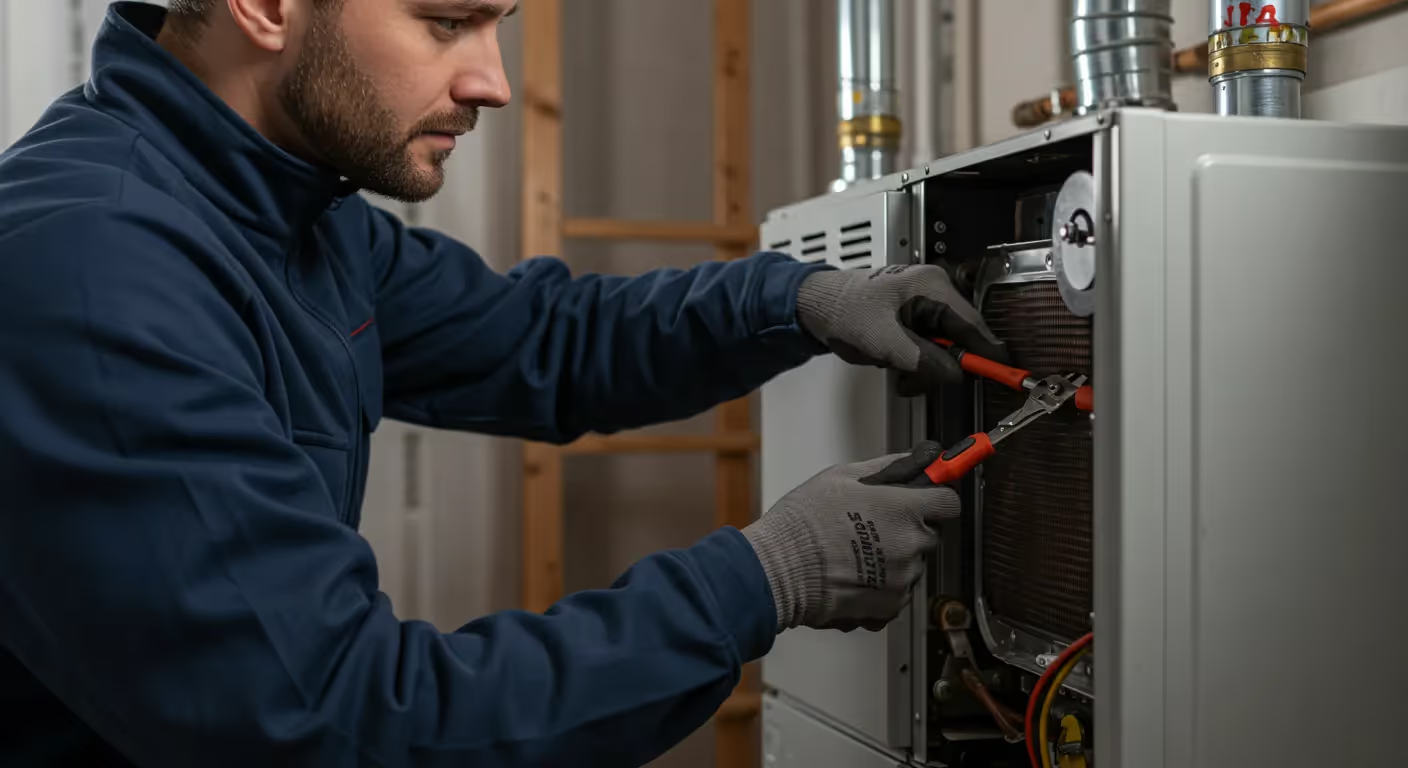
A high-quality installation follows a rigorous, standardized process to ensure the equipment performs to the manufacturer’s specifications. Shortcuts during installation are the leading cause of premature system failure and reduced efficiency.
- Site Preparation and Protection: The process begins with protecting your property. Technicians lay down drop cloths and wear shoe covers to keep your home clean. The area around the existing unit is cleared to provide safe access for removal. Safety is the priority, so gas lines and electrical circuits are shut off and locked out before any tools touch the equipment.
- System Removal: The old unit is disconnected carefully. If it is a heat pump, the refrigerant is recovered into unmatched cylinders to prevent atmospheric venting. Gas unions are disconnected, and the flue pipe is removed. The old unit is then maneuvered out of the home, often requiring specialized dollies or lifting gear to prevent damage to floors or door frames.
- Load Calculation and Sizing: Before the new unit is unboxed, the lead installer verifies the sizing using Manual J load calculations. This mathematical formula considers the volume of air in the home, the R-value of insulation, and the orientation of the house relative to the sun. This step confirms that the selected unit is neither too large (which causes short-cycling and humidity issues) nor too small (which causes the unit to run continuously without reaching the set temperature).
- Equipment Placement and Connection: The new furnace or air handler is positioned and leveled. Proper leveling is critical for drainage and quiet operation. The plenum (the box connecting the unit to the ductwork) is attached and sealed with mastic or foil tape to prevent air leaks.
- Utility Connections: This is the most technical phase. For gas furnaces, the gas line is reconnected, and a sediment trap is installed to protect the valve. The flue pipe is installed, ensuring proper slope for venting combustion gases safely outside. For heat pumps, the refrigerant lines are brazed with nitrogen flowing through them to prevent oxidation, then a vacuum is pulled to remove moisture from the lines. Electrical connections are tightened to specific torque settings to prevent arcing or overheating.
- Commissioning and Testing: Once the physical installation is complete, the system is started. Technicians measure static pressure (airflow resistance), temperature rise (the difference in air temperature entering and leaving the unit), and gas manifold pressure. These metrics are adjusted to match the manufacturer's exact requirements. The system is run through a full cycle to ensure it heats, turns off, and maintains temperature correctly. View maintenance plans for future care.
Deciding When to Replace vs. Repair
Homeowners often struggle with the decision to repair an aging unit or invest in a new one. While repairs can solve immediate problems, there is a tipping point where continuing to patch up an old system becomes financially irresponsible.
- The 50% Rule: A general guideline used in the industry is the 50% rule. If the cost of the repair approaches or exceeds 50% of the value of the system (or the cost of a new unit), replacement is the smarter financial move. For example, replacing a cracked heat exchanger or a failed compressor is expensive. Putting that money toward a new system with a fresh warranty often yields a better return on investment.
- System Age: Heating systems have a finite lifespan. Gas furnaces typically last 15 to 20 years, while heat pumps last 10 to 15 years. If your unit in Oakland is approaching this age range, parts will become harder to find and more expensive. Even if the unit is running, its efficiency has likely degraded significantly. A furnace installed 20 years ago may only be 60-70% efficient, meaning 30-40 cents of every dollar you spend on gas is wasted up the flue. New models achieve 95% efficiency or higher.
- Frequency of Breakdowns: If you find yourself calling for service every winter, the system is signaling that it is at the end of its life. Frequent breakdowns are inconvenient and indicate that multiple components are wearing out simultaneously. Reliability is a key factor; knowing your heat will turn on when the temperature drops to 20°F is worth the investment in a new system.
- Safety Concerns: Safety is the most critical factor. Older furnaces are prone to cracks in the heat exchanger, which can leak carbon monoxide into the living space. If a technician flags a safety violation or a crack, the unit must be replaced immediately. There is no safe "repair" for a compromised heat exchanger that guarantees the safety of your family.
- Comfort Issues: If some rooms in your house are boiling while others are freezing, or if the air feels dry and dusty, your current system may be struggling to distribute air effectively. Variable-speed motors found in modern replacements run longer at lower speeds, mixing the air better and providing more even temperatures throughout the home.
Local Considerations for Heating in Kentucky
Operating a heating system in this region requires specific attention to local climate patterns and regulations. The weather here is variable, with winters that bring deep freezes and shoulder seasons that require only light heating. Visit our blog for local tips.
- Climate and Equipment Selection: The average low temperatures in winter can dip well below freezing. This makes the choice of a heating source critical. While heat pumps are excellent for efficiency, standard models lose capacity as the outdoor temperature drops. For this region, many homeowners opt for a "dual fuel" system—a heat pump for mild days and a gas furnace backup for the deep freeze. Alternatively, modern cold-climate heat pumps can maintain efficiency even in sub-zero temperatures. Understanding these local weather demands ensures you don't install a system that leaves you shivering in January.
- Permits and Codes: Replacement work involves adherence to Kentucky building and mechanical codes. These regulations govern everything from the type of venting used for gas furnaces to the clearance required around electrical panels. Professional installers handle the permitting process, ensuring the work passes inspection. This is vital for insurance purposes and strictly required if you plan to sell your home in the future.
- Utility Infrastructure: Oakland has a mix of utility availability. Some areas have access to natural gas, while more rural locations rely on propane or electricity. The availability of fuel dictates the best system for your home. Switching from an electric furnace to a propane system, or vice versa, may require upgrades to your electrical panel or the installation of a fuel tank. A professional assessment identifies these constraints early in the process.
Why Energy Efficiency Matters Now More Than Ever
Energy costs are rarely static. As utility rates fluctuate, the efficiency of your heating system plays a massive role in your monthly budget. The efficiency of a furnace is measured in AFUE (Annual Fuel Utilization Efficiency), while heat pumps use HSPF (Heating Seasonal Performance Factor).
Older units often operate at 80% AFUE or lower. This means 20% of the energy you pay for is lost. Modern condensing furnaces can reach up to 98% AFUE. Over the lifespan of the unit—typically 15 to 20 years—the savings on utility bills can offset a significant portion of the installation cost.
Furthermore, high-efficiency systems often qualify for federal tax credits and local utility rebates. These financial incentives are designed to encourage homeowners to upgrade to greener technology. Navigating these rebates can be confusing, but a professional service provider will help you identify which models qualify and provide the necessary documentation to claim your savings.
Trusting Your Home to Certified Professionals
The difference between a system that lasts 20 years and one that fails in five often comes down to the quality of the installation. A high-quality unit installed poorly will never achieve its rated efficiency and will likely suffer from early component failure.
Choosing a company like Carter Heating and Cooling ensures that technical expertise backs every decision. Technicians undergo rigorous training to stay updated on the latest HVAC technologies and safety protocols. They understand the nuances of airflow, combustion analysis, and refrigerant management.
You also gain the protection of labor warranties. While manufacturers cover the parts, a reputable installer stands behind their craftsmanship. If a weld breaks or a wire comes loose six months after installation, you need to know that the company will return to fix it without charging you another service fee.
Transparency is another hallmark of professional service. You should receive a detailed quote that outlines the scope of work, the model numbers of the equipment being installed, and the timeline for completion. There should be no surprise charges on the final invoice. This level of professionalism builds trust and ensures that the project is completed to your satisfaction.
Secure Your Comfort for the Season
Winter weather is unpredictable, but your heating system shouldn't be. Whether your current unit has completely failed or is simply costing too much to operate, taking action now prevents emergency situations later. You deserve a warm, safe home where the temperature is consistent, and the air quality is clean.
Don't wait until the next freeze to address your heating needs. A modern, efficient replacement handles the cold with ease and lowers your energy bills in the process.
Contact us today to schedule your comprehensive heating assessment and installation.

Great Service at a Fair Price
Veterans Discount


Senior Discount

Law Enforcement

Fire fighters/ems

Hear From Your Neighbors!
Hear from your neighbors to see how our commitment to dependable service and lasting comfort has made a difference in their homes.