

How can we help today?
Choose an option to see quick actions and get help faster.Whole House Dehumidifier Installation in Oakland, KY
Whole House Dehumidifier Installation in Oakland, KY
Reduce indoor humidity with professional whole-house dehumidifier installation in Oakland. Enjoy improved comfort and air quality. Call us today for an assessment!
Dealing with sticky, uncomfortable humidity levels in your Oakland home can make even moderate temperatures feel unbearable while increasing the risk of mold growth. A professionally installed whole-house dehumidifier provides the comprehensive moisture control necessary to protect your property and improve indoor air quality. Contact us today to discuss financing options or schedule your installation.
Living in a humid subtropical climate means that air conditioning alone often cannot remove enough moisture to keep your home comfortable without over-cooling the space. When humidity levels remain high, your HVAC system has to work harder, leading to higher energy bills and a clammy feeling indoors. Integrating a dedicated dehumidification system directly into your central heating and cooling setup solves this issue at the source.
- Achieve consistent, automated humidity control throughout every room in your house.
- Reduce common allergens, dust mites, and potential mold growth by maintaining optimal moisture levels.
- Enjoy a cooler, more comfortable indoor environment during hot summers, allowing you to set your thermostat higher to save energy.
All installations are fully licensed and include comprehensive manufacturer warranties to ensure your peace of mind and long-term performance.
Comprehensive Moisture Control Solutions
When you invest in a whole-house dehumidifier, you are purchasing a permanent solution to indoor moisture issues that portable units simply cannot match. Portable units are often noisy, limited to a single room, and require constant manual draining. A whole-house system is integrated directly into your existing HVAC ductwork, treating the air across the entire square footage of your home invisibly and silently.
What is Included in the Installation
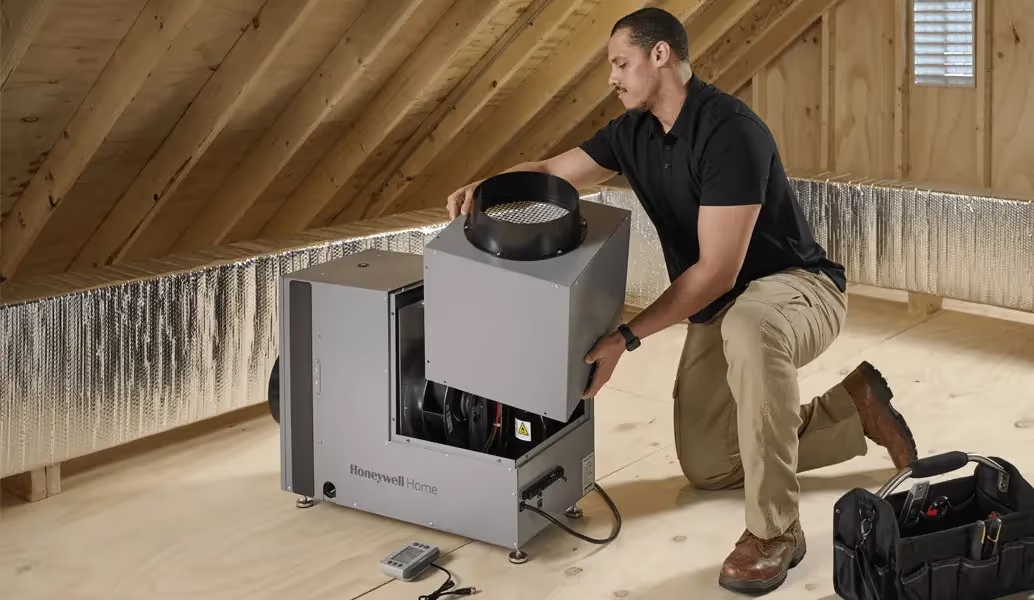
The installation process involves more than just placing a unit in your mechanical room. It requires a strategic integration with your home’s air distribution system. A professional installation package typically includes the dehumidifier unit itself, which is sized according to the specific volume of your home and the severity of the moisture intrusion. It also includes the necessary ductwork modifications to create a bypass or independent return layout, ensuring airflow is captured, treated, and redistributed effectively.
Licensed technicians handle all high-voltage electrical connections, ensuring the unit has a dedicated power source that meets local building codes. Additionally, the setup includes a permanent drainage solution. Unlike portable units that need buckets emptied, a whole-house system uses a gravity drain or a condensate pump to route water directly to your home’s plumbing or exterior drainage system. This allows for "set it and forget it" operation.
System Capacity and Sizing
Selecting the right size unit is critical for performance. Sizing is not just about square footage; it involves calculating the moisture load of the home. Factors such as the number of occupants, the tightness of the building envelope, and the presence of a crawl space or basement all influence the required capacity.
Carter Heating and Cooling ensures that the unit selected usually removes between 70 to 130 pints of water per day, depending on your specific requirements. An undersized unit will run continuously without reaching the target humidity level, leading to premature failure. An oversized unit may short-cycle, which reduces efficiency. The goal is to install a system that runs long enough to effectively scrub moisture from the air while communicating seamlessly with your thermostat or a dedicated humidistat.
How the Installation Process Works
Installing a whole-house dehumidifier is a precise technical process that involves modifying your central heating and cooling system. This is not a plug-and-play appliance; it requires HVAC expertise to ensure that airflow balance is maintained and that the new equipment does not restrict the performance of your furnace or air conditioner.
- Site Assessment and Configuration Strategy: The process begins with an evaluation of your current HVAC layout. Technicians determine the best location for the unit, typically in a basement, crawl space, or mechanical closet near the main air handler. The configuration is decided based on the available space and the ductwork design. Common configurations include a "return to supply" install or a dedicated return setup. This planning phase ensures that the dehumidifier will not create backpressure that could damage your blower motor.
- Ductwork Modification and Connection: Once the location is set, technicians cut into the existing supply and return plenums to attach the dehumidifier’s intake and exhaust ducts. Insulated flex duct or rigid sheet metal is used to connect the unit. Dampers may be installed to prevent air from backflowing through the dehumidifier when it is not in use. Sealing these connections with mastic or foil tape is essential to prevent air leaks, ensuring that 100% of the air passing through the unit is treated and sent back into the living space.
- Electrical and Control Wiring: The dehumidifier requires a dedicated electrical circuit. Technicians run the necessary wiring and install a safety switch or breaker. Low-voltage wiring is then connected to the control interface. This can be a dedicated controller mounted on the wall or integration with a smart thermostat that supports humidity control accessories. This integration allows the dehumidifier to run independently of the AC or in conjunction with the blower fan to circulate dry air even when cooling is not required.
- Drainage Implementation: Proper condensate management is vital to prevent water damage. The system extracts gallons of water from the air daily. Technicians install a PVC drain line with a P-trap to prevent sewer gases or odors from entering the air stream. If a floor drain is not accessible via gravity, a condensate pump is installed to lift the water and push it to a suitable drain location, such as a utility sink or washing machine outlet.
- System Commissioning and Testing: After all connections are made, the system is powered on and tested. Technicians verify the static pressure within the ducts to ensure proper airflow. They also test the humidistat to confirm the unit triggers on and off at the correct set points. The installer will demonstrate how to change the filter and adjust the humidity settings, typically recommending a relative humidity (RH) level between 45% and 50% for optimal comfort and health.
When to Replace vs. Repair Your Dehumidification System
Homeowners who already have a dehumidification system in place may face the dilemma of whether to repair a malfunctioning unit or invest in a new installation. While high-end dehumidifiers are built for longevity, they are mechanical systems subject to wear and tear. Knowing when to stop pouring money into repairs is key to maintaining long-term efficiency.
- Compressor Failure: The compressor is the heart of the dehumidifier. If the compressor fails or the refrigerant system develops a significant leak, the cost of repair often approaches or exceeds 50% of the cost of a new unit. In these scenarios, replacement is almost always the more financially sound decision, as a new unit will come with a fresh warranty and improved energy efficiency.
- Age of the Equipment: Most whole-house dehumidifiers have a lifespan of 10 to 15 years. If your unit is approaching this age range and begins to require minor repairs—such as fan motor replacements or control board fixes—it is often a signal that major components are nearing the end of their service life. Replacing an aging unit prevents the inconvenience of sudden failure during the peak humidity of an Oakland summer.
- Energy Efficiency Improvements: Dehumidifier technology has advanced significantly in the last decade. Newer models are far more efficient at removing water per kilowatt-hour of electricity consumed. If your current unit is over a decade old, you may be paying significantly more in electrical costs to operate it compared to a modern Energy Star-rated system. Upgrading can result in monthly utility savings that help offset the installation cost over time.
- Inconsistent Humidity Levels: If the unit runs constantly but fails to bring the humidity down to the set point, it may have lost refrigerant or the internal coils may be degraded. If a professional service call reveals that the unit is operating at full capacity but performance has dropped, it indicates the system is no longer capable of handling the home's moisture load. Replacement ensures you regain control over your indoor environment.
Local Considerations for Oakland Installations
Installing HVAC equipment in Oakland, KY requires specific attention to the regional climate and local building standards. The humid subtropical weather pattern means that latent heat (moisture) removal is just as important as sensible heat (temperature) removal.
- Regional Climate and Seasonality: In this region, the outdoor dew point frequently rises above 65°F or 70°F in the summer. This creates a "latent load" that standard air conditioners struggle to manage, especially during shoulder seasons (spring and fall) when the temperature is mild but humidity is high. In these months, an AC unit may not run long enough to dehumidify the air. A whole-house dehumidifier bridges this gap, running independently to keep the home dry even when the AC is off. This is crucial for preventing the "muggy" feeling inside the home during rainy spring weeks.
- Basements and Crawl Spaces: Many homes in the area utilize crawl spaces or basements, which are primary entry points for ground moisture. The stack effect draws this damp air up into the main living quarters. Installations often focus on these lower levels. If the installation is in an encapsulated crawl space, the dehumidifier acts as the primary defense against wood rot and fungal growth in the floor joists. Local codes may require specific dedicated outlets and clearance around the unit for maintenance access in these confined spaces.
- Permitting and Utilities: Modifications to the electrical system to accommodate a whole-house dehumidifier may require adherence to local electrical codes. Ensuring the panel has sufficient amperage and that the grounding is correct is a safety priority. Furthermore, disposal of condensate water must comply with local plumbing regulations to ensure it does not create a nuisance or sanitation issue. Professional installers handle the verification of these requirements to ensure the job is compliant with all local ordinances.
The Importance of Professional Execution
Attempting a DIY installation or relying on a general handyman for whole-house dehumidification often leads to suboptimal results. The effectiveness of the system relies heavily on airflow dynamics. If the ductwork is not tapped correctly, or if the bypass damper is not calibrated, the air will take the path of least resistance, potentially bypassing the dehumidifier entirely.
Professional execution ensures that the pressure drops across the coil are within manufacturer specifications. This maximizes the pints-per-day removal rate. Furthermore, improper drainage installation is a leading cause of water damage in homes. A professional setup includes redundant safety measures, such as overflow float switches that shut the unit down if the drain line becomes clogged, preventing water from spilling onto your ceiling or floor.
- Health and Structural Benefits: Beyond comfort, professional installation protects the physical structure of the home. High humidity causes wood floors to cup, doors to stick, and drywall to soften. By maintaining a constant RH below 50%, you also create an environment that is hostile to dust mites and mold spores. This is particularly beneficial for family members with asthma or allergies. The investment in a properly installed system is an investment in the longevity of the home’s interior finishes and the health of its occupants.
- Warranty and Long-Term Support: Manufacturer warranties for whole-house dehumidifiers are robust, often covering parts for five years or more. However, these warranties are frequently contingent upon proof of professional installation. Improper installation can void coverage, leaving the homeowner liable for expensive repairs. By choosing a reputable service provider, you ensure that the paperwork is filed correctly and that you have a partner to call for annual maintenance, such as filter changes and coil cleaning.
Taking control of your indoor air quality is a decisive step toward a healthier, more comfortable home. High humidity does not resolve itself; it requires a mechanical solution designed for the specific demands of your property. For reliable, expert whole-house dehumidifier installation in Oakland, trust the team at Carter Heating and Cooling to deliver results that last.
Ready to eliminate excess moisture and breathe easier? Call us now to schedule your home assessment.
Take Control of Excess Humidity and Enjoy Lasting Indoor Comfort
Persistent humidity problems will not resolve on their own—and in Oakland’s climate, delaying action only increases the risk of mold growth, rising energy costs, and ongoing discomfort. A professionally installed whole-house dehumidifier gives you precise, automated moisture control that works alongside your HVAC system to protect your home and improve indoor air quality year-round. With expert sizing, code-compliant installation, and long-term warranty protection, Carter Heating and Cooling delivers solutions designed for lasting performance and real results. Don’t let excess moisture dictate how comfortable your home feels—contact us today to schedule your whole-house dehumidifier consultation with Carter Heating and Cooling and take the next step toward a healthier, drier, and more comfortable living environment.

Great Service at a Fair Price
Veterans Discount


Senior Discount

Law Enforcement

Fire fighters/ems

Hear From Your Neighbors!
Hear from your neighbors to see how our commitment to dependable service and lasting comfort has made a difference in their homes.