

How can we help today?
Choose an option to see quick actions and get help faster.Ductless Installation in Lewisburg, KY
Ductless Installation in Lewisburg, KY
Explore ductless mini-split systems for efficient cooling and heating in Lewisburg, KY. Achieve year-round comfort. Learn more about our quick, reliable installation!
Resolve Uneven Cooling and High Utility Costs with a Ductless System
Tired of battling uneven temperatures and facing escalating energy bills due to an outdated air conditioning setup? If you require a solution that offers precise comfort control for specific rooms or home additions in Lewisburg, KY, contact us to schedule a comprehensive assessment or apply for financing today. Carter Heating and Cooling specializes in installing advanced ductless mini-split systems designed to address the unique thermal challenges of your living space.
- Enjoy quicker installations with minimal disruption to your home’s structure.
- Experience enhanced comfort with energy-efficient ductless technology that eliminates hot and cold spots.
- Reduce energy costs with variable-speed systems tailored to your specific cooling and heating needs.
All installations are backed by a comprehensive warranty and available financing options to ensure your investment is protected and affordable.
Immediate Benefits of Modern Ductless Installation
Choosing a ductless mini-split system changes the way you experience indoor climate control immediately upon installation. Unlike traditional central air systems that rely on extensive and often leaky ductwork, a ductless setup delivers conditioned air directly into the zones where you need it most. This "point-of-use" approach drastically reduces energy waste, as there is no thermal loss through ducts running in unconditioned attics or crawlspaces.
Residents in Lewisburg often choose this technology for its versatility. Whether you are outfitting a newly constructed home addition, converting a garage into a living space, or retrofitting a historic home where installing ductwork is impossible, the scope of a ductless installation is designed to be low-impact. You receive a system that handles both cooling and heating, utilizing heat pump technology to reverse the refrigerant cycle. This means a single investment solves your comfort needs year-round, handling the humid summers and the chilly winters characteristic of the region.
The timeline for these projects is significantly shorter than central HVAC replacements. Because there is no need to fabricate or route sheet metal ducts, a typical installation is often completed within a single day. You gain immediate access to superior air filtration, whisper-quiet operation, and the ability to control the temperature in individual rooms independently of the rest of the house.
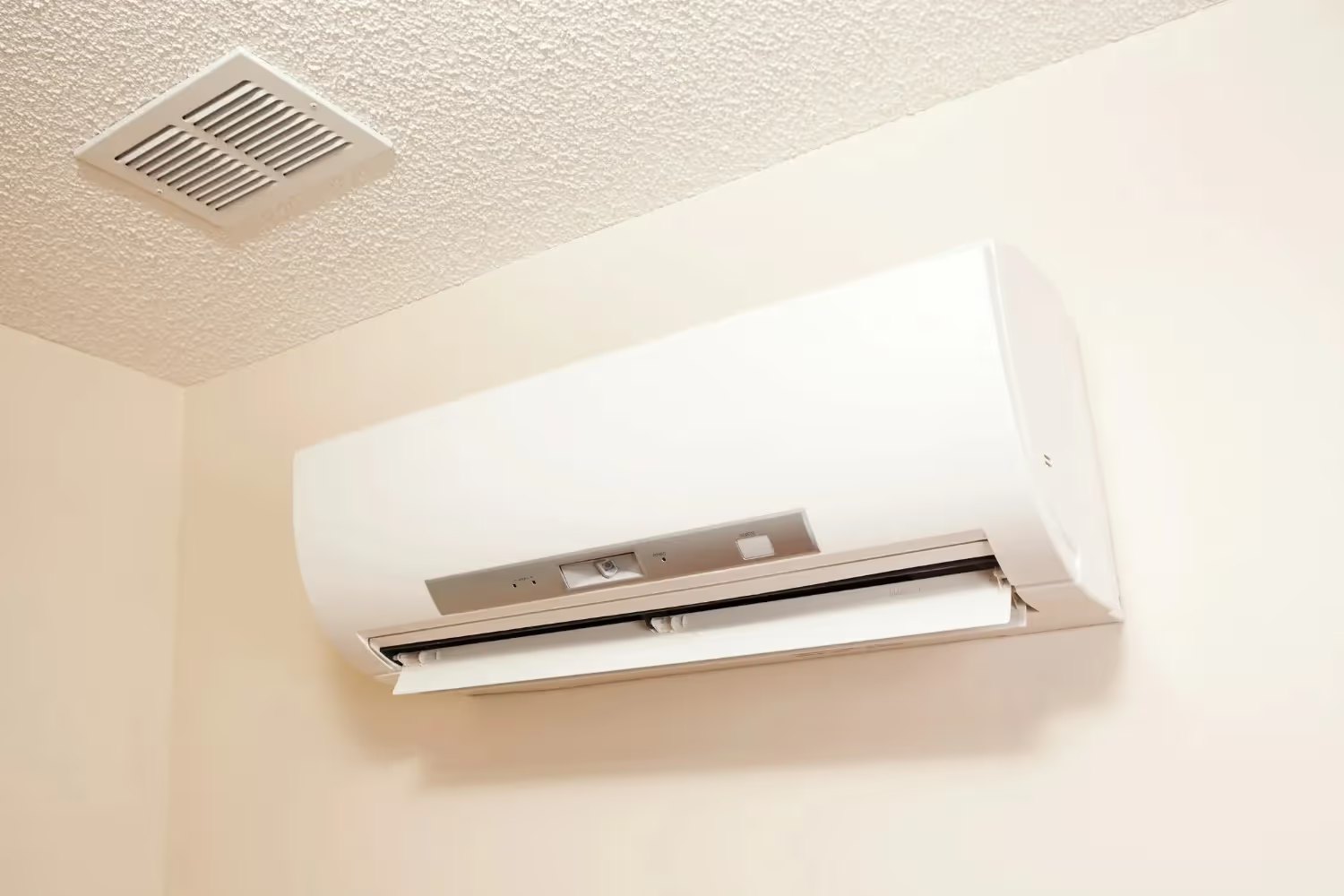
The Ductless Installation Process Step-by-Step
Understanding the mechanics of the installation helps homeowners prepare for the transition to a mini-split system. We prioritize a structured approach that ensures the longevity of the equipment and the integrity of your home construction.
Site Evaluation and Load Calculation
The process begins with a technical assessment of the space. Technicians perform a Manual J load calculation to determine the exact BTU capacity required for the room. This involves measuring square footage, assessing insulation quality, counting windows, and identifying heat-generating appliances. Proper sizing is critical; an oversized unit will short-cycle and fail to dehumidify, while an undersized unit will run constantly without reaching the set temperature.
Mounting the Indoor Air Handler
Once the ideal location is selected—typically high on a wall or recessed into a ceiling for optimal airflow—a mounting plate is secured to the interior wall. This unit must be perfectly level to ensure proper drainage of condensate. The location is chosen to distribute air evenly across the room while remaining accessible for future filter cleaning.
Drilling the Conduit Pathway
One of the main advantages of this system is the minimal structural alteration required. A small hole, usually three inches in diameter, is drilled through the exterior wall. This serves as the pathway for the refrigerant lines, electrical wiring, and condensate drain tubing. The hole is drilled with a slight downward slope to the outside to assist with gravity drainage.
Installing the Outdoor Condenser
The outdoor unit is positioned outside the home, either on a concrete pad or mounted to the side of the house using brackets. This placement is strategic to ensure proper airflow around the coil and to minimize vibration transfer to the home. In areas prone to snow, the unit may be elevated to prevent ice buildup from blocking airflow during winter operation.
Connecting and Testing the System
Technicians run the line set (copper tubing) between the indoor and outdoor units through the conduit. The lines are insulated and sealed to prevent energy loss. After making the electrical connections, the system is pressure-tested to ensure there are no refrigerant leaks. Finally, a vacuum is pulled on the lines to remove moisture and air before the refrigerant is released. The system is then powered on and tested in both heating and cooling modes to verify performance.
Determining When to Switch to Ductless
Homeowners often grapple with the decision between repairing an existing window unit or central system versus investing in a new ductless installation. While repairs may seem cheaper upfront, there are distinct scenarios where replacement is the financially sound choice.
Efficiency Ratings and Energy Consumption
If your current cooling method involves window units or a central system older than 10-15 years, you are likely paying a premium for electricity. Older units often operate at 10 SEER (Seasonal Energy Efficiency Ratio) or lower. Modern ductless systems frequently exceed 20 SEER. If your energy bills in Lewisburg have been steadily climbing despite normal usage, the operational savings of a high-efficiency ductless unit can offset the installation cost over time.
Frequency and Cost of Repairs
Applying the "50% Rule" is a prudent strategy. If the cost to repair your current system approaches 50% of the value of a new system, replacement is generally recommended. Furthermore, if you are requiring refrigerant recharges annually, it indicates a leak that is environmentally harmful and costly to maintain. A new ductless system eliminates these recurring repair costs and provides a fresh warranty for peace of mind.
Zoning Requirements and Comfort Issues
If you have rooms that are perpetually too hot in the summer or too cold in the winter, a central system repair cannot fix the underlying airflow imbalance. Central thermostats measure temperature in a single location, often leaving upstairs bedrooms or sunrooms uncomfortable. If your goal is granular control over specific zones, repairing the central unit is a stopgap measure that will not solve the comfort problem. Ductless installation provides the structural solution to zoning issues.
Regional Considerations for Installation
Operating an HVAC system in Kentucky requires attention to specific environmental and regulatory factors. The humid subtropical climate dictates that equipment must be capable of significant dehumidification during the summer. Ductless systems feature a "dry mode" specifically designed to remove excess moisture without over-cooling the space, a crucial feature for local homes during July and August when temperatures hover near 90°F.
Winter Performance and Heat Pumps
While winters are generally mild with highs in the 40s and 50s, temperatures do drop below freezing. Modern ductless systems utilize inverter-driven compressors that maintain heating capacity even when outdoor temperatures are low. When selecting a unit for this region, it is essential to verify the HSPF (Heating Seasonal Performance Factor) and low-ambient heating capabilities to ensure the system can serve as a primary heat source during occasional cold snaps.
Permits and Electrical Compliance
Installation involves high-voltage electrical work, typically requiring a dedicated circuit at the electrical panel. Local building codes in the Lewisburg area dictate specific disconnect box requirements and wire sizing to ensure safety. Professional installers handle the permitting process to ensure the modification meets all municipal and safety standards. This includes ensuring the outdoor unit placement complies with setback requirements from property lines.
Technical Superiority of Inverter Technology
A primary differentiator of the systems we install is the use of inverter-driven compressors. Traditional air conditioners operate on an "on/off" cycle. When the room gets too warm, the unit blasts on at 100% capacity, cools the room, and then shuts off. This cycle creates temperature swings, noise, and high energy consumption due to the power surge required for startup.
In contrast, the inverter technology in our ductless units operates like a dimmer switch or the cruise control on a car. The compressor speeds up or slows down to match the exact heating or cooling demand of the room. Once the set temperature is reached, the system idles at a low speed to maintain that temperature precisely. This results in:
- Consistent Temperatures: The room stays within a fraction of a degree of your setting.
- Reduced Noise: The elimination of hard start-stops makes the system barely audible.
- Lower Energy Draw: Avoiding the power spikes of startup cycles significantly lowers electricity usage.
- Longer Equipment Life: Less wear and tear on internal components leads to increased longevity.
Carter Heating and Cooling Installation Standards
When investing in a permanent upgrade for your home, the quality of the installation is just as important as the brand of equipment selected. A poorly installed unit will suffer from refrigerant leaks, drainage issues, and premature failure, regardless of the manufacturer’s specs.
We adhere to strict installation protocols that go beyond basic code requirements. This includes using torque wrenches to ensure factory-specification tightness on all flare connections, preventing the most common cause of refrigerant leaks. We also utilize triple-evacuation procedures during the vacuum process to ensure the system is completely free of non-condensables and moisture, which protects the compressor oil and ensures maximum efficiency.
Our team focuses on the aesthetics of the installation as well. We use line set covers to hide and protect the exterior piping, ensuring the outside of your home looks neat and finished. Inside, we ensure the unit is centered and level, respecting the design of your interior space. We also take the time to educate homeowners on the operation of the remote control or smart-home integration features, ensuring you get the most out of your new system from day one.
Maintenance and Long-Term Care
To protect your investment, understanding the maintenance requirements of a ductless system is vital. Because these units do not have ductwork to hide dust, the air filters located inside the indoor handler require regular cleaning. These are reusable, washable filters that trap dust, pollen, and allergens.
Filter Cleaning:
Homeowners should check filters monthly. A clogged filter restricts airflow, forcing the system to work harder and reducing efficiency. This simple task can be done in minutes without tools.
Coil Cleaning:
Over time, the indoor blower wheel and coil can accumulate dust and biological growth due to the moisture removed from the air. Professional maintenance involves a deep clean of these components to prevent odors and maintain air quality.
Condenser Care:
The outdoor unit needs to be kept clear of debris. Leaves, grass clippings, and snow drifts can block airflow through the condenser coil. Keeping a two-foot clearance around the unit ensures it can breathe and exchange heat effectively.
Professional maintenance plans usually include checking refrigerant levels, testing electrical connections, and cleaning the condensate drain line to prevent water backups. Regular servicing extends the lifespan of the equipment and keeps the manufacturer’s warranty valid.
Secure Your Comfort Upgrade
Upgrading to a ductless mini-split system offers a direct path to solving comfort issues that traditional HVAC systems simply cannot address. Whether you are dealing with a hot upstairs bedroom, a new sunroom, or want to zone your entire home for maximum efficiency, the technology exists to provide a tailored solution. The combination of whisper-quiet operation, superior filtration, and significant energy savings makes this an intelligent choice for modern homeowners.
Stop overpaying to heat and cool unoccupied rooms or struggling with spaces that never feel quite right. Take control of your indoor environment with a system designed for precision and efficiency.
Contact us today to schedule your ductless consultation and take the first step toward a more comfortable, energy-efficient home.

Great Service at a Fair Price
Veterans Discount


Senior Discount

Law Enforcement

Fire fighters/ems

Hear From Your Neighbors!
Hear from your neighbors to see how our commitment to dependable service and lasting comfort has made a difference in their homes.