
How can we help today?
Choose an option to see quick actions and get help faster.AC Tune-Up in Lewisburg, KY
AC Tune-Up in Lewisburg, KY
Struggling with your AC in Lewisburg? Schedule a pro inspection to improve air quality & energy efficiency. Secure your comfort, call us today!
Is Your Air Conditioner Failing to Combat the Summer Humidity?
Inconsistent cooling, rising energy bills, and strange noises from your HVAC system indicate that your unit is struggling to handle the demands of the Lewisburg climate. Contact us immediately to schedule a professional inspection and restore your home’s comfort.
When an air conditioner operates without regular maintenance, it works harder to maintain the set temperature, leading to accelerated wear and tear on critical components. Ignoring these early warning signs often results in sudden breakdowns during the hottest weeks of the year. Our technicians provide thorough, data-driven tune-ups designed to bring your system back to factory specifications.
- Reduce your monthly cooling costs with efficient, targeted maintenance that optimizes energy usage.
- Extend the lifespan of your AC unit by identifying and resolving minor mechanical issues before they become major failures.
- Experience immediate improvement in air quality and consistent comfort throughout every room in your home.
All services are performed by licensed professionals with full warranty coverage to ensure your system meets all manufacturer standards.
Quick, Effective Solutions for Your AC Troubles
An air conditioner that fails to cool effectively creates an uncomfortable living environment and poses risks to the longevity of the system. In humid subtropical climates, the HVAC system is responsible not just for lowering temperature, but also for removing excess moisture from the air. When the system is compromised, humidity levels inside the home rise, making the air feel sticky and potentially leading to mold growth in ductwork. Carter Heating and Cooling addresses these specific performance gaps through rigorous diagnostic protocols.
Many homeowners notice that their system runs constantly but never reaches the thermostat setting. This often stems from restricted airflow, dirty evaporator coils, or low refrigerant levels. A system running continuously to combat the mid-80s to 90-degree heat typical of this region drives up utility costs significantly. A professional tune-up intervenes by cleaning essential components and calibrating the system controls. This process reduces the electrical load required to start and run the compressor, resulting in immediate efficiency gains.
What is Included in Your Comprehensive AC Tune-Up?
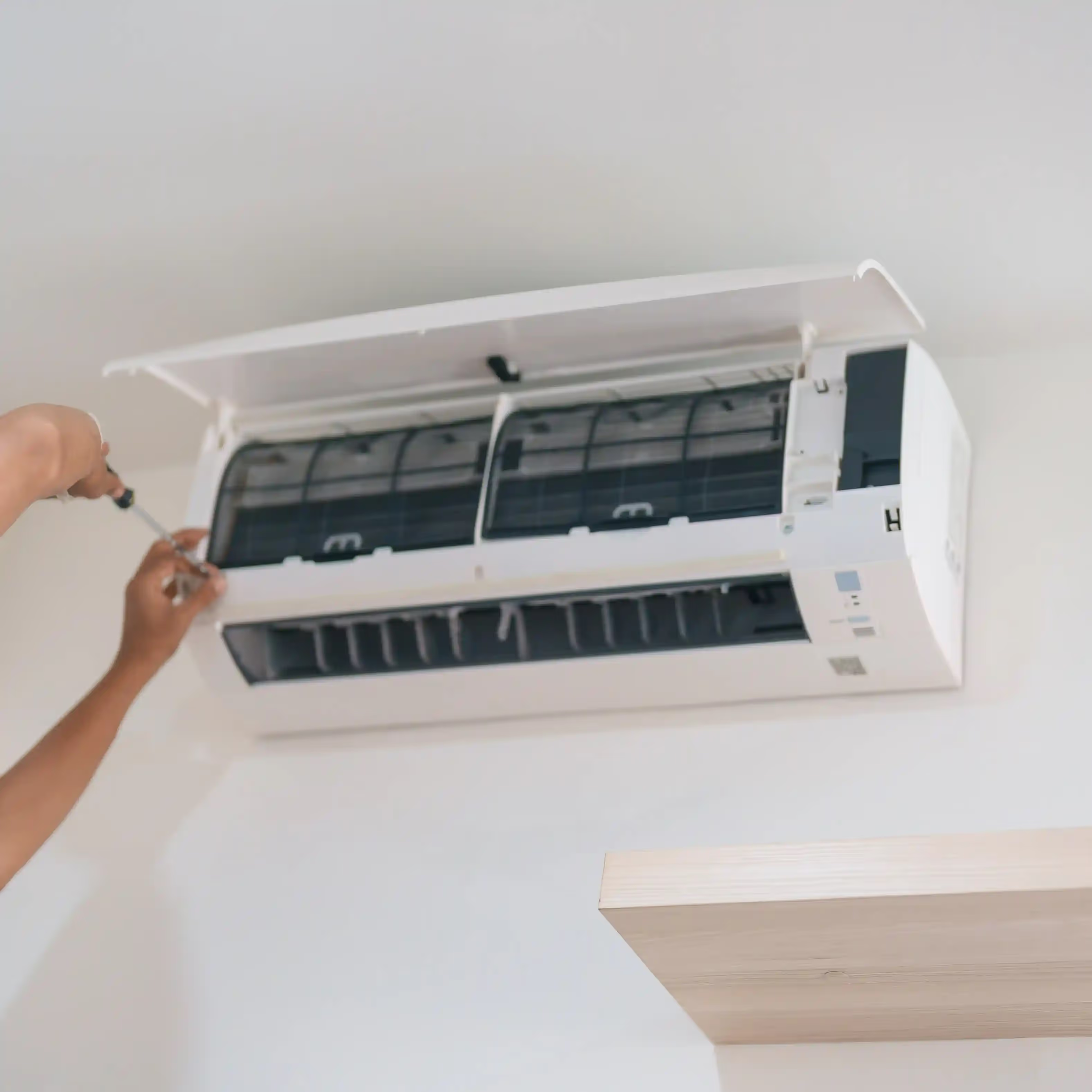
A professional tune-up goes far beyond a simple filter change. It involves a systematic examination of the entire cooling cycle to ensure safety, efficiency, and reliability. The goal is to optimize the heat transfer process and ensure all electrical components are operating within safe ranges.
- Evaporator and Condenser Coil Cleaning: Dirt and debris build-up on coils act as insulation, preventing the system from absorbing heat inside and releasing it outside. We chemically clean these coils to restore proper heat transfer capabilities.
- Refrigerant Level Verification: Technicians measure superheat and subcooling levels to ensure the refrigerant charge is exact. Incorrect refrigerant levels strain the compressor and can lead to frozen coils or total system failure.
- Electrical Component Inspection: Loose connections and pitted contactors can cause voltage fluctuations that damage the compressor and fan motors. We tighten all electrical connections and measure the voltage and amperage on all motors.
- Capacitor Testing: Capacitors provide the startup torque for motors. Weak capacitors are a leading cause of compressor failure. We test these components to ensure they are holding the correct microfarad rating.
- Condensate Drain Line Clearing: A clogged drain line can cause water damage to your home and increase indoor humidity. We flush the condensate line and treat it to prevent algae growth and blockages.
- Thermostat Calibration: To ensure accurate temperature control, we verify that your thermostat is reading the indoor temperature correctly and cycling the unit on and off at the appropriate intervals.
- Blower Motor and Belt Inspection: For systems with belt-driven motors, we check for wear and proper tension. For direct-drive motors, we inspect the wheel for debris accumulation that can unbalance the blower and cause excessive noise.
Our AC Tune-Up Process: What to Expect
We utilize a structured workflow to ensure every aspect of your cooling system is analyzed and optimized without disrupting your day. This standardized process ensures that no component is overlooked and that you receive a detailed report of your system’s health.
- First, the technician performs a visual inspection of the outdoor unit and the indoor air handler to check for obvious signs of damage, leaks, or hazards. This includes checking the area around the outdoor unit for vegetation or debris that might be restricting airflow.
- Next, the system is powered down to safely access internal components. The technician removes service panels to access the electrical compartment and the blower assembly. This is when the deep cleaning of coils and internal components takes place.
- Following the cleaning, the electrical analysis begins. The technician uses specialized multimeters to check the resistance, voltage, and amperage of all electrical parts. This step is critical for predicting potential future failures.
- Then, the system is powered back on to monitor the refrigeration cycle. Gauges are attached to the service ports to read pressures and temperatures. This data tells the technician exactly how the refrigerant is changing state and moving through the system.
- Finally, the technician tests the system’s operation through a full cycle, measuring the temperature drop (Delta T) between the return air and the supply air. A report is generated detailing the work performed and any recommendations for repairs if worn parts are discovered.
Deciding Between AC Repair and Replacement
During a tune-up, a technician may uncover issues that go beyond routine maintenance. Understanding when to invest in a repair versus when to opt for a full system replacement is a financial decision based on the age of the unit, the cost of the repair, and the system's overall efficiency.
- The 50% Rule: If the cost of the necessary repair approaches 50% of the value of the system, replacement is generally the more economically sound choice. Putting expensive parts into an aging system often yields diminishing returns.
- System Age Considerations: Most air conditioners have a lifespan of 10 to 15 years. If your unit is over 10 years old and requires a major component replacement, such as a compressor or evaporator coil, investing in a new, high-efficiency unit is often wiser. Newer models offer significantly higher SEER ratings, which translate to lower monthly energy bills.
- Frequency of Breakdowns: If your system requires multiple repairs in a single season, it indicates that the unit has reached the end of its reliable service life. Continuing to patch a failing system results in cumulative costs that often exceed the price of a new installation.
- Refrigerant Type: Older systems may utilize R-22 refrigerant, which has been phased out and is prohibitively expensive to restock. If an R-22 system develops a leak, replacement is almost always the only viable option due to federal regulations and cost.
Seasonal AC Maintenance Tips for Lewisburg Residents
The local climate in Lewisburg presents specific challenges for air conditioning systems. The combination of high ambient temperatures and significant precipitation means your AC must work harder to control latent heat (humidity). Residents can take specific steps to support their system’s performance between professional visits.
- Manage Surroundings After Storms: Heavy thunderstorms are common in late spring and summer. After a storm, check the outdoor condenser unit for leaves, mud, or branches that may have been blown against the fins. Clear at least two feet of space around the unit to ensure proper airflow.
- Filter Discipline: In humid climates, filters can become clogged quickly with pollen and dust. A clogged filter restricts airflow, causing the evaporator coil to freeze. Check filters monthly and replace them at least every 90 days, or more frequently if you have pets.
- Vent Management: Keep all supply vents open, even in unused rooms. Closing vents increases static pressure in the ductwork, which can cause leaks and strain the blower motor. Proper airflow balance is essential for humidity control.
- Dehumidification Support: If your home feels damp even when the AC is running, consider using standalone dehumidifiers or installing a whole-home dehumidifier. This reduces the moisture load on the AC, allowing it to focus on cooling the air rather than just drying it.
- Professional Inspection Frequency: Due to the long cooling season, an annual tune-up in early spring is critical. This ensures the system is ready for the first heatwave and prevents the inconvenience of waiting for repairs during peak demand times.
Why Choose Us? Our Commitment to Quality and Community
Selecting a service provider for your HVAC needs requires trust in technical expertise and operational transparency. We prioritize technical accuracy and customer education over quick fixes. Our technicians are trained to adhere to all local building codes and manufacturer specifications, ensuring that every tune-up improves the safety and efficiency of your equipment.
We do not employ high-pressure sales tactics. When a technician identifies a worn part or a potential issue, the findings are presented with clear evidence and data, allowing you to make an informed decision regarding your property. Our focus remains on restoring your comfort and ensuring your system operates reliably through the intense summer months.
Carter Heating and Cooling provides prompt, documented service that respects your time and property. Whether you are looking to maintain a new system or extend the life of an older unit, our team delivers results that lower energy consumption and prevent unexpected downtime.
Call Us Now!
Secure your comfort for the season by scheduling your AC tune-up today.

Great Service at a Fair Price
Veterans Discount


Senior Discount

Law Enforcement

Fire fighters/ems

Hear From Your Neighbors!
Hear from your neighbors to see how our commitment to dependable service and lasting comfort has made a difference in their homes.