
How can we help today?
Choose an option to see quick actions and get help faster.AC Maintenance in Lewisburg, KY
AC Maintenance in Lewisburg, KY
Ensure your AC is summer-ready with our expert maintenance services in Lewisburg. Click here for reliable inspections, tune-ups, and peace of mind.
Eliminate Cooling Inconsistencies Before the Heat Spikes
As temperatures in Lewisburg begin to climb toward their summer peak or drop rapidly during the transitional months, the reliability of your air conditioning system becomes the single most important factor in your home’s comfort. Neglecting the mechanical needs of your cooling unit often leads to sudden performance failures, increased humidity levels inside the home, and inflated utility bills that could have been avoided with proactive care. For immediate scheduling or to discuss our service agreements, contact us or apply for financing online.
Carter Heating and Cooling provides comprehensive inspections designed to address these specific performance variables:
- Ensure your system operates efficiently through the humid summer months by optimizing airflow and refrigerant levels.
- Avoid costly breakdowns with bi-annual preventive maintenance checks that identify worn components before they fail.
- Speak directly with seasoned professionals who understand the specific climate demands of the region.
We offer competitive pricing and detailed service agreements tailored for Lewisburg residents to ensure year-round peace of mind.
What You Get With a Comprehensive AC Tune-Up
A professional tune-up is not merely a visual inspection; it is a rigorous optimization of your system’s mechanical and electrical components. The goal is to restore the unit to factory specifications, ensuring it draws the minimum amount of energy required to cool your home. When you book a service, the focus is on three critical areas: safety, efficiency, and longevity.
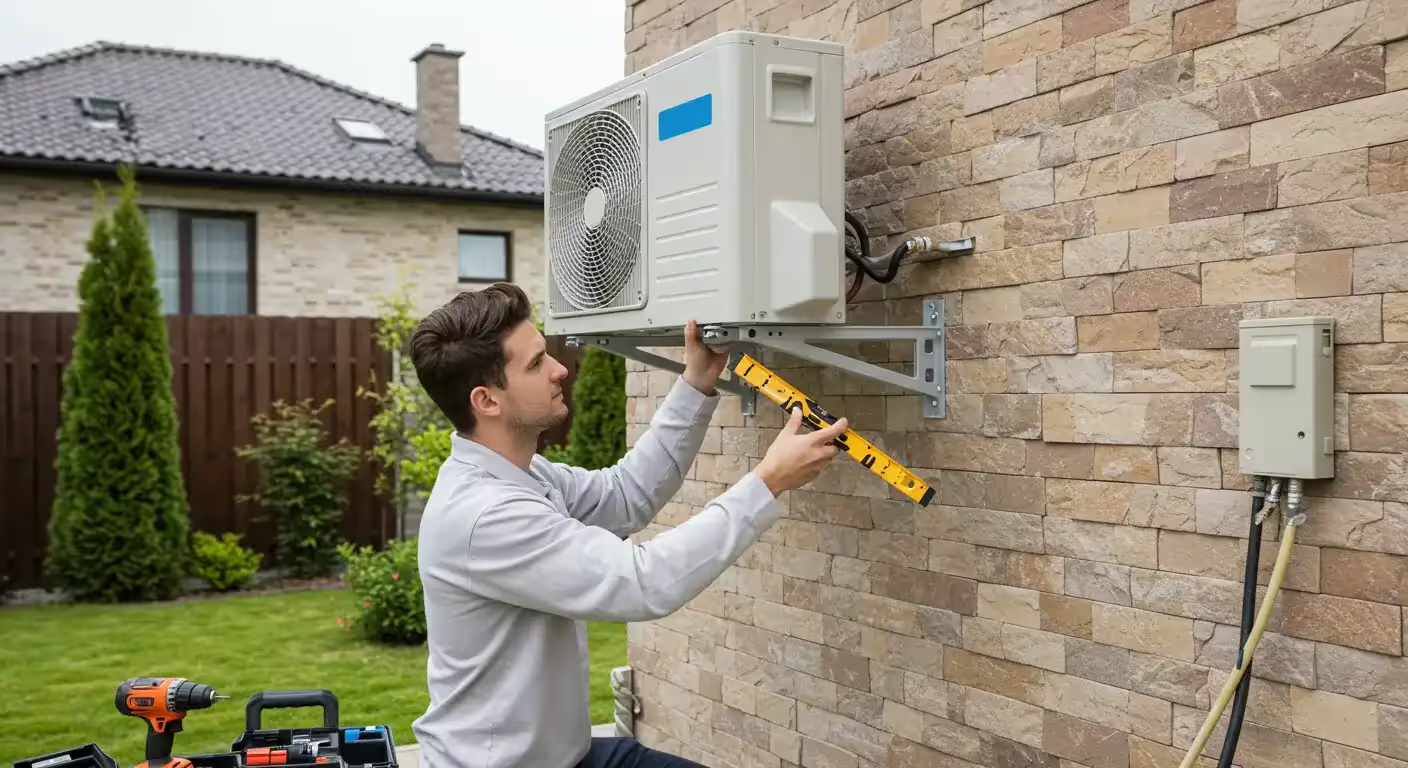
Electrical Component Inspection and Tightening
Modern air conditioners rely on complex electrical connections to communicate between the thermostat, the compressor, and the fan motors. Over time, vibrations from normal operation can loosen these connections, leading to arcing, pitting, or sudden electrical failure.
- Technicians inspect the capacitor, which is responsible for starting the compressor. A weak capacitor is a leading cause of compressor failure.
- All wiring connections are tightened to prevent voltage drops that can overheat the motor.
- The contactor is checked for signs of burning or pitting, which can cause the AC to run continuously or not at all.
Airflow and Coil Optimization
The ability of your AC to cool the air depends entirely on heat transfer. If the evaporator or condenser coils are coated in dust, dirt, or pollen, the system cannot effectively remove heat from your home.
- Condenser coils are chemically cleaned to remove built-up grime, allowing for efficient heat release outdoors.
- Evaporator coils are inspected for cleanliness and signs of freezing, which often indicate airflow restrictions.
- The blower motor is cleared of debris to ensure consistent air circulation throughout the ductwork.
- Air filters are evaluated and replaced if necessary to prevent strain on the intake system.
Refrigerant and Drainage Systems
Incorrect refrigerant levels—either too high or too low—can drastically reduce efficiency and damage the compressor.
- Gauges are used to measure operating pressures and ensure they match the manufacturer’s specifications.
- The condensate drain line is flushed to prevent water backups. In humid climates, a clogged drain line can trigger safety switches that shut down the entire system or cause water damage to floors and ceilings.
- Technicians verify the sub-cooling and superheat measurements to confirm the system is absorbing and releasing heat correctly.
The Mechanics of Routine Maintenance
Understanding the process of a maintenance visit helps homeowners prepare for the service and know what to expect. The workflow is designed to be thorough yet non-intrusive, focusing on delivering a report on the system's health.
Initial Assessment and Safety Check
- The technician arrives and begins with a conversation about any specific issues you have noticed, such as strange noises, hot spots in the house, or rising energy bills.
- Power to the unit is safely disconnected to allow for internal access.
- A general visual inspection identifies obvious signs of wear, rust, or physical damage to the exterior housing.
The Calibration Phase
- Thermostats are calibrated to ensure the temperature reading on the wall matches the actual temperature in the room. Even a few degrees of variance can cause the system to run longer than necessary.
- Moving parts, such as fan bearings, are lubricated to reduce friction and noise.
- Safety controls are tested to ensure the unit shuts off properly in the event of an emergency or system overload.
Reporting and Recommendations
- Once the physical work is complete, Carter Heating and Cooling provides a detailed status report.
- This report outlines the current condition of vital parts, refrigerant levels, and any potential issues that may require attention in the near future.
- You receive a clear explanation of any recommended repairs, separated from the standard maintenance tasks, allowing you to make informed decisions without pressure.
Deciding Between Maintenance, Repair, or Replacement
One of the primary benefits of regular maintenance is that it provides the data needed to make long-term financial decisions regarding your HVAC system. Knowing when to keep investing in a current unit and when to upgrade is key to managing household expenses.
When to Stick with Maintenance
- The system is less than 10 years old and has been serviced regularly.
- Energy bills have remained consistent relative to weather changes.
- The unit maintains the set temperature without running continuously.
- The warranty is still valid, and maintenance is required to keep it active.
When Repair is the Logical Step
- A specific component, such as a fan motor or capacitor, has failed, but the rest of the system is in good condition.
- The cost of the repair is less than 50% of the value of the system.
- The breakdown is an isolated incident rather than part of a pattern of failures.
- The system uses modern refrigerant (R-410A) rather than phased-out types.
When Replacement Beats Repair
- The system is over 15 years old, nearing the end of its expected operational life.
- You are facing a major repair (like a compressor failure) on an older unit.
- The system uses R-22 Freon, which is no longer manufactured and is prohibitively expensive to restock.
- Your energy bills are rising despite regular maintenance, indicating a loss of internal efficiency.
- The unit requires frequent repairs, effectively "nickeling and diming" you for more than the cost of a monthly payment on a new, high-efficiency system.
Impact of Local Weather on Cooling Systems
The climate in Lewisburg presents specific challenges that make generic maintenance insufficient. The region experiences hot, humid summers and cold winters, with an average annual precipitation of around 45 inches. This moisture and temperature fluctuation significantly impacts how air conditioners perform and degrade over time.
Humidity Management
- High humidity levels mean your air conditioner has to work twice as hard: it must lower the temperature and remove moisture from the air.
- If coils are dirty, the dehumidification process slows down, leading to a "clammy" feeling inside the home even when the air is cool.
- Routine clearing of the condensate drain is critical here, as the high volume of moisture pulled from the air can quickly create algae growth and blockages in the drainage pipes.
Seasonal Debris and Pollen
- The peak precipitation in spring combined with high pollen counts can mat down the outdoor condenser coil.
- Cottonwood and other organic debris create a blanket over the fins, suffocating the unit and causing the compressor to overheat during the first heatwave of summer.
- Maintenance scheduled before the peak heat ensures these obstructions are removed before they cause mechanical stress.
Transitioning Seasons
- The shift from cooling to heating and back again puts strain on reversing valves (in heat pumps) and electrical contacts.
- Occasional snowfall in winter means the outdoor unit must be checked for clearance and proper defrost operation, ensuring it is ready to switch back to cooling when spring arrives.
Why Professional Care Outperforms DIY Efforts
While some homeowners attempt to maintain their systems personally, professional service offers advantages that DIY methods cannot match. Air conditioners are high-voltage, high-pressure systems that require specialized tools and training to service safely and effectively.
Tools and Diagnostics
- Professionals utilize digital manifolds to read refrigerant pressures with exact precision; guessing these levels can destroy a compressor.
- Anemometers and hygrometers are used to measure airflow and humidity performance, data points that are invisible to the naked eye.
- Leak detectors identify microscopic refrigerant leaks that would otherwise go unnoticed until the system stops cooling.
Warranty Preservation
- Most manufacturer warranties explicitly state that the equipment must be maintained by a licensed HVAC professional.
- DIY repairs or lack of documented professional maintenance can void these warranties, leaving you responsible for the full cost of major parts replacement.
- Professional technicians use OEM (Original Equipment Manufacturer) parts or approved equivalents, ensuring compatibility and performance.
Safety and Code Compliance
- Handling refrigerant requires EPA certification due to environmental regulations. Venting refrigerant into the atmosphere is illegal and harmful.
- Checking electrical components carries the risk of electrocution if not done with proper lockout/tagout procedures.
- Professionals ensure that all wiring meets local building codes and safety standards, reducing the risk of electrical fires.
Securing Your Home Comfort
Maintaining your air conditioning system is an investment in the longevity of your home’s infrastructure. A well-tuned unit runs quieter, costs less to operate, and provides consistent relief from the outdoor elements. By addressing small issues before they escalate into system failures, you protect your budget and ensure your home remains a sanctuary against the heat.
Carter Heating and Cooling is dedicated to providing the thorough, data-driven service necessary to keep your AC running at peak performance. Don't wait for the first heatwave to discover a problem — contact us today.
Take control of your indoor climate today—schedule your comprehensive maintenance visit now.

Great Service at a Fair Price
Veterans Discount


Senior Discount

Law Enforcement

Fire fighters/ems

Hear From Your Neighbors!
Hear from your neighbors to see how our commitment to dependable service and lasting comfort has made a difference in their homes.