

How can we help today?
Choose an option to see quick actions and get help faster.Mini Split Installation in Lewisburg, KY
Mini Split Installation in Lewisburg, KY
Optimize home comfort with expert mini split installation in Lewisburg, KY. Discover energy-efficient heating and cooling. Contact us today for a consultation!
Stay Comfortable Year-Round with Reliable Mini Split Installation
Tackling unpredictable temperatures in Lewisburg, KY can be challenging, especially when your current HVAC system struggles to reach every room or energy bills continue to climb without a corresponding increase in comfort. Ensure your home maintains optimal comfort with our expert mini split installation services by contacting us today to schedule a site evaluation or discuss financing options.
Carter Heating and Cooling provides a streamlined approach to ductless climate control, ensuring that homeowners do not have to rely on inefficient window units or expensive central air retrofits. We assess the specific thermal load of your property to recommend and install the most efficient system for your space.
- Rapid installation processes tailored to your specific schedule.
- Customized solutions designed for every home size and budget constraints.
- Post-installation support and comprehensive maintenance packages.
- All services come with full compliance to local codes, extensive warranties, and flexible financing options.
A Comprehensive Ductless Climate Control Solution
Investing in a mini split system is about more than just buying equipment; it is about securing a localized, highly efficient heating and cooling solution that adapts to your lifestyle. When you choose professional installation, you receive a turnkey service that transforms how you manage indoor climate. The core of this service involves the integration of two main components: an outdoor compressor/condenser and an indoor air-handling unit, connected by a conduit housing the power cable, refrigerant tubing, and a condensate drain.
Modern ductless systems utilize inverter technology. Unlike traditional rotary compressors that turn on and off completely—causing temperature spikes and energy surges—inverter compressors ramp up or down based on current demand. This allows the system to maintain a constant temperature with minimal energy consumption. For homeowners in Lewisburg, this technology is essential for managing the humid subtropical climate where humidity control is just as important as temperature reduction.
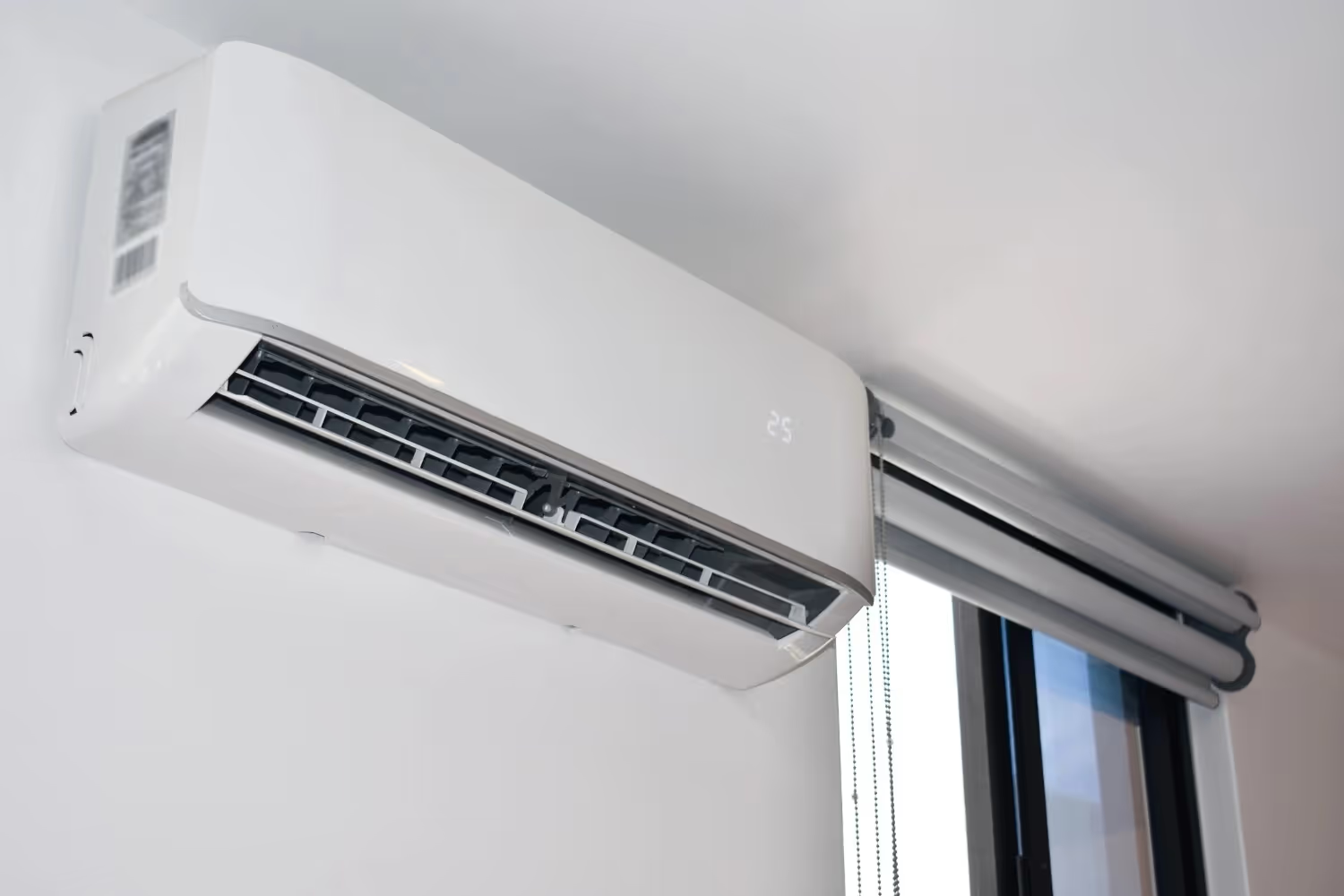
The scope of installation covers everything required to get the system running efficiently. This includes the mounting of indoor units on walls, floors, or ceilings depending on the aesthetic and airflow requirements of the room. It also includes the secure placement of the outdoor unit, whether on a concrete pad or wall-mounted brackets, ensuring it is level and clear of debris that could obstruct airflow.
We also focus on zone-control capabilities. A single outdoor unit can often support multiple indoor heads, allowing for independent temperature control in different rooms. This eliminates the need to cool or heat unoccupied spaces, driving down utility costs significantly. Whether you are outfitting a new sunroom, a garage workshop, or an older home with no existing ductwork, the installation is designed to be low-impact and high-performance.
What to Expect During Your Mini Split Installation
The installation process is methodical and requires technical precision to ensure the longevity of the equipment. While ductless systems are less invasive than central HVAC installations, they require specialized handling of refrigerants and electrical components. We adhere to a strict protocol to ensure safety and efficiency.
Site Evaluation and Load Calculation
First, a technician evaluates the square footage, insulation levels, window placement, and sun exposure of the room. This data is used to perform a manual J load calculation. This step is critical; an undersized unit will run constantly without reaching the set temperature, while an oversized unit will short-cycle, failing to dehumidify the air properly.
Structural Preparation
Once the ideal location is selected, the installation team prepares the mounting surface. For wall-mounted units, a metal bracket is secured to the studs to support the weight of the air handler. The technician ensures the bracket is perfectly level to allow for proper drainage of condensate water.
Drilling the Conduit Hole
A small hole, typically three inches in diameter, is drilled through the exterior wall. This is done with precision to avoid electrical wires or plumbing. The hole is angled slightly downward to the outside to assist with gravity drainage. A sleeve is inserted to protect the lines and seal the opening against weather and pests.
Routing and Connecting Lines
The refrigerant lines, drainage pipe, and control wiring are bundled and passed through the conduit hole. On the exterior, these lines are often covered with a protective housing (line set cover) to shield them from UV rays and improve the aesthetic appearance of the home exterior.
Outdoor Unit Installation
The outdoor condenser is positioned on a composite pad to prevent vibration transfer and sinking, or mounted on brackets to keep it above potential snow lines. The technician connects the refrigerant lines to the service valves on the condenser.
Vacuum and Pressure Testing
Before releasing refrigerant, the lines must be evacuated. A vacuum pump removes all air and moisture from the copper tubing. Moisture inside the lines can freeze or react with oil to form acid, which destroys the compressor. After vacuuming, the system is pressure-tested to ensure there are absolutely no leaks.
Electrical Connection and Startup
A dedicated electrical disconnect box is installed near the outdoor unit for safety and code compliance. Once wired, the system is powered on. Technicians test all modes—cooling, heating, fan-only, and dehumidification—checking airflow and temperature differentials to verify performance.
Determining When to Install a New System Versus Repairing the Old
Homeowners often face the decision of whether to repair an aging HVAC unit or switch to a new mini split system. This decision relies on several factors including the age of the current equipment, the frequency of breakdowns, and monthly energy expenditures.
If your current central air system or older ductless unit is over 10 to 15 years old, efficiency has likely degraded significantly. Older units often utilize R-22 refrigerant, which is phased out and expensive to replenish. If a compressor fails or a major leak occurs in an older system, the cost of repair often approaches or exceeds 50% of the cost of a new installation. In these scenarios, replacement is the financially sound choice.
Consider the layout of your home. If you have built an addition, converted a garage, or have a specific room that is always too hot or too cold (hot spots and cold spots), extending existing ductwork is often cost-prohibitive and inefficient. Installing a mini split in these specific zones solves the problem instantly without overworking the main central system.
Energy bills provide another clear indicator. If utility costs are rising despite normal usage, your current system is working harder to produce the same results. Modern mini splits offer high SEER2 (Seasonal Energy Efficiency Ratio) ratings, often exceeding 20 or 25 SEER. Switching to these high-efficiency units can result in immediate ROI through monthly savings.
Navigating Local Requirements and Climate Challenges
Installing HVAC equipment in Lewisburg involves understanding local regulations and environmental factors. Compliance is not optional; it ensures the safety of your home and the validity of your insurance.
Permitting and Codes
HVAC installations generally require compliance with the Kentucky Department of Housing, Buildings & Construction standards. This includes adhering to electrical codes for the dedicated circuits required by mini split systems. Professional installers handle the logistical burden of ensuring all work meets state and local safety standards.
Handling Humidity
The local climate is characterized by significant humidity in the summer. Mini splits are excellent dehumidifiers, but only if the drainage is handled correctly. We ensure that condensate lines are routed effectively away from the home foundation. In some basement or interior wall applications, condensate pumps may be required to lift water to a drainage point.
Winter Performance
While winters here are generally mild compared to northern states, temperatures can drop below freezing. Carter Heating and Cooling ensures that the units installed have adequate heating capacity (HSPF2 ratings) to function efficiently even when outdoor temperatures dip. Some models are specifically designed with base pan heaters to prevent defrost drainage from freezing and damaging the outdoor unit.
Electrical Infrastructure
Many older homes in the area may have outdated electrical panels. A professional assessment determines if your current amperage service can support the addition of a mini split system or if a sub-panel upgrade is necessary to prevent breaker trips and fire hazards.
Why Professional Installation Matters for Long-Term Performance
While the hardware of a mini split is sophisticated, its performance is entirely dependent on the quality of the installation. A significant percentage of system failures are traced back to improper installation practices rather than manufacturing defects — see our reviews to learn more.
One of the most common issues with amateur installation is improper flaring of copper refrigerant lines. If the connection points are not flared precisely, refrigerant will leak over time. This leads to a gradual loss of cooling capacity and eventually causes the compressor to burn out due to lack of lubrication and cooling. Professional installers use eccentric flaring tools and torque wrenches to ensure factory-spec connections.
Voltage fluctuations can also destroy sensitive inverter boards. Professional installation includes verifying stable voltage delivery and proper grounding. If the voltage supplied is irregular, it can fry the internal electronics, leading to expensive component replacements that warranties may not cover if the installation was not performed by a licensed contractor.
Placement strategy is another differentiator. Placing an indoor unit near a heat source (like a kitchen oven) or in direct sunlight can trick the internal thermostat, causing the unit to run excessively. Placing the outdoor unit in a location with restricted airflow reduces efficiency and shortens the lifespan of the equipment. Experience ensures that units are placed for maximum aerodynamic performance and accurate temperature reading.
Furthermore, manufacturer warranties are almost universally contingent on proof of installation by a licensed HVAC professional. Attempting a DIY installation or using an unlicensed handyman often voids the warranty immediately, leaving the homeowner liable for replacement parts.
Securing Your Comfort with Expert Service
A properly installed mini split system transforms the comfort level of your home, offering precise temperature control and superior energy efficiency. From the initial load calculation to the final pressure test, every step of the process is designed to optimize performance and longevity.
By choosing a professional service, you eliminate the risks associated with refrigerant handling, electrical work, and code compliance. You gain the peace of mind that comes with validated warranties and a system that operates reliably through the heat of summer and the chill of winter.
Carter Heating and Cooling is dedicated to providing Lewisburg residents with high-quality ductless solutions. Ensure your investment is protected and your home remains a sanctuary of comfort.
Take control of your indoor climate today. Contact us now to schedule your mini split installation or to speak with a specialist about your home's specific needs.

Great Service at a Fair Price
Veterans Discount


Senior Discount

Law Enforcement

Fire fighters/ems

Hear From Your Neighbors!
Hear from your neighbors to see how our commitment to dependable service and lasting comfort has made a difference in their homes.