
How can we help today?
Choose an option to see quick actions and get help faster.Furnace Repair in Lewisburg, KY
Furnace Repair in Lewisburg, KY
Furnace Repair in Lewisburg, KY
Immediate Heating Relief When Your System Fails
Facing unexpected furnace breakdowns can be stressful, and the freezing winters in our region do not offer any leniency for equipment failure. A silent furnace means your home temperature drops rapidly, risking frozen pipes and severe discomfort for your family. Carter Heating and Cooling provides rapid, decisive furnace repair in Lewisburg to restore warmth to your property immediately. Contact us to schedule your emergency diagnosis today.
- Get your furnace fixed the same day with our quick response team.
- Transparent pricing with no hidden fees ensures you know exactly what the repair costs before work begins.
- Our licensed technicians provide professional, code-compliant service with every call.
All services are performed by licensed professionals, with satisfaction guarantees on all workmanship.
Today's Repair Services: Fast, Reliable, and Transparent
When you engage a professional for furnace repair, the objective is to restore functionality with minimal downtime. Homeowners in Lewisburg need to know that the technician arriving at their door is equipped to handle the specific mechanical failures common to gas and electric heating systems. We prioritize dispatching trucks that are fully stocked with universal parts, diagnostic tools, and equipment necessary to address the majority of heating issues in a single visit.
Our service focuses on accurately identifying the root cause of the failure rather than simply swapping out parts until the system works. Modern furnaces are complex machines that rely on a sequence of operations involving ignition, combustion, and air distribution. A failure in one area, such as a pressure switch, often indicates an underlying issue with venting or drainage that must be addressed to prevent recurrence.
We handle the full spectrum of furnace repairs, including:
- Ignition System Failures: Whether your system uses a hot surface igniter or a spark ignition, these components are subject to wear and intense heat. We replace faulty igniters and troubleshoot control boards that fail to send the necessary voltage.
- Airflow and Blower Motor Issues: If your furnace is running but little air is coming from the vents, or if the system is overheating and shutting down, the blower motor or capacitor may be at fault. We repair or replace these components to ensure proper heat distribution.
- Thermostat and Control Calibration: Sometimes the issue lies in the communication between your thermostat and the furnace control board. We recalibrate systems and replace faulty wiring to ensure your temperature settings are accurately reflected in the home’s climate.
- Flame Sensor Cleaning and Replacement: A furnace that turns on and immediately shuts off often has a dirty or oxidized flame sensor. This safety mechanism prevents gas from flowing without a flame present. We clean or replace these sensors to restore steady operation.
- Gas Valve and Safety Switch Replacement: Ensuring the safe flow of natural gas or propane is paramount. We test and replace faulty gas valves, limit switches, and rollout switches that may be tripping due to safety hazards.
Understanding Our Furnace Repair Process
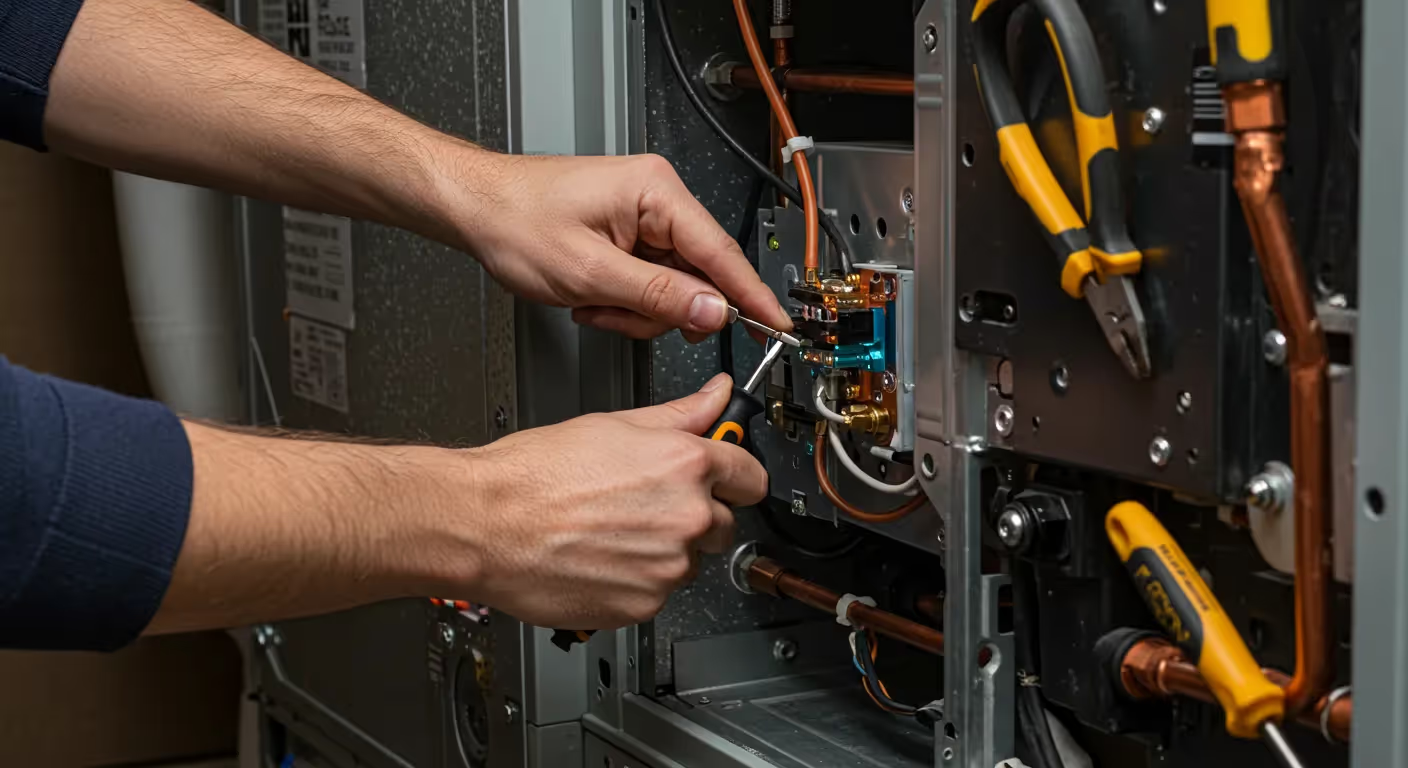
A structured approach to repair ensures that nothing is overlooked and that your heating system returns to peak efficiency. We do not rely on guesswork. Our technicians follow a rigorous protocol designed to isolate the problem, verify the safety of the unit, and execute the repair according to manufacturer specifications.
- System Diagnostics and Safety Check: Upon arrival, the technician performs a comprehensive diagnostic of the furnace. This involves testing electrical voltage, checking gas pressure, inspecting the heat exchanger for cracks, and analyzing the error codes displayed by the control board.
- Clear Explanation and Quoting: Once the issue is identified, you receive a detailed explanation of the failure and a firm quote for the repair. You will see exactly what parts are needed and the labor required. Work does not begin until you approve this scope.
- Execution of Repairs: The technician proceeds with the approved repairs. This may involve draining the system, disassembling the burner assembly, or wiring in new control modules. We use high-quality replacement parts that meet or exceed OEM standards.
- Testing and Verification: Installing the part is only half the job. We cycle the furnace through multiple operational stages to ensure it ignites, heats, and shuts down correctly. We check for gas leaks, verify proper combustion exhaust, and measure the temperature rise to ensure it falls within the manufacturer’s range.
- Site Cleanup and Final Report: We respect your home by keeping the work area clean. Old parts are removed, and you receive a final report detailing the work performed, providing documentation for your home maintenance records.
Repair or Replace? Making the Right Choice for Your Home
One of the most difficult decisions a homeowner faces during a breakdown is whether to invest in another repair or to replace the aging unit entirely. This decision should be based on data, safety, and financial logic rather than sales pressure. In Lewisburg, where winter temperatures frequently drop into the teens, reliability is the most critical factor.
We assist you in evaluating the condition of your current system using specific criteria to determine the most cost-effective path forward.
- The Age of the System: The average lifespan of a gas furnace is typically 15 to 20 years. If your unit is approaching or has exceeded this range, parts may be becoming obsolete, and the efficiency of the unit has likely degraded significantly. Investing heavily in a unit near the end of its life is rarely economical — apply for financing today.
- Frequency of Breakdowns: If you have required multiple repairs in the last two years, the system is likely entering a phase of rapid decline. "Nickel and diming" repairs can quickly exceed the monthly cost of a new, warranted system.
- The 50% Rule: A general industry standard suggests that if the cost of the repair is 50% or more of the cost of a new system, replacement is the smarter financial move. This is particularly true if the warranty on the current unit has expired.
- Safety Concerns: Certain failures, specifically cracked heat exchangers, pose a carbon monoxide risk to the household. In almost all cases, a cracked heat exchanger necessitates an immediate replacement of the furnace or the heat exchanger itself, which is a major repair often comparable to the cost of a new unit.
- Energy Efficiency Considerations: Older furnaces often operate at 60% to 70% AFUE (Annual Fuel Utilization Efficiency). Modern units operate at 95% or higher. Upgrading can result in immediate reductions in monthly utility bills, which helps offset the installation cost over time.
Lewisburg Area Service Information: Permits and Utility Details
Operating in Logan County requires adherence to specific local building codes and safety regulations, particularly concerning gas appliances and electrical connections. Carter Heating and Cooling ensures that all repairs comply with Kentucky state mechanical codes. This is vital not just for safety, but for maintaining the validity of your home insurance and the manufacturer warranty of your equipment.
Utility Coordination:
Most furnaces in our service area rely on natural gas, propane, or electricity.
- Gas Supply: For gas furnaces, we verify that the gas pressure entering the manifold matches the requirements of the unit. Incorrect pressure can lead to soot buildup, inefficient heating, or damage to the heat exchanger.
- Electrical Requirements: Modern high-efficiency furnaces are electrically sensitive. We check that your dedicated circuit is grounded properly and delivering stable voltage, as fluctuations can damage expensive control boards.
Seasonality and Preparedness:
The heating season in our area runs aggressively from late October through early April. The months of December, January, and February see the lowest temperatures. We strongly advise homeowners to test their systems in early autumn. Waiting until the first freeze often results in longer wait times as demand for emergency service spikes across the region.
Ventilation and Humidity:
Our humid subtropical climate means that moisture control is a year-round concern. During winter, however, the air inside the home can become excessively dry when the furnace runs constantly. We check that your furnace’s humidifier (if equipped) is functioning and that the exhaust venting is clear of bird nests or debris, which are common issues in local residential areas.
Why Choose Carter Heating and Cooling? Our Commitments to You
Selecting a service provider for furnace repair is a decision about trust and technical capability. You need a team that understands the urgency of a cold home and possesses the certifications to resolve the issue legally and safely. We distinguish ourselves through technical rigor and operational efficiency.
- Licensed and Insured Professionals: We do not use unskilled labor. Every technician is trained and holds the necessary certifications to work on gas and electric heating systems in Kentucky.
- Fully Stocked Service Vehicles: We aim to fix the problem on the first visit. Our trucks carry a wide inventory of common parts, reducing the need to order components and leave you in the cold while waiting for delivery.
- Accurate Diagnostics: We use advanced diagnostic tools to read system pressures, temperatures, and electrical signals. This eliminates guesswork and ensures you only pay for the repairs you actually need.
- Respect for Property: We treat your home with care. Our technicians use drop cloths and shoe covers to protect your flooring and clean up the workspace thoroughly once the job is complete.
- Warrantied Workmanship: We stand behind our repairs. If the same component fails within our warranty period, we return to fix it. You pay for a solution, not an attempt.
Don’t Freeze—Act Now!
Restoring your heat is our priority. Do not let a minor noise turn into a major system failure during the coldest night of the year.
Contact us immediately to dispatch a technician and get your furnace running efficiently again.

Great Service at a Fair Price
Veterans Discount


Senior Discount

Law Enforcement

Fire fighters/ems

Hear From Your Neighbors!
Hear from your neighbors to see how our commitment to dependable service and lasting comfort has made a difference in their homes.