

How can we help today?
Choose an option to see quick actions and get help faster.Heat Pump Installation in Franklin, KY
Heat Pump Installation in Franklin, KY
Explore professional heat pump installation in Franklin, KY. Enhance home comfort and lower energy bills. Contact us for a consultation and clear pricing.
Dealing with rising energy costs and uncomfortable temperatures in your living space can make your home feel less like a sanctuary and more like a burden. It might be time to consider a new, efficient heat pump installation in Franklin, KY to restore balance and efficiency to your property. Contact us today to discuss our flexible financing options or to schedule your system evaluation.
Upgrading your heating and cooling equipment provides immediate benefits beyond just temperature control. Homeowners who proactively replace aging units often see distinct advantages:
- Experience immediate improvements in home comfort, humidity control, and overall system efficiency.
- Reduce your monthly energy bills significantly by switching to a modern, high-SEER rated system.
- Enjoy peace of mind knowing your investment is backed by extensive manufacturer warranties and reliable support.
We handle all necessary permits and offer flexible financing options to make your upgrade easy and affordable.
What to Expect From Professional Heat Pump Installation
Investing in a new heat pump is a significant decision that impacts your home’s infrastructure for the next 15 to 20 years. When you schedule an installation, you are purchasing a comprehensive service that goes far beyond simply dropping a new unit on a concrete pad. The focus remains on maximizing energy efficiency and ensuring the equipment is sized correctly for your specific square footage and insulation levels.
A professional installation includes a full assessment of your current heating and cooling load. This calculation, often referred to as a Manual J load calculation, determines the exact heating and cooling capacity required for your home. Oversized units cycle on and off too frequently, leading to premature wear and high humidity, while undersized units run constantly without ever reaching the set temperature. Getting this calculation right is the first step in the process.
The scope of work generally covers the removal and environmentally safe disposal of your old equipment. Refrigerant must be recaptured according to EPA regulations to prevent environmental contamination. Following the removal, the installation team prepares the site. This involves leveling the ground for the outdoor condenser, inspecting the electrical disconnect box to ensure it meets current safety codes, and checking the condition of the refrigerant line set.
Your installation also includes the integration of modern thermostat controls. Many new heat pumps offer variable speed technology or two-stage cooling, which requires sophisticated thermostats to communicate effectively with the air handler. Ensuring these components "talk" to each other correctly is vital for achieving the SEER (Seasonal Energy Efficiency Ratio) and HSPF (Heating Seasonal Performance Factor) ratings advertised by the manufacturer.
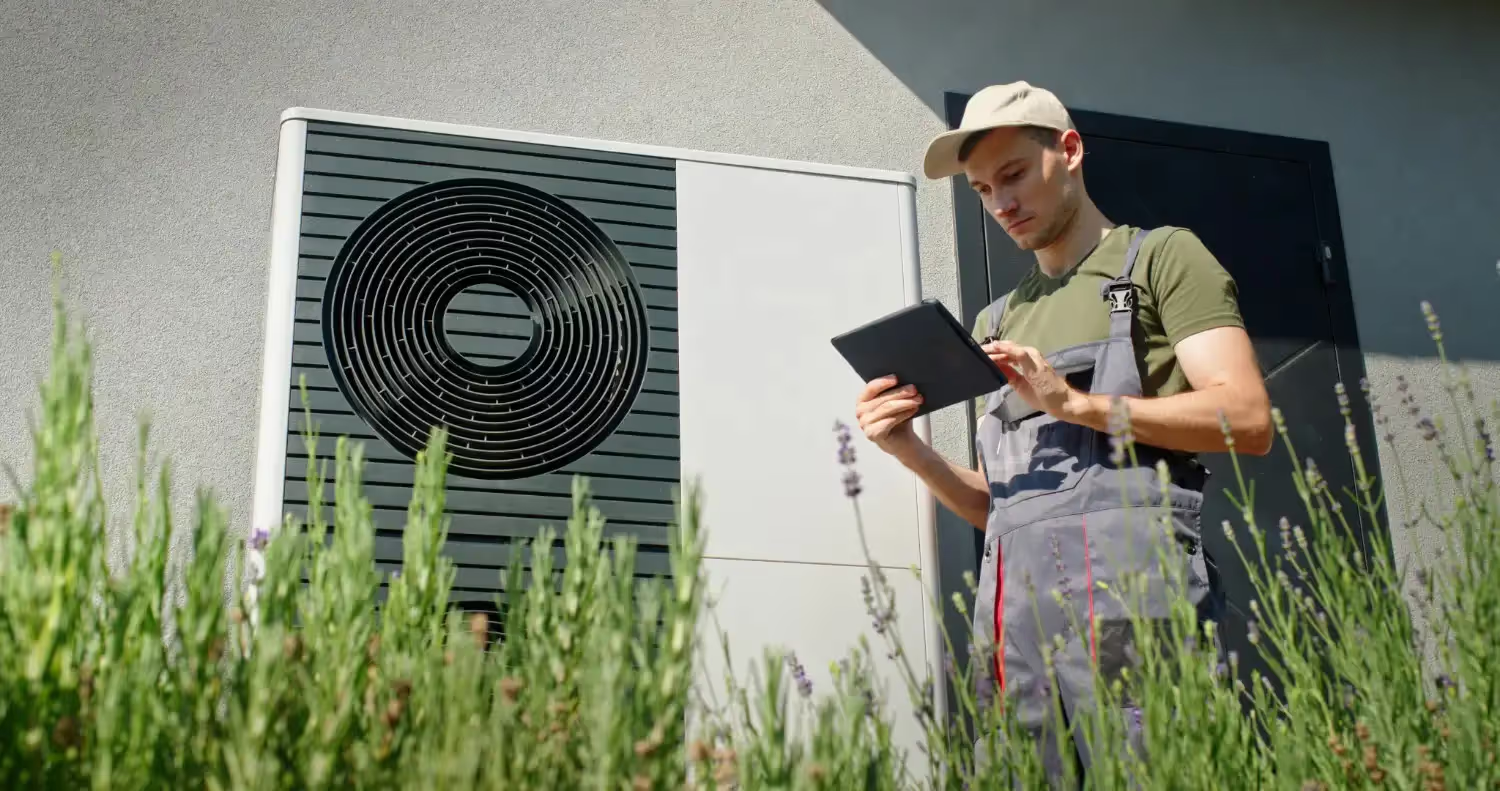
The Installation Process Step-by-Step
Understanding the sequence of events on installation day helps homeowners prepare and ensures the project moves smoothly. While every home has unique challenges, the workflow follows a specific technical standard to guarantee system integrity.
- The process begins with site protection. Technicians lay down drop cloths and wear protective shoe covers to ensure your flooring and home interior remain clean throughout the project.
- Next, the power to the existing HVAC system is disconnected at the main breaker panel and the local disconnect box. This is a critical safety step before any physical work involves high-voltage wiring.
- The existing refrigerant is then pumped out of the system into recovery cylinders. This is a closed-loop process designed to prevent any chemical leakage.
- Once the old unit is clear, the physical removal takes place. The outdoor condenser and the indoor air handler (or furnace coil) are disconnected from the ductwork and electrical supply and removed from the premises.
- Modification of the plenum (the box connecting the unit to the ductwork) is often necessary. New units rarely have the exact dimensions of older models. Sheet metal work is performed on-site to create an airtight seal between the new air handler and your existing ducts.
- The new indoor and outdoor units are positioned. The outdoor unit is set on a new composite pad to dampen vibration and keep it level.
- Refrigerant lines are brazed. This involves welding the copper lines that connect the indoor and outdoor units. During this step, nitrogen is flowed through the lines to prevent oxidation inside the copper, which protects the compressor from future damage.
- A vacuum pump is attached to the system to remove all moisture and air from the lines. This "evacuation" process is measured in microns to ensure a perfectly dry and sealed environment for the refrigerant.
- The system is charged with the precise amount of refrigerant specified by the manufacturer. Technicians measure subcooling and superheat levels to verify the charge is accurate for the current weather conditions.
- Finally, the system undergoes a full startup commissioning. Airflow is measured, the thermostat is programmed, and the auxiliary heat strips are tested to ensure they engage during emergency heating modes.
Determining When Replacement Beats Repair
Homeowners often struggle with the decision to repair an existing unit or invest in a replacement. There are clear technical and financial indicators that signal when a replacement is the more prudent financial choice.
The "50% Rule" is a standard industry benchmark. If the cost of a repair approaches 50% of the value of a new system, replacement is generally recommended. This is particularly true if the equipment is out of warranty, as you are investing significant capital into a depreciating asset that may fail again in a different component shortly after.
Age is the primary factor. Heat pumps in the Franklin area typically have a service lifespan of 12 to 15 years. As systems age, their internal components—specifically the compressor and the reversing valve—succinctly lose efficiency. An older unit may technically run, but it requires significantly more electricity to move the same amount of heat as a modern system. If your heat pump is over 12 years old and requires a major component replacement, such as a compressor or fan motor, upgrading is often more cost-effective.
Refrigerant type is another critical decision point. Older systems utilize R-22 (Freon), which has been phased out due to environmental regulations. R-22 is becoming prohibitively expensive and difficult to source. If your older system develops a leak, the cost to refill it can be astronomical. Modern systems use R-410A or newer refrigerants like R-454B, which are efficient, available, and compliant with federal standards.
Carter Heating and Cooling helps homeowners evaluate the history of the unit. If you have required frequent repairs over the last two years—even minor ones—it indicates that the system is entering the failure phase of its lifecycle. Constant breakdowns are not only expensive but also leave you vulnerable to outages during extreme weather.
Navigating Local Climate and Requirements
Installing a heat pump in Franklin requires specific attention to the regional climate and local building regulations. The humid subtropical climate presents distinct challenges that the installation must address to ensure year-round comfort.
- Humidity Control: Summers in this region are characterized by high humidity. A heat pump is not just an air conditioner; it is a dehumidifier. Properly sizing the unit is critical for moisture removal. If a unit is too large, it will cool the air too quickly and shut off before it has had time to pull moisture out of the air. This results in a "clammy" feeling inside the home. Professional installation prioritizes long run times at lower speeds (using variable speed compressors) to maximize dehumidification.
- Winter Performance and Auxiliary Heat: While winters are generally mild, temperatures do drop below freezing. Modern heat pumps are highly efficient at extracting heat from cold air, but they need a backup plan for extreme dips. This is where "heat strips" or electric resistance heating elements come into play. These are installed inside the air handler to provide supplemental heat when the outdoor temperature drops below the balance point of the heat pump. Ensuring these are sized correctly for your electrical panel is a key part of the installation.
- Permitting and Electrical Codes: Local municipalities often require permits for HVAC replacements to ensure the work meets safety standards. This includes verifying that the electrical circuit feeding the unit is sufficient for the new load. Newer, more efficient units might draw fewer amps, but the wire gauge and breaker size must still match the manufacturer's specifications. The disconnect box outside must also be up to code, providing a safe way to cut power during maintenance.
Types of Heat Pump Systems Available
When selecting a system for installation, you are not limited to a single design. The layout of your home and your existing infrastructure dictate which configuration offers the best performance.
- Split-System Air Source Heat Pumps: This is the most common configuration for homes with existing ductwork. It consists of an outdoor condenser and an indoor air handler. These systems are ideal for whole-home heating and cooling and can be integrated with smart thermostats for zone control.
- Ductless Mini-Splits: For room additions, garages, or older homes without ductwork, ductless systems are the solution. They require only a small hole in the wall for the line set and mount directly on the wall or ceiling. They offer incredibly high efficiency because there is no energy loss through leaky ducts.
- Dual Fuel (Hybrid) Systems: In some scenarios, a heat pump is paired with a gas furnace instead of electric heat strips. The heat pump handles the moderate heating loads (which is most of the winter), and the gas furnace takes over only when temperatures drop significantly. This approach maximizes efficiency by using electricity when it is most efficient and gas when it provides the best thermal output.
Why Professional Sizing Matters More Than Brand
While the brand of the equipment matters, the quality of the installation and the accuracy of the sizing are the most significant predictors of system longevity. A top-tier brand installed poorly will fail sooner than a mid-tier brand installed perfectly.
Ductwork is often the neglected variable in heat pump efficiency. If your existing ducts are undersized, crushed, or leaking, a new high-efficiency heat pump will never perform to its rated capacity. The static pressure—the resistance the air faces as it moves through the ducts—must be measured. High static pressure forces the blower motor to work harder, reducing its lifespan and increasing noise levels. A professional installation includes an assessment of the duct system to ensure it can handle the airflow requirements of the new unit.
Furthermore, the placement of the outdoor unit affects performance. It requires adequate clearance on all sides to allow for proper airflow. If it is crowded by shrubs, fences, or placed too close to the house, the compressor runs hotter than intended. Professionals ensure proper spacing and orientation to facilitate maintenance access and optimal heat exchange.
Ensuring Long-Term Performance and Warranty Protection
The installation marks day one of the system's life, but long-term performance relies on protection and maintenance. New heat pumps come with manufacturer warranties that typically cover parts for 10 years. However, these warranties often contain clauses that require proof of professional installation and regular maintenance.
Registering the equipment is a step that cannot be skipped. Most manufacturers offer a base warranty (e.g., 5 years) that extends to the full term (e.g., 10 years) only upon product registration within typically 60 to 90 days of installation. Professional installers handle this documentation or provide you with the exact serial and model numbers needed to complete it immediately.
Labor warranties are separate from parts warranties. While the manufacturer covers the compressor or coil, they do not cover the cost of the technician's time to replace it. Many installation packages include a labor warranty for the first year or more, providing a buffer against early component failures (infant mortality) that can occur with manufactured electronics.
Routine maintenance is the mechanism that keeps these warranties valid. This involves annual checks of the refrigerant charge, cleaning the coils, and inspecting electrical connections. A neglected system that fails due to a dirty filter or clogged coil may have its warranty claim denied. Establishing a maintenance schedule immediately after installation ensures the investment remains protected.
Secure Your Home Comfort Today
A new heat pump installation is a direct investment in the comfort, safety, and efficiency of your home. By replacing an outdated or failing system, you eliminate the unpredictability of breakdowns and the financial drain of inefficient operation. The technology available today offers superior humidity control, quieter operation, and lower monthly costs compared to units manufactured just a decade ago.
Carter Heating and Cooling is committed to providing precise, code-compliant installations that stand the test of time. We focus on the technical details—from load calculations to airflow verification—to ensure your new system delivers the performance you expect.
Take control of your home’s climate. Contact us today to schedule your consultation and get a clear, upfront estimate for your heat pump installation.

Great Service at a Fair Price
Veterans Discount


Senior Discount

Law Enforcement

Fire fighters/ems

Hear From Your Neighbors!
Hear from your neighbors to see how our commitment to dependable service and lasting comfort has made a difference in their homes.