

How can we help today?
Choose an option to see quick actions and get help faster.Air Conditioning Tune-up in Franklin, KY
Air Conditioning Tune-up in Franklin, KY
Beat the Franklin summer heat and humidity with a professional AC tune-up! Complete system calibration to improve efficiency and reliability. Schedule now to maintain coolness all season.
Is Your AC Unit Ready to Handle the Franklin Summer Humidity?
When your air conditioner fails to keep up with the humid summer heat in Franklin, you need immediate professional attention to restore comfort, efficiency, and safety to your home. Contact us today at [Insert Phone Number] to schedule your comprehensive system tune-up.
Living in a humid subtropical climate means your cooling system fights a constant battle against both heat and moisture, and without proper care, components wear down quickly. Carter Heating and Cooling provides detailed inspection and maintenance services designed to catch small issues before they evolve into system failures during the hottest weeks of the year.
- Enhance your AC’s efficiency significantly and lower your monthly energy bills through precision calibration.
- Secure immediate appointment slots with swift service to ensure your home remains cool without interruption.
- Receive service from experienced technicians who adhere to the highest industry standards for safety and performance.
All services are fully licensed and backed by a satisfaction guarantee to ensure peace of mind regarding your investment. Read our reviews for your peace of mind.
What You Get With a Professional System Tune-Up
A tune-up is not merely a quick visual check; it is a rigorous restoration of your system’s specifications to factory standards. Over months of operation, vibration loosens electrical connections, friction wears down motor bearings, and debris clogs vital airflow channels. Our service addresses every mechanical and electrical aspect of the air conditioner to ensure it operates at peak performance.
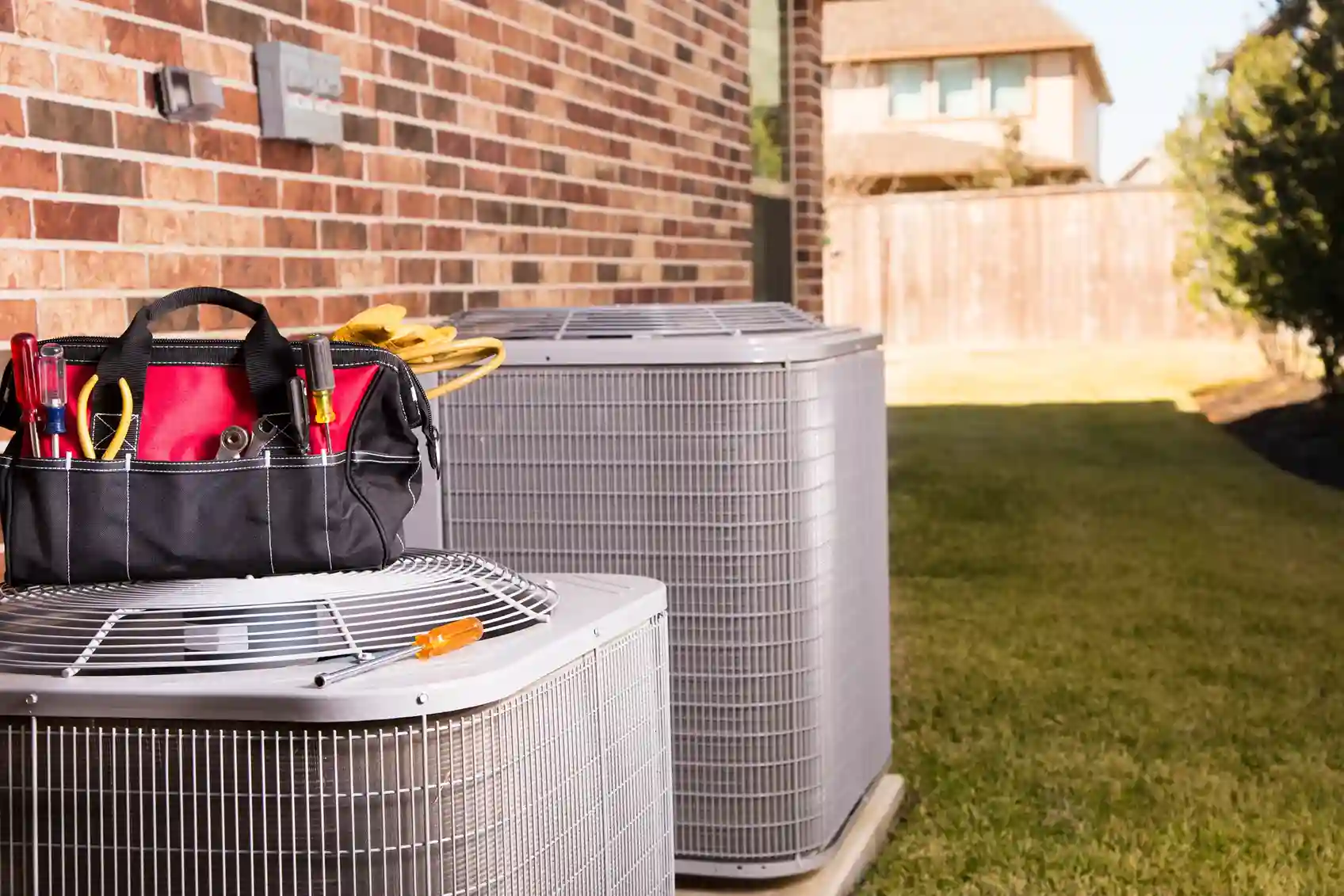
Electrical Component Inspection and Tightening
Modern air conditioning systems rely on precise electrical signals to function. Loose connections can create resistance, leading to overheating and potential electrical fires or component failure.
- Technicians tighten all electrical connections to prevent voltage fluctuation.
- We measure voltage and amperage on motors to ensure they are drawing the correct amount of power.
- Capacitors are tested to ensure they can effectively start the compressor and fan motors.
- The contactor is inspected for pitting or burning, which could prevent the unit from turning on.
Airflow and Filtration Analysis
Airflow is the lifeblood of any HVAC system. Restricted airflow freezes coils and forces the compressor to work harder than necessary.
- We inspect the blower motor and wheel for dust buildup that reduces rotation speed.
- The air filter is checked and replaced or cleaned if necessary to maintain proper static pressure.
- Supply and return static pressures are measured to identify ductwork restrictions.
- Vents and registers are checked for blockages that might disrupt air circulation in specific rooms.
Refrigerant Level and Pressure Checks
The refrigerant charge must be exact. Too little refrigerant causes freezing; too much can damage the compressor.
- Technicians attach gauges to measure operating pressures on both the high and low sides of the system.
- We calculate superheat and subcooling values to verify the system is absorbing and releasing heat efficiently.
- Any leak indicators are noted, and if refrigerant is low, we identify the source before adding more (refrigerant does not evaporate; it only leaves the system through a leak).
Coil Cleaning and Debris Removal
The evaporator and condenser coils are responsible for heat exchange. If they are dirty, the AC cannot cool the house.
- The outdoor condenser coil is chemically cleaned to remove dirt, pollen, and grass clippings.
- The indoor evaporator coil is inspected for mold or dust buildup that hinders heat absorption.
- Debris is removed from the base of the outdoor unit to prevent moisture retention and rust.
Condensate Drain Line Clearing
As your AC removes humidity, it produces water. If the drain line clogs, water can back up and damage your home.
- We flush the condensate drain line to remove algae and slime blockage.
- The drain pan is treated to prevent future biological growth.
- Safety float switches are tested to ensure they shut the unit off if a backup occurs, preventing water damage to floors or ceilings.
The Maintenance Process: Step-by-Step
Understanding what happens during a service visit helps you prepare and ensures you know exactly what work is being performed. We operate with a structured checklist to ensure no component is overlooked.
Arrival and Initial Assessment
The process begins when a technician arrives at your Franklin property.
- The technician will ask about any specific concerns you have noticed, such as strange noises, warm spots in the house, or rising utility bills. Browse our FAQs for common solutions.
- The thermostat is tested to verify it communicates correctly with the air handler and the outdoor condenser.
- Temperature splits are taken at the return and supply vents to establish a baseline of current performance.
System Shutdown and Interior Inspection
Safety is paramount. Power is disconnected to the unit to allow for safe internal access.
- Service panels are removed to access the blower, coils, and electrical compartments.
- Physical components are inspected for signs of wear, corrosion, or stress cracks.
- Moving parts, such as fan motors and bearings, are lubricated to reduce friction and noise.
Cleaning and Calibration
This is the core of the tune-up where performance is restored.
- Coils are sprayed with a specialized cleaner that foams out debris from deep within the fins.
- Electrical components are tightened and tested with a multimeter.
- The blower assembly is cleaned to ensure smooth operation.
System Restart and Performance Verification
Once maintenance tasks are complete, the system is powered back on for a live test.
- The unit is allowed to run for 15 minutes to stabilize pressures.
- Final amperage and voltage readings are recorded.
- The temperature difference between air entering and leaving the system is measured again to quantify the improvement.
- The technician generates a report detailing the work done and the health status of the system.
When to Repair vs. When to Replace
During a tune-up, technicians may discover issues that require more than just maintenance. Deciding whether to repair a specific part or replace the entire system is a financial decision based on the age of the unit, the cost of the repair, and the efficiency of the current system.
The 50% Rule
A general guideline used in the industry involves the cost of repair relative to the value of the unit.
- If the cost of the repair approaches 50% of the cost of a new system, replacement is generally the better financial option. Apply for HVAC financing to help cover costs.
- Investing heavy capital into an aging unit often leads to "throwing good money after bad," as other components are likely to fail soon after.
Age of the System
Air conditioners in Kentucky generally last between 10 and 15 years, depending on usage and maintenance history.
- If your unit is under 10 years old and under warranty, repair is almost always the right choice.
- If the unit is over 15 years old and requires a major component like a compressor or condenser fan motor, replacement offers better long-term value through energy savings and warranty coverage.
Refrigerant Type
Older units utilize R-22 refrigerant (Freon), which has been phased out and is incredibly expensive to source.
- If your older unit leaks R-22, the cost to refill it may exceed the monthly payment of a new, high-efficiency system.
- Modern systems use R-410A or newer refrigerants, which are environmentally friendly and more affordable.
Frequency of Breakdowns
Reliability is a key factor in comfort.
- If you find yourself calling for service multiple times a year, the cumulative cost of service calls and parts adds up quickly.
- A new system eliminates the stress of unexpected breakdowns during a heatwave.
Efficiency Ratings (SEER)
Older units often have SEER (Seasonal Energy Efficiency Ratio) ratings of 10 or 12.
- Modern units start at 14 SEER and go much higher.
- Replacing a 10 SEER unit with a 16 SEER unit can reduce cooling costs by 30% to 40% immediately.
Seasonal Considerations and Local HVAC Needs
Operating an air conditioner in Franklin requires specific attention to local climate factors. The humid subtropical weather patterns place unique stresses on cooling equipment that generic maintenance might miss.
Humidity Control
Franklin experiences high humidity levels, often exceeding 70% in the summer. An air conditioner’s primary job is dehumidification, which happens as a byproduct of cooling.
- If the evaporator coil is dirty or the refrigerant is low, the coil temperature won't drop low enough to condense moisture effectively.
- This leads to a cool but "clammy" feeling in the home, promoting mold growth and discomfort.
- A tune-up ensures the system runs at the correct parameters to strip moisture from the air efficiently.
Cottonwood and Pollen
The local flora in the region produces significant amounts of pollen, cottonwood, and organic debris in late spring and early summer.
- This debris acts like a blanket on the outdoor condenser unit, blocking airflow.
- When the outdoor unit cannot breathe, it cannot release the heat it absorbed from inside your house.
- Regular chemical cleaning of the outdoor coil is essential in this region to prevent compressor overheating.
Utility Costs and Efficiency
As temperatures rise into the 90s, the demand on the local electrical grid increases.
- Inefficient units draw significantly more amperage to do the same amount of work as a tuned unit.
- By ensuring your capacitors and motors are operating within specs, you reduce the electrical draw, keeping your utility bills manageable even during peak pricing months.
Permits and Regulations
While a standard tune-up typically does not require a permit, any significant repair discovered during the process—such as replacing a compressor or altering electrical circuits—must adhere to local building codes.
- Professional technicians ensure that any work performed meets the safety standards required by local municipalities.
- This compliance protects your home insurance validity and ensures safety.
Why Professional Maintenance is a Necessity
Attempting DIY maintenance on an HVAC system is rarely effective and can be dangerous. The systems operate with high-voltage electricity and high-pressure gases. Professional technicians bring the diagnostic tools, safety gear, and expertise required to perform the job correctly.
Tools and Diagnostics
Homeowners rarely possess the specialized tools required for a proper tune-up.
- Manifold gauges for pressure readings, psychrometers for humidity analysis, and specialized leak detectors are standard equipment for our team.
- Without these tools, "maintenance" is simply guesswork.
Warranty Preservation
Most HVAC manufacturers require proof of annual maintenance to keep warranties valid.
- If a major component fails and you cannot prove the system was maintained by a licensed professional, the manufacturer may deny the claim.
- Carter Heating and Cooling provides documentation of every service, preserving your warranty coverage.
Safety Inspections
Beyond cooling, technicians check for safety hazards.
- Worn wires can cause shorts or fires.
- Issues with the condensate drain can cause water damage.
- For systems with gas furnace backups, we ensure there are no issues that could affect the heating cycle later in the year.
Long-Term System Health
Think of a tune-up like an oil change for a car.
- Neglecting it ensures a shorter lifespan and reduced performance.
- Regular care extends the life of the unit, delaying the expensive capital cost of replacement.
Secure Reliable Cooling and Energy Savings Before the Heat Arrives
Don't wait until the middle of a July heatwave to find out your air conditioner isn't working properly. Proactive maintenance is the only way to guarantee comfort and efficiency.
Secure your comfort and lower your energy bills today. Book your expert AC tune-up or call us now.

Great Service at a Fair Price
Veterans Discount


Senior Discount

Law Enforcement

Fire fighters/ems

Hear From Your Neighbors!
Hear from your neighbors to see how our commitment to dependable service and lasting comfort has made a difference in their homes.