

How can we help today?
Choose an option to see quick actions and get help faster.Air Conditioning Installation in Franklin, KY
Air Conditioning Installation in Franklin, KY
Discover swift and professional AC installation services in Franklin. Our certified technicians ensure cool, efficient homes. Schedule your consultation now!
Restore Total Home Comfort with Professional AC Installation
Stuck in the summer heat with a failing or outdated air conditioner can be miserable, especially when Franklin humidity levels begin to rise. Let our certified technicians provide a swift, professional installation that cools your home instantly; contact us to schedule your assessment or apply for financing today.
- Quick installation turnaround by certified professionals.
- State-of-the-art systems ensuring efficient cooling and lower utility bills.
- Flexible financing options designed to fit your budget.
All installations are fully compliant with local codes and regulations and backed by comprehensive manufacturer and labor warranties. Carter Heating and Cooling ensures that your transition to a new cooling system is seamless, transparent, and technically sound.
Modernize Your Home Cooling System for Efficiency and Longevity
Installing a new air conditioner is a significant investment in your property and your daily comfort. Homeowners in Franklin often find that older units simply cannot keep up with the demands of a humid subtropical climate. As systems age, they lose their ability to remove moisture effectively, leading to a clammy indoor environment and skyrocketing energy bills.
When you invest in a modern installation, you are purchasing more than just a metal box. You are securing a comprehensive climate control solution. New systems operate with higher SEER2 (Seasonal Energy Efficiency Ratio) ratings, which translates directly to reduced electricity consumption. Modern technology allows for variable-speed compressors and two-stage cooling, which adapt to the specific heat load of the day rather than blasting at full capacity 100% of the time.
Current installation standards also focus heavily on air quality. A proper installation includes assessing the entire ventilation ecosystem. This ensures that the new unit pairs correctly with your ductwork to deliver balanced airflow to every room, eliminating hot spots and drafts. Whether you are replacing a central air unit, a heat pump, or installing a ductless mini-split system, the goal is consistent, reliable temperature control that you do not have to micromanage.
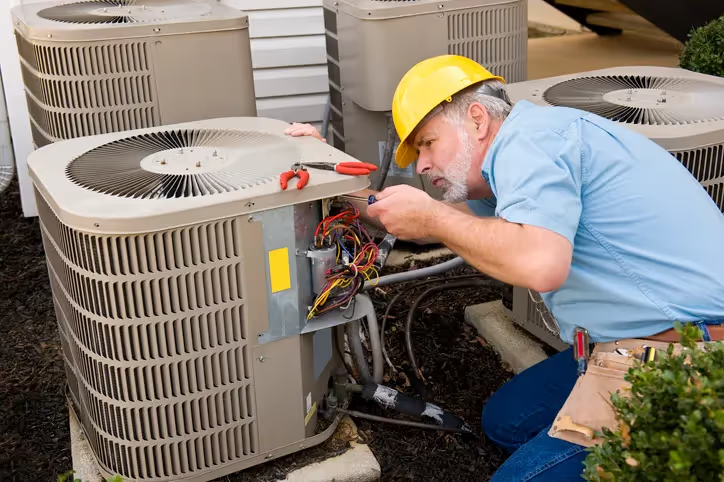
The Professional Installation Process: From Assessment to Airflow
A high-quality AC installation involves a rigorous technical process. Swapping out equipment without proper calculation and calibration leads to inefficiency and premature failure. We follow a strict protocol to ensure your system performs exactly as the manufacturer intended.
Site Evaluation and Load Calculation
- The process begins with a Manual J load calculation. This is the industry standard for determining exactly how much cooling power your home requires.
- Technicians measure square footage, insulation levels, window orientation, and local climate data specific to Franklin.
- This step prevents the installation of an oversized unit, which cycles on and off too frequently (short cycling), or an undersized unit that runs continuously without cooling the space.
Ductwork Inspection and Preparation
- Before a new unit is hooked up, the existing air distribution system is inspected for leaks, disconnects, or inadequate sizing.
- Leaky ducts can lose up to 30% of conditioned air before it reaches your living space.
- Any necessary modifications or sealing are identified to ensure the new equipment is not handicapped by old infrastructure.
Safe Removal and Disposal
- The old refrigerant must be recovered safely according to EPA regulations to prevent environmental contamination.
- The existing condenser and evaporator coil are disconnected and removed from the property.
- The installation site is prepped, which may include leveling the ground pad or reinforcing mounting brackets to ensure stability.
Equipment Installation and Brazing
- The new condenser (outdoor unit) is positioned, and the evaporator coil is installed within the indoor air handler or furnace.
- Refrigerant lines are connected using high-heat brazing techniques. To prevent oxidation inside the copper lines, nitrogen is flowed through the tubing during this process.
- A filter drier is installed to trap any potential moisture or debris within the refrigeration cycle.
System Evacuation and Charging
- A vacuum pump is used to remove air and moisture from the lineset. Technicians use a micron gauge to verify that the system is completely sealed and free of contaminants.
- Once the vacuum holds, the refrigerant is released into the system.
- The charge is fine-tuned based on "subcooling" and "superheat" measurements to ensure the compressor operates efficiently and the coil absorbs heat correctly.
Final Testing and Calibration
- The system is powered on, and the thermostat is calibrated to communicate correctly with the new equipment.
- Technicians measure static pressure to verify that airflow is moving through the ducts at the correct velocity.
- The temperature drop (delta T) across the coil is measured to confirm the system is cooling effectively.
Deciding Between Repair and Replacement
Determining whether to patch up an old system or invest in a new one is a common dilemma. While repairs are often cheaper upfront, throwing money at a dying system is rarely cost-effective in the long run. There are clear indicators that signal it is time to stop repairing and start planning for installation.
The 50% Rule
- If the cost of the necessary repair approaches 50% of the value of a new system, replacement is the smarter financial move. Major component failures, such as a blown compressor or a cracked coil, usually fall into this category.
System Age and Refrigerant Type
- Air conditioners typically last between 10 and 15 years. If your unit is approaching or exceeding this age range, efficiency has likely degraded significantly.
- Older units that utilize R-22 (Freon) are becoming prohibitively expensive to repair due to the phase-out of this refrigerant. Upgrading to a system that uses R-410A or newer eco-friendly refrigerants eliminates this sourcing issue.
Frequency of Breakdowns
- If you have required service calls more than twice in the last two years, the system is becoming unreliable. Join our maintenance plan to help prevent future issues. The cumulative cost of service fees and minor parts often exceeds the monthly payment on a financed new system.
Rising Energy Bills
- A sudden spike in utility costs without a change in usage habits indicates the AC is working harder to produce the same amount of cooling. Replacing an old 10 SEER unit with a modern 16+ SEER unit can reduce cooling costs by 20% to 40%.
Comfort and Humidity Issues
- If the system runs constantly but the house feels sticky or warm, the compressor is losing compression or the coils are fouling. In our humid climate, an AC that cannot dehumidify effectively is failing at half its job.
Local Considerations for Franklin Homeowners
Installing air conditioning in this region requires specific attention to local conditions and regulations. The climate here exerts specific pressures on cooling equipment that must be addressed during the selection and installation phase.
Combating High Humidity
- Franklin experiences significant humidity during the summer months. Standard single-stage air conditioners operate at full blast and then shut off, which cools the air quickly but often fails to remove enough moisture.
- Carter Heating and Cooling often recommends two-stage or variable-speed systems for this area. These units run for longer periods at lower speeds, which allows for superior dehumidification and a more comfortable indoor environment.
Permitting and Code Compliance
- HVAC installations involve electrical work and structural modifications that must adhere to local building codes.
- Permits are often required to ensure the installation meets safety standards regarding breaker sizing, wire gauge, and disconnect box placement.
- Professional installers handle the administrative burden of pulling permits and scheduling required inspections with local authorities.
Electrical System Compatibility
- Older homes in the area may not have the electrical capacity to support modern, high-powered HVAC equipment.
- Assessing the electrical panel is a critical part of the process. If the existing service is 60 or 100 amps, an upgrade may be necessary to run a central air system safely without tripping breakers.
Weather Protection and Clearance
- Severe weather, including thunderstorms and high winds, is not improved. Outdoor units must be securely anchored to a concrete pad or hurricane straps to prevent movement during storms.
- Placement is key; the unit needs adequate clearance from vegetation and structures to maintain airflow. In this region, rapid plant growth means homeowners must be vigilant about keeping the area around the condenser clear.
Critical Features of a Quality Installation
The performance of your new air conditioner depends more on the quality of the installation than the brand name on the box. Even the most expensive, high-efficiency unit will underperform if it is installed incorrectly — read our reviews.
Correct Sizing
- Oversized units cool the air too fast, satisfying the thermostat before the humidity is removed. This leads to mold growth and clammy air.
- Undersized units run perpetually, leading to premature wear and high electric bills.
- Precise sizing ensures the unit runs long enough to dehumidify while maintaining the set temperature.
Sealed and Insulated Ductwork
- The best AC unit cannot overcome leaky ducts. Ensuring the plenum and all connections are sealed with mastic or foil tape is standard procedure for a high-efficiency result.
- Insulating ductwork in unconditioned spaces, such as attics or crawl spaces, prevents energy loss and condensation buildup, which can lead to water damage.
Drainage Management
- AC units produce gallons of water condensate daily. A proper installation includes a clear, pitched drain line and a secondary drain pan with a safety float switch.
- If the primary drain clogs, the float switch shuts the system down to prevent water from overflowing and damaging ceilings or floors.
Thermostat Integration
- Modern systems often require proprietary thermostats to unlock features like variable speed control and humidity settings.
- Technicians ensure the control interface is user-friendly and programmed to maximize energy savings based on your schedule.
Secure Your Comfort with Expert Service
Reliable cooling is not a luxury; it is a necessity for maintaining a safe and comfortable home environment. Don't wait until the middle of a heatwave to address a failing system. Proactive replacement allows you to choose the best system for your needs rather than settling for whatever is in stock during an emergency.
We provide transparent pricing, detailed proposals, and a commitment to technical excellence. Every step of the process, from the initial load calculation to the final airflow test, is executed with precision.
Take control of your indoor climate today. Contact Carter Heating and Cooling to schedule your consultation and ensure your home stays cool for years to come.

Great Service at a Fair Price
Veterans Discount


Senior Discount

Law Enforcement

Fire fighters/ems

Hear From Your Neighbors!
Hear from your neighbors to see how our commitment to dependable service and lasting comfort has made a difference in their homes.