
How can we help today?
Choose an option to see quick actions and get help faster.Heating Service in Franklin, KY
Heating Service in Franklin, KY
Heating Service in Franklin, KY
Is Your Heating System Failing You?
Struggling with a heating system that just won't keep up with the cold or has stopped working entirely is a stressful situation for any homeowner. You need fast, reliable service to ensure your home stays warm and comfortable, and you need a team that can diagnose the root cause immediately. Contact us today to schedule an emergency repair or to inquire about our financing options.
When you choose Carter Heating and Cooling for your heating needs in Franklin, KY, you receive professional attention designed to restore your comfort without delay. We prioritize the following outcomes for every service call:
- Experienced technicians available around the clock to handle unexpected breakdowns.
- Guaranteed same-day service when you place your call before noon.
- Transparent pricing with free, no-obligation estimates on replacements.
Fully licensed and insured for your peace of mind, we also offer flexible financing options to ensure your safety and comfort never have to wait.
Immediate Heating Solutions and Diagnostics
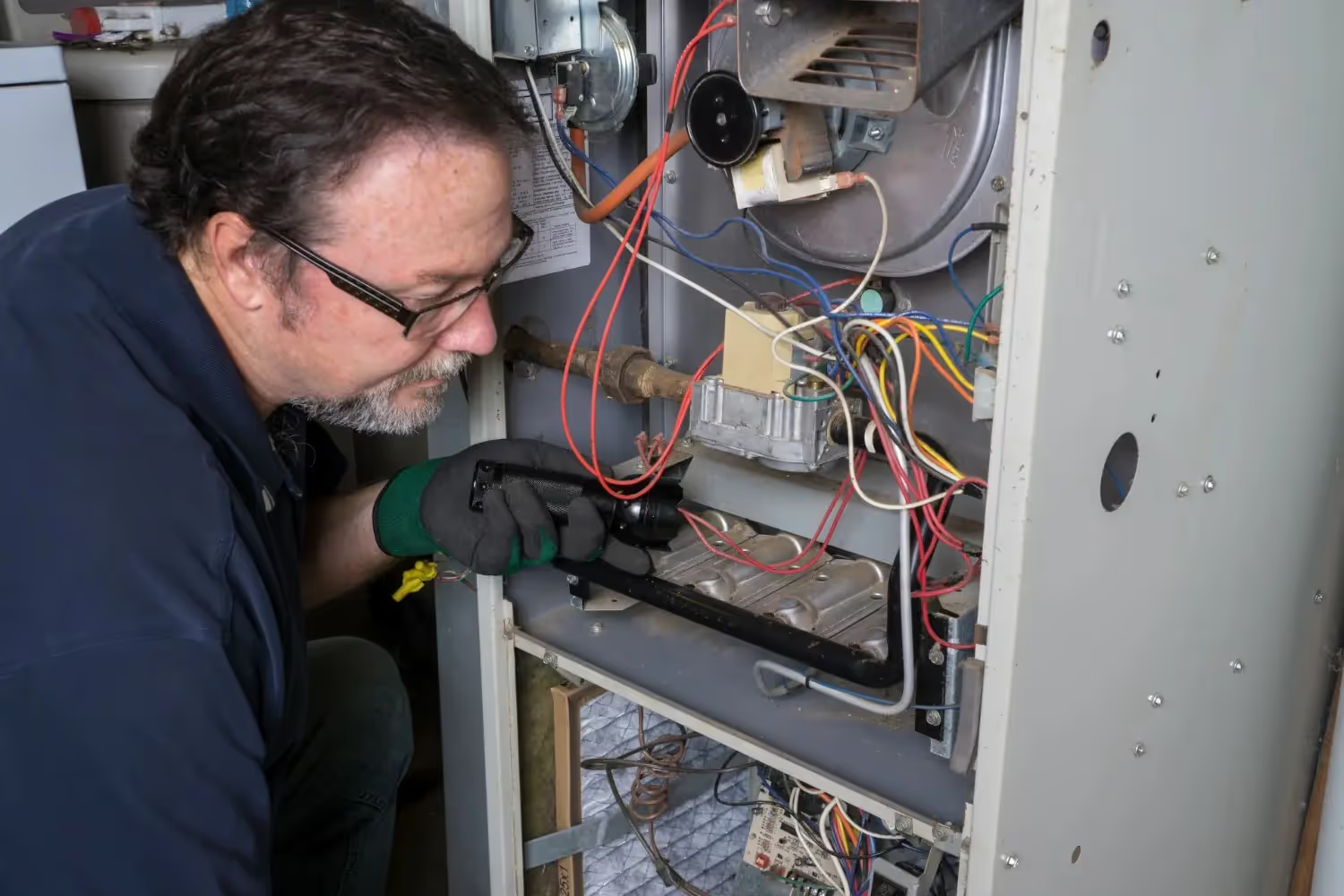
When your furnace or heat pump malfunctions, the priority is restoring heat to the home to prevent frozen pipes and discomfort. Professional heating service goes beyond a simple quick fix; it involves a comprehensive evaluation of your entire HVAC infrastructure. Upon arrival, the focus is on identifying the specific mechanical or electrical failure preventing your system from cycling correctly.
Service appointments typically cover a wide range of heating technologies, including forced-air gas furnaces, electric furnaces, and heat pumps. The scope of work for a standard service visit often includes:
- Ignition System Verification: Testing the pilot light, hot surface igniter, or spark ignition system to ensure the fuel source is igniting safely.
- Airflow Analysis: Checking the blower motor, fan belts, and air filter status to guarantee that warm air is actually moving through the ductwork.
- Safety Control Testing: Inspecting limit switches and safety sensors that prevent the unit from overheating or operating under dangerous conditions.
- Thermostat Calibration: Ensuring the communication between your control interface and the heating unit is accurate and responsive.
- Component Isolation: Testing capacitors, contactors, and control boards to pinpoint electrical failures.
Addressing these issues promptly prevents minor malfunctions from escalating into catastrophic system failures. A distinct burning smell, unusual banging noises, or rapid cycling (turning on and off frequently) are all indicators that professional intervention is required immediately.
The Heating Service and Repair Process
Understanding what happens during a service visit helps you make informed decisions about your property. The process is designed to be systematic and transparent, ensuring you know exactly what is wrong and how much it will cost to fix before any work begins. Read our reviews.
- Dispatch and Arrival: A technician is dispatched to your location with a fully stocked vehicle containing common parts and diagnostic tools. You receive notification when the technician is en route.
- Initial Assessment: The technician performs a visual inspection of the unit and asks specific questions about the symptoms you are experiencing, such as cold spots in the house or strange odors.
- System Diagnostics: Using specialized gauges and meters, the technician tests voltage, amperage, gas pressure, and refrigerant levels (for heat pumps). This step isolates the failed component.
- Review of Findings: You are presented with a clear report detailing the problem. The technician explains why the failure occurred and provides options for repair.
- Authorization and Repair: Work begins only after you approve the scope and price. The technician replaces faulty parts, cleans dirty components, and secures loose connections.
- System Verification: Once the repair is complete, the system is run through a full heating cycle to verify it reaches the set temperature and operates safely.
- Site Cleanup: The workspace is cleaned, and old parts are removed from your property.
Analyzing Common Heating Performance Issues
Before a total breakdown occurs, heating systems often provide warning signs. Recognizing these signs early can save significant money on emergency repairs. In Franklin, where humidity and temperature fluctuations are common, specific performance issues tend to arise more frequently.
- Uneven Heating: If certain rooms remain cold while others are overheating, this often points to issues with ductwork integrity or a failing blower motor. Leaky ducts can lose up to 30% of your generated heat into the attic or crawlspace.
- Short Cycling: If the heater runs for only a few minutes and shuts off, it is "short cycling." This causes excessive wear on the startup components and is often caused by an oversized unit, a clogged air filter restricting airflow, or a faulty thermostat.
- High Energy Bills: A sudden spike in utility costs without a corresponding drop in outdoor temperature indicates the system is working harder than necessary. This loss of efficiency suggests dirty burners, failing motor bearings, or heat exchanger issues.
- Cold Air Blowing: If a furnace blows cold air, it may be due to a tripped safety limit switch (often caused by overheating) or a pilot light that has gone out. For heat pumps, this might indicate the unit is stuck in defrost mode or has a refrigerant leak.
Critical Decision Guide: Repair vs. Replace
Deciding whether to invest in another repair or replace the entire heating system is a financial and logical decision. While Carter Heating and Cooling aims to repair systems whenever feasible, there are mathematical and safety thresholds where replacement becomes the more prudent option.
Consider replacement if the system meets the following criteria:
- Age of Unit: Gas furnaces generally last 15-20 years, while heat pumps last 10-15 years. If your unit is nearing or past this age range, parts availability becomes scarce, and major component failures become imminent.
- The 50% Rule: If the cost of the repair approaches 50% of the value of a new system, replacement is the better financial move. A new system comes with a fresh warranty, whereas a repair only guarantees the specific part replaced.
- Frequency of Breakdowns: If you have required repairs more than twice in the last two years, the system is becoming a money pit. Continued repairs on a dying system offer diminishing returns.
- Safety Hazards: A cracked heat exchanger in a gas furnace is a non-negotiable replacement scenario. This defect can leak carbon monoxide into the living space, posing a severe health risk. Similarly, significant electrical hazards in older units may violate current safety codes.
- Efficiency Ratings: Older units often operate at 60-70% AFUE (Annual Fuel Utilization Efficiency). Modern systems operate at 90-98% AFUE. Upgrading can result in immediate monthly savings that offset the installation cost over time.
Local Factors Affecting Heating in the Region
Operating a heating system in this specific region requires attention to local climate patterns and regulations. The humid subtropical climate means that heating systems often sit idle for long periods during mild shoulder seasons, which can lead to specific mechanical issues upon startup.
- Humidity Management: High humidity levels, even in cooler months, can affect indoor air quality. Heating systems must effectively manage airflow to prevent mold growth within ductwork during periods of inactivity.
- Heat Pump Prevalence: Given the generally mild winters compared to northern states, heat pumps are a common and efficient choice here. However, when temperatures occasionally drop below freezing, the auxiliary (emergency) heat strips must be fully functional. Testing these strips is a critical part of local maintenance.
- Permitting and Codes: Any significant modification or replacement of a heating system in Franklin requires adherence to local building codes and safety regulations. This ensures that gas lines are sized correctly, electrical circuits can handle the load, and exhaust venting meets safety clearance requirements.
- Utility Rebates: Local utility providers frequently offer rebates for upgrading to high-efficiency equipment. Professional service providers can help identify which equipment qualifies for these incentives, lowering the net cost of installation.
The Importance of Professional Execution
Attempting DIY repairs on heating systems is dangerous and often illegal depending on the scope of work. Modern heating equipment involves high-voltage electricity, combustible gases, and pressurized refrigerants. The margin for error is non-existent.
Professional execution ensures:
- Warranty Compliance: Manufacturer warranties strictly require that all service and repairs be performed by a licensed professional. DIY attempts or using unlicensed labor will void these protections, leaving you liable for future costs.
- Carbon Monoxide Safety: specialized tools are required to detect hairline cracks in heat exchangers or back-drafting issues in flue pipes. These are undetectable to the naked eye but critical for home safety.
- Correct Sizing: If a replacement is necessary, a professional performs a Manual J load calculation. This determines the exact heating capacity required for the home based on square footage, insulation levels, and window orientation. Guessing on size leads to short cycling (if too big) or constant running (if too small).
- Electrical Safety: Loose connections or improper wire sizing can lead to electrical fires. Professionals torque connections to manufacturer specifications and ensure the breaker panel supports the unit’s amperage draw.
Secure Your Comfort and Safety: Contact Us Today
Your heating system is the heart of your home during the winter months. Ignoring minor issues or delaying necessary service can lead to uncomfortable nights, frozen plumbing, and higher operational costs. Whether you are dealing with a furnace that refuses to ignite, a heat pump that is icing up, or simply need an expert opinion on the longevity of your current unit, decisive action is required.
We provide the expertise, the tools, and the local knowledge necessary to resolve your heating challenges efficiently. Do not wait for a complete system failure during a cold snap. Trust Carter Heating and Cooling to restore warmth and safety to your property.
Take control of your home comfort today; contact us now to schedule your heating service.

Great Service at a Fair Price
Veterans Discount


Senior Discount

Law Enforcement
Fire fighters/ems
Hear From Your Neighbors!
Hear from your neighbors to see how our commitment to dependable service and lasting comfort has made a difference in their homes.