
How can we help today?
Choose an option to see quick actions and get help faster.Immediate Heating Repair Solutions
A sudden furnace failure during a Franklin, KY freeze creates immediate stress and creates a safety hazard for your home. Carter Heating and Cooling provides rapid diagnostic services to restore your indoor temperature; Contact us now to schedule a repair or discuss financing options.
When the heat goes out, waiting days for a technician is not an option. You need a team that understands the distinct four-season climate in this region and arrives equipped to handle the job immediately.
- Certified technicians arrive the same day to restore warmth and comfort.
- Comprehensive service for all heating model repairs and maintenance.
- Transparent pricing with no hidden costs.
Peace of mind comes standard with fully licensed repairs and extended warranties on parts and labor.
Diagnosing and Restoring Your Heating System Today
When you request service, the priority is minimizing downtime. A heating system failure rarely happens at a convenient time, which is why availability and speed are the primary metrics for a successful repair. The goal is not just to patch the problem but to identify the root cause to prevent a recurrence later in the season.
Upon arrival, the technician assesses the entire heating envelope. This includes the thermostat communication, the fuel source delivery (gas or electric), and the mechanical operation of the unit itself. Residents in Franklin rely on a mix of gas furnaces, electric heat pumps, and boilers. A qualified professional carries the necessary diagnostic tools—multimeters, manometers, and combustion analyzers—to pinpoint faults across any of these system types immediately.
Most heating issues stem from specific, replaceable components rather than a total system failure. The service truck is stocked with universal parts such as ignitors, flame sensors, capacitors, and limit switches. This inventory management allows for a "one-trip" resolution for the vast majority of calls. If a specialized part is required, the procurement process is expedited to ensure your home does not remain cold for long.
Common Failure Points We Address
Heating systems are complex machines with moving parts and electrical connections that degrade over time. Recognizing the symptom often leads directly to the solution. Browse our FAQs for help.
- Ignition Failure: In gas furnaces, if the pilot light, hot surface ignitor, or flame sensor malfunctions, the burners will not light. This acts as a safety lockout to prevent gas accumulation.
- Blower Motor Issues: If the motor that pushes air through the ducts fails, you may hear a humming noise or feel no airflow at the registers. This can be caused by a capacitor failure or a worn-out motor.
- Thermostat Malfunctions: Sometimes the issue is not the heater but the "brain" of the system. Calibration errors or wiring faults can prevent the signal from reaching the furnace.
- Short Cycling: If the unit turns on and off frequently without reaching the set temperature, it may be overheating due to a clogged filter or a failing limit switch.
- uneven Heating: Ductwork leaks or issues with zone dampers can cause some rooms to freeze while others are sweltering.
The Repair Process: From Diagnosis to Warmth
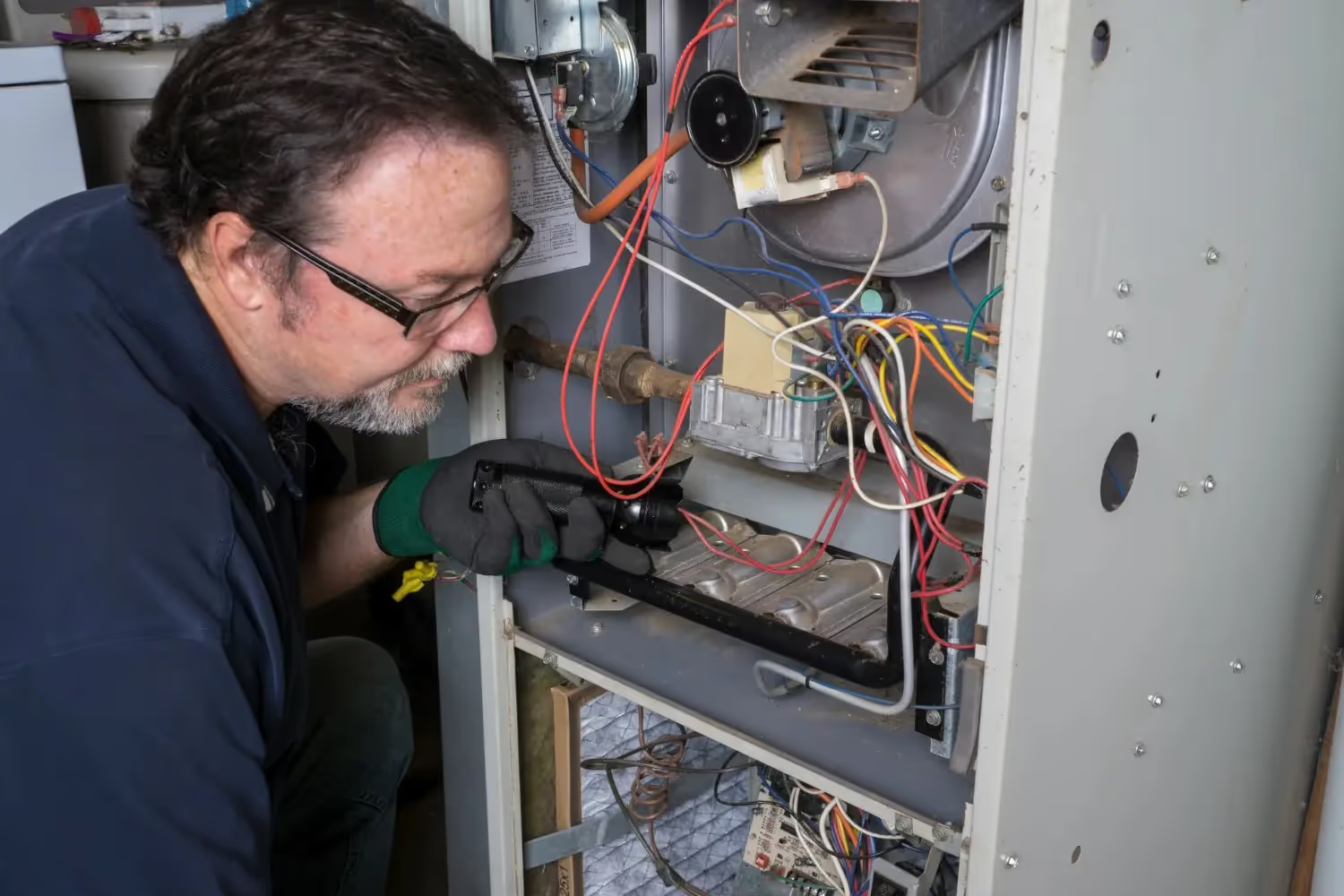
Professional heating repair follows a strict protocol to ensure safety and efficiency. This is not a guessing game; it is a systematic elimination of variables until the problem is isolated and resolved.
- Initial Safety Inspection: The technician first verifies that there are no immediate hazards, such as gas leaks or carbon monoxide back-drafting. The area around the unit is inspected for combustible materials or structural issues.
- System Diagnostics: Using specialized gauges and meters, the technician tests electrical voltage, amperage draws on motors, and gas pressure. This data reveals if components are operating within manufacturer specifications.
- Error Code Analysis: Modern furnaces and heat pumps utilize control boards that flash LED error codes. Interpreting these codes provides a direct map to the internal fault.
- Quote and Approval: Once the problem is identified, you receive a clear explanation of the failure and a flat-rate price for the repair. No work begins without your explicit approval.
- Execution of Repair: The faulty component is removed and replaced. Electrical connections are tightened, and moving parts are lubricated if necessary.
- Performance Testing: After the repair, the system is forced through a full heating cycle. The technician measures the temperature rise (the difference between air entering and leaving the unit) to ensure it matches the equipment’s rating.
- Final Cleanup and Report: The work area is cleaned, and you are provided with a digital report detailing the work performed, the parts used, and the warranty status of the repair.
Repair vs. Replacement: Making the Financial Choice
One of the most critical decisions a homeowner faces is determining when a repair is no longer cost-effective. While the immediate instinct is often to fix the existing unit to save money, there is a tipping point where mounting repair costs exceed the value of a new system. This decision relies on data, specifically the age of the unit, the frequency of breakdowns, and current efficiency ratings.
The 50% Rule and System Age
Industry standards suggest that if the cost of a repair approaches 50% of the value of a new system, replacement is the smarter financial move. This is particularly true if the equipment is out of warranty. In Franklin, where temperature extremes range from the mid-40s in winter to the upper 80s in summer, HVAC systems work hard year-round. A heat pump or furnace that is over 12 to 15 years old is nearing the end of its useful life.
Efficiency and Utility Bills
Older systems often operate at 60% to 70% AFUE (Annual Fuel Utilization Efficiency). This means 30 to 40 cents of every dollar spent on heating is wasted. Modern systems can reach efficiencies of 95% or higher. If your energy bills have been steadily climbing despite normal usage, the internal components of your heater may be degraded beyond what a simple repair can fix. In these cases, replacement offers a return on investment through monthly utility savings.
Frequency of Repairs
If you have required heating service more than twice in the last two years, the system is likely entering a cascade of failure. Fixing one part puts stress on the remaining old parts, leading to another breakdown shortly after. Carter Heating and Cooling technicians provide an honest assessment of the unit’s overall health, helping you calculate the total cost of ownership over the next few years versus the cost of a modern upgrade.
Franklin Weather Patterns and Heating System Stress
The local climate in Franklin, KY, presents specific challenges for heating infrastructure. The distinct four-season climate, characterized by high humidity in the summer and dipping temperatures in the winter, creates a unique wear-and-tear profile on HVAC equipment.
Impact of Moisture and Humidity
High precipitation and humidity levels throughout the year can lead to rust and corrosion on the heat exchanger and burner assembly. Even in winter, moisture management is critical. For homeowners with heat pumps, the outdoor unit is exposed to the elements 365 days a year. The transition from cooling in the humid summer to heating in the damp winter places constant strain on the compressor and reversing valve.
The Strain of Temperature Fluctuations
Kentucky winters can see temperature swings from freezing to mild within a span of days. This requires the heating system to cycle on and off frequently, rather than running at a steady state. This "stop-and-go" operation places significant stress on the capacitor and starter components. Ensuring your system is tuned to handle these fluctuations is essential for longevity.
Local Utilities and Permitting
When repairs involve gas lines or significant electrical alterations, adherence to local building codes is mandatory. Professional service providers manage all necessary compliance regarding utility connections. Whether your home utilizes natural gas, propane, or electricity, the repair must meet safety standards to ensure insurance compliance and resident safety.
Why Technical Certification Matters for Repairs
Heating repair is not a DIY task. Modern heating systems involve high-voltage electricity, combustible gases, and pressurized refrigerants. The difference between a restored system and a safety hazard often lies in the training of the individual performing the work.
Safety Protocols
Certified technicians are trained to handle carbon monoxide risks. A cracked heat exchanger, which might be invisible to the untrained eye, can leak deadly exhaust gases into the living space. Professionals use combustion analyzers to detect these leaks immediately. Furthermore, handling refrigerant for heat pumps requires EPA certification to prevent environmental damage and ensure the system is charged to the exact ounce.
Diagnostic Accuracy
Trial-and-error repairs are expensive. A generic handyman may replace a thermostat when the real issue is a bad transformer, costing you money for parts you didn't need. Specialized training ensures that the diagnosis is based on electrical theory and mechanical principles, not guesswork. This precision reduces labor time and ensures the warranty on your equipment remains valid. Read our reviews for peace of mind. Manufacturers often void warranties if repairs are performed by unlicensed individuals.
Tooling and Equipment
Proper repair requires more than a screwdriver. It requires specialized vacuum pumps, reclamation machines, and sensitive electronic testing gear. Professional teams invest heavily in these tools to ensure repairs meet factory specifications. For example, setting the gas manifold pressure requires a precise manometer; getting this wrong can crack the heat exchanger or soil the burners with soot.
Securing Your Home Comfort
A functioning heating system is a necessity for safety and structural integrity during the winter months. Delaying repairs can lead to frozen pipes, increased damage to the HVAC unit, and uncomfortable living conditions. By choosing a service that prioritizes technical expertise, speed, and transparency, you ensure your home remains warm regardless of the weather outside.
Carter Heating and Cooling delivers the expertise required to handle complex heating challenges in the Franklin area. The focus remains on accurate diagnostics, durable repairs, and helping homeowners make informed decisions about their property.
Restore Safe, Reliable Heat: Schedule Your Emergency Repair Today
A dependable heating system is essential for staying safe and comfortable during Franklin’s coldest weather, and swift, professional repair ensures your home is protected from further damage or discomfort. With Carter Heating and Cooling, you receive precise diagnostics, expert repairs, and honest guidance you can trust.
Don't let a broken heater compromise your safety or comfort. Contact us immediately to dispatch a certified technician to your home.

Great Service at a Fair Price
Veterans Discount


Senior Discount

Law Enforcement
Fire fighters/ems

Hear From Your Neighbors!
Hear from your neighbors to see how our commitment to dependable service and lasting comfort has made a difference in their homes.