

How can we help today?
Choose an option to see quick actions and get help faster.Ductless Inspection in Glasgow, KY
Ductless Inspection in Glasgow, KY
Struggling with increasing humidity and discomfort in Glasgow? Schedule a ductless mini-split inspection to restore efficiency, handle repairs, and safeguard against breakdowns. Contact us today!
Is Your Mini-Split Losing the Battle Against Humidity?
Facing uncomfortable heat or noticing a spike in humidity levels inside your home during Glasgow’s sweltering summers often points to a neglected system. Our comprehensive ductless inspection services identify efficiency gaps and restore your comfort quickly—contact us today to schedule your system check-up.
- Restore peak cooling performance to handle high humidity levels effectively.
- Identify potential failures before they turn into emergency breakdowns.
- Maximize energy efficiency to keep utility costs manageable during peak seasons.
All inspections and subsequent repairs are performed in full compliance with local codes, ensuring your manufacturer warranties remain intact.
Comprehensive Ductless System Evaluation
A ductless mini-split is a sophisticated piece of equipment that relies on precise heat transfer and airflow to maintain comfort in Glasgow. When you book an inspection, you are not simply getting a filter change; you are receiving a deep-dive diagnostic evaluation of the system’s health. Over time, dust, debris, and mold can accumulate on the blower wheel and evaporator coil, acting as an insulating layer that prevents the system from absorbing heat. This forces the compressor to work harder, driving up amperage and shortening the lifespan of the unit.
We examine the internal components that homeowners cannot easily access. This includes checking the condensate drain line, which is critical in our humid climate. If this line becomes clogged with algae or biological growth, it can lead to water damage on your walls or floors. We also verify the communication lines between the indoor and outdoor units. Ductless systems rely on complex electronics to modulate speed and temperature; a loose connection or a degraded wire can cause sporadic errors or total system shutdown.
Our technicians measure the refrigerant charge using precise gauges. Ductless systems are critically charged, meaning even a slight deficit in refrigerant can drastically reduce efficiency, while an overcharge can damage the compressor. We assess the temperature differential (Delta T) across the coil to ensure the unit is removing heat at the manufacturer’s specified rate. This data-driven approach moves beyond guesswork, providing you with a clear picture of your system’s current operational status.
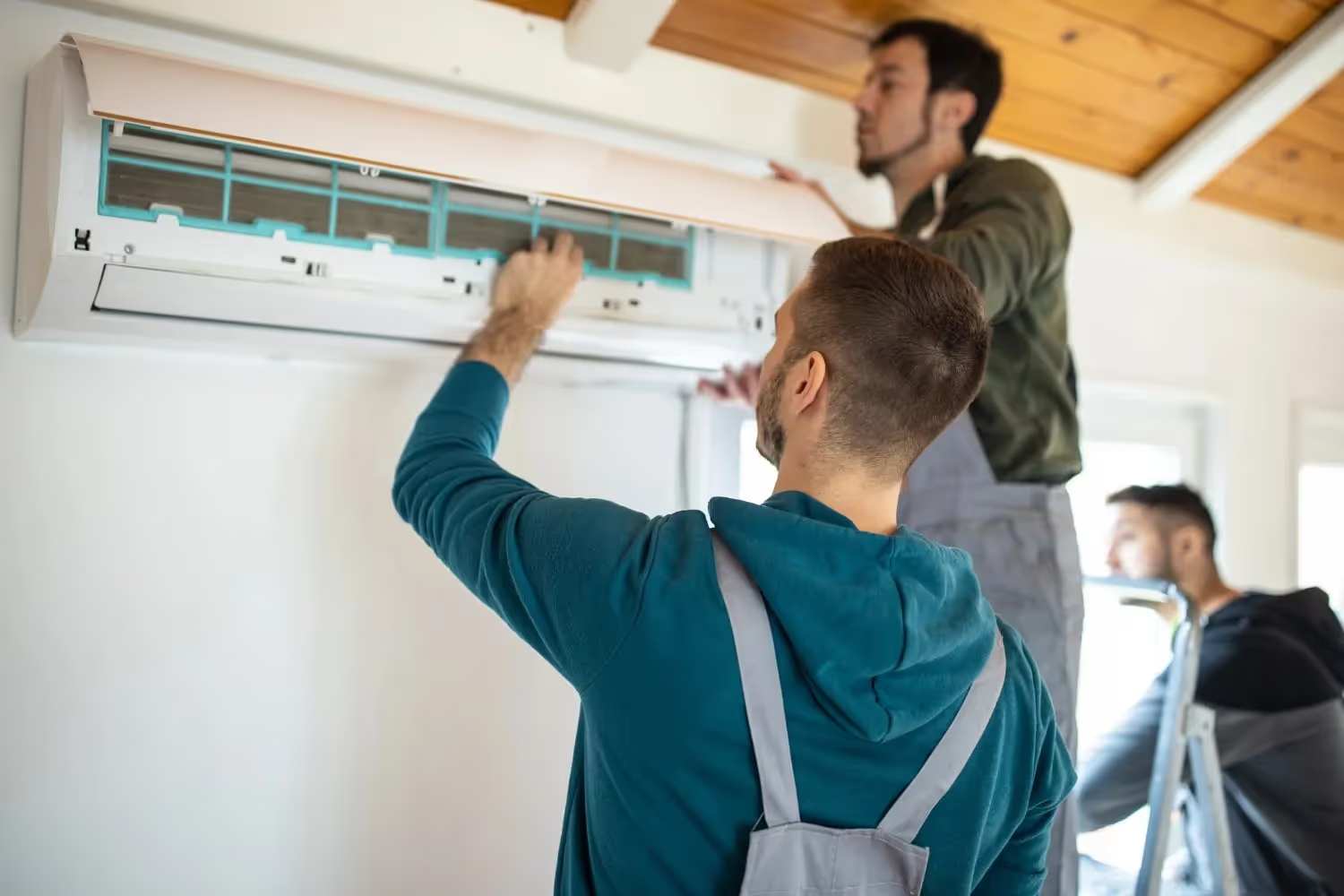
How the Inspection Process Works
We have refined our inspection protocol to be thorough, non-intrusive, and efficient. We understand that your time is valuable, so we follow a strict sequence to cover every critical component without unnecessary delays.
- Initial Visual and audible Assessment: The process begins with a conversation about any specific issues you have noticed, such as strange noises, smells, or warm spots in the room. We then perform a visual check of the indoor and outdoor units, looking for obvious signs of wear, oil stains that indicate leaks, or physical damage to the casing.
- System Performance Testing: Next, we power on the system to observe its operation in real-time. We cycle the unit through its various modes—cooling, heating, dry, and fan-only. During this stage, we listen for irregularities in the fan motor and compressor. We attach diagnostic tools to measure the electrical voltage and amperage to ensure the unit is drawing the correct amount of power.
- Deep Component Analysis: The technician will remove the front casing of the indoor unit to inspect the filters, evaporator coil, and blower wheel. This step is crucial for identifying mold growth or heavy dust buildup. We also check the flare connections, which are the most common points for refrigerant leaks in ductless systems.
- Outdoor Unit Diagnostics: The focus then shifts to the outdoor condenser. We inspect the coil for debris like grass clippings or leaves that restrict airflow. We check the reversing valve (if it is a heat pump) to ensure it shifts correctly between heating and cooling modes. We also verify the integrity of the insulation on the refrigerant lines.
- Final Reporting: Finally, we compile all findings into a clear, direct report. We explain the current condition of your system, highlight any immediate repairs needed to prevent breakdown, and provide recommendations for maintenance. Carter Heating and Cooling ensures you have all the information required to make decisions about your home comfort.
When to Repair vs. When to Replace
An inspection often serves as a decision point for homeowners. While ductless systems are durable, they do not last forever. Knowing the difference between a system that needs a minor repair and one that is nearing the end of its useful life can save you significant money in the long run.
Repair is usually the right choice when:
- The system is under ten years old and has been relatively well-maintained.
- The issue is isolated to a specific, replaceable component, such as a control board, a fan motor, or a sensor.
- The cost of the repair is less than 50% of the cost of a new unit.
- The equipment still uses current refrigerant standards and parts are readily available from the manufacturer.
Replacement becomes the smarter financial decision when:
- The unit is over 15 years old and requires a major component, like a compressor.
- You are facing frequent, recurring breakdowns that add up to more than the price of a new install.
- The system uses obsolete refrigerant (like R-22), making recharge extremely expensive and environmentally unsound.
- The heat exchanger or coil has significant corrosion that is causing multiple leaks.
- The system’s efficiency rating (SEER) is significantly lower than modern units, meaning a new system would pay for itself in energy savings over a few years.
We provide honest assessments based on the data we gather. If a unit is costing you more to keep running than it is worth, we will present the math clearly so you can decide the best path forward — apply for financing online.
Local Considerations for Ductless Systems
Operating a ductless system in Glasgow comes with specific regional challenges that dictate how inspections should be handled. Our climate is classified as humid subtropical, which places a heavy latent load on air conditioning equipment. This means your system isn't just cooling the air; it is working overtime to remove moisture.
- Humidity and Mold Risks: In this region, the combination of dust and high humidity creates the perfect environment for mold growth on the blower wheel inside the ductless head. If left unchecked during an inspection, this can severely impact indoor air quality and reduce airflow. Our inspections prioritize checking these internal components because we know how quickly biological growth can accumulate in our local climate.
- Seasonal Transitions: We experience distinct seasonal shifts, from hot, sticky summers to winters that can see temperatures drop below freezing. Many ductless systems here are used as primary heat sources. Inspecting the reversing valve and the defrost cycle functionality is critical before winter arrives. A system that cannot effectively defrost its outdoor coil will freeze up and fail to provide heat when you need it most.
- Electrical and Utility factors: Local power fluctuations can sometimes impact sensitive inverter boards found in ductless mini-splits. During an inspection, we check the error history of the unit to see if it has experienced voltage spikes or drops. Ensuring your system is properly grounded and protected against local grid inconsistencies is part of ensuring longevity.
Why Professional Inspection Matters
Ductless systems are engineering marvels that offer high efficiency and precise zoning, but they are also intolerant of neglect. Unlike standard central air systems, mini-splits have tighter tolerances for airflow and refrigerant charge. A "DIY" check often misses the subtle signs of trouble that a trained eye will catch immediately.
We utilize specialized tools designed specifically for mini-split diagnostics. This includes digital micron gauges for vacuum testing (during repairs), anemometers for airflow measurement, and thermistors for accurate temperature readings. General HVAC tools are often insufficient for the proprietary technology found in modern ductless brands.
Furthermore, we look at the installation quality during our inspection. Many issues stem from improper initial installation, such as linesets that are too long without additional charge, or drain lines that lack proper pitch. Identifying these root causes allows us to propose permanent fixes rather than temporary band-aids. We focus on the total health of the system to ensure it delivers the efficiency you paid for — check our reviews today.
Detailed Safety and Electrical Checks
Safety is a paramount component of our inspection process. Ductless systems involve high-voltage electrical connections that power the compressor and outdoor fan, as well as low-voltage communication wires that send signals between the indoor and outdoor units. Over time, vibration from the compressor can cause wire nuts and terminal block connections to loosen.
- Tightening Electrical Connections: Loose connections create resistance, which generates heat. This can lead to melted wires, burnt circuit boards, or even fire hazards. We systematically tighten every electrical connection in the system. This simple step prevents a vast number of electrical failures.
- Amperage Draw Monitoring: We measure the amperage draw of the compressor and fan motors. If a motor is drawing more amps than its nameplate rating, it indicates it is working against friction or an electrical fault. This is an early warning sign of motor failure. Catching this early allows for a planned replacement rather than an emergency outage.
- Condensate Pump Safety: Many ductless installations utilize a condensate pump to move water away from the unit. If this pump fails, water can overflow. We test the safety switch on the pump to ensure that if the pump stops working, the AC unit shuts off automatically before causing water damage to your home.
Optimizing Airflow and Efficiency
The efficiency of your ductless system is directly tied to its ability to move air across the heat exchanger. In Glasgow, where pollen and dust are prevalent, filters and coils can become impacted relatively quickly.
- Coil Impact Analysis: Even a thin layer of dust on the evaporator coil acts as an insulator. This prevents the refrigerant from absorbing heat from your room. We inspect the coil density and condition. If cleaning is required, we can identify the specific type of cleaning (chemical vs. steam) that is safe for your specific unit.
- Vane and louver Operation: The directional vanes on a ductless unit ensure air is distributed evenly throughout the room. If the stepper motors that control these vanes fail, you may end up with hot or cold spots. We test the full range of motion of the louvers to ensure optimal air distribution.
Keeping Your System Running Longer
The goal of every inspection is to extend the lifecycle of your investment. Ductless systems are significant investments in home comfort, and premature failure is almost always preventable. By addressing minor wear and tear, lubricating moving parts, and ensuring the refrigerant cycle is sealed and pure, we add years to the life of the equipment.
We also verify that the location of the outdoor unit is still viable. Landscaping growth or new structures can sometimes block airflow to the outdoor condenser years after the initial installation. We provide advice on maintaining the perimeter around the unit to ensure it can breathe freely, which is essential for heat dissipation.
Ensuring Year-Round Comfort
Whether you rely on your ductless unit for supplemental cooling in a sunroom or as the primary heating and cooling source for your entire home, reliability is non-negotiable. Our technicians are trained to look for the specific wear patterns associated with year-round usage.
We check the integrity of the line set insulation. UV exposure can degrade the white insulation on the copper pipes outside. If this insulation rots away, the refrigerant gains or loses heat before it reaches the indoor unit, killing efficiency. We note these details and can replace insulation to restore performance.
Carter Heating and Cooling is dedicated to providing the most thorough, data-backed ductless inspections in the area. We don’t just look at the unit; we analyze how it performs in your specific environment. If your system hasn’t been checked recently, or if you are noticing a decline in comfort, do not wait for a complete failure.
Ensure your system is ready for the season—schedule your inspection with us today.

Great Service at a Fair Price
Veterans Discount


Senior Discount

Law Enforcement

Fire fighters/ems

Hear From Your Neighbors!
Hear from your neighbors to see how our commitment to dependable service and lasting comfort has made a difference in their homes.