

How can we help today?
Choose an option to see quick actions and get help faster.Heat Pump Repair in Glasgow, KY
Heat Pump Repair in Glasgow, KY
Struggling with heat pump issues in Glasgow? Contact us for priority repair and diagnostics. Ensure your home comfort with our expert, efficient service.
Is Your Heat Pump Failing to Maintain Consistent Temperatures?
Facing unexpected heat pump failures in Glasgow means dealing with uncomfortable indoor climates when you need reliability the most. Whether your system is blowing cold air during a winter freeze or failing to dehumidify during a humid summer afternoon, you need a solution that restores your home’s environment immediately. Contact us today for emergency diagnostics or call to schedule a priority repair.
When your system malfunctions, waiting days for a technician is not an option. Our approach ensures that your heat pump is back up and running with minimal disruption to your daily life.
- Get same-day service — no waiting means your comfort is restored faster.
- Enjoy peace of mind with a 24/7 emergency repair service that responds when you need it most.
- Benefit from our comprehensive warranty covering all repair workmanship and parts.
All repairs meet local codes with options for extended warranties and flexible financing to ensure your system is fixed right the first time without breaking your budget. Carter Heating and Cooling is prepared to handle the specific demands of the local climate to keep your system efficient year-round.
Comprehensive Heat Pump Diagnostics and Repair
When a technician arrives at your property, the primary goal is to identify the root cause of the failure, not just treat the symptom. Heat pumps are complex systems that handle both heating and cooling, meaning they have more moving parts and control sequences than a standard air conditioner or furnace. A precise diagnosis prevents recurring issues and ensures that the repair you pay for actually solves the problem.
Upon arrival, the focus shifts to a thorough system evaluation. This involves checking the thermostat communication, measuring refrigerant levels, inspecting electrical connections, and testing the reversing valve—a critical component unique to heat pumps. The objective is to determine exactly why the unit is not meeting the thermostat's set point.
Common issues addressed during a service visit include:
- Reversing Valve Malfunctions: The component responsible for switching between heating and cooling modes can get stuck. If your home is heating when it should be cooling, or vice versa, this valve is often the culprit.
- Refrigerant Leaks: Low refrigerant levels reduce the system’s ability to transfer heat. This often leads to ice buildup on the coils and a significant drop in efficiency.
- Electrical Failures: Worn capacitors, contactors, or frayed wiring can cause the compressor to fail or the fan to stop spinning.
- Auxiliary Heat Strip Issues: In extreme cold, the heat pump relies on electric heat strips for supplemental warmth. If these fail, the system cannot maintain temperature during deep freezes.
- Defrost Cycle Failures: If the outdoor unit freezes over and fails to defrost, airflow is blocked, potentially damaging the compressor.
Repairs are conducted using high-quality parts that match or exceed original equipment manufacturer (OEM) specifications. The goal is to restore the unit to its factory efficiency ratings. You receive a clear explanation of what is broken, why it broke, and the total cost to fix it before any work begins. There are no hidden fees or surprise charges once the work is completed.
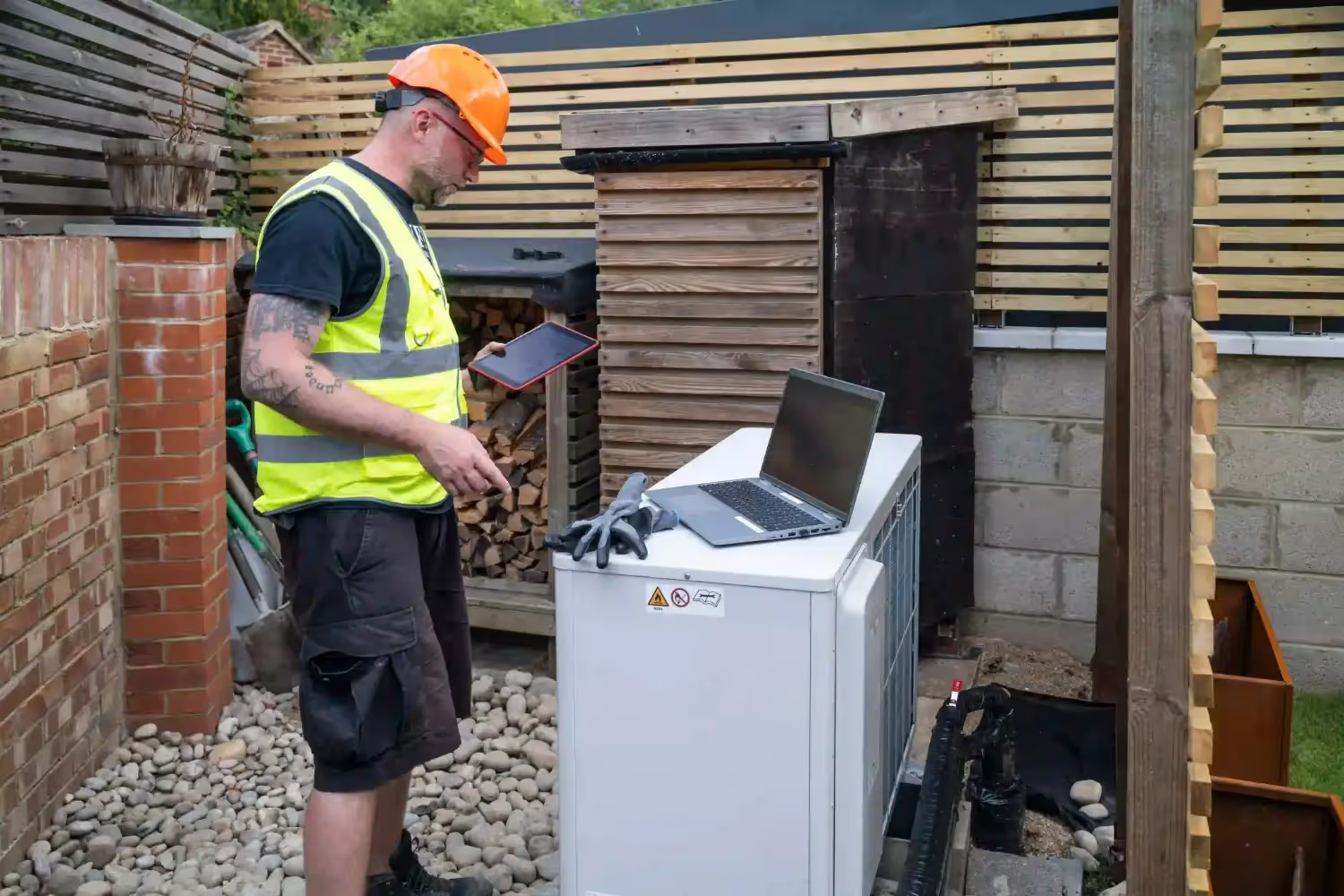
The Repair Process: From Assessment to Restoration
Understanding the service workflow helps you plan your day and know what to expect. The process is designed to be transparent, efficient, and thorough, ensuring that no steps are skipped in restoring your comfort.
- Initial System Assessment: The technician begins by listening to the unit and observing its operation. They will check the thermostat settings and measure the temperature differential between the supply and return air. This data provides immediate clues regarding airflow restrictions or refrigerant issues.
- Component Isolation and Testing: Using specialized multimeters and gauges, specific components are isolated. The technician tests the compressor's amperage, checks the fan motor's capacitor, and verifies the integrity of the control board. This step confirms exactly which part has failed.
- Upfront Quote and Approval: Once the problem is identified, you receive a detailed quote. This includes the cost of parts and labor. The technician explains the repair options available, including any potential temporary fixes versus permanent solutions. Work proceeds only after you provide approval.
- Execution of Repairs: The technician performs the necessary repairs using stocked parts from the service vehicle. This might involve reclaiming refrigerant, brazing a line set, replacing a control board, or swapping out a motor. The work area is kept clean, and safety protocols are strictly followed to protect your home’s electrical system.
- System Testing and Verification: After the new part is installed, the system is not just turned on; it is stress-tested. The technician cycles the unit through all modes (heating, cooling, defrost) to ensure the repair holds. They measure static pressure and airflow to confirm the system is operating within manufacturer parameters.
- Final Walkthrough: The technician reviews the work with you, explains the warranty coverage on the new parts, and provides maintenance tips to prevent future breakdowns.
Carter Heating and Cooling emphasizes a "fix it right the first time" philosophy. This structured process minimizes callbacks and ensures that when the technician leaves, your heat pump is reliable.
Deciding Between Heat Pump Repair and Replacement
Homeowners often face the difficult decision of whether to invest in another repair or to replace the system entirely. This decision should be based on data, not guesses. While repairs are often the most immediate and cost-effective solution, there are specific thresholds where replacement becomes the smarter financial move.
Consider the following factors when making your decision:
- The 50% Rule: If the cost of the repair approaches 50% of the value of a new system, replacement is generally recommended. Investing a significant amount into an aging unit often yields diminishing returns.
- Age of the Unit: Most heat pumps have a lifespan of 10 to 15 years. If your unit is over 12 years old and requires a major repair (like a compressor replacement), it is often more prudent to put that money toward a new, more efficient system.
- Frequency of Breakdowns: If you have required repairs more than twice in the last two years, the system is likely entering a phase of rapid decline. Recurring costs can quickly outpace the monthly payments on a new, financed unit.
- Efficiency Ratings: Older heat pumps often have SEER (Seasonal Energy Efficiency Ratio) ratings of 10 or 12. Modern units start at 14 and go much higher. Upgrading can result in significant monthly energy savings, effectively subsidizing the cost of the new unit over time.
- Refrigerant Type: If your older system uses R-22 refrigerant (Freon), repairs involving refrigerant will be exorbitantly expensive due to the phase-out of this chemical. Systems using R-410A or newer refrigerants are more economical to service.
- Comfort Consistency: If your current unit struggles to keep up with the temperature settings, runs constantly without pausing, or creates hot and cold spots in different rooms, it may be undersized or simply worn out. A new system offers improved variable-speed technology for better humidity control and even temperatures.
Local Climate and Regulatory Considerations
Operating a heat pump in Glasgow, KY, presents specific challenges due to the regional climate and local regulations. The weather here is characterized by distinct four seasons, with hot, humid summers and winters that can dip well below freezing. This variability demands a heat pump that is calibrated perfectly for both dehumidification and heating capacity.
- Humidity Management: During the summer, high humidity levels require a heat pump to run long enough to pull moisture from the air. Short-cycling (turning on and off too quickly) prevents this, leading to a clammy indoor environment. Proper charge and airflow adjustments are necessary to maximize latent cooling (moisture removal).
- Winter Defrost Cycles: In the winter, temperatures frequently hover around freezing with high moisture content in the air. This is the ideal condition for frost to form on the outdoor unit. Your heat pump must have a functioning defrost board and sensors to melt this ice efficiently. Failure to defrost leads to ice encasement, which can crush the outdoor coils.
- Auxiliary Heat Reliance: While heat pumps are efficient, they lose capacity as the temperature drops. Local setups often require correctly sized electric resistance heat strips to take over when the thermometer hits the low 30s or 20s. Ensuring these strips are functional is a key part of local maintenance.
- Permitting and Codes: Repairs involving major component replacements or system change-outs must adhere to local building codes. This ensures safety regarding electrical connections and refrigerant handling. Professional service providers handle all necessary permitting requirements to ensure your home remains compliant with city and county regulations.
- Utility Rebates and Incentives: Local utility providers often offer rebates for repairing or upgrading to high-efficiency systems. Understanding these programs can help offset the cost of service.
Why Professional Diagnostics Matter
Attempting DIY repairs on a heat pump can be dangerous and costly. Unlike simple appliances, heat pumps operate with high-voltage electricity and high-pressure refrigerant. Incorrect handling can lead to severe injury or render the system completely irreparable.
- Electrical Safety: Heat pumps draw significant power. A mishandled capacitor can deliver a dangerous shock even after the power is cut. Professionals are trained to discharge capacitors and handle high-voltage wiring safely.
- Refrigerant Handling: It is illegal under federal law to vent refrigerant into the atmosphere. Technicians must carry EPA certification to purchase and handle refrigerants. Overcharging or undercharging a system by even a small amount can drastically reduce efficiency and lifespan.
- Warranty Preservation: Most manufacturer warranties require proof of service by a licensed HVAC contractor. DIY repairs often void these warranties, leaving you liable for the full cost of future replacements.
- Tooling and Equipment: Diagnosing a heat pump requires vacuum pumps, micron gauges, manifold sets, and sensitive electrical testers. Buying these tools for a one-time repair is not cost-effective.
- System Longevity: A "band-aid" fix might get the system running for a day, but it often places stress on other components. A professional repair addresses the systemic issue, ensuring the longevity of the compressor and motors.
Why Choose Us
Choosing the right HVAC service provider ensures your heat pump is repaired safely, efficiently, and reliably. Carter Heating and Cooling stands out in Glasgow for several key reasons:
- Experience: Years of hands-on experience with heat pumps and HVAC systems allow us to quickly diagnose and resolve issues.
- Local Expertise: We understand the unique climate challenges of Glasgow, ensuring your system is optimized for seasonal temperature swings and humidity.
- Certified Technicians: All our technicians are trained, licensed, and equipped with the latest tools to handle complex repairs safely and accurately.
- Transparent Communication: You’ll always know the cost, scope, and timeline of repairs—no hidden fees or surprises.
- Comprehensive Warranty: All repairs come with workmanship and parts warranties, giving you peace of mind.
- Fast, Reliable Service: Same-day and 24/7 emergency repairs minimize downtime and restore comfort quickly.
- Customer-Focused Approach: We prioritize your satisfaction, providing clear explanations, maintenance tips, and ongoing support to extend the life of your system.
By choosing Carter Heating and Cooling, you’re partnering with a trusted team dedicated to restoring comfort, safety, and efficiency in your home.
Restoring Your Home Comfort
When your heat pump fails, the priority is getting your home back to a livable temperature as quickly as possible. You need a partner who understands the technical intricacies of modern HVAC equipment and the specific demands of the local weather patterns. From the moment you notice an issue to the final testing of the repaired unit, the focus is on speed, accuracy, and long-term reliability.
We provide transparent communication regarding costs, clear timelines for repair completion, and the assurance that your system is operating safely. Whether it is a minor electrical fix or a major component replacement, the work is backed by industry-leading warranties and a commitment to customer satisfaction.
Don't let a broken heat pump compromise your comfort or safety. Secure your appointment now to ensure your system is ready for whatever the weather brings.
Contact Carter Heating and Cooling today to schedule your diagnostic service.

Great Service at a Fair Price
Veterans Discount


Senior Discount

Law Enforcement

Fire fighters/ems

Hear From Your Neighbors!
Hear from your neighbors to see how our commitment to dependable service and lasting comfort has made a difference in their homes.