

How can we help today?
Choose an option to see quick actions and get help faster.AC Installation in Glasgow, KY
AC Installation in Glasgow, KY
Upgrade your comfort with Carter Heating and Cooling in Glasgow. Expert AC installation services available 24/7 to ensure efficient and effective cooling. Call now!
Is Your Cooling System Failing to Handle the Summer Heat?
Glasgow's humid subtropical climate creates a distinct need for reliable climate control, and when summer humidity peaks, an underperforming unit can make your home unbearable. If you are noticing uneven cooling, loud operation, or a system that runs constantly without reaching the set temperature, contact us immediately to schedule a comprehensive evaluation or financing discussion.
The discomfort of a breakdown often strikes when you need relief the most. Trying to push an aging, inefficient system through another season often results in higher monthly utility bills and the looming threat of a total system failure. You require a permanent solution that restores control over your indoor environment.
Carter Heating and Cooling provides:
- Immediate, expert AC installations ensuring your comfort year-round.
- Energy-efficient solutions that reduce bills and increase performance.
- 24/7 emergency service availability for unexpected breakdowns.
All installations are backed by a comprehensive warranty and meet all local building codes.
What You Get With A Professional Installation
When you invest in a new air conditioning system, you are purchasing more than just the equipment; you are investing in the design and integration of that equipment into your home’s infrastructure. A standardized box-swap is rarely sufficient for optimal performance. The focus is on ensuring the new unit communicates correctly with your ductwork, thermostat, and electrical systems to deliver consistent cooling.
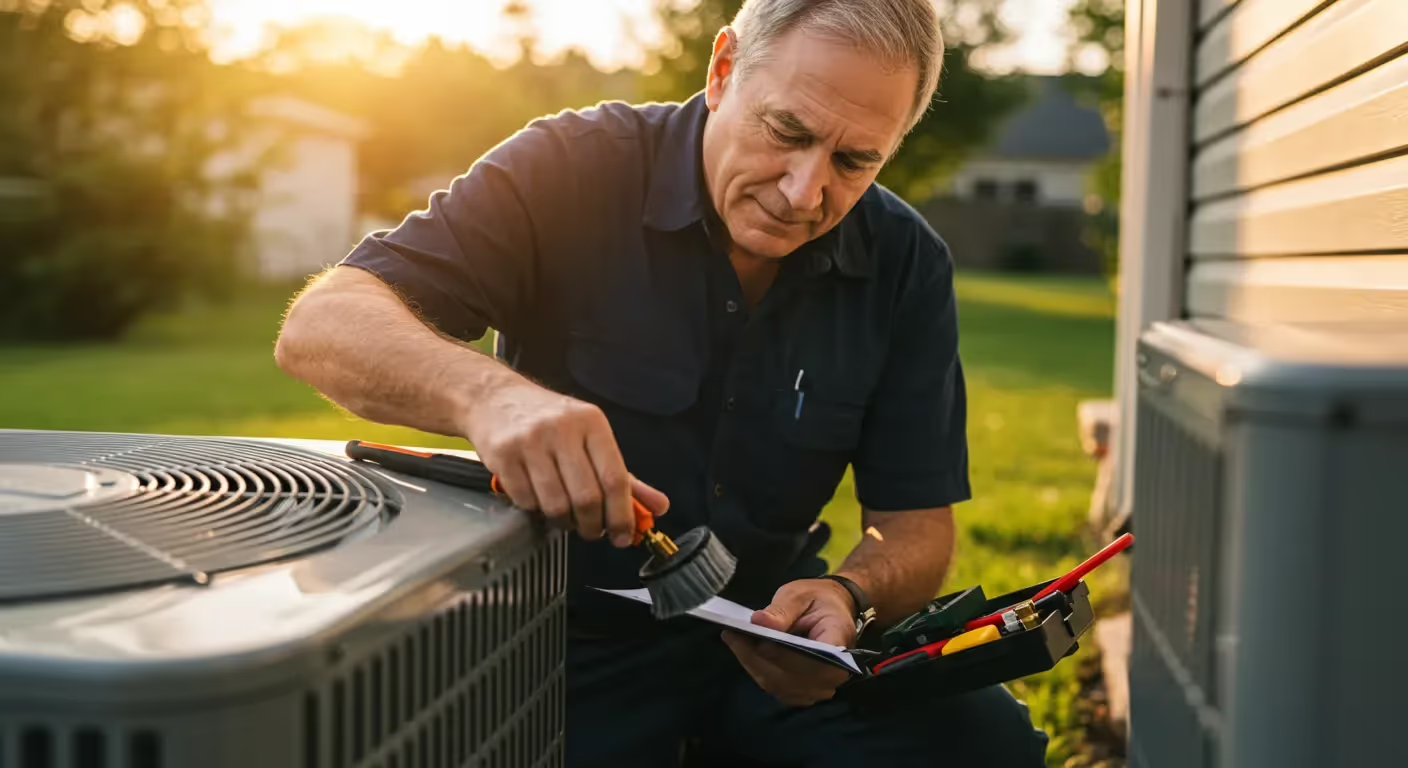
Accurate Load Calculation and Sizing
Size matters significantly in HVAC performance. An oversized unit will cool the house too quickly, shutting off before it has removed the necessary humidity. This leads to a cold but clammy home and increases wear on the compressor due to short cycling. Conversely, an undersized unit will run continuously, failing to reach the target temperature on the hottest days in Glasgow.
- Technicians perform a Manual J load calculation to determine the exact cooling requirements of your specific floor plan.
- Factors such as window orientation, insulation levels, and square footage are analyzed.
- The selected unit matches the thermal load of the structure, maximizing efficiency and lifespan.
High-Efficiency Equipment Selection
Modern air conditioners are far more efficient than models manufactured even ten years ago. The industry has shifted toward higher SEER2 (Seasonal Energy Efficiency Ratio) standards.
- You receive guidance on selecting units that qualify for potential energy rebates.
- Options include variable-speed compressors that adjust cooling output in small increments, maintaining precise temperature control without energy spikes.
- Systems are selected to handle high latent heat loads, which is essential for managing local humidity levels.
Comprehensive System Integration
The installation process covers the entire cooling loop. This includes the outdoor condenser and the indoor evaporator coil.
- The transition between the new unit and existing ductwork is sealed to prevent air leakage.
- Refrigerant lines are sized and insulated to prevent energy loss during transfer.
- Drainage systems are upgraded to ensure condensate is safely removed from the home, preventing water damage.
How The Installation Process Works
A professional replacement is a structured construction project that requires coordination and technical skill. The goal is to minimize disruption to your household while ensuring the system is set up for decades of reliable service.
Site Preparation and Safety
Before any equipment is moved, the workspace is secured.
- Technicians lay down drop cloths and floor protectors to safeguard your home.
- Power to the existing HVAC circuits is verified off to ensure safety during the electrical disconnect.
- The area around the outdoor pad is cleared of debris or overgrowth to ensure proper airflow for the new unit.
Removal of Existing Equipment
Removing the old unit is a regulated process, particularly regarding refrigerants.
- EPA-certified technicians connect recovery machines to the old unit to capture existing refrigerant.
- Refrigerant is never vented into the atmosphere; it is reclaimed and recycled according to federal law.
- Old copper lines are cut and removed, and the old condenser and coil are hauled away for proper disposal.
Setting the New System
This is the core of the installation where precision is critical.
- The outdoor pad is leveled or replaced to ensure the compressor sits flat, which is vital for oil distribution within the motor.
- The indoor evaporator coil is fitted into the plenum or air handler.
- Refrigerant lines are brazed using nitrogen purging. This step prevents oxidation inside the copper pipes, which could otherwise clog the new compressor's sensitive valves.
Commissioning and Testing
Simply turning the unit on is not the final step. The system must be commissioned to verify it operates within manufacturer specifications.
- A vacuum pump is used to remove moisture and air from the refrigerant lines, measured with a micron gauge.
- Refrigerant charge is weighed in effectively, adjusting for the length of the line set.
- Static pressure tests are conducted to ensure the ductwork allows for proper airflow volume.
- Temperature differentials (the difference between air entering and leaving the unit) are measured to confirm cooling capacity.
When Replacement Beats Repair
Homeowners often struggle with the decision to repair a failing unit or invest in a new one. While repairs can solve immediate issues, there is a mathematical tipping point where replacement becomes the more financially sound decision.
The 5000 Rule
A common industry benchmark helps clarify this decision. Multiply the age of your equipment by the estimated repair cost.
- If the total exceeds $5,000, replacement is generally the better investment.
- For example, a 12-year-old unit requiring a $500 repair equals 6,000, suggesting replacement is prudent.
- If the total is less than $5,000, a repair might extend the unit's life sufficiently to justify the cost.
Freon Phase-Outs (R-22)
Older units utilizing R-22 refrigerant are becoming obsolete.
- Production of R-22 has ceased, making remaining supplies prohibitively expensive.
- If an older unit develops a refrigerant leak, the cost to refill it often approaches the cost of a down payment on a new system.
- Newer systems use R-410A or newer refrigerants, which are more environmentally friendly and affordable to service.
Energy Efficiency Gains
As units age, their efficiency drops due to coil corrosion and motor wear.
- A 15-year-old unit may perform at a significantly lower SEER rating than when it was new.
- Replacing a 10 SEER unit with a modern 16+ SEER system can reduce cooling costs by a substantial margin.
- These monthly savings offset the monthly cost of financing a new installation, effectively paying for the upgrade over time.
Local Considerations for AC Installation
Operating an air conditioner in this region requires specific attention to environmental factors. The equipment must be resilient enough to handle drastic temperature shifts and high moisture content in the air.
Humidity Control
In Glasgow, humidity is often a bigger comfort issue than heat alone.
- Standard single-stage air conditioners run at full capacity and shut off quickly.
- This rapid cooling satisfies the thermostat but leaves moisture in the air.
- Two-stage or variable-speed units are recommended locally because they run longer at lower speeds, acting as whole-home dehumidifiers while they cool.
Permits and Regulations
Installation must adhere to local building codes to ensure safety and property value.
- Permits verify that the electrical connections meet load requirements and that the unit is safely situated.
- Professional installers handle the permitting paperwork, ensuring the job passes inspection.
- Compliance with Department of Energy regulations regarding regional SEER minimums is mandatory for all new installs.
Seasonality and Timing
Waiting for total failure during a July heatwave puts you at a disadvantage.
- Scheduling replacement during the shoulder seasons (spring or fall) often provides more flexibility in scheduling.
- Proactive replacement avoids the emergency premium costs associated with after-hours urgency.
- Early installation ensures the system is tuned and ready before the first heat spike of the year.
Why Professional Installation Matters
The longevity of your air conditioning system is determined more by the quality of the installation than the brand of the equipment. Even the highest-rated unit will fail prematurely if the ductwork is not sealed, the charge is incorrect, or the brazing is poor.
Technical Certification
Your home comfort system is a complex machine involving high-voltage electricity, high-pressure gas, and airflow dynamics.
- Technicians undergo rigorous training to stay current with modern HVAC technology.
- Certifications such as NATE (North American Technician Excellence) indicate a technician has demonstrated real-world knowledge and competency.
- Carter Heating and Cooling employs technicians who understand the science behind airflow and thermodynamics.
Warranty Protection
Manufacturer warranties are strict. They often require proof of professional installation to remain valid.
- DIY or handyman installations can void the manufacturer’s warranty immediately.
- Professional installation provides a paper trail proving the unit was installed according to specifications.
- Labor warranties provide additional peace of mind, covering the cost of service should an issue arise shortly after installation — check our maintenance plan for long-term care.
Tooling and Equipment
Proper installation requires specialized tools that are not available to the general public.
- Digital manifolds, micron gauges, and nitrogen regulators are essential for a clean install.
- Sheet metal fabrication tools allow for custom transitions to ensure your new unit fits your existing ductwork perfectly.
- Combustion analyzers and leak detectors ensure the safety of the home environment.
Secure Your Comfort Today
A failing air conditioner risks your comfort, your wallet, and your home’s air quality. Upgrading to a modern, efficient system resolves these issues immediately, providing consistent cooling and lower energy consumption. Do not wait for the next heatwave to expose the weaknesses in your current setup. Contact us now to discuss your installation options and restore reliable comfort to your home.

Great Service at a Fair Price
Veterans Discount


Senior Discount

Law Enforcement

Fire fighters/ems

Hear From Your Neighbors!
Hear from your neighbors to see how our commitment to dependable service and lasting comfort has made a difference in their homes.