

How can we help today?
Choose an option to see quick actions and get help faster.Mini Split Inspection in Glasgow, KY
Mini Split Inspection in Glasgow, KY
Experience effective cooling this summer with our professional mini split inspections in Glasgow. Ensure optimal performance and comfort. Schedule now!
Is Your Mini Split Failing to Combat the Heat?
Dealing with unreliable cooling or strange noises from your ductless system during Glasgow's humid summers can disrupt your entire household. When your comfort is compromised, it is time for a comprehensive mini split inspection by trusted local experts; contact us now to schedule your assessment or discuss financing options for necessary repairs.
Carter Heating and Cooling provides thorough diagnostic services designed to pinpoint efficiency losses and mechanical faults before they result in a total system breakdown. Ignoring minor irregularities—such as short cycling, lukewarm airflow, or musty odors—often leads to expensive component failures and higher monthly utility bills. Our technicians dive deep into the mechanics of your equipment to restore the precise temperature control ductless systems are known for.
Our inspection service delivers the following outcomes:
- Ensure optimal efficiency and cooling power by identifying and resolving airflow restrictions or refrigerant issues.
- Receive immediate, actionable advice on potential upgrades or repairs based on the specific condition of your unit.
- Enjoy the comfort of your home year-round with a well-maintained mini split that handles both summer humidity and winter chills.
- Identify hidden electrical or drainage hazards that could damage your property or void manufacturer warranties.
All services come with full warranties and strict compliance with local building codes.
Comprehensive Inspection: What We Check and Why
A mini split inspection is more than just a quick filter check. It is a systematic analysis of both the indoor air handling unit and the outdoor compressor to ensure they are communicating and operating correctly. Because ductless systems rely on complex electronics and inverter technology, our evaluation covers specific touchpoints that standard HVAC inspections might miss.
Indoor Unit Analysis
The indoor unit is responsible for air distribution and dehumidification. Issues here directly impact indoor air quality and comfort.
- Blower Wheel and Fan Balance: We inspect the blower wheel for dust accumulation and mold growth. Even a thin layer of dust can unbalance the fan, causing noise and reducing air throw.
- Evaporator Coil Condition: We check for dirt buildup that insulates the coil, preventing proper heat exchange. This is critical for maintaining the SEER rating of the unit.
- Condensate Drain Line: Mini splits remove significant moisture. We test the drain line and pump (if applicable) to ensure water flows freely. Clogs here are a primary cause of water damage to interior walls.
- Air Filter Integrity: We assess the condition of mesh filters and specialized ionizing filters. Clogged filters restrict airflow, causing the system to overwork and potentially freeze up.
- Vane and Louver Operation: We verify that the motorized louvers open, close, and oscillate correctly to distribute air evenly across the room.
- Sensor Calibration: We test the thermistors and return air sensors to ensure the unit is reading the room temperature accurately.
Outdoor Unit Diagnostics
The outdoor unit houses the compressor and major electrical components. Its health dictates the longevity of the entire system.
- Compressor Amp Draw: We measure the electrical current drawn by the compressor. High amps indicate the motor is working too hard, signaling potential failure.
- Refrigerant Levels and Pressures: We check operating pressures to determine if the refrigerant charge is correct. Low levels indicate a leak that must be located and sealed.
- Inverter Board Inspection: The inverter board controls the variable speed of the compressor. We check for signs of overheating, burn marks, or loose connections that could lead to expensive board failures.
- Condenser Coil Cleanliness: We inspect the outdoor coil for debris, leaves, and dirt that block airflow and cause the system to overheat.
- Reversing Valve Operation: For heat pumps, we test the reversing valve to ensure the system shifts smoothly between heating and cooling modes.
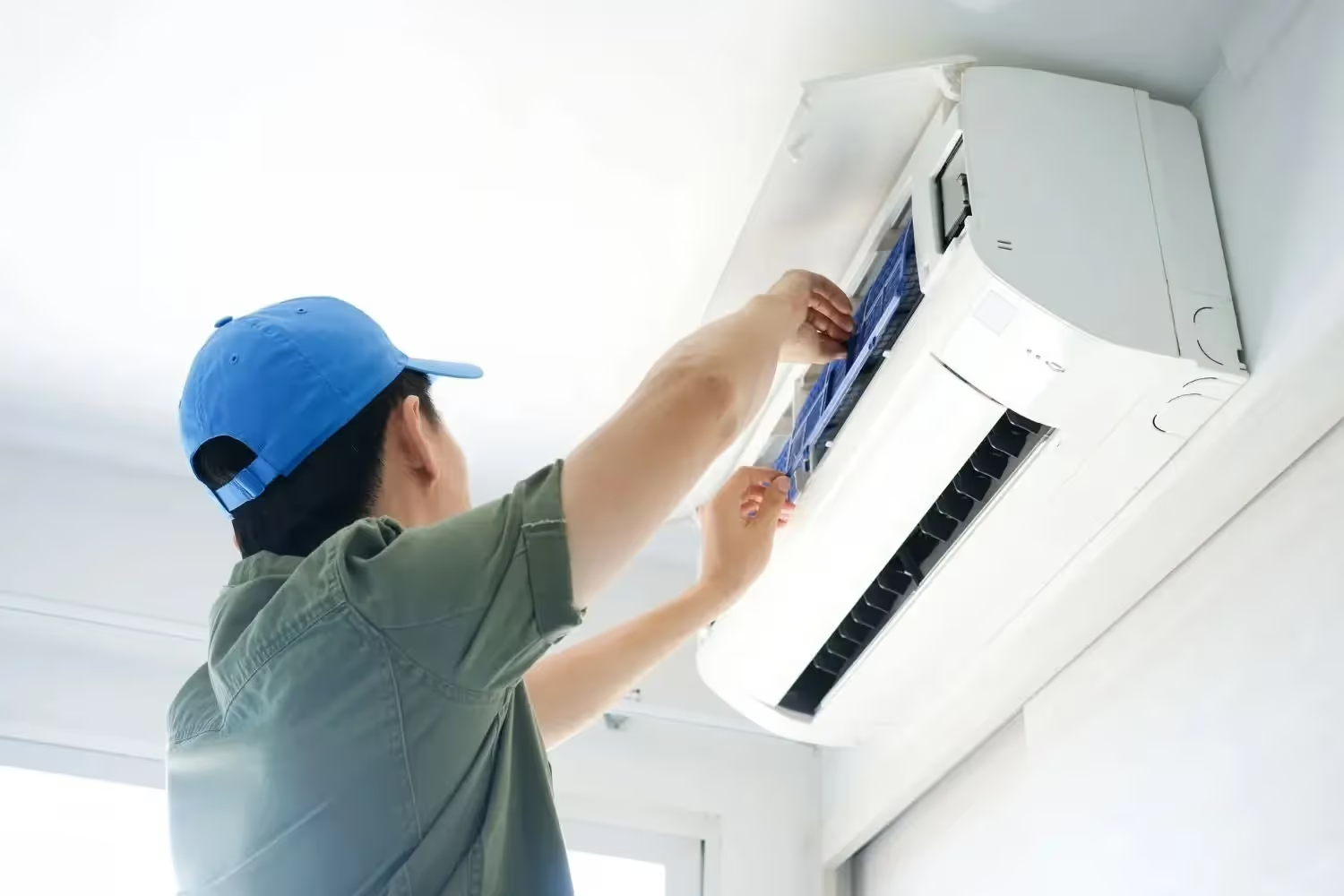
The Inspection Process: How We Work
We respect your time and property. Our inspection process is streamlined to provide you with clear answers without disrupting your day. We move systematically from the initial visual assessment to advanced diagnostic testing.
- Arrival and Site Protection: Our technicians arrive on time with the necessary diagnostic tools. We wear shoe covers and use drop cloths to protect your flooring near the indoor units.
- Visual and Auditory Assessment: We begin by running the unit to listen for abnormal sounds—such as clicking, grinding, or hissing—that indicate mechanical stress. We also look for visible signs of leaks or corrosion.
- Electrical Testing: We shut off power to safe-check all electrical connections. We tighten loose wires, check voltage stability, and inspect the disconnect box for safety hazards.
- Performance Testing: We restart the system and use thermal probes to measure the temperature differential (Delta T) between the supply and return air. This data confirms if the unit is cooling or heating effectively.
- Drainage Test: We pour water into the condensate pan to verify that it drains quickly and that the condensate pump triggers correctly.
- Final Report and Consultation: Once the inspection is complete, we provide a detailed report of our findings. We explain any issues found in plain language, outlining the urgency of any recommended repairs.
Repair vs. Replacement: Making the Right Decision
After an inspection, you may be faced with a decision: fix the current issue or invest in a new system. Mini splits are durable, but they do not last forever. We help you make a financially sound choice based on the age of the unit, the cost of the repair, and future efficiency gains.
When to Repair
- Unit Age: The system is under 10 years old and has been relatively well-maintained.
- Minor Component Failure: The issue is isolated to a sensor, a capacitor, or a fan motor. These parts are generally affordable and extend the life of the unit.
- Warranty Coverage: The unit is still under the manufacturer’s parts warranty, significantly reducing your out-of-pocket costs.
- Performance History: The unit has historically heated and cooled the space effectively without recurring breakdowns.
When to Replace
- Compressor Failure: If the compressor fails and the unit is out of warranty, the cost of replacement parts and labor often approaches the price of a new outdoor unit.
- Refrigerant Type: If your system utilizes older R-22 refrigerant, repairs involving refrigerant handling are prohibitively expensive and environmentally obsolete. Modern systems use R-410A or newer alternatives.
- Repeated Leaks: If the system has developed multiple refrigerant leaks in the coils, patching is often a temporary fix. Coil degradation usually signals the end of the unit's service life.
- Inverter Board Failure on Older Units: Replacement boards for older mini splits can be difficult to source and expensive. If the unit is over 12 years old, a board failure is often the tipping point for replacement.
Local Considerations for Glasgow Homeowners
Operating a mini split in Glasgow presents specific challenges due to our regional climate. The high humidity during the summer months places a heavy load on the dehumidification capabilities of your system. If a mini split is not inspected regularly, biological growth can accumulate rapidly on the blower wheel and in the drain pan. This not only reduces efficiency but can also introduce mold spores into your living space.
Furthermore, our area experiences distinct seasonal shifts. We rely on these systems for cooling in the 90-degree heat and for heating during winter cold snaps. This dual-duty operation means your mini split runs for more hours per year than a standard AC unit. The wear and tear are accelerated, making annual or bi-annual inspections vital for reliability.
Carter Heating and Cooling understands local codes regarding electrical disconnects and mounting requirements. We ensure that your system installation and operation comply with all safety standards, protecting your home insurance validity and ensuring safe operation during electrical storms.
Seasonal Preparation Notes:
- Spring: Schedule inspections before the high heat hits to ensure the AC mode and dehumidification functions are ready.
- Fall: Check the reversing valve and heating capacity before the first freeze to avoid emergency calls in winter.
- Vegetation Management: Keep shrubs and grass trimmed back from the outdoor unit to maintain proper airflow, especially during the fast-growing summer months.
Why Professional Inspection Matters
Attempting to inspect a mini split without professional training can lead to misdiagnosis or accidental damage. Ductless systems are densely packed with electronics. A simple mistake, such as touching the wrong terminal on the inverter board, can short out the entire system. Furthermore, handling refrigerant requires EPA certification to ensure it is not vented into the atmosphere, which is illegal and harmful to the environment.
We utilize specialized tools that are not available to the average homeowner:
- Digital Manifolds: For precise pressure readings that detect even minor leaks.
- Anemometers: To measure air velocity and volume at the vane.
- Megohmmeters: To test the insulation integrity of the compressor windings, predicting failures before they happen.
- Thermal Imaging: To identify hot spots in the electrical panel or uneven cooling across the evaporator coil.
By choosing professional inspection, you are paying for accuracy. You get a definitive answer on the health of your system, rather than guesswork. This proactive approach allows you to budget for repairs or replacement on your own timeline, rather than being forced into an emergency decision during a heatwave.
Secure Your Comfort with Expert Diagnostics
Your mini split system is an investment in efficient, targeted comfort. Protecting that investment requires more than just cleaning a filter; it requires a deep understanding of inverter technology and fluid dynamics. Whether you are noticing a slight drop in performance or simply want peace of mind before the season changes, a professional inspection is the most cost-effective way to ensure reliability.
Don't wait for a complete system failure to address performance issues. Act now to extend the lifespan of your equipment and maintain a comfortable indoor environment.
Contact us today to schedule your comprehensive mini split inspection.

Great Service at a Fair Price
Veterans Discount


Senior Discount

Law Enforcement

Fire fighters/ems

Hear From Your Neighbors!
Hear from your neighbors to see how our commitment to dependable service and lasting comfort has made a difference in their homes.