

How can we help today?
Choose an option to see quick actions and get help faster.Heating Installation in Glasgow, KY
Heating Installation in Glasgow, KY
Heating Installation in Glasgow, KY
Restore Consistent Warmth With Professional Heating Installation
As temperatures drop across the region, ensuring your home remains warm and cozy becomes paramount, yet an unreliable furnace or heat pump can leave you exposed to the elements. Carter Heating and Cooling provides speedy, reliable heating installations to safeguard your comfort during chilly evenings; contact us today to discuss financing options or schedule your consultation.
Residents in Glasgow, KY know that while winters can be mild, January and February often bring freezing temperatures and occasional snow that demand a fully functional heating system. When your current unit fails to keep up or breaks down completely, you need a solution that prioritizes efficiency and long-term performance. We focus on delivering immediate results that secure your indoor climate.
- Expert installation designed for system longevity and safety.
- High-efficiency systems engineered to reduce monthly energy expenditures.
- Stress-free service with clear communication and ongoing maintenance options.
Licensed and bonded professionals are ready to assist you with easy financing options available to fit your budget.
Comprehensive Heating Solutions Available Today
When you invest in a new heating system, you are purchasing more than just a box of machinery; you are securing the infrastructure of your home’s comfort for the next 15 to 20 years. The goal is to transition from a failing or inefficient unit to a modern system that actively manages your indoor environment. Modern heating technology has advanced significantly, offering variable speeds and smart integrations that older models simply cannot match.
System Selection and Sizing
The first step in our scope of work involves identifying the correct equipment for your specific footprint. A unit that is too large will cycle on and off frequently, leading to wear and tear, while a unit that is too small will run continuously without ever reaching the set temperature. We utilize precise load calculations that factor in square footage, insulation levels, window quality, and local climate data to determine the exact BTUs required.
- Gas Furnaces: For homes with natural gas access, modern furnaces offer high AFUE ratings, meaning more fuel is converted into heat rather than being lost up the flue.
- Heat Pumps: Ideal for the humid subtropical climate of the region, heat pumps provide efficient heating in the winter and cooling in the summer.
- Dual-Fuel Systems: These hybrid systems combine an electric heat pump with a gas furnace, automatically switching between fuel sources to maximize efficiency as outside temperatures fluctuate.
Ductwork and Airflow Evaluation
A new heater cannot perform efficiently if the distribution system is compromised. Part of the installation scope includes a thorough review of your existing ductwork. Leaks, gaps, or crushed ducts can lose up to 30% of the air before it reaches your living space. We assess the static pressure capabilities of your duct system to ensure it can handle the airflow of the new, more powerful equipment. If modifications are necessary to optimize the system, these are identified and planned before installation begins.
Thermostat and Control Integration
Modern installations include the integration of advanced thermostats. Whether you prefer a standard programmable model or a smart thermostat that can be controlled via smartphone, the interface is crucial for managing energy usage. We ensure that the new equipment communicates correctly with the thermostat, enabling features like humidity control and zoning if applicable.
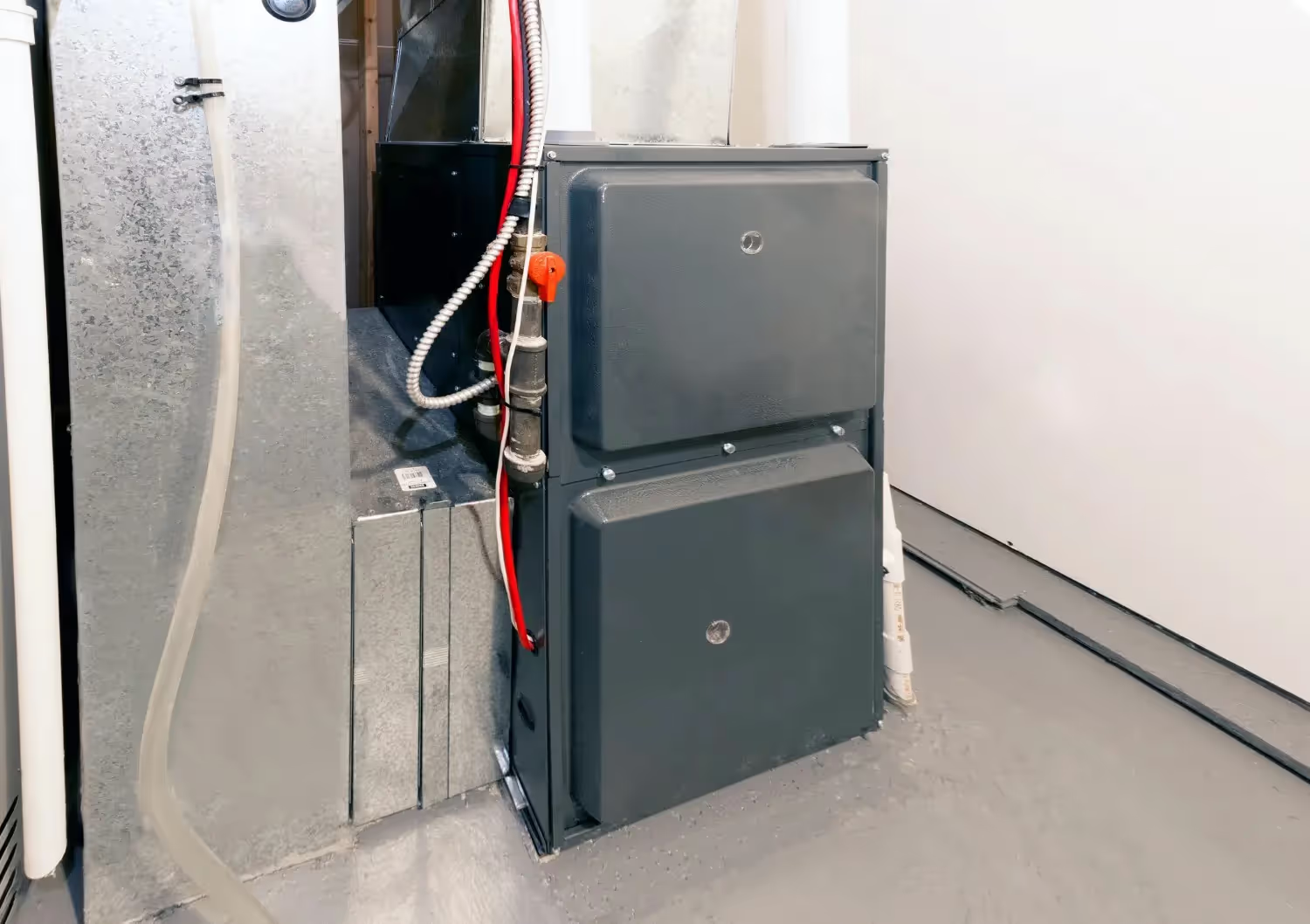
The Heating Installation Process Step-by-Step
Replacing a heating system is a major construction project within your home, but a structured process ensures it happens efficiently and with minimal disruption to your daily routine. We adhere to a strict protocol that guarantees safety and code compliance from start to finish.
Site Preparation and Protection
- Technicians arrive on time and begin by laying down drop cloths and floor protectors to safeguard your home.
- The workspace around the existing unit is cleared to ensure safe access for heavy lifting and tool usage.
- Safety checks are performed to shut off gas lines and electrical circuits connected to the old equipment.
Removal of Existing Equipment
- The old furnace or air handler is disconnected from the plenum, vent pipes, and fuel sources.
- Refrigerant, if present in a heat pump setup, is recovered according to EPA regulations to prevent environmental contamination.
- The old unit is carefully removed from the property and disposed of responsibly.
Positioning and Connection
- The new unit is positioned and leveled. In basements or crawl spaces, this may involve reinforcing the mounting pad or suspension rods to reduce vibration.
- The plenum is adapted to fit the new unit, ensuring an airtight seal to prevent air leakage.
- Flue pipes are installed or reconfigured to ensure carbon monoxide is safely vented outside the home. PVC venting is often required for high-efficiency condensing furnaces.
Utility Connections
- Gas lines are reconnected with new sediment traps and shut-off valves where necessary. A soap bubble test or digital detector is used to verify there are absolutely no gas leaks.
- Electrical wiring is updated to match the amperage requirements of the new system. This includes checking the disconnect box and replacing fuses or breakers if they do not meet the manufacturer's specifications.
- Drain lines for condensate are routed to a floor drain or pump, ensuring moisture produced by high-efficiency units is carried away safely.
Commissioning and Testing
- Once physically installed, the system is started up. Technicians measure gas pressure at the manifold to ensure the burner is firing at the correct rate.
- Temperature rise is measured—this is the difference in temperature between the air entering the return and the air leaving the supply. It must fall within the manufacturer’s specified range.
- Airflow is balanced, and the thermostat is calibrated to verify it reads the room temperature accurately.
Final Walkthrough
- The work area is cleaned, and all debris is removed.
- You receive a briefing on how to operate the new system, how to change the filter, and what maintenance schedule is required to keep the warranty valid.
Determining When to Replace vs. Repair
Homeowners often struggle with the decision of whether to sink more money into a failing unit or invest in a replacement. While repairs can be cheaper in the short term, they are often a poor financial decision for aging systems. Understanding the threshold for replacement helps you avoid throwing good money after bad.
The 50% Rule
- If the cost of the repair approaches 50% of the value of a new system, replacement is the smarter financial move. Major component failures, such as a cracked heat exchanger or a blown compressor, often fall into this category.
- Investing thousands into an old unit does not reset its life expectancy; it merely patches one part while others remain prone to failure.
Age of the Equipment
- Most furnaces and heat pumps have a lifespan of 12 to 15 years. If your system is in this age range and requires a significant repair, parts availability becomes an issue, and efficiency has likely degraded significantly.
- Newer systems are far more efficient than those manufactured a decade ago. Replacing a 15-year-old furnace with a modern high-efficiency model can result in immediate utility savings that help offset the installation cost.
Rising Energy Bills
- If you notice your heating costs climbing despite normal usage, it indicates the system is losing efficiency. Components wear out, friction increases in motors, and heat transfer becomes less effective. A new installation resets your energy consumption baseline.
Comfort and Safety Issues
- Uneven heating, where some rooms are hot and others freezing, suggests the system can no longer distribute air effectively.
- Excessive noise, such as banging, squealing, or rattling, often points to internal structural failure.
- The most critical factor is safety. If a heat exchanger is compromised, it poses a carbon monoxide risk. In such cases, immediate replacement is the only safe option.
Local Considerations for Heating in Glasgow, KY
Installing a heating system in this region requires specific attention to local climate patterns and building codes. The humid subtropical climate means that while winters are generally mild compared to northern states, the region is subject to cold snaps and high humidity that the HVAC system must manage.
Handling Humidity and Mold Prevention
- Because our area experiences significant humidity, the heating system (especially if it is a heat pump) plays a role in moisture control. Improperly sized units can lead to short-cycling, which fails to remove humidity, leading to clammy indoor conditions and potential mold growth.
- We ensure the equipment selected has the capacity to dehumidify effectively during the shoulder seasons when it is cool but damp.
Permitting and Code Compliance
- Local regulations dictate specific requirements for gas line pressure testing, electrical disconnects, and venting clearances.
- Work performed without adherence to these local codes can result in fines or issues when selling the home. Professional installation ensures that all work meets the current safety standards adopted by the municipality.
Utility Infrastructure
- Depending on whether your property relies on natural gas, propane, or strictly electricity, the installation approach changes.
- For rural properties relying on propane, ensuring the conversion kits for furnaces are installed correctly is vital for safety and fuel efficiency.
- Carter Heating and Cooling technicians verify that your electrical panel has sufficient capacity to handle new electric heat strips or high-powered heat pumps, which is common in areas where gas lines are not available.
Winterization Needs
- Although snow is occasional, freezing rain and frost are common. Outdoor heat pump units must be elevated on "snow legs" or pads to prevent ice accumulation from blocking airflow.
- Condensate drains must be insulated or treated to prevent freezing, which can cause water to back up into the furnace and shut down the system.
Why Professional Installation Matters
The performance of your heating system is more dependent on the quality of the installation than the brand of the equipment. Even the most expensive, top-tier furnace will fail to deliver its rated efficiency if it is installed poorly. Issues such as improper refrigerant charge, leaky ductwork, or incorrect gas pressure can reduce efficiency by up to 30% and drastically shorten the life of the unit.
We prioritize technical precision. Our teams are trained to follow manufacturer specifications down to the millimeter. This includes precise sheet metal fabrication to transition airflow smoothly and electrical connections that are tightened to specific torque settings to prevent arcing.
Warranties also hinge on professional validation. Manufacturers require proof that the unit was installed by a licensed contractor to honor parts warranties. By choosing a reputable provider, you ensure that if a component fails prematurely, the paperwork and support are in place to cover it. Furthermore, we provide labor warranties that cover the workmanship, giving you total peace of mind.
From the initial load calculation to the final calibration of the thermostat, every step is executed with the intent of providing reliable warmth for years to come. Do not leave your home’s comfort to chance or inexperienced handling.
Call Us Now!
Ensure your home is prepared for whatever the weather brings. Contact us today to schedule your heating installation quote and secure a warm, safe environment for your household.

Great Service at a Fair Price
Veterans Discount


Senior Discount

Law Enforcement

Fire fighters/ems

Hear From Your Neighbors!
Hear from your neighbors to see how our commitment to dependable service and lasting comfort has made a difference in their homes.