
How can we help today?
Choose an option to see quick actions and get help faster.Emergency Repair in Glasgow, KY
Emergency Repair in Glasgow, KY
Facing HVAC issues in Glasgow? Contact us for rapid, professional repair services 24/7. Licensed technicians ready to restore your comfort swiftly with upfront pricing.
Restoring Comfort When Your System Fails Unexpectedly
Waking up to a freezing house in the dead of winter or facing a broken air conditioner during a heatwave disrupts your life and threatens your safety. When your HVAC system fails, you need immediate, professional attention in Glasgow to protect your property and restore climate control without delay. Contact us immediately to dispatch a technician or inquire about financing options for major repairs:
- Rapid response times available 24/7 to address critical heating and cooling failures.
- Licensed technicians equipped to handle repairs on all major makes and models.
- Transparent, upfront pricing provided before any work begins to ensure no surprises.
We ensure all emergency services are fully compliant with Kentucky safety standards and backed by satisfaction guarantees.
Immediate Solutions for Critical HVAC Needs
Equipment failure rarely happens during convenient business hours. A furnace usually quits on the coldest night of the year, and air conditioners often succumb to the strain of the first major heatwave. In these moments, the priority is securing a qualified professional who can analyze the root cause and implement a fix swiftly. Residents in Glasgow, KY, face distinct seasonal challenges, from high humidity that burdens cooling units to freezing temperatures that put heating systems to the ultimate test.
Waiting for a standard appointment window during an emergency is not an option. Delayed action can lead to frozen pipes, water damage, or health risks associated with extreme temperatures. Our emergency protocols are designed to bypass standard queues. We triage calls based on urgency and safety risk, ensuring that homeowners with total system failures receive priority status. Whether the issue stems from an electrical fault, a mechanical breakdown, or a refrigerant leak, the goal is to stabilize the home environment as quickly as possible.
Carter Heating and Cooling maintains a readiness posture that allows for rapid deployment. By keeping service vehicles stocked with universal parts and diagnostic tools, we aim to resolve the majority of emergency calls in a single visit. This logistical preparation minimizes downtime and prevents the discomfort of waiting days for a specific component to arrive.
What to Expect During an Emergency Visit
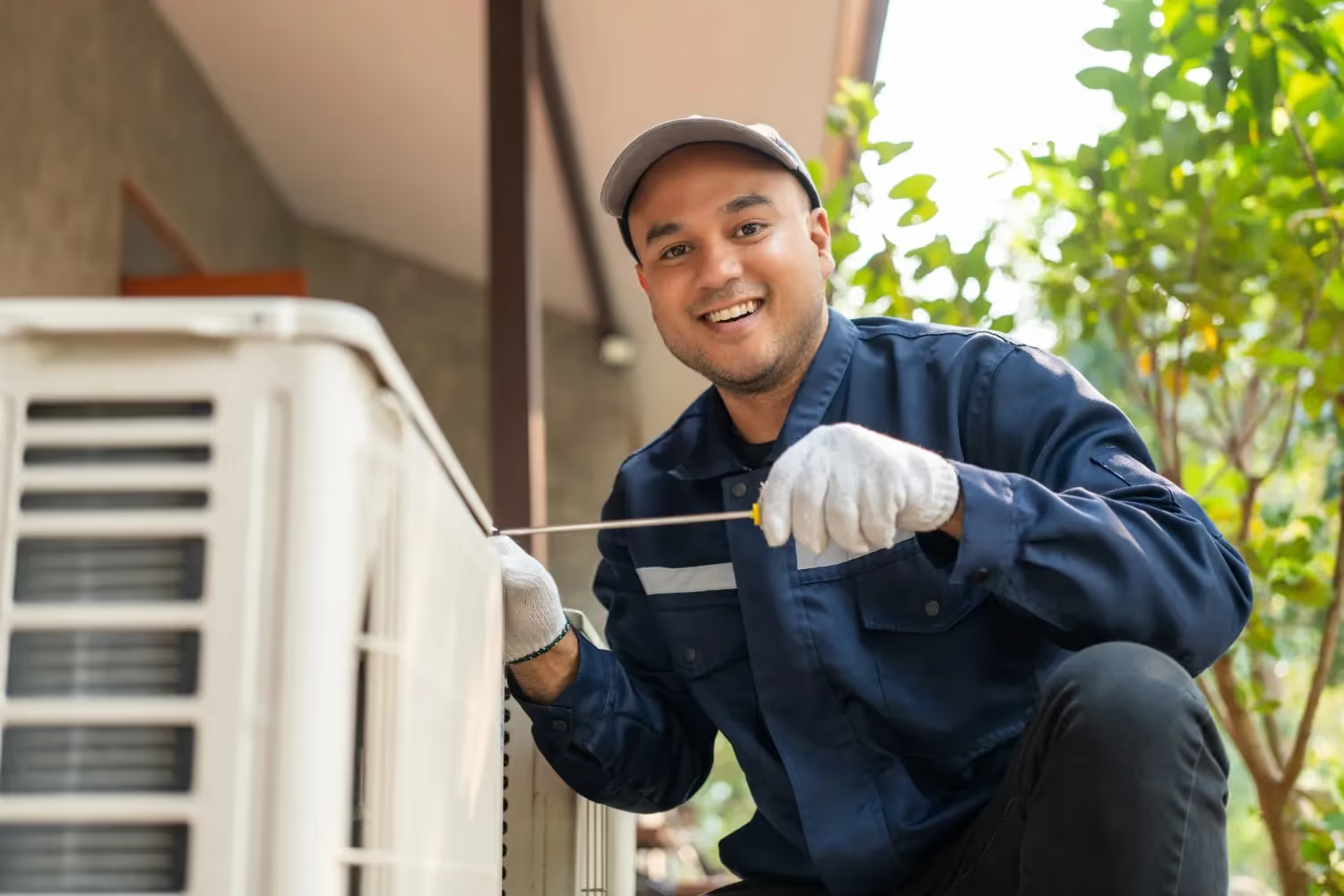
When you request emergency service, you are looking for clarity and competence. The process begins the moment a technician arrives on-site. The focus is strictly on diagnosing the immediate failure and assessing the safety of the system:
- Diagnostic Assessment: The technician performs a comprehensive evaluation of the system, checking electrical connections, airflow, safety switches, and mechanical components to pinpoint the failure.
- Safety Inspection: For gas furnaces, this includes checking for carbon monoxide leaks or cracked heat exchangers. For AC units, it involves checking for electrical shorts that could pose fire hazards.
- Clear Explanation: Once the issue is identified, you receive a detailed explanation of what went wrong, why it happened, and what is required to fix it.
- Upfront Quoting: Before a wrench is turned for the repair, you are presented with the total cost. This eliminates the anxiety of an hourly rate ticking up while the technician works.
- Execution: Upon approval, the repair is performed using industry-standard protocols to ensure the fix is durable, not just a temporary patch.
The Technical Process of Emergency Restoration
Restoring a system to working order involves a systematic approach. Randomly replacing parts without understanding the systemic failure often leads to repeat breakdowns. A professional approach relies on data and testing.
First, the technician isolates the system from power to ensure a safe working environment. This is followed by a continuity check of all circuits. If the system is a furnace, the ignition sequence is tested step-by-step—from the induction fan to the pressure switch, ignitor, gas valve, and flame sensor. Any interruption in this sequence identifies the faulty component.
Next, if the issue involves an air conditioner, the focus shifts to the refrigeration cycle. Gauges are attached to measure subcooling and superheat levels, which indicate if the charge is correct or if there is a blockage in the line. Electrical components like capacitors and contactors are tested under load to see if they are within the manufacturer's specified range.
Finally, once the defective part is replaced, the system is not merely turned on; it is commissioned. This means observing the unit through a full cycle of operation to verify that the repair holds, airflow is sufficient, and the temperature split (the difference between supply and return air) is correct. This validation step is critical to prevent a callback the next day.
Deciding Between Repair and Full Replacement
In an emergency scenario, the pressure to get the system running can sometimes obscure the best long-term financial decision. Homeowners often face a difficult choice: pour money into an aging unit to get it running today, or invest those funds into a modern, reliable replacement. Making this decision requires an objective look at the data.
The 50% Rule
A common industry standard is the 50% rule. If the cost of the repair approaches or exceeds 50% of the value of a new system, replacement is generally the wiser economic choice. However, this must be weighed against the immediate availability of equipment and the current budget.
Age and Reliability
HVAC systems have a finite lifespan. An air conditioner in Kentucky typically lasts 12 to 15 years, while a gas furnace may last 15 to 20 years. If your unit is nearing the end of this window and suffers a major component failure—such as a compressor or heat exchanger—a repair is often just a temporary stopgap before the next major failure.
Efficiency Considerations
Older units often operate at much lower efficiency levels compared to modern SEER2-compliant models. Continuing to repair an old unit locks you into higher monthly utility bills. Sometimes, the monthly savings from a new, high-efficiency system can offset the cost of financing a replacement, making it a cash-flow-neutral decision over time.
Common Emergency Failure Scenarios
Understanding what typically goes wrong can help you communicate effectively with technicians. Emergency calls often stem from specific, recurring issues that plague residential systems:
- Frozen Evaporator Coils: This is usually caused by restricted airflow (dirty filters) or low refrigerant levels. A frozen coil stops the cooling process entirely and can damage the compressor if not addressed.
- Ignition Failure: In gas furnaces, faulty ignitors or flame sensors are common culprits. If the system cannot prove a flame is present, it will shut down the gas valve to prevent an explosion, leaving the house without heat.
- Clogged Condensate Drains: In humid climates, AC units remove gallons of water from the air daily. If the drain line clogs with algae or debris, water can back up, triggering a float switch that kills power to the unit to prevent water damage to the home.
- Capacitor Failure: These electrical components help motors start and run. They degrade over time, especially in high heat. A failed capacitor will prevent the outdoor fan or compressor from running, resulting in warm air blowing from the vents.
- Thermostat Malfunctions: Sometimes the issue is not the equipment but the control center. A dead thermostat or faulty wiring can sever communication between the user interface and the HVAC equipment.
Local Compliance and Environmental Factors
Operating in South Central Kentucky requires specific knowledge of local climate patterns and regulations. The weather in Glasgow fluctuates significantly, meaning systems must be calibrated to handle both heavy latent heat loads (humidity) in summer and sharp temperature drops in winter.
Permitting and Codes
Major repairs, particularly those involving refrigerant handling or gas line modifications, are governed by Kentucky building codes. Emergency repairs must still adhere to these strict standards to ensure safety and insurance compliance. We ensure that all work performed meets local requirements, preventing issues when you eventually sell your home or undergo an inspection.
Utility Integration
Understanding the local grid and utility provider specifications, such as those from Glasgow City Utilities, is vital. Fluctuations in power quality during storms can damage sensitive inverter boards in modern HVAC systems. We often recommend surge protection as part of the repair process to armor the system against future electrical grid volatility.
Seasonality Checks
After an emergency repair, it is crucial to prepare the system for the remainder of the season. If a furnace is repaired in January, the technician should also inspect the ventilation and intake pipes to ensure snow or ice has not obstructed them, a common issue in our region that can lead to carbon monoxide buildup.
Why Professional Diagnosis Matters
DIY attempts during an HVAC emergency often exacerbate the problem. Modern heating and cooling equipment is complex, relying on sophisticated electronics and high-pressure gases. Without the proper gauges, meters, and training, it is impossible to accurately diagnose a problem.
For example, simply adding refrigerant to an AC unit because it "seems low" can destroy the compressor if the actual issue was a dirty coil or a bad metering device. Similarly, bypassing a safety switch on a furnace to force it to run can create a life-threatening situation. Professional technicians carry the liability and the expertise to perform repairs that are safe for the occupants and the structure.
Furthermore, manufacturer warranties almost always require proof of professional service. Attempting a repair yourself often voids the warranty, leaving you responsible for the full cost of future parts replacements. Relying on a licensed provider protects your warranty coverage and ensures a paper trail of professional maintenance.
Ensuring Long-Term System Health
Once the immediate crisis is resolved, the focus shifts to prevention. Most emergency breakdowns are preventable through routine maintenance. When a technician resolves an emergency, they often provide a report on the overall health of the system. This "vital signs" report helps homeowners plan for future needs rather than reacting to disasters:
- Refrigerant Pressures: Verifying that the system is holding a charge and not leaking.
- Amperage Draws: Checking that motors are not working harder than designed, which precedes failure.
- Temperature Differentials: ensuring the system is actually exchanging heat effectively.
Taking action on these recommendations prevents the next emergency. It moves the homeowner from a reactive state—paying premium rates for urgent fixes—to a proactive state, where maintenance is scheduled and budgeted.
Trustworthy Service When You Need It Most
When your home environment becomes uncomfortable or unsafe, the speed and quality of the solution matter. You need a partner who understands the urgency of the situation and respects your property. We prioritize clear communication, technical excellence, and respect for your time. By combining local knowledge with industry-leading technical standards, we provide solutions that last, not just quick patches that fail a week later.
Ensure Reliable, Prompt Repairs With Trusted Local Technicians: Act Today
Whether you are facing a flooded basement from a burst pipe, a freezing home due to furnace failure, or a sweltering living room because the AC compressor died, the solution is a phone call away. Carter Heating and Cooling is dedicated to restoring your comfort efficiently and professionally; schedule service today.
Don’t let a breakdown compromise your comfort or safety. Contact us now for immediate, professional repair services.

Great Service at a Fair Price
Veterans Discount


Senior Discount

Law Enforcement
Fire fighters/ems

Hear From Your Neighbors!
Hear from your neighbors to see how our commitment to dependable service and lasting comfort has made a difference in their homes.