
How can we help today?
Choose an option to see quick actions and get help faster.Ductless Inspection in Horse Cave, KY
Ductless Inspection in Horse Cave, KY
Facing issues with your mini-split in Horse Cave? Contact us for a detailed system inspection and repair to enhance efficiency and comfort. Sign up today!
Restore Maximum Efficiency to Your Mini-Split System
A malfunctioning ductless unit in Horse Cave leads to uneven cooling, rising energy bills, and uncomfortable humidity levels right when you need relief the most. Contact us today to schedule a comprehensive inspection that identifies hidden issues before they turn into costly breakdowns.
Our approach focuses on finding the root cause of performance drops rather than just treating symptoms.
- Rapid response times to restore your indoor comfort quickly.
- Comprehensive diagnostic testing that evaluates the mechanical and electrical health of your unit.
- Local technicians who understand how Kentucky humidity impacts ductless drainage and efficiency.
All services are fully licensed with transparent pricing and no hidden fees, ensuring you know exactly what is required to get your system back on track.
Comprehensive System Diagnostics: What to Expect Today
When you request a professional inspection for your ductless mini-split, the goal is to obtain a complete picture of the system's operational health. Unlike standard central HVAC systems, ductless units rely on sophisticated inverter technology and individual air handlers that require specialized attention. Carter Heating and Cooling approaches every inspection with a rigorous protocol designed to catch small inefficiencies before they force a total system replacement.
The immediate objective is to verify that the system is communicating correctly between the indoor and outdoor units. Ductless systems rely on complex circuit boards to modulate compressor speeds. If these communication lines are disrupted or if the voltage fluctuates, the system may run, but it will not cool or heat effectively. A thorough inspection evaluates these electrical components first, ensuring that power is being distributed safely and efficiently.
Following the electrical assessment, the focus shifts to airflow and air quality. In Horse Cave, where humidity can remain high through the summer, the blower wheel inside the wall unit often accumulates dust and biological growth. This buildup restricts airflow, forcing the motor to work harder and reducing the unit’s ability to dehumidify the room. A proper inspection includes examining the blower wheel, vanes, and filters to determine if deep cleaning is necessary to restore optimal cubic feet per minute (CFM) airflow.
The Step-by-Step Inspection Process
A professional inspection involves a systematic review of every component within your heating and cooling infrastructure. This process ensures that no part of the system—mechanical, electrical, or structural—is overlooked.
Indoor Unit Evaluation
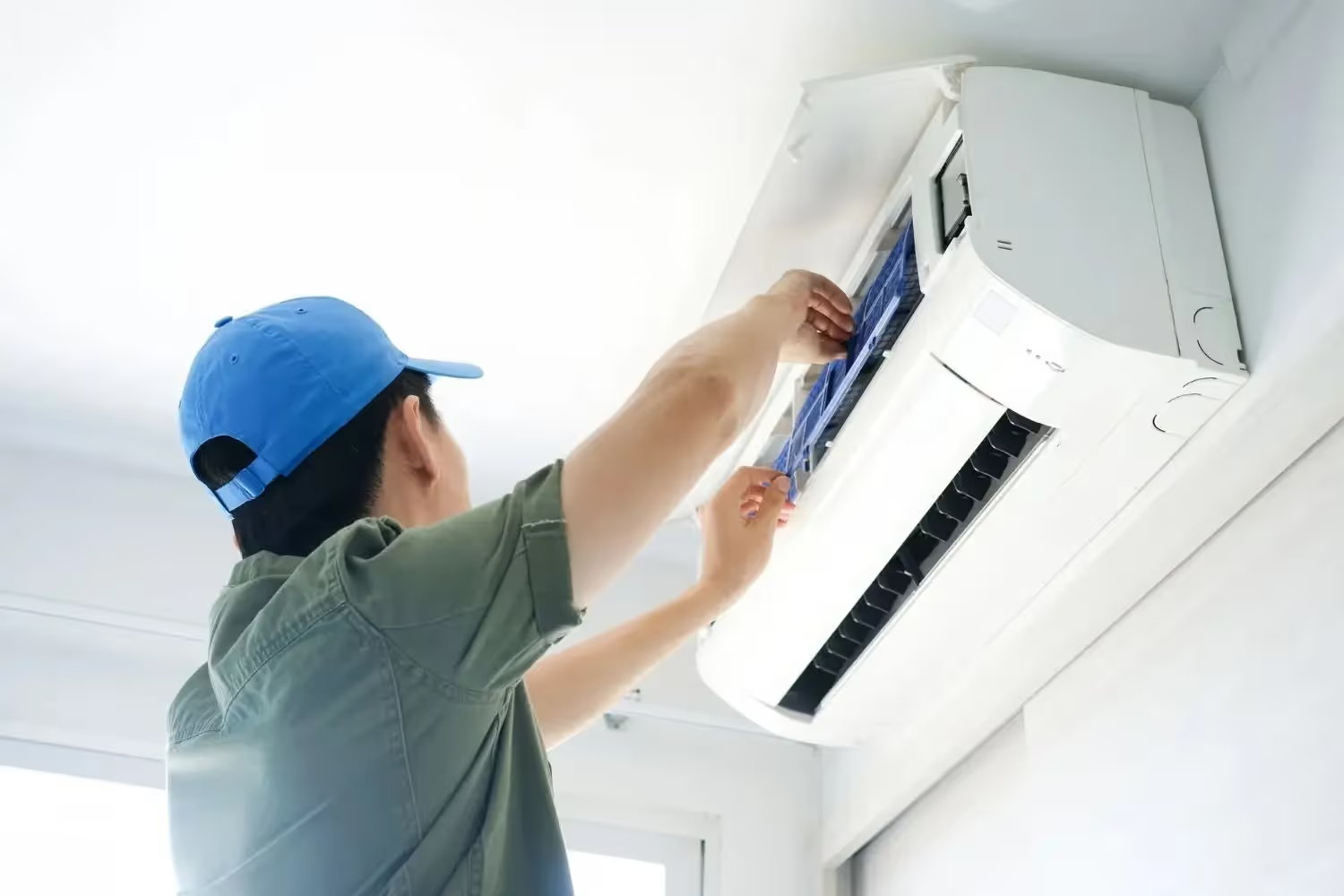
- Filter and Coil Analysis: The technician removes the front casing to inspect the primary filters and the evaporator coil. The coil is checked for impact damage, corrosion, or debris buildup that insulates the fins and prevents heat transfer.
- Blower Wheel Assessment: A flashlight is used to inspect the curvature of the blower wheel blades. Even a thin layer of dust on these curved blades can cut airflow efficiency by a significant margin.
- Drainage Testing: Ductless units rely on gravity or condensate pumps to remove moisture. The technician tests the condensate line for blockages and ensures the pump (if equipped) is triggering correctly to prevent water leaks down your wall.
- Vane Operation: The horizontal and vertical louvers are cycled to ensure the stepper motors are functioning, allowing for proper air distribution throughout the room.
Outdoor Condenser Evaluation
- Refrigerant Level Check: Gauges are attached to measure operating pressures. The technician looks for signs of leaks, such as oil residue on connections, and verifies that the refrigerant charge matches the manufacturer's specifications for the current outdoor temperature.
- Compressor Inverter Test: The heart of the system is the variable-speed compressor. The technician measures the frequency and amperage to ensure it is ramping up and down smoothly without excessive vibration or noise.
- Coil and Fan Inspection: The outdoor coil is checked for debris such as grass clippings, leaves, or dirt that restricts heat rejection. The fan motor is tested for bearing wear and proper rotation speed.
- Reversing Valve Operation: For heat pumps, the reversing valve is cycled to ensure the system can switch seamlessly between heating and cooling modes, a critical function for local weather patterns.
Electrical and Safety Checks
- Voltage and Amperage: Connections at the disconnect box and the terminal block are tightened. Voltage readings are taken to ensure the power supply is stable and within the rated range.
- Interconnect Wire Inspection: The communication wire running between the indoor and outdoor units is inspected for insulation damage, which is common if rodents or landscaping equipment have disturbed the lines.
Deciding Between Repair and Replacement
During an inspection, you may be faced with the decision to repair a specific component or replace the entire system. Ductless mini-splits generally have a lifespan of 15 to 20 years with proper care, but specific scenarios may make replacement the more strictly financial choice.
When to Repair
- The System is Under 10 Years Old: If the unit is relatively new and the warranty is still valid, repairing is almost always the best path. Most manufacturers cover parts for 5 to 7 years, and some up to 12.
- Isolated Component Failure: If a single part, such as a fan motor or a control board, has failed but the compressor is healthy, a repair is cost-effective.
- Maintenance-Related Issues: If the inspection reveals that the issue is simply a clogged drain line or a dirty blower wheel, these are standard maintenance repairs that restore the unit to 100% efficiency immediately.
When to Replace
- Compressor Failure: The compressor is the most expensive component of the system. If it fails and the unit is out of warranty, the cost of the part and labor often approaches the price of a brand-new outdoor unit.
- R-22 Refrigerant: If your older system utilizes R-22 refrigerant (Freon), it is obsolete. R-22 is no longer produced, making repairs legally difficult and exorbitantly expensive. Upgrading to a system with R-410A or newer refrigerants is necessary.
- Frequent Repairs: If you have required multiple repairs in the last two years, the system is likely reaching the end of its useful life. Continuing to patch a dying system is often throwing good money after bad.
- The 50% Rule: If the cost of the repair exceeds 50% of the cost of a new system, replacement is the smarter financial move. This is especially true when factoring in the energy savings of a modern, higher-SEER unit — apply for financing today.
Understanding Seasonal HVAC Needs in This Region
The climate in Horse Cave presents specific challenges for ductless systems that generic maintenance guides often overlook. The region experiences hot, humid summers and moderately cold winters, requiring your system to perform effectively as both an air conditioner and a primary heat source.
Summer Humidity Management
- High humidity levels in Kentucky mean your ductless unit is working overtime to pull moisture out of the air. This places a heavy load on the condensate drainage system.
- Algae and mold grow rapidly in drain pans and lines during humid months. Regular inspections in late spring are critical to prevent water backups that can damage drywall and flooring.
- If a unit is oversized, it will cool the room too quickly and shut off before it has removed the humidity, leaving the room feeling clammy. An inspection can verify if your system is sized correctly for the heat load of the room.
Winter Heating Performance
- While winters are generally mild, temperatures can drop significantly. Ductless heat pumps lose efficiency as the outdoor temperature plummets.
- The defrost cycle is critical during winter. Your outdoor unit will freeze over with frost and must reverse operation to melt it. An inspection ensures the defrost sensors and control boards are managing this cycle correctly so you are not left without heat on a freezing night.
- Keep the outdoor unit clear of snow drifts and debris. The unit needs unrestricted airflow to extract heat from the outside air.
Permits and Local Regulations
- Any significant repair involving refrigerant handling or electrical modification requires adherence to local building codes.
- Professional technicians ensure that all work is compliant with safety standards, protecting your home insurance validity and ensuring the resale value of your property is not negatively impacted by unpermitted work.
Why Specialized Ductless Attention Matters
Ductless mini-splits are not the same as forced-air furnaces or central ACs. They contain dense electronics and compact components that require specialized tools and training to service. A general handyman or a technician only familiar with traditional HVAC may miss the subtle signs of inverter board failure or improper communication voltage.
Inverter Technology Expertise
- The variable-speed drive in your unit is a computer-controlled system. It requires technicians who understand DC voltage conversion and frequency modulation.
- Misdiagnosing an inverter issue as a compressor issue is a common and costly mistake made by inexperienced workers. Proper diagnostics save you from paying for a compressor you didn't need.
Proprietary Tools and Parts
- Ductless manufacturers often use proprietary codes and parts. Access to detailed error code manuals and direct lines to manufacturer technical support is essential for accurate troubleshooting.
- Specialized cleaning bibs and pressurized water systems are required to clean the blower wheel without making a mess of your home or damaging the delicate electronics.
Energy Efficiency Focus
- The primary advantage of a ductless system is high efficiency (SEER ratings often 20+). An inspection focuses on retaining that efficiency.
- Technicians check that the temperature split (the difference between air intake and output) is within the optimal range, ensuring you are getting the energy savings you paid for.
When your comfort is compromised, you need a solution that addresses the specific mechanics of your equipment and the specific weather patterns of Horse Cave. Ignoring small noises, leaks, or error codes today will inevitably lead to a lack of heating or cooling when the weather is at its worst. Professional inspection provides the data you need to make informed decisions about your property’s climate control.
Secure the longevity of your investment and ensure your home remains comfortable regardless of the season. Contact us now to schedule your ductless inspection.
Detailed Ductless Inspection with Component-Level Reporting
Before issues become costly, request a complete ductless inspection in Horse Cave, KY by Carter Heating and Cooling. We assess indoor units, refrigerant lines, drain performance, and system response. Inspection results are documented for maintenance planning or repair scheduling.
Request a Full Ductless System Inspection With Written Assessment

Great Service at a Fair Price
Veterans Discount


Senior Discount

Law Enforcement

Fire fighters/ems

Hear From Your Neighbors!
Hear from your neighbors to see how our commitment to dependable service and lasting comfort has made a difference in their homes.