

How can we help today?
Choose an option to see quick actions and get help faster.Furnace Service in Horse Cave, KY
Furnace Service in Horse Cave, KY
Furnace Service in Horse Cave, KY
Restore Reliability to Your Heating System Immediately
Is your furnace failing to heat your home adequately as the chill of a Kentucky winter sets in, leaving your family vulnerable to dropping temperatures? Quick, professional furnace service is crucial to restore comfort and safety to your property in Horse Cave before a minor issue becomes a total system failure. Contact us immediately or apply for financing online to secure your appointment.
When the heat goes out, waiting days for a technician is not an option. Carter Heating and Cooling provides the rapid response necessary to protect your home from freezing pipes and uncomfortable living conditions.
- Expert technicians available 24/7 to tackle any furnace challenge.
- Maximize efficiency and minimize costs with our tailored furnace maintenance plans.
- Swift resolution, with most repairs completed on the first visit.
All services are backed by a full warranty and transparent, competitive pricing, ensuring you know exactly what to expect before work begins.
Comprehensive Furnace Diagnostics and Repair Protocols
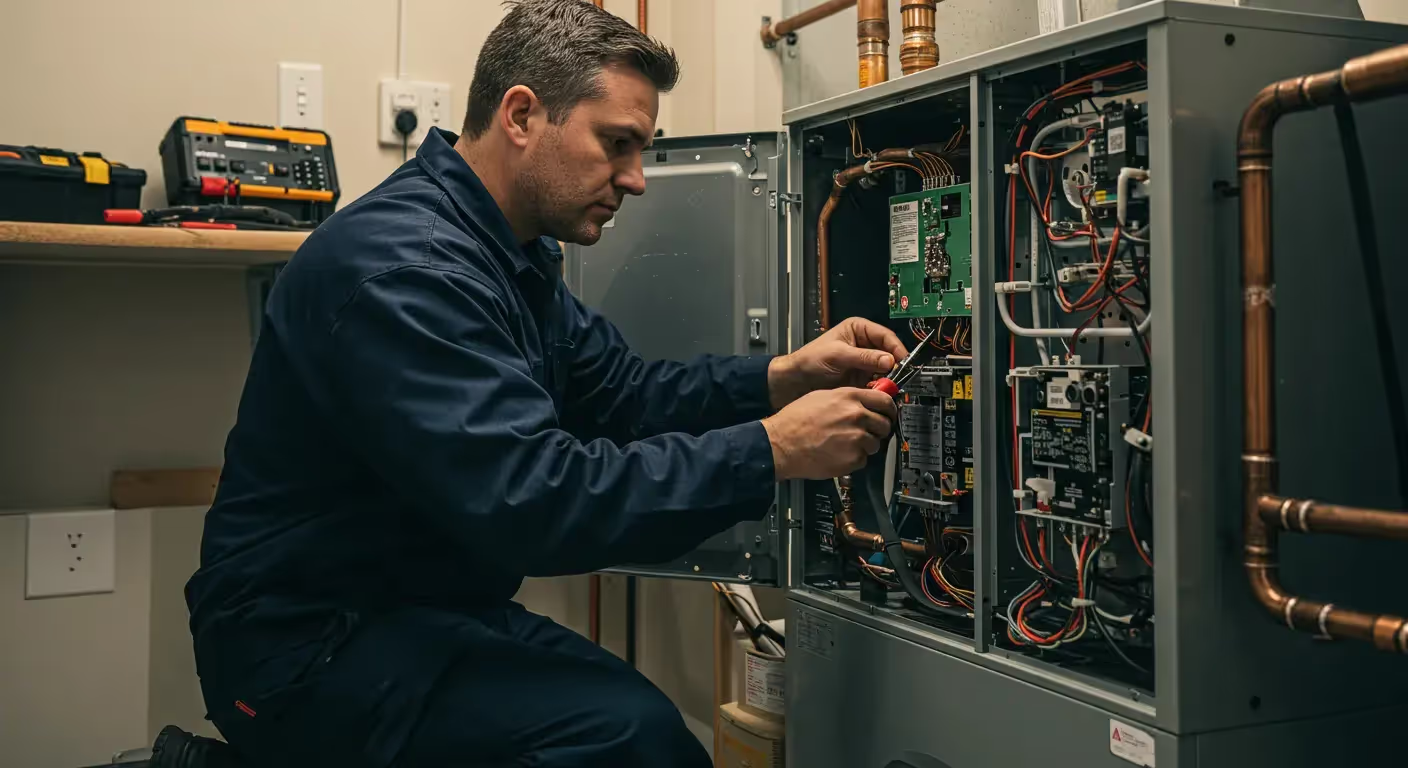
When a heating system falters, the root cause is rarely visible to the untrained eye. Effective service requires a systematic approach to diagnostics that goes beyond swapping out parts. Upon arrival, the focus shifts immediately to identifying why the system is not meeting the heating load of the home. This involves a thorough analysis of the thermostat communication, electrical connections, and mechanical components.
Homeowners in Horse Cave often experience issues ranging from ignition failures to airflow restrictions. The diagnostic process begins with a safety check. Technicians verify that the heat exchanger is intact, ensuring there is no risk of carbon monoxide leaking into the living space. Following this, the ignition sequence is tested. Whether the unit uses a hot surface igniter or a pilot light, this component must function perfectly for the burners to fire.
Once safety is confirmed, the evaluation moves to performance. This includes:
- Testing the Limit Switch: This safety device shuts the blower off if the internal temperature gets too high. A faulty switch can cause the blower to run continuously or not at all.
- Inspecting the Flame Sensor: Over time, oxidation can build up on the sensor, causing the furnace to shut down seconds after lighting. Cleaning or replacing this sensor is a common repair.
- Checking Gas Pressure: Incorrect gas pressure can lead to inefficient burning, soot buildup, or a cracked heat exchanger. Technicians use manometers to calibrate this precisely to manufacturer specifications.
- Analyzing the Blower Motor: The motor is responsible for circulating air. Technicians check the capacitor and the amperage draw to predict potential failures before they result in a total loss of heat.
This granular level of inspection ensures that the repair addresses the underlying issue, not just the symptom. The goal is to restore the unit to its original efficiency ratings, ensuring reliable operation for the remainder of the season.
Proactive Maintenance to Prevent Mid-Winter Breakdowns
Reactive repairs solve immediate crises, but proactive maintenance prevents them from happening in the first place. A furnace is a complex machine with moving parts that endure significant stress during the cold months. Without regular attention, efficiency drops, and the risk of catastrophic failure increases.
A professional tune-up involves a multi-point inspection and cleaning process designed to extend the lifespan of the equipment. In the humid subtropical climate of this region, moisture management is critical. Even during winter, humidity levels can fluctuate, and ensuring that condensate drains in high-efficiency furnaces are clear is vital to prevent water damage and system lockouts.
The maintenance protocol typically includes:
- Tightening Electrical Connections: Loose connections create resistance, which generates heat and can burn out wires or control boards.
- Lubricating Moving Parts: Friction is the enemy of mechanical efficiency. Motors and bearings require proper lubrication to reduce drag and electricity consumption.
- Cleaning the Burner Assembly: Dust and debris can clog burners, resulting in uneven heating and wasted fuel. A clean burn is essential for maximum heat output.
- Calibrating the Thermostat: A discrepancy between the actual room temperature and the thermostat reading causes the system to run longer than necessary or short-cycle, both of which drive up utility costs.
By scheduling this service annually, homeowners ensure their warranty remains valid, as many manufacturers require proof of maintenance for parts coverage. It also provides a baseline for the system’s health, allowing for the anticipation of future repairs rather than being surprised by them.
Determining When to Repair or Invest in a New System
Deciding between repairing an existing furnace and replacing it with a modern unit is a financial and logical calculation. There is a tipping point where throwing money at an aging system yields diminishing returns. This decision often arises during a service call where a major component, such as a blower motor or heat exchanger, has failed.
The industry standard for making this decision involves the "50% Rule." If the cost of the repair approaches 50% of the value of a new system, replacement is generally the wiser financial move. However, other factors play a significant role in this determination.
- Age of the Equipment: The average lifespan of a gas furnace is between 15 and 20 years. If a unit in Horse Cave is nearing the 15-year mark and requires a significant repair, replacement offers better long-term value.
- Frequency of Repairs: If a system has required multiple service calls in the past two years, it is signaling the end of its reliable service life. These cumulative costs often exceed the monthly investment of a new, warranted system.
- Energy Efficiency Trends: Older furnaces often operate at 60% to 70% Annual Fuel Utilization Efficiency (AFUE). Modern units start at 80% and go up to 98%. Replacing an old unit can result in immediate reductions in monthly energy bills, which helps offset the installation cost over time.
- Comfort Consistency: If some rooms are freezing while others are roasting, or if the furnace makes excessive noise, these are signs that the internal components are worn beyond the point where simple repairs can restore factory performance.
Technicians provide a detailed cost-benefit analysis, presenting the price of the repair alongside the price of replacement, factoring in estimated energy savings. This transparency empowers homeowners to make the decision that best fits their budget and future plans for the home.
A Streamlined Process for System Replacement and Installation
If replacement is the chosen path, the installation process is handled with precision to ensure the new system operates at peak performance. A furnace is not a "plug-and-play" appliance; it must be integrated into the home's existing ductwork and utility infrastructure.
The process begins with a Manual J load calculation. This calculation considers the square footage, insulation levels, window types, and local climate data to determine exactly how much heat the home requires. Installing a specifically sized unit is critical. An oversized furnace will short-cycle, leading to wear and tear, while an undersized unit will run continuously without ever achieving the set temperature.
The installation workflow follows a strict sequence:
- Site Preparation and Removal: The old unit is disconnected from gas and electric lines and removed safely. Technicians take care to protect flooring and surrounding areas during this removal.
- Ductwork Inspection and Modification: The existing plenum and ductwork are inspected for leaks or disconnects. Modifications may be made to the sheet metal to ensure a seamless fit with the new, likely more compact, cabinet of the modern furnace.
- Venting and Drainage: High-efficiency furnaces produce condensation and require PVC venting rather than metal flues. Technicians install the necessary piping to vent exhaust gases safely to the exterior and drain condensate away from the home.
- Final Commissioning: Once the physical installation is complete, the system is fired up. Technicians test gas pressure, temperature rise, and static pressure to verify the installation meets all manufacturer parameters.
This methodical approach ensures that the warranty is valid from day one and that the system delivers the efficiency promised on the rating label.
Navigating Local Climate Challenges and Operational Requirements
Operating a furnace in the Horse Cave area presents specific challenges due to the regional climate and local infrastructure. While winters are cold, the transition seasons can see fluctuations in humidity and temperature that stress HVAC equipment. The humid subtropical climate means that during the off-season, idle furnaces can accumulate moisture, leading to rust on the heat exchanger or burners. This makes pre-season checks essential to identify corrosion before the heat is turned on for the first time.
Local regulations and utility requirements also dictate how service and installation must be performed. Safety is the primary driver behind these codes.
- Permit Compliance: Major installations and modifications to gas lines often require adherence to local building codes. Professional service providers manage the permitting process to ensure all work is up to code and legal for resale purposes.
- Gas and Electric Safety: Working with natural gas or propane requires specialized certification. Technicians must ensure that all connections are leak-free and that electrical circuits are properly grounded and sized for the furnace’s amperage.
- Venting Regulations: Proper clearance for exhaust vents is strictly regulated to prevent exhaust gases from re-entering the home through windows or air intakes.
Understanding these local nuances is part of professional service. It ensures that the heating system acts as a safe, integrated part of the home’s infrastructure rather than a standalone hazard.
Why Technical Expertise Matters for Long-Term Comfort
The difference between a quick fix and a lasting solution lies in the technical expertise of the service provider. Modern heating systems are driven by complex electronics and proprietary algorithms. Carter Heating and Cooling employs technicians who are rigorously trained on the latest advancements in HVAC technology. This training ensures that whether the system is a 20-year-old atmospheric furnace or a brand-new modulating system, the service provided is accurate and effective.
Homeowners rely on service providers to be honest about the state of their equipment. Trust is built through transparency—showing the customer the cracked part, explaining the multimeter reading, and providing a clear, written estimate before proceeding. This approach eliminates surprises and gives homeowners control over the process.
Furthermore, professionalism extends to how the home is treated. Technicians utilize shoe covers and drop cloths to maintain the cleanliness of the workspace. Service vehicles are stocked with a wide inventory of universal and OEM parts, enabling the completion of most repairs in a single visit. This logistical preparation minimizes downtime, which is the priority when temperatures outside are below freezing.
Secure Your Comfort and Safety Today
A malfunctioning furnace disrupts daily life and poses genuine risks to your property and health. Waiting for the problem to resolve itself often leads to higher repair bills and longer periods of discomfort. Whether the situation calls for an emergency repair, a seasonal tune-up, or a full system replacement, professional intervention is the only way to guarantee a warm, safe environment for your family.
Don’t let the cold dictate the comfort of your home. Take decisive action to restore your heating system’s performance. Contact us now to schedule your service or request an estimate for a new system installation.

Great Service at a Fair Price
Veterans Discount


Senior Discount

Law Enforcement

Fire fighters/ems

Hear From Your Neighbors!
Hear from your neighbors to see how our commitment to dependable service and lasting comfort has made a difference in their homes.