
How can we help today?
Choose an option to see quick actions and get help faster.Emergency Heating in Horse Cave, KY
Emergency Heating in Horse Cave, KY
Emergency heating service in Horse Cave KY by Carter Heating & Cooling. Fast reliable repairs when you need heat now. Call 24/7!
Is Your Heating System Ready for the Unexpected Cold?
Facing a sudden heating malfunction as the temperature drops can be more than inconvenient—it can be downright disruptive. Learn how Carter Heating and Cooling offers immediate solutions to get your heat running smoothly again. If your system has failed and your home is losing warmth rapidly, contact us now to schedule immediate dispatch or inquire about our flexible financing options to restore safety and comfort to your property:
- Guaranteed same-day service for all emergency calls.
- Experienced local technicians available 24/7.
- Comprehensive service including repairs and full system checks.
Licensed and insured—ensuring a trustworthy service every time.
Immediate Response Protocols for Heating Failures
When a furnace or heat pump fails in the middle of a freezing night, the priority is immediate mobilization. Residents in Horse Cave, KY cannot afford to wait for business hours when indoor temperatures begin to plummet. The service structure is built around rapid deployment. Upon receiving an emergency request, the dispatch team prioritizes the call based on severity and location. The goal is to have a qualified technician at the door within hours, not days.
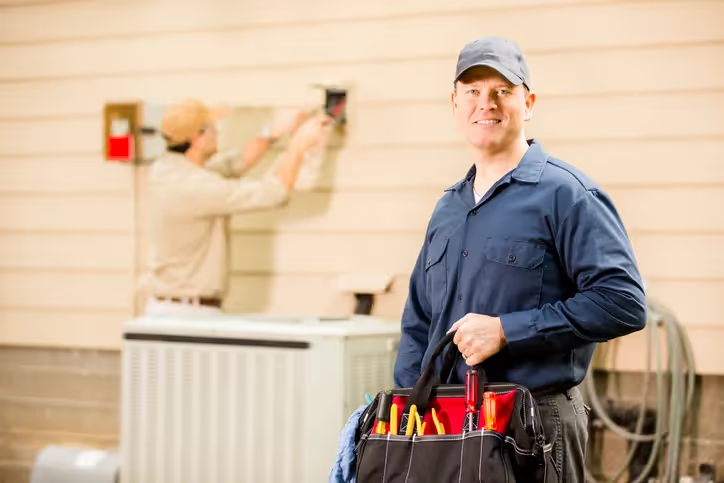
Technicians arrive in fully stocked service vehicles. These mobile warehouses contain the most frequently required components for gas furnaces, electric air handlers, and heat pumps. This preparation strategy drastically reduces the need to run to supply houses or wait for parts delivery, which allows most repairs to be completed during the initial visit. The focus is on restoring heat immediately to prevent frozen pipes and protect the health of the occupants.
The initial diagnostic phase involves a systematic analysis of the heating failure. Technicians do not guess; they use advanced multimeters and combustion analyzers to pinpoint the exact root cause. Whether the issue stems from a faulty ignition sensor, a broken blower motor, or a refrigerant leak in a heat pump, the problem is identified quickly. Once the issue is isolated, a clear, flat-rate quote is provided before any work begins, ensuring total transparency regarding the scope of the repair.
Comprehensive Diagnostics and Repair Procedures
Emergency heating service goes beyond simply swapping out a broken part. It requires a holistic view of the HVAC system to ensure that the immediate fix holds up against the rest of the winter season. The repair process follows a strict technical protocol designed to ensure safety and efficiency.
Safety Inspection and Carbon Monoxide Testing:
- The first step in any heating emergency, particularly with gas furnaces, is verifying safety. Technicians check for cracks in the heat exchanger, which can lead to carbon monoxide leaks.
- Draft induction motors and flue pipes are inspected to ensure hazardous exhaust gases are venting properly outside the home.
- Safety switches, such as rollout switches and limit switches, are tested to confirm they are functioning correctly to prevent overheating.
Electrical and Mechanical Troubleshooting:
- For electric systems and heat pumps, the focus shifts to the electrical sequence of operation. Technicians test capacitors, contactors, and relays to ensure power is being distributed correctly.
- Thermostat communication is verified to ensure the command center is effectively signaling the heating unit.
- Blower motors and fans are inspected for seizure, bearing wear, or belt slippage that might be restricting airflow.
Ignition and Fuel System Analysis:
- In gas units, the ignition sequence is critical. The hot surface igniter or pilot light is tested for reliability.
- Flame sensors are cleaned or replaced if they are failing to detect a flame, which causes the system to shut down as a safety precaution.
- Gas valves are checked for proper pressure to ensure the burners are firing at the correct intensity for the unit’s specifications.
Airflow and Pressure Verification:
- Restricted airflow is a common cause of system failure. Filters are checked and replaced if necessary.
- Ductwork is inspected for major leaks or disconnects that might be venting warm air into an attic or crawlspace.
- Static pressure is measured to ensure the system isn't working harder than necessary to move air through the home.
Determining Repair vs. System Replacement
During an emergency service call, a homeowner often faces a critical decision: should the existing unit be repaired, or is it time to invest in a replacement? This decision is rarely easy, but specific technical criteria help clarify the best path forward. The goal is to provide a solution that makes financial sense in the long run, rather than applying a temporary bandage to a dying system.
The 50% Rule:
- If the cost of the emergency repair approaches or exceeds 50% of the value of a new system, replacement is generally the more improved financial decision. Investing heavily in an old unit often leads to "throwing good money after bad."
Age of the Equipment:
- Furnaces typically last between 15 and 20 years, while heat pumps may last 10 to 15 years. If the equipment in a Horse Cave home is nearing or past this age range, a major breakdown is often a signal that the end of its lifecycle has arrived.
- Older units are significantly less efficient. Replacing a unit with a low AFUE (Annual Fuel Utilization Efficiency) rating with a modern, high-efficiency model can result in energy savings that help offset the installation cost.
Frequency of Breakdowns:
- If the heating system has required multiple repairs over the last two winters, reliability has become compromised. Frequent breakdowns indicate that internal components are failing in succession.
- Chronic issues often lead to emergency calls at the most inconvenient times. A new system offers the peace of mind of a fresh warranty and reliable operation.
Safety Concerns:
- A cracked heat exchanger is a non-negotiable red flag. Because this poses a direct carbon monoxide threat, the furnace must be shut down immediately. In most cases, replacing the heat exchanger is so labor-intensive and costly that full system replacement is the only logical option.
Understanding the Installation Process
If a repair is not feasible, the transition to a new heating system is handled with precision. The installation process is methodical, adhering to manufacturer specifications and local building codes to ensure optimal performance.
Load Calculation and Sizing:
- Technicians do not automatically install the same size unit that was removed. A Manual J load calculation is performed to determine the exact heating requirements of the home based on square footage, insulation levels, and window quality.
- Proper sizing prevents short-cycling (unit too big) or the inability to keep up with freezing temperatures (unit too small).
System Removal and Preparation:
- The old unit is disconnected from gas, electric, and ductwork lines safely. Refrigerant is recovered from heat pumps according to environmental regulations.
- The installation area is prepped, and the plenum (the transition between the unit and ductwork) is modified if necessary to fit the new equipment.
Installation and Connection:
- The new furnace or air handler is positioned and leveled. Vibration pads are used to reduce noise.
- Flue pipes are installed with the correct slope to ensure proper venting of exhaust gases.
- Gas lines are reconnected and tested with a soap solution to ensure there are no leaks.
- Electrical connections are tightened, and the thermostat is wired to control the new stages of heating.
Commissioning and Testing:
- Once installed, the system is not just turned on; it is commissioned. Technicians measure gas pressure, check temperature rise (the difference in temperature between return and supply air), and verify airflow.
- The homeowner is walked through the operation of the new thermostat and briefed on maintenance requirements.
Local Climate Factors and Regulatory Compliance
Operating a heating system in this region requires specific attention to environmental variables. The climate in Horse Cave, KY, features a distinct four-season pattern, but winters can bring sharp, unexpected drops in temperature. These fluctuations put significant stress on heating elements, particularly heat pumps that rely on auxiliary heat strips when the outdoor temperature drops below freezing. High humidity levels during the summer can also accelerate corrosion within the system, which often manifests as component failure once the heat is turned on for the first time in late autumn.
Carter Heating and Cooling understands these local nuances. Service technicians are familiar with the specific strain placed on systems in this geographic area. Furthermore, adherence to local building codes is strictly maintained. Any major modification to a heating system, particularly involving gas lines or electrical circuits, requires compliance with safety standards. Technicians ensure that all work meets or exceeds these regulations, protecting the homeowner from future liability or safety hazards. This includes verifying that venting distances are correct and that condensate drains are routed properly to prevent water damage.
Navigating the landscape of rebates and incentives is another area where local expertise matters. Utility companies and manufacturers frequently offer rebates for upgrading to high-efficiency equipment. During the service visit, information regarding available credits is provided, helping homeowners maximize their investment.
Why Technical Expertise Matters in Emergencies
In an emergency situation, the competency of the technician is the single biggest factor in how quickly comfort is restored. Generic handymen or inexperienced contractors may misdiagnose complex issues, leading to repeated failures or dangerous operating conditions. Specialized heating technicians undergo rigorous training to understand the physics of thermodynamics and the intricacies of modern control boards.
This expertise translates into speed and accuracy. A skilled technician can listen to the sound of an inducer motor and identify a bearing failure before opening the cabinet. They understand the relationship between static pressure and blower motor amp draw. This depth of knowledge ensures that the root cause is addressed, not just the symptom.
Professional service also entails a respect for the property. Technicians utilize shoe covers and drop cloths to protect flooring and workspaces. The goal is to leave the home exactly as it was found, only warmer. Transparency in pricing means that homeowners are never caught off guard by the final invoice. The focus remains on solving the mechanical problem efficiently and ethically.
Reliable heating is not a luxury; it is a necessity for a safe home. When systems fail, the response must be professional, immediate, and technically sound. Restore warmth to your home today—click here to schedule your emergency service.

Great Service at a Fair Price
Veterans Discount


Senior Discount

Law Enforcement
Fire fighters/ems
Hear From Your Neighbors!
Hear from your neighbors to see how our commitment to dependable service and lasting comfort has made a difference in their homes.