
How can we help today?
Choose an option to see quick actions and get help faster.Ductless Maintenance in Horse Cave, KY
Ductless Maintenance in Horse Cave, KY
Ensure your ductless system in Horse Cave operates optimally. Contact us for comprehensive maintenance to enhance efficiency and prevent costly repairs.
Eliminate Performance Drops in Your Ductless Unit
Noticing your ductless system isn’t heating or cooling as it should, or perhaps the airflow seems restricted despite a clear filter? It is likely time for a professional maintenance check to address hidden accumulation of debris and mechanical wear. For immediate service in Horse Cave to restore your system’s output, contact us today to schedule a comprehensive tune-up.
Residents in this area rely heavily on their mini-split systems to handle the humid summers and variable winters. When these units go without service, efficiency plummets, and energy bills rise. Our team addresses the root causes of poor performance.
- Restore your system efficiency and comfort within a day.
- Ensure all components meet optimal performance through a detailed inspection.
- Reduce the risk of costly future repairs with scheduled maintenance.
All services are performed by licensed professionals with comprehensive warranties for peace of mind. Carter Heating and Cooling ensures your investment is protected through rigorous technical standards.
Comprehensive Ductless Maintenance Scope
When you book a maintenance visit, you are paying for more than a quick filter change. A ductless mini-split system operates differently than a traditional forced-air system, relying on precise inverter technology and compact components that require specialized attention. The primary goal is to remove the biological growth, dust, and debris that naturally accumulate inside the air handler and the outdoor condenser.
Indoor Unit Deep Cleaning and Inspection
The indoor air handler is responsible for absorbing heat and distributing conditioned air. Because these units are located directly in the living space, they must be kept impeccably clean to maintain air quality and airflow.
- Evaporator Coil Cleaning: The coil is where heat exchange happens. Over time, it creates a moist environment perfect for mold and dust buildup. We chemically clean the coil to ensure maximum thermal transfer.
- Blower Wheel Sanitization: The blower wheel spins at high speeds to push air. If dust settles on the blades, it creates drag, unbalances the fan, and reduces airflow. This is often the cause of a noisy or vibrating unit.
- Filter Maintenance: While homeowners often clean the primary mesh filters, we inspect and clean the secondary filtration systems and housing to ensure no bypass dirt enters the mechanical areas.
- Condensate Drain Line Flush: Ductless units remove humidity from your home. This moisture travels down a drain line. In humid climates, algae can block this line, leading to water leaking down your wall. We flush and treat the line to prevent backups.
Outdoor Condenser Optimization
The outdoor unit houses the compressor and the heat rejection coil. It is exposed to the elements, including the heavy rainfall and pollen common in Kentucky.
- Condenser Coil Washing: Dirt, leaves, and grass clippings can clog the fins of the outdoor coil. This forces the compressor to work harder to dump heat. We meticulously clean these fins to lower operating pressures and electricity usage.
- Refrigerant Level Verification: Mini-splits require a precise refrigerant charge. Even a slight undercharge or overcharge can significantly impact the inverter’s ability to ramp up and down efficiently. We measure operating pressures and line temperatures to ensure the charge is exact.
- Electrical Connection Tightening: The vibration of the unit can loosen electrical terminals over time. Loose connections create heat and can burn out control boards. We torque all connections to factory specifications.
The Maintenance Execution Process
Our approach to servicing your ductless system is systematic and respectful of your home — read our reviews. We understand that these units are often mounted on walls in finished rooms, requiring a "white glove" approach to service to prevent mess or damage.
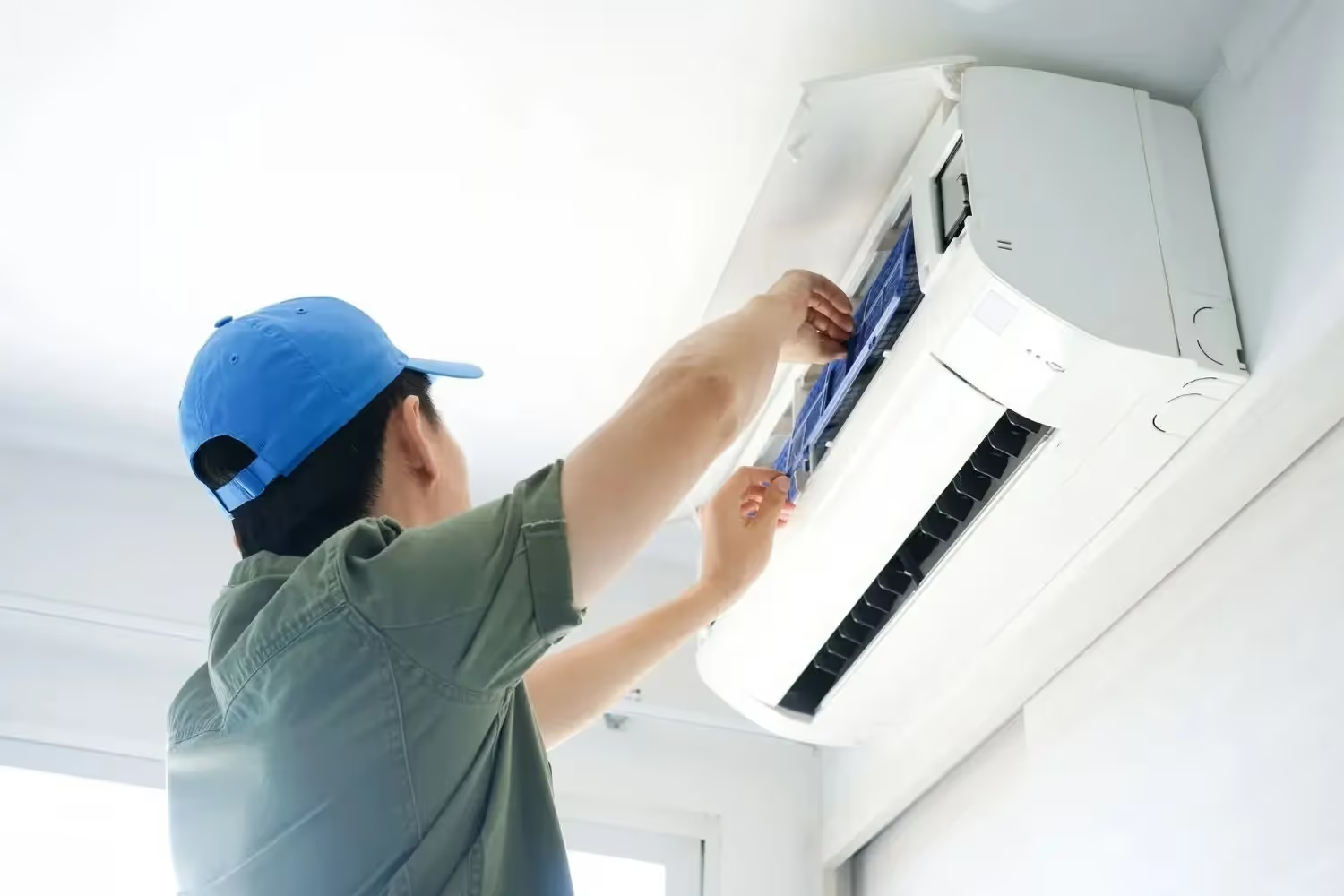
- First, the technician performs a pre-service operational check. This involves running the unit in both heating and cooling modes (season permitting) to establish a baseline of performance. We check the temperature differential between the return air and the supply air to gauge current efficiency.
- Next, the work area is prepped. Because cleaning a mini-split involves water and cleaning solutions, we utilize specialized "bib kits." These are waterproof bags that strap around the indoor unit, creating a funnel. This allows us to pressure wash the coils and blower wheel right on the wall without a single drop of water touching your floor or furniture. Drop cloths are laid down as an extra precaution.
- Following the preparation, the deep cleaning begins. We apply a non-acidic, coil-safe cleaner that penetrates the tight fins of the evaporator coil and the curves of the blower wheel. After the cleaner dwells and loosens the debris, it is rinsed away thoroughly. The outdoor unit is simultaneously cleaned and cleared of organic debris.
- Finally, once the cleaning is complete and the unit is reassembled, we conduct a post-service test. We verify that airflow has increased, the drain line is flowing freely, and the electrical draw is within manufacturer limits. You receive a detailed report of what was done and the overall health status of the system.
Determining When to Repair or Replace
While maintenance can resolve many performance issues, there are times when a system has reached the end of its viable life or requires a significant repair. Understanding the difference between a unit that needs a tune-up and one that needs replacement is critical for financial planning.
Indications for Repair
If the system is generally reliable but has a specific failure, repair is usually the best path.
- Control Board Failures: If a power surge damages a board but the compressor is healthy, replacing the board is cost-effective.
- Minor Refrigerant Leaks: If a leak is found at a flare connection, it can often be re-flared and recharged without replacing the whole system.
- Fan Motor Issues: A noisy motor can be swapped out relatively easily, extending the life of the unit by several years.
Indications for Replacement
Certain scenarios make sinking money into an old unit unwise.
- Compressor Failure: The compressor is the heart of the system. If it fails and the unit is out of warranty, the cost of the part and labor often approaches the cost of a brand-new, more efficient system.
- Age and Efficiency: If your ductless system is over 15 years old, it is likely using outdated refrigerant (like R-22) and has a much lower SEER rating than modern units. Replacement offers immediate energy savings.
- Multiple Major Component Failures: If you are facing a bad compressor, a leaking coil, and a fried board simultaneously, replacement is the only logical financial choice.
Local Operational Considerations
Operating a ductless system in Horse Cave requires specific attention to our local climate and regulatory environment. The humid subtropical climate presents unique challenges that generic maintenance plans might miss.
- Humidity Management: With annual rainfall around 50 inches and high summer humidity, the condensate removal system of your mini-split works overtime. Algae growth in drain lines is accelerated here compared to drier climates. Regular chemical treatment of the drain pan and line is not optional; it is a necessity to prevent water damage to your drywall.
- Seasonal Debris: The distinct seasons bring varying types of debris. Spring storms often pack pollen and cottonwood into outdoor coils, effectively suffocating the unit right before the heat of summer. Fall leaves can pile up around the outdoor unit, restricting airflow. Local maintenance schedules should be timed to address these seasonal peaks.
- Permitting and Licensing: HVAC work, particularly involving refrigerant, is regulated. Handling refrigerant requires EPA 608 certification to ensure no ozone-depleting substances are vented. Furthermore, electrical work on these units must adhere to local building codes to ensure safety. Hiring licensed professionals ensures that your warranty remains valid and your home insurance is not compromised by unpermitted work.
Technical Precision and System Longevity
Ductless mini-splits are sophisticated pieces of equipment. They utilize inverter-driven compressors that modulate speed based on real-time demand, rather than simply turning on and off like old-school air conditioners. This complexity means that maintenance requires a higher level of technical aptitude. A technician must understand how to read error codes from the internal computer and how to test DC voltage components that are common in these systems.
Carter Heating and Cooling employs technicians who are specifically trained on the nuances of ductless technology. We understand that a slight imbalance in the blower wheel doesn't just make noise—it wears down the bearings and reduces the lifespan of the motor. We know that a dirty sensor can cause the unit to short-cycle, defeating the energy-saving purpose of the inverter.
Our focus is on the long-term reliability of your heating and cooling solution. By meticulously cleaning and calibrating the system, we aim to extend the operational life of the equipment, delay the need for replacement, and ensure that you get the high-efficiency performance you paid for when the system was installed. We do not cut corners on the cleaning process because we know that hidden dirt is the enemy of efficiency.
Secure the performance of your ductless system today. Contact us to schedule your professional maintenance service.
Preventive Maintenance for Long-Term Ductless System Reliability
Protect your mini split investment with scheduled ductless maintenance in Horse Cave, KY. Our service covers coil cleaning, drain line inspection, electrical testing, and performance checks for all indoor and outdoor units. Maintenance is essential to prevent wear, maintain warranty eligibility, and extend system life.
Set Up Ductless Maintenance That Supports Ongoing System Health

Great Service at a Fair Price
Veterans Discount


Senior Discount

Law Enforcement

Fire fighters/ems

Hear From Your Neighbors!
Hear from your neighbors to see how our commitment to dependable service and lasting comfort has made a difference in their homes.