

How can we help today?
Choose an option to see quick actions and get help faster.Heat Pump Installation in Horse Cave, KY
Heat Pump Installation in Horse Cave, KY
Discover professional heat pump installation in Horse Cave to enhance home comfort and efficiency. Contact us today to schedule a consultation and learn about our financing options.
Expert Heat Pump Installation for Efficient Comfort
Struggling with inconsistent home temperatures and rising energy costs creates unnecessary stress for homeowners. Discover how our expert heat pump installations provide year-round comfort effectively, and contact us to discuss financing options or schedule an estimate today. While many systems struggle to handle the specific humidity and temperature swings found in Horse Cave, a properly installed heat pump offers a versatile solution.
- Maximize your home's energy efficiency and reduce utility bills.
- Enjoy faster, reliable service tailored to Horse Cave's unique climate.
- Choose from a wide selection of top-tier heat pumps suited to your specific needs.
All installations are backed by comprehensive warranties and proven expertise to secure your investment.
What You Get With a Professional Heat Pump Installation
Installing a heat pump is more than just swapping out a box outside your home; it is a comprehensive upgrade to your property’s thermal envelope. Unlike traditional furnaces or air conditioners that only perform one function, a heat pump manages both heating and cooling. This dual functionality makes it the primary engine for your home's comfort. When you move forward with an installation, the immediate result is a streamlined system capable of handling the humid subtropical summers and the chilly winters typical of this region.
Current heat pump technology utilizes inverter-driven compressors. This allows the system to run at variable speeds rather than simply blasting on and off. The result is distinct: quiet operation, precise temperature holding to within a degree of your thermostat setting, and superior humidity control. For residents in Horse Cave, humidity control is essential during the muggy summer months to prevent mold growth and ensure the air feels cool, not clammy.
A complete installation package includes the removal and environmentally safe disposal of existing equipment. It involves a full assessment of the electrical capacity to ensure your panel can support the new unit without tripping breakers. The transition to a modern heat pump also provides access to higher SEER2 (Seasonal Energy Efficiency Ratio) and HSPF2 (Heating Seasonal Performance Factor) ratings, which directly correlate to lower monthly operational costs.
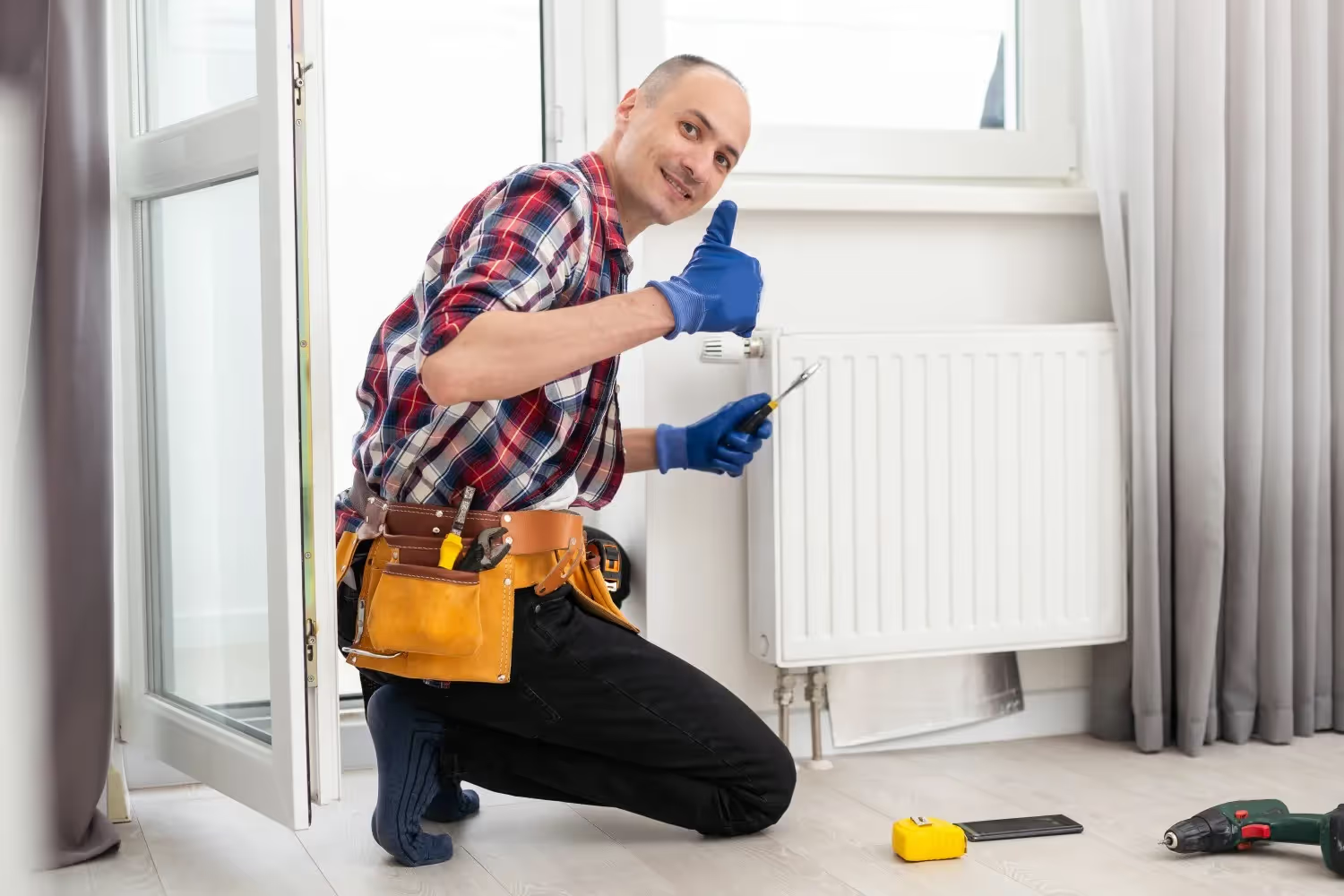
The Installation Process: From Load Calculation to Airflow
A successful installation relies heavily on technical precision during the setup phase. Many homeowners ask why some contractors dislike heat pumps or why previous units failed to keep up. The answer almost always lies in improper sizing or poor ductwork integration. We follow a strict protocol to ensure the mechanical design matches the specific heat load requirements of your structure.
Manual J Load Calculation
The process begins with data, not guesswork. A Manual J calculation determines exactly how much heating and cooling energy your home loses and gains throughout the day.
- Technicians measure square footage, window surface area, and insulation levels in the attic and walls.
- The orientation of the house relative to the sun is analyzed to account for solar heat gain.
- Local climate data for Horse Cave is factored in to ensure the unit performs during peak summer heat and winter lows.
Ductwork Analysis and Modification
Even the most expensive heat pump will fail if connected to leaking or undersized ducts. Heat pumps generally require higher airflow volume than older gas furnaces.
- The existing duct system is inspected for static pressure issues that could choke the new system.
- Leaks are sealed to prevent conditioned air from escaping into crawl spaces or attics.
- Return air vents are evaluated to ensure the system can "breathe" properly, preventing strain on the blower motor.
Setting the Equipment
Once the design phase is complete, the physical installation takes place.
- The outdoor condenser is leveled on a composite pad to prevent vibration and settling.
- Proper clearance is established around the unit to allow for coil cleaning and adequate airflow.
- The indoor air handler is secured and sealed to the supply plenum to eliminate air gaps.
Refrigerant and Electrical Connections
The lifeline of the heat pump is the refrigerant line set connecting the indoor and outdoor components.
- Copper lines are brazed using nitrogen purging to prevent oxidation inside the pipes, which protects the compressor valves.
- The system is pressure-tested with nitrogen to guarantee there are no leaks before refrigerant is added.
- A deep vacuum is pulled to remove moisture and non-condensables from the lines.
- The refrigerant charge is weighed in specifically according to the manufacturer’s specifications for the line set length.
Determining When to Replace vs. Repair
Deciding between repairing an aging system or investing in a new installation is a financial and logical calculation. While repairs might seem cheaper upfront, an old system acts as a slow leak on your finances through inefficiency and repeated service calls. There are specific technical indicators that signal replacement is the smarter economic choice.
The Age and Refrigerant Factor
Heat pumps have an average lifespan of 10 to 15 years. If your current unit is approaching or has passed the 12-year mark, major component failures are likely imminent. Furthermore, older systems often utilize R-22 refrigerant, which has been phased out. Servicing an R-22 unit is prohibitively expensive due to the scarcity of the chemical. If an older unit develops a refrigerant leak, replacement is almost always the only viable option.
Compressor and Heat Exchanger Health
The compressor is the heart of the heat pump. If the compressor fails and the unit is out of warranty, the cost of the part and labor often approaches half the cost of a new system. Similarly, if the reversing valve (which switches the unit between heating and cooling) is stuck or corroded, it indicates the system has suffered significant wear. Investing thousands into a dying system rarely yields a return on investment.
Frequency of Breakdowns
The "50% Rule" is a standard industry metric. If the cost of the repair equals 50% of the value of the system, or if you have paid for repairs multiple times in the last two years that total a significant amount, replacement is necessary. Reliability is a key factor; a new system provides peace of mind that the heat will work when the temperature drops.
Why Heat Pumps Are Effective in Kentucky
A common misconception is that heat pumps struggle in regions that see freezing temperatures. While this was true for technology from the 1980s, modern cold-climate heat pumps are engineered differently. Carter Heating and Cooling installs systems designed to extract heat from the outside air even when temperatures dip well below freezing.
In the humid subtropical climate of Horse Cave, the cooling season is long and moisture-heavy. Heat pumps are excellent dehumidifiers. By running at lower speeds for longer cycles, they pull more moisture out of the air than a standard single-stage air conditioner. This creates a more comfortable indoor environment at a higher thermostat setting, saving energy.
For the winter months, modern systems can maintain 100% heating capacity down to much lower temperatures than their predecessors. For homeowners concerned about extreme cold snaps, dual-fuel or "hybrid" systems are an option. These setups use an electric heat pump as the primary heat source but switch to a gas furnace backup during the few days a year when temperatures are extremely low. This optimizes efficiency by using the most cost-effective fuel source for the current outdoor temperature.
Local Installation Considerations
Installing a heat pump in this specific region requires attention to local codes and environmental factors. Ignoring these details can lead to failed inspections or premature equipment corrosion.
Electrical and Permits
Upgrading to a heat pump often requires a dedicated electrical circuit.
- The breaker panel must have sufficient amperage to handle the startup load of the compressor and the backup electric heat strips.
- Local building codes in Horse Cave dictate specific disconnect box locations and wire sizing for safety.
- Professional installers handle the permitting process to ensure the job is recorded and compliant with municipal regulations.
Condensate Management
During the summer, a heat pump generates a significant amount of water as it dehumidifies the home.
- Drain lines must be properly trapped and routed to a drain or the outdoors to prevent water damage to ceilings or floors.
- In winter, the outdoor unit produces water during the defrost cycle. This water must drain away freely so it does not refreeze and turn the unit into a block of ice. The unit must be elevated on snow legs or a stand to keep it above typical snowfall levels.
Unit Placement
Noise and airflow are critical for placement.
- Units should not be placed directly outside bedroom windows if possible, although modern inverter units are very quiet.
- The outdoor unit must be away from dryer vents, as lint accumulation on the coils significantly reduces efficiency and can cause the compressor to overheat.
The Importance of Correct Sizing
One of the most pervasive issues in the HVAC industry is the tendency for contractors to oversize equipment. There is a false belief that "bigger is better." In reality, an oversized heat pump is a liability. It will cool the house too quickly, shutting off before it has removed the humidity. This leads to "short cycling," where the motor starts and stops frequently. This places immense stress on the electrical components and leads to premature failure.
Undersizing is equally problematic, as the unit will run continuously without ever reaching the set temperature, driving up electric bills. The sweet spot is achieved only through rigorous calculation. A correctly sized unit runs longer, steadier cycles, filtering the air more effectively and maintaining a constant temperature throughout the home. This balance is what separates a mediocre install from a high-performance climate control system.
Maximizing Investment Through Professional Execution
Choosing the right equipment is only half the battle; the quality of the installation dictates the efficiency and longevity of the system. Manufacturers explicitly state that warranty coverage is contingent upon proper installation procedures. Cutting corners on vacuuming the lines, failing to braze with nitrogen, or skipping the airflow setup can void these warranties and leave the homeowner liable for future repairs — read our reviews.
Professional installation also involves configuring the thermostat. Modern smart thermostats communicate directly with the heat pump, monitoring energy usage and adjusting blower speeds. If these are wired incorrectly, the system may default to expensive backup heat strips instead of using the efficient heat pump cycle, negating the energy savings you paid for.
Secure Your Comfort and Efficiency
Upgrading to a new heat pump system transforms how your home handles energy and comfort. It resolves the issues of uneven temperatures, high humidity, and excessive operational costs. By selecting a system that is properly sized and installed according to strict industry standards, you ensure a reliable environment for your family regardless of the weather outside.
Take control of your home’s climate today. Carter Heating and Cooling is ready to help you navigate your options and secure a system that delivers consistent performance for years to come.
Call us now to schedule your comprehensive heat pump assessment and installation.

Great Service at a Fair Price
Veterans Discount


Senior Discount

Law Enforcement

Fire fighters/ems

Hear From Your Neighbors!
Hear from your neighbors to see how our commitment to dependable service and lasting comfort has made a difference in their homes.