

How can we help today?
Choose an option to see quick actions and get help faster.Heating Replacement in Horse Cave, KY
Heating Replacement in Horse Cave, KY
Heating Replacement in Horse Cave, KY
Stop Cold Drafts and Unreliable Heat With Immediate System Replacement
Cold weather should mean comfort inside your home, not stress over a failing unit or rising utility bills. If your heating system has finally given up after a cold snap in Horse Cave, we are here to bring back the warmth—fast and fuss-free. Contact us immediately to schedule a priority assessment or click to apply for our flexible financing options.
Carter Heating and Cooling understands that heating failures rarely happen at convenient times. When the temperature drops, you need a partner who can assess the situation and provide a permanent solution without delay. We prioritize replacement services to ensure your home remains safe and comfortable, minimizing the downtime between a breakdown and a brand-new, efficient system.
- Expedited same-day service capability to restore your comfort quickly.
- Transparent, flat-rate pricing with absolutely no hidden fees.
- Full labor and parts warranty included with every replacement installation.
- Licensed and insured technicians, with flexible financing options available for all budgets.
What to Expect From Your Heating Replacement Service
When you commit to a heating replacement, you are investing in the next 15 to 20 years of your home’s comfort. The goal is not just to swap out a box, but to improve the overall energy efficiency and airflow of your property. Modern systems are significantly more advanced than units manufactured even a decade ago. This means the replacement process involves a comprehensive evaluation of your current infrastructure to ensure the new unit performs at its peak potential.
A professional replacement begins with a technical load calculation. Many older homes in Horse Cave were originally fitted with oversized or undersized units based on rough estimates. An oversized unit cycles on and off too frequently, leading to wear and tear, while an undersized unit runs constantly without ever reaching the set temperature. We perform a Manual J load calculation that factors in square footage, insulation levels, window types, and local climate data to determine exactly the right size system for your specific needs.
Included in a standard replacement service is the safe removal and disposal of your old equipment. Handling refrigerants, disconnecting gas lines, and managing heavy machinery requires specific certifications to ensure safety and environmental compliance. You receive a full project roadmap that outlines the timeline, the specific model being installed, and the projected energy savings you can expect to see on your monthly utility bills.
- Comprehensive Site Evaluation: Technicians assess existing ductwork, electrical connections, and fuel lines to ensure they meet current building codes.
- System Selection: Guidance on choosing between gas furnaces, electric furnaces, or dual-fuel heat pump systems based on your energy goals and budget.
- Efficiency Upgrades: Installation of high-efficiency units with high AFUE (Annual Fuel Utilization Efficiency) ratings to maximize every dollar spent on energy.
- Smart Thermostat Integration: Options to install compatible smart controls that allow for precise temperature management and further cost savings.
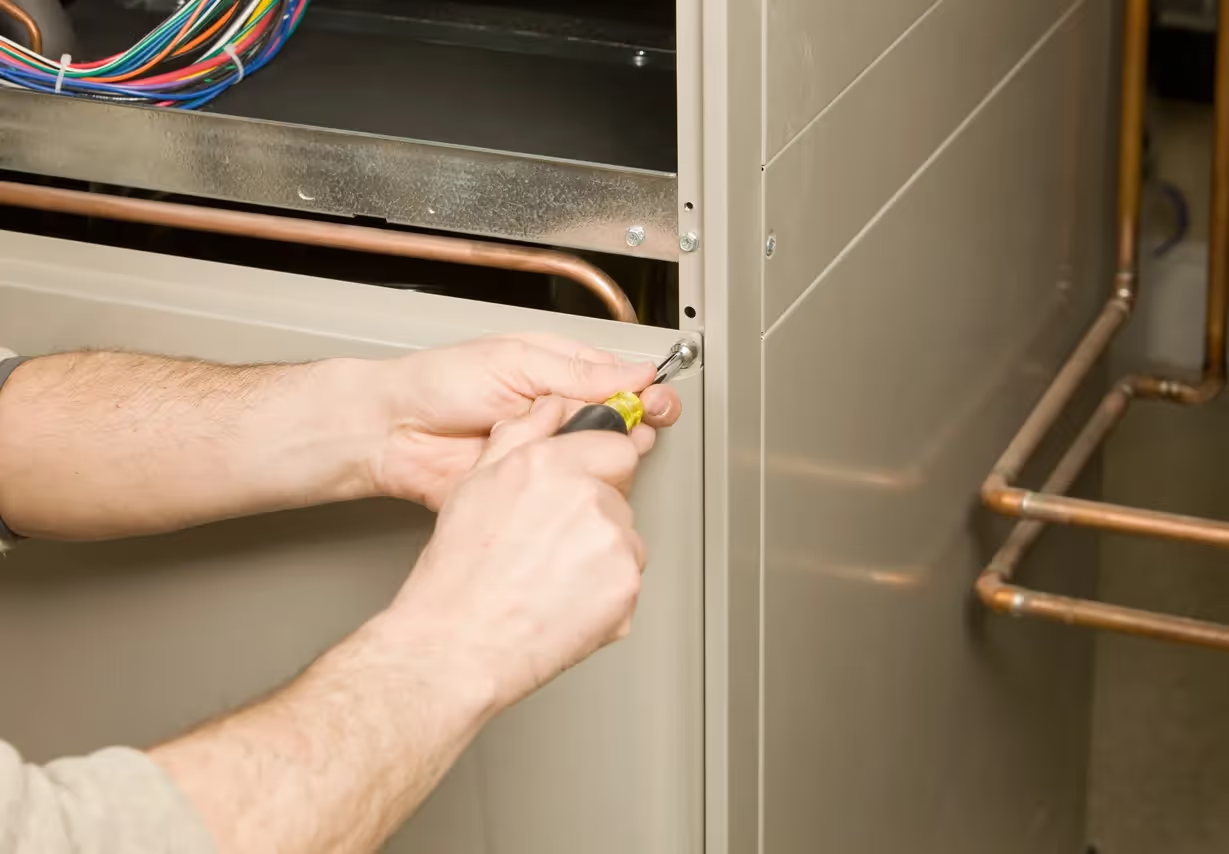
The Installation Process Explained
The day of installation is structured to be efficient and respectful of your property. The objective is to complete the transition from the old unit to the new system with minimal disruption to your daily routine — read our reviews. Professional crews arrive fully equipped with all necessary parts and tools, reducing the need for trips back and forth to the supply house.
Preparation is the first critical step. Technicians lay down drop cloths and protective coverings to shield your flooring and furniture. The workspace around the heating unit is cleared to allow for safe maneuvering of heavy equipment. Safety is paramount, so the main power and gas supplies are shut off before any work begins.
The removal phase involves disconnecting the obsolete unit from the plenum, vent pipes, gas lines, and electrical wiring. This is done methodically to preserve the integrity of the connections that will be reused. Once the old unit is removed, the area is cleaned, and any necessary modifications to the plenum or base are made to accommodate the dimensions of the new system.
- Positioning and Connection: The new heating unit is moved into place and leveled. Precise leveling is vital for proper drainage and efficient operation, particularly for high-efficiency condensing furnaces.
- Ductwork sealing: The supply and return plenums are connected and sealed with mastic or foil tape to prevent air leakage. Airtight connections ensure that the heat you pay for actually reaches your living spaces.
- Utility Hookup: Gas lines are reconnected and tested for leaks using electronic sniffers or bubble solutions. Electrical wiring is terminated according to the manufacturer's schematics, and high-voltage connections are tightened to torque specifications.
- Venting Installation: For gas furnaces, proper venting is installed to ensure dangerous combustion byproducts, such as carbon monoxide, are safely expelled from the home. PVC or metal flue pipes are routed and secured.
- Commissioning and Testing: The system is powered on and put through a full commissioning sequence. Technicians measure static pressure, temperature rise, and gas pressure to verify the system is running within factory specifications.
- Walkthrough: The lead technician walks you through the operation of the new system, demonstrates how to change filters, and explains the warranty registration process.
Recognizing When Replacement Is the Smarter Choice
Deciding between another repair and a full replacement is often a matter of economics and reliability. While a repair might seem cheaper upfront, pouring money into a dying system is often a sunk cost. There are clear technical indicators that suggest a replacement is the only financially sound option.
The most common benchmark used in the industry is the "50% Rule." If the cost of the repair approaches 50% of the value of a new system, replacement is the better investment. Furthermore, if you have had to call for repairs more than twice in the last two years, the system has likely reached the end of its useful life. Continual breakdowns signal that internal components are failing in succession.
Age is the primary determinant. In the humid subtropical climate of Horse Cave, heating systems endure significant workloads. If your furnace or heat pump is over 15 years old, it is operating on borrowed time. Older units also lack the safety features and efficiency standards of modern equipment. An old heat exchanger, for example, can develop cracks that are invisible to the naked eye but pose a serious carbon monoxide risk.
- Rising Energy Bills: If your usage habits haven't changed but your heating costs are spiking, the system has lost efficiency. Modern units can reduce these costs by up to 30%.
- Uneven Heating: If some rooms are freezing while others are roasting, the blower motor or compressor may be failing, or the unit may be improperly sized.
- Excessive Noise: Squealing, banging, or rattling sounds indicate mechanical failure in the motor, bearings, or burner assembly that is often too costly to fix on an old unit.
- Humidity Issues: A failing system struggles to regulate humidity, leading to dry air in winter that causes static shock and respiratory issues.
- Yellow Pilot Light: For gas furnaces, a yellow flame instead of a blue one indicates incomplete combustion, which is a potential safety hazard requiring immediate attention.
Navigating Local Heating Requirements and Seasonal Factors
Installing a heating system in Kentucky requires adherence to specific regional considerations. The local climate features four distinct seasons, but winter cold snaps can be sharp and sudden. This necessitates a heating system that can ramp up performance quickly. Additionally, the high humidity during the warmer months affects how systems—particularly heat pumps—must be configured to handle moisture control year-round.
Local building codes and permit requirements are strictly enforced to ensure homeowner safety. A professional replacement involves pulling the necessary mechanical permits before work begins. This process ensures that the installation meets all safety standards regarding gas piping, electrical grounding, and exhaust venting. Following the installation, a county or city inspector may review the work to certify it complies with local regulations.
Utility availability in the area also dictates your options. While many homes rely on natural gas, others in more rural outskirts may depend on propane or high-efficiency electric heat pumps. Understanding the cost-benefit analysis of these fuel sources is part of the planning process. For example, modern heat pumps are effective even in lower temperatures, making them a viable option for areas where gas infrastructure is limited.
- Permit Acquisition: We handle all administrative tasks, including filing for mechanical permits required by local municipalities.
- Code Compliance: All installations adhere to the latest Kentucky residential building codes, including clearance distances for vents and electrical disconnect accessibility.
- Seasonal Timing: We plan installations to account for weather patterns, ensuring your home isn't left without heat during critical cold fronts.
- Rebate Eligibility: We assist in identifying available local utility rebates or federal tax credits for installing high-efficiency Energy Star rated equipment.
Why Choose Professional Installation for Your New System
The longevity and efficiency of your new heating system depend almost entirely on the quality of the installation. Industry data suggests that a significant percentage of HVAC equipment is installed incorrectly, leading to efficiency losses and premature failure. Carter Heating and Cooling focuses on precision installation practices that adhere to manufacturer guidelines and industry best practices.
Safety is the non-negotiable aspect of heating replacement. Dealing with high-voltage electricity, combustible gases, and exhaust fumes requires specialized training. A certified professional ensures that there are no gas leaks, that carbon monoxide is properly vented, and that electrical connections are fire-safe. This protects your property and your family from serious hazards.
Warranty protection is another critical factor. Manufacturers of top-tier heating equipment often require proof of professional installation to honor their warranties. If a system is installed by an uncertified handyman, you may void the warranty immediately, leaving you liable for expensive parts if something breaks. We register your equipment and provide the documentation needed to keep your warranty valid.
- Correct Sizing: We avoid "rule of thumb" sizing, ensuring your unit is perfectly matched to your home's thermal profile.
- Ductwork Optimization: We don't just connect the unit; we inspect the immediate ductwork to ensure airflow is not restricted, which helps the new system run quietly and efficiently.
- Tooling and Technology: Our trucks are stocked with advanced diagnostic tools, digital manometers, and combustion analyzers to tune your system to factory-perfect settings.
- Post-Install Support: We provide ongoing support and maintenance plans to protect your investment and ensure it continues to operate at peak efficiency for years.
Secure Your Home’s Comfort Now
Waiting to replace a failing heating system is a gamble that can result in frozen pipes, emergency service fees, and uncomfortable nights. A modern, professionally installed system provides consistent warmth, lower energy bills, and peace of mind knowing your home is prepared for whatever the weather brings.
Don't let a breakdown dictate your schedule or your comfort. Trust the team at Carter Heating and Cooling to provide a seamless, high-quality replacement experience. We handle everything from the initial load calculation to the final safety inspection.
Call us now to book your replacement consultation and restore reliable heat to your home today.

Great Service at a Fair Price
Veterans Discount


Senior Discount

Law Enforcement

Fire fighters/ems

Hear From Your Neighbors!
Hear from your neighbors to see how our commitment to dependable service and lasting comfort has made a difference in their homes.