
How can we help today?
Choose an option to see quick actions and get help faster.Mini Split Repair in Horse Cave, KY
Mini Split Repair in Horse Cave, KY
Experience rapid and dependable mini split repair in Horse Cave with our certified technicians. Ensure your system operates smoothly with thorough diagnostics and advanced repair techniques. Schedule now.
Immediate Mini Split Repair Services
Facing unexpected mini split breakdowns in the heat of a Kentucky summer? Get fast, reliable repairs with our certified technicians today to restore your comfort immediately. Contact us now to schedule your diagnostic visit or inquire about financing options for major repairs.
- Same or next-day service available to ensure minimal downtime for your home or business.
- Upfront, transparent pricing with no hidden costs provided before any work begins.
- Service available for all major brands, including Carrier, Samsung, and Lennox.
- All repairs come with a satisfaction guarantee and adhere to local building codes.
When your ductless system fails in Horse Cave, the humidity and heat can quickly make your indoor environment unbearable. Carter Heating and Cooling specializes in the precise diagnosis and repair of complex inverter-driven systems. Unlike standard central air units, mini splits require specific technical knowledge regarding electronic control boards and variable-speed compressors. Our team arrives fully equipped to handle everything from communication errors between indoor and outdoor units to refrigerant leaks and drainage failures, ensuring your system operates efficiently regardless of the season.
Comprehensive Diagnostics and Scope of Repair
Effective repair begins with an accurate diagnosis. Ductless mini split systems rely heavily on sophisticated electronics and proprietary communication protocols. When a system stops cooling or heating, the issue is rarely as simple as a blown fuse. Our technicians utilize advanced diagnostic tools to interface with the onboard computers found in modern units from manufacturers like Samsung and Mitsubishi. This allows us to read error codes directly from the system, pinpointing the exact location of the failure without guesswork.
The scope of our repair services covers every component of your ductless system. This includes the outdoor condenser unit, where the compressor and main control board are housed, as well as the indoor air handling units. We address issues with inverter boards, which are responsible for modulating the speed of the compressor to save energy. If these boards fail, the system cannot function. We also inspect and repair refrigerant linesets, ensuring there are no kinks or leaks that would compromise efficiency.
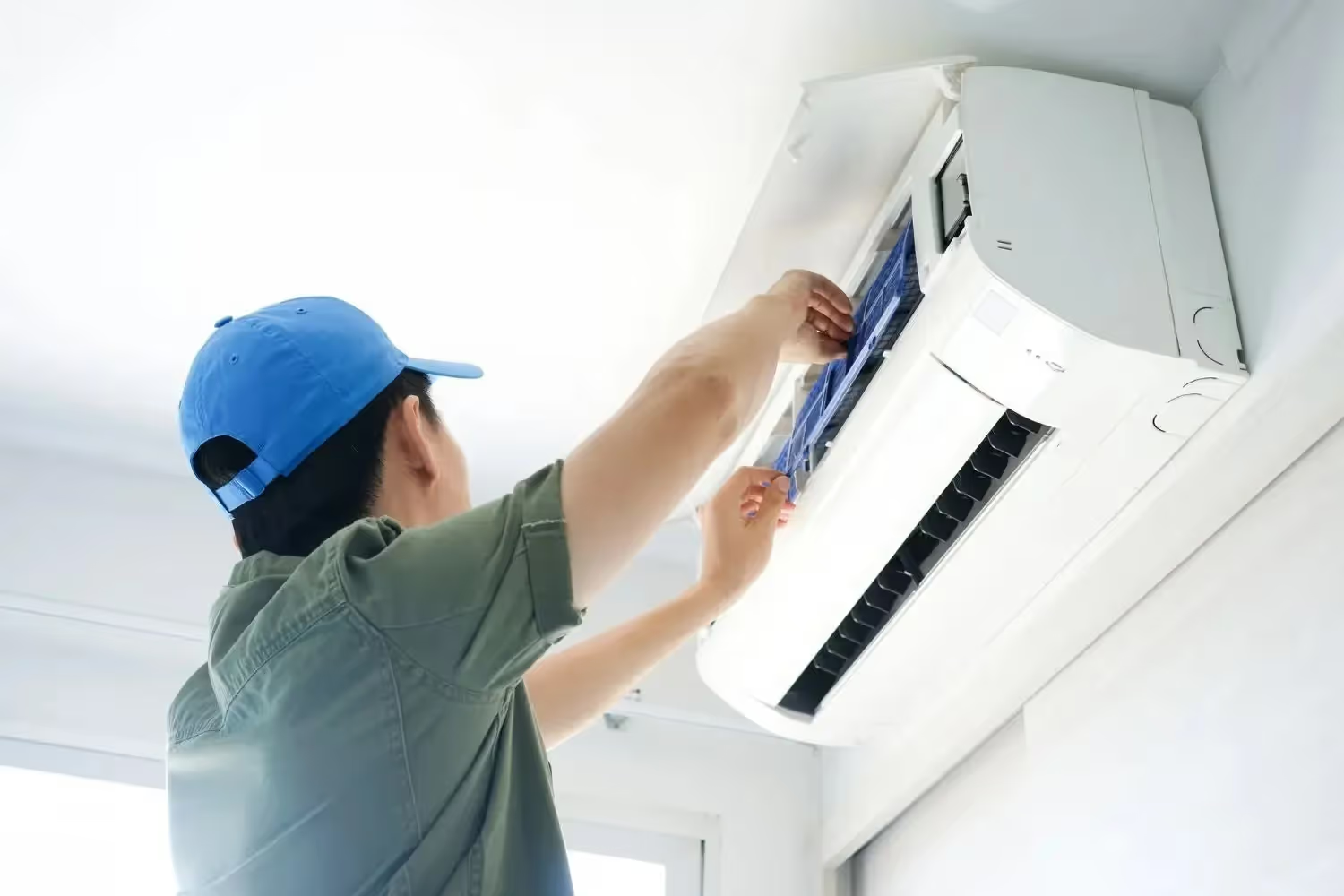
Beyond the electrical and mechanical components, we focus on airflow and air quality mechanisms. A mini split that runs but does not cool often suffers from impacted blower wheels or clogged filters that restrict air movement. Our repair scope includes the deep cleaning of these internal components if they are the root cause of the malfunction. Whether you have a single-zone unit in a sunroom or a multi-zone system conditioning an entire property, the goal is always to restore the unit to factory specifications.
The Repair Process: From Assessment to Restoration
We follow a strict, methodical process to ensure every repair is durable and safe. This approach minimizes the risk of recurring issues and maximizes the lifespan of your equipment.
- Initial System Evaluation: Upon arrival, the technician performs a visual inspection of the indoor and outdoor units. We check for obvious signs of damage, such as oil stains indicating a refrigerant leak, loose wiring connections, or physical obstructions around the condenser. We also verify the thermostat settings and remote control functionality to rule out user-error or simple calibration issues.
- Electrical and Communication Testing: Since mini splits rely on a constant stream of data between the indoor and outdoor units, communication errors are common. We use multimeters to test the voltage and signal wires. This step verifies that the indoor unit is correctly calling for heating or cooling and that the outdoor unit is receiving that signal. We also inspect the power supply to ensure the unit is receiving clean, stable power, which is critical for protecting sensitive inverter boards.
- Refrigerant Charge Verification: If the electrical systems are sound, we assess the refrigerant levels. Mini splits are critically charged systems; even a minor deficit can drastically reduce performance and freeze up the coils. We measure superheat and subcooling levels to determine if the charge is correct. If the levels are low, we perform a leak search using electronic detectors and nitrogen pressure tests before adding any refrigerant.
- Component Repair or Replacement: Once the fault is isolated, we present you with a clear report and a quote. With your approval, we proceed with the repair. This may involve replacing a faulty sensor, soldering a leaking joint, swapping out a control board, or replacing a seized fan motor. We use OEM (Original Equipment Manufacturer) parts whenever possible to ensure compatibility and warranty compliance.
- Performance Validation: After the repair is complete, we do not simply leave. We cycle the system through its various modes—cooling, heating, dehumidification—to verify that the discharge air temperature is within the correct range. We check drainage to ensure condensate is flowing freely away from the home and verify that the system is running quietly and efficiently.
Troubleshooting Common Mini Split Technical Failures
Mini splits manifest problems differently than traditional HVAC systems. Understanding the specific nature of these failures helps in setting expectations for the repair.
- Water Leaks and Drainage Issues: One of the most common service calls involves water dripping from the indoor head. In humid climates, the unit pulls significant moisture from the air. If the condensate drain line is clogged with algae, mold, or debris, or if the unit was not installed completely level, water will back up and overflow the drain pan. Repairing this involves clearing the blockage, treating the line to prevent regrowth, and adjusting the unit's leveling if necessary.
- Inverter Board Failures: The inverter is what makes mini splits efficient, converting AC power to DC to control compressor speed. However, these boards are sensitive to power surges and overheating. A "communication error" or a system that refuses to power on often points to a fried board. Diagnosis involves tracing high-voltage circuits. Replacement requires handling delicate electronics and applying thermal paste correctly to heat sinks.
- Refrigerant Leaks at Flare Connections: Unlike traditional systems that are brazed, mini splits often use flare connections to join copper lines. Over time, thermal expansion and contraction can loosen these connections, leading to refrigerant leaks. Detecting these requires high-sensitivity sniffers. The repair involves cutting off the old flare, creating a new precision flare with a specialized tool, and torquing the nut to the manufacturer's exact specifications.
- Mold and Odor Accumulation: "Dirty sock syndrome" or musty odors indicate bacterial growth on the blower wheel or evaporator coil. Because mini splits are always damp during cooling mode, they are prone to biological growth if not maintained. Repairing this isn't just cleaning; it involves disassembling the indoor unit casing to chemically clean the barrel fan and coil, ensuring the air you breathe is safe.
Repair vs. Replacement: Making the Financial Decision
Deciding whether to repair a malfunctioning unit or invest in a new system is a major financial decision. We provide the data you need to make the right choice for your home and budget.
- Age of the Equipment: Most ductless mini splits have a lifespan of 15 to 20 years with proper maintenance. If your system is under 10 years old, repair is usually the best option. However, if the unit is approaching the 15-year mark and requires a major component like a compressor, the cost of repair may not yield a good return on investment compared to a new system with a fresh warranty.
- The 50% Rule: A general industry standard is the 50% rule: if the cost of the repair approaches or exceeds 50% of the cost of a new unit, replacement is often the wiser financial move. This is particularly true if the unit has a history of breakdowns. We help you crunch the numbers, providing a clear comparison of the repair bill versus the installation cost of a modern, more efficient model.
- Refrigerant Type: Older systems may use R-22 refrigerant, which has been phased out and is prohibitively expensive to acquire. If your older unit has a refrigerant leak, simply refilling it may cost nearly as much as a down payment on a new system. Modern systems use R-410A or newer, more eco-friendly refrigerants that are readily available and efficient.
- Energy Efficiency Improvements: Technology in the HVAC space moves fast. A mini split installed 12 years ago likely has a significantly lower SEER (Seasonal Energy Efficiency Ratio) rating than today's models. By upgrading, you might see a reduction in your monthly energy bills that helps offset the cost of the new installation over time. We can calculate estimated savings based on your usage patterns.
Navigating Local Climate and Infrastructure
Operating a mini split in Horse Cave, KY, presents specific challenges due to the regional climate and local infrastructure. Our repair protocols are tailored to these local conditions to ensure longevity.
- High Humidity Management: Our summers are characterized by intense humidity. Mini splits are excellent dehumidifiers, but this puts a heavy load on the drainage system. During repairs, we often install upgraded condensate pumps or recommend specific maintenance schedules to handle the sheer volume of water these units extract from the air in July and August.
- Winter Defrost Cycles: While our winters are generally mild, temperatures do drop below freezing. Mini splits used for heating must periodically enter a "defrost mode" to melt ice off the outdoor coil. If sensors fail or the outdoor unit is positioned where snow drifts accumulate, this cycle can fail, leading to an ice-bound unit that provides no heat. We check sensor calibration and advise on snow protection for outdoor condensers to prevent this winter failure.
- Voltage Fluctuation Sensitivity: In certain semi-rural or developing areas, voltage fluctuations from the grid can occur. Because inverter boards are highly sensitive to "dirty power," we often find damaged electronics following storms or grid surges. Part of our repair service includes checking your grounding and recommending surge protection devices specifically designed for ductless equipment to prevent future catastrophic electrical failures.
Why Choose Certified Technicians for Ductless Systems
Attempting DIY repairs or hiring a general handyman for mini split issues often leads to further damage and voided warranties. These systems are fundamentally different from standard split systems and require specialized training.
- Manufacturer Warranty Compliance: Brands like Mitsubishi, Daikin, and Carrier often require proof of service by a licensed professional to honor their parts warranties. Carter Heating and Cooling technicians are trained on these specific product lines. We ensure that your repair is documented correctly so that if a part is under warranty, you receive the credit you are due.
- Specialized Tools and Equipment: Repairing a mini split requires proprietary tools that general maintenance workers do not carry. This includes metric torque wrenches for flare nuts, adapters for mini-split service ports (which differ from standard ports), and specific electronic testers for inverter DC voltage. We carry this specialized inventory on our trucks to avoid delays.
- Handling High-Pressure Systems: Mini splits operate at very high pressures. Mishandling refrigerant lines can result in rapid refrigerant loss, environmental damage, and personal injury. Our team is EPA-certified to handle refrigerants safely and legally. We adhere to all safety protocols regarding high-voltage electrical work, ensuring your family and property remain safe throughout the repair process.
- Long-Term Reliability: A quick patch job often fails within a few months. Our goal is to fix the root cause. Whether it is re-flaring a leaking connection or replacing a motor, we test the system thoroughly to ensure the fix holds. We are interested in building long-term relationships with our clients, which requires delivering lasting results on the first visit.
When your comfort is compromised, you need a repair service that combines technical expertise with local knowledge. Do not let a broken mini split disrupt your life.
Schedule your expert mini split repair service today and restore your comfort immediately.
Mini Split Repairs with Targeted Diagnostics and Component-Level Fixes
When zone performance drops or the system stops responding, trust Carter Heating and Cooling for mini split repair in Horse Cave, KY. We diagnose faults in communication boards, sensors, fans, or compressor components and perform repairs to restore system-wide function.
Book Mini Split Repair That Delivers Technical Precision and System Recovery

Great Service at a Fair Price
Veterans Discount


Senior Discount

Law Enforcement

Fire fighters/ems

Hear From Your Neighbors!
Hear from your neighbors to see how our commitment to dependable service and lasting comfort has made a difference in their homes.