

How can we help today?
Choose an option to see quick actions and get help faster.Heat Pump Replacement in Horse Cave, KY
Heat Pump Replacement in Horse Cave, KY
Upgrade to efficient heating in Horse Cave with our heat pump replacement services. Same-day installation available. Contact us today to discuss financing options!
Restore Consistent Heating and Cooling Efficiency
Is your heat pump failing to keep up with the Horse Cave climate, leaving your home uncomfortable and your energy bills skyrocketing? Immediate replacement services are available to ensure your home’s comfort all year round; contact us today to discuss financing options or schedule your installation.
Living in Horse Cave means dealing with a humid subtropical climate where summers are hot and winters bring moderate snowfall. When your HVAC system fails, you cannot afford to wait weeks for a solution. Carter Heating and Cooling provides decisive replacement services designed to restore your indoor environment immediately. A failing unit not only struggles to maintain temperature but also fails to control the high humidity levels typical of this region, leading to potential moisture issues inside the home. Upgrading your system addresses these comfort gaps while optimizing energy consumption.
- Experience rapid, same-day installation protocols to regain your comfort quickly.
- Benefit from competitive financing options to make your high-efficiency upgrade affordable.
- Enjoy long-term peace of mind with comprehensive warranties on all parts and labor.
All installations are fully compliant with Kentucky Building Codes, with tailored financing to meet your budget constraints.
What You Get With A Modern Heat Pump Installation
When you invest in a heat pump replacement, you are purchasing more than just a piece of machinery; you are securing a comprehensive climate control solution tailored to your specific property. The goal is to install a system that manages the heavy precipitation and humidity of the local area while providing efficient heating during the dipping winter temperatures.
Comprehensive System Sizing and Selection
The most critical aspect of a new installation is ensuring the unit is correctly sized for your home. An oversized unit will short-cycle, turning on and off too frequently, which prevents it from effectively dehumidifying the air—a major issue during Horse Cave summers. Conversely, an undersized unit will run continuously without ever reaching the set temperature, driving up electric bills.
- We utilize industry-standard load calculations to determine the exact BTU capacity required for your square footage and insulation levels.
- Selection includes top-tier brands like Goodman and MRCOOL, known for their durability in variable climates.
- Options available for variable-speed compressors that adjust output precisely to meet heating and cooling demands, rather than running at 100% capacity all the time.
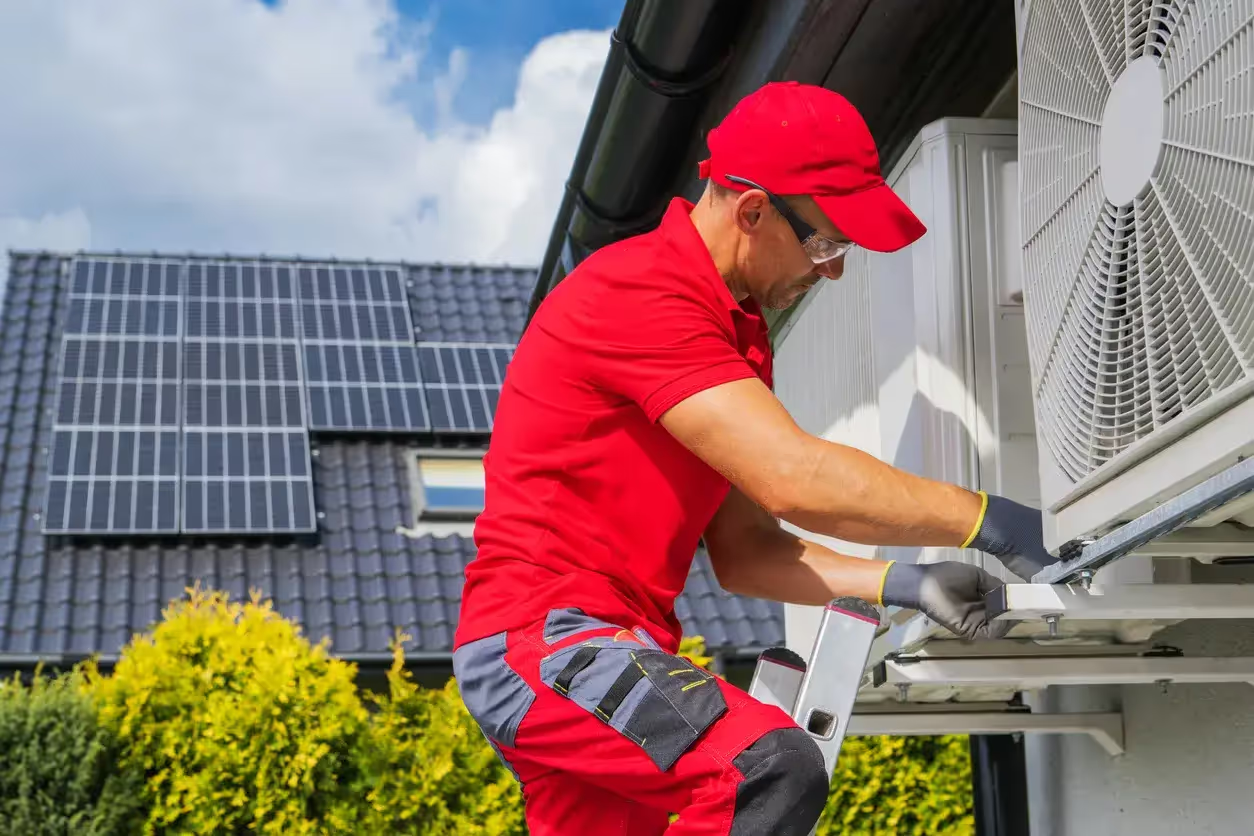
Complete Removal and Disposal
A seamless replacement involves the careful handling of your existing infrastructure. The service includes the safe disconnection of high-voltage electrical lines and the recovery of existing refrigerant according to EPA standards.
- Technicians handle the heavy lifting and removal of the old condenser and air handler units.
- Disposal is handled in compliance with environmental regulations, ensuring no hazardous materials leak into the local ecosystem.
- The installation site is cleared of debris and prepared for the new pad and equipment.
Infrastructure Assessment and Upgrades
Putting a new unit on old, leaking ductwork defeats the purpose of a high-efficiency upgrade. The scope of work covers an inspection of the peripheral systems that support the heat pump.
- Existing ductwork is checked for leaks, disconnects, or insulation failures that could compromise airflow.
- The refrigerant line set is evaluated to determine if it can be flushed and reused or if it requires replacement to match the new refrigerant type (such as transitioning from R-22 to R-410A or newer alternatives).
- Electrical disconnects and wiring are inspected to ensure they meet current safety codes and can handle the amperage of the new equipment.
The Replacement Process: From Assessment to Airflow
Understanding the workflow helps you prepare for the installation day. The process is designed to minimize disruption to your household while ensuring technical precision. Professional installers follow a rigid checklist to guarantee the system operates at its rated SEER2 (Seasonal Energy Efficiency Ratio) efficiency from the first moment it powers on.
- Site Evaluation and Protection: The team arrives and establishes a work zone. Floor runners and drop cloths are used to protect your flooring and furniture. The technicians verify the model numbers of the equipment to ensure it matches the quote and fits the physical space available in your mechanical closet, basement, or crawlspace.
- System Decommissioning: Power is cut to the HVAC circuits. Technicians attach gauges to the old system to pump down or recover the refrigerant. This step is critical for safety and environmental compliance. Once the lines are clear, the electrical whips and thermostat wires are disconnected, and the old plenum connections are severed carefully to preserve the metalwork.
- Equipment Setting and Connection: The new indoor air handler or furnace coil is positioned first. It is leveled to ensure proper drainage of condensate water, which is vital for removing humidity. Outside, a new composite or concrete pad is laid if necessary, and the condenser unit is set. The refrigerant lines are brazed using nitrogen to prevent oxidation inside the copper tubing, a step that protects the compressor from future failure.
- Evacuation and Charging: Before the system is filled with refrigerant, a vacuum pump is attached to the lines. This pulls the system down to a deep vacuum, measured in microns, to remove all moisture and non-condensable gases. Moisture inside the lines can freeze or create acid that eats away at motor windings. Once the vacuum holds, the factory-specified weight of refrigerant is released into the system.
- Final Testing and Calibration: The system is powered on. Technicians measure static pressure in the ducts to verify airflow. They check the temperature split (the difference between air entering and leaving the unit) to confirm efficient heat transfer. Finally, the new thermostat is programmed, and the homeowner is briefed on operation and filter maintenance.
When to Replace vs. Repair Your Heat Pump
Deciding between another repair bill and a full replacement is a financial calculation. While repairs may seem cheaper in the short term, an aging system in Horse Cave often becomes a money pit due to efficiency losses and frequent component failures.
The 50% Investment Rule
If the cost of a necessary repair approaches 50% of the value of a new system, replacement is the financially sound choice. For example, if a compressor fails on a 12-year-old unit, the cost of the part and labor often rivals a significant down payment on a modern, warrantied system.
Age and R-22 Freon Availability
Heat pumps generally have a lifespan of 10 to 15 years. If your unit is over 12 years old, it likely uses R-22 refrigerant (Freon), which has been phased out. Repairs requiring R-22 are exorbitantly expensive due to scarcity. Modern systems use environmentally friendly refrigerants that are cheaper to source and more efficient at heat transfer.
Performance and Comfort Issues
A system that requires replacement often signals its failure through poor performance before it stops working entirely.
- Uneven Temperatures: If some rooms are freezing while others are hot, the compressor or blower motor may be losing capacity.
- Rising Humidity: If your home feels clammy or you notice mold growth near vents, the heat pump is no longer effectively removing moisture.
- Audible Warning Signs: Grinding, squealing, or banging noises indicate internal mechanical wear that usually leads to catastrophic failure.
- Energy Spike: A sudden, unexplained increase in electrical usage suggests the system is working overtime to maintain setpoints, indicating degraded internal components.
Local Considerations: Permits, Climate, and Utilities
Operating a heat pump in this specific region requires attention to local regulations and environmental factors. Horse Cave averages around 50 inches of precipitation annually, meaning your external unit must be elevated and protected from standing water and snow accumulation.
Handling Kentucky Building Codes
Compliance is non-negotiable for safety and insurance purposes.
- All replacements must adhere to the current Kentucky Residential Code regarding HVAC installations.
- Electrical connections must meet safety standards, including proper disconnect boxes and wire gauging.
- Professional installers handle the permitting process, ensuring that the work passes any necessary municipal inspections. This protects the homeowner from liability and ensures the resale value of the home is not compromised by unpermitted work.
Climate-Specific Setup
The high humidity in summer and the potential for frost in winter dictate specific setup requirements.
- Defrost Boards: The outdoor unit must have a functioning defrost control board to handle Kentucky winters. If the unit freezes over and cannot defrost, it will stop heating and potentially damage the fan blades.
- Drainage: Proper condensate drain lines and pumps are essential to handle the volume of water removed from the air during humid summers. These lines must be routed away from the foundation to prevent water damage.
- Elevation: Condensers are set on "snow legs" or elevated pads to keep them above the average snowfall line, ensuring unrestricted airflow during winter storms.
Utility Rebates and Incentives
Local utility providers often offer incentives for upgrading to high-efficiency systems.
- Many modern heat pumps meet the SEER2 and HSPF2 (Heating Seasonal Performance Factor) criteria required to qualify for federal tax credits or local utility rebates.
- Installers can provide the AHRI (Air-Conditioning, Heating, and Refrigeration Institute) certificate numbers needed to file these claims, potentially saving homeowners significantly on the total cost of installation.
Proof of Reliability and Installation Quality
Selecting the right contractor is as important as selecting the right brand of equipment — read our reviews to learn why. A heat pump is a complex system involving high-voltage electricity, high-pressure refrigerant, and airflow dynamics. Improper installation is the leading cause of premature system failure and efficiency loss.
- Licensed and Insured: Professional technicians carry full licensure to operate in Kentucky, along with liability and worker’s compensation insurance to protect your property during the project.
- Brand Authorization: Being an authorized dealer for brands like Goodman implies that technicians have undergone specific training on those units. This ensures that the installation adheres strictly to the manufacturer's specifications, which is required to keep the warranty valid.
- Detailed Commissioning: The job is not considered complete until the system is fully commissioned. This involves a series of diagnostic tests to verify charge, airflow, and control sequence. A generic "install and leave" approach often results in callbacks; a commissioned system is built to last.
Carter Heating and Cooling focuses on delivering a seamless transition from your old, failing unit to a modern, high-efficiency system. The focus is on technical accuracy, code compliance, and long-term reliability — request a quote now.
Don't let a failing heat pump compromise your comfort or safety any longer. Secure your home’s climate with a professional replacement today.
Heat Pump Replacement for Increased Efficiency and Performance
Upgrade aging or failed systems with a complete heat pump replacement in Horse Cave, KY, by Carter Heating and Cooling. We remove the existing system, assess compatibility, and install a high-efficiency unit with full testing and warranty registration. System performance is verified at handover.
Replace Your Heat Pump with a Fully Matched and Tested High-Efficiency Unit

Great Service at a Fair Price
Veterans Discount


Senior Discount

Law Enforcement

Fire fighters/ems

Hear From Your Neighbors!
Hear from your neighbors to see how our commitment to dependable service and lasting comfort has made a difference in their homes.