
How can we help today?
Choose an option to see quick actions and get help faster.Heat Pump Repair in Smiths Grove, KY
Heat Pump Repair in Smiths Grove, KY
Struggling with a malfunctioning heat pump in Smiths Grove, KY? Contact Carter Heating and Cooling for fast, expert repair services and regain your home comfort today.
Is Your Heat Pump Not Performing? Get Fast Repair Today!
Dealing with a malfunctioning heat pump can leave your home uncomfortably cold or warm, disrupting your daily routine and safety. At Carter Heating and Cooling, we offer speedy, expert repairs to restore your comfort quickly. Contact us immediately to schedule a diagnostic visit and get your system back on track.
- Rapid diagnosis and repair by skilled technicians
- 24/7 service availability—no need to wait for business hours
- Upfront pricing with no hidden fees
All repairs come with a comprehensive warranty and available financing options.
What You Get Today: Fast Repair and Peace of Mind
When your heating and cooling system fails, you need a solution that addresses the root cause immediately, not a temporary patch. Our service is designed to minimize downtime for homeowners in Smiths Grove, KY. We understand that a broken heat pump affects the livability of your home, especially during extreme weather shifts. When you book a service appointment, you receive a prompt response from a fully equipped team ready to tackle the issue on the spot.
Our trucks are stocked with common parts, including capacitors, contactors, and sensors, which allows us to complete most repairs during the initial visit. You do not have to wait days for a standard component to ship while your home temperature fluctuates. We prioritize clear communication throughout the visit. You will receive a thorough explanation of what failed, why it failed, and the specific steps required to fix it. We provide a flat-rate quote before any work begins, ensuring you have total control over the financial decision.
Reliability is the cornerstone of our repair service. We verify every repair with rigorous testing protocols to ensure the system is not only running but operating at peak efficiency. This approach prevents callbacks and ensures that once our technician leaves, your indoor climate remains stable. We focus on restoring the safety and functionality of your home environment without unnecessary delays or sales pressure.
Understanding the Repair Process: What to Expect from Our Technicians
A professional repair visit follows a structured, logical process to ensure accurate diagnostics. We do not guess; we test. Modern heat pumps are complex systems that rely on a balance of airflow, refrigerant pressure, and electrical signals. Our technicians follow a systematic approach to isolate the variable causing the failure.
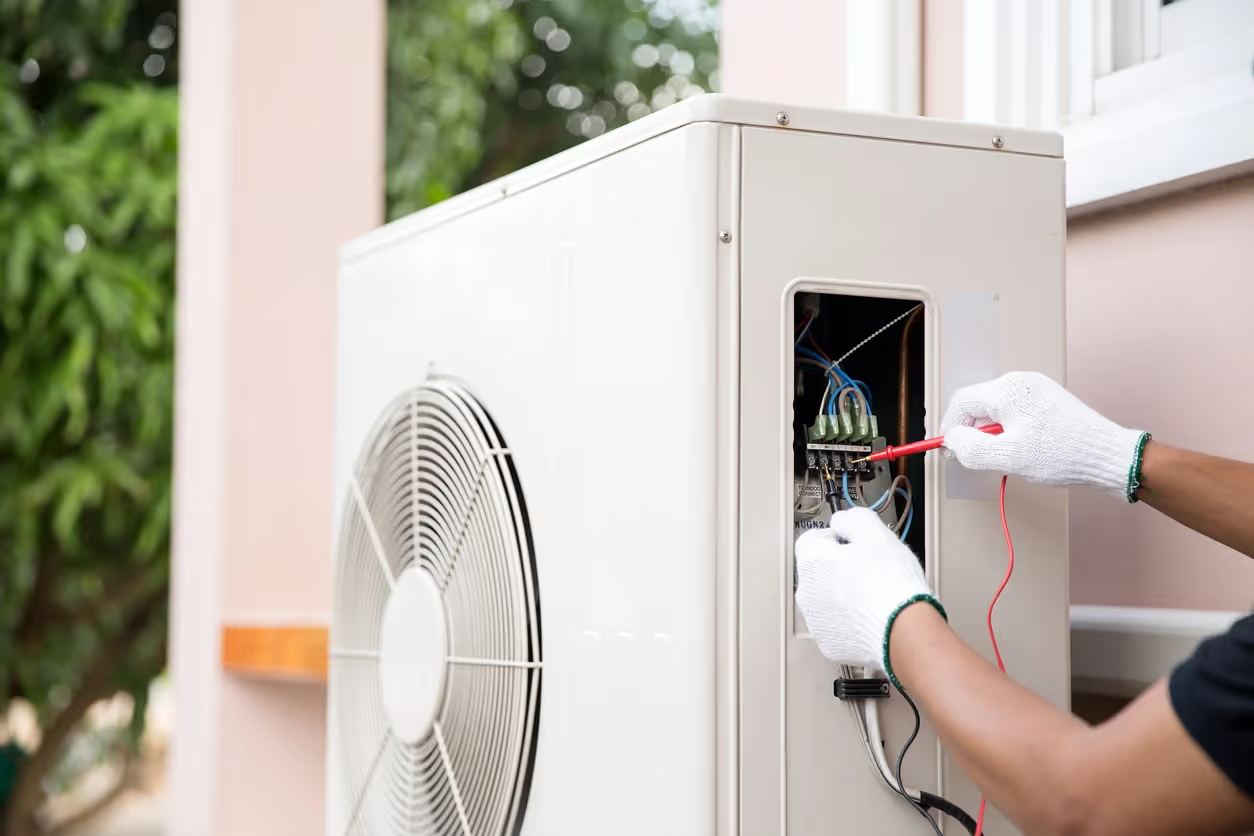
- System Diagnostics and Electrical Testing: The first step involves a complete electrical safety check. We inspect the breaker panel and the disconnect box to ensure power is reaching the unit safely. Technicians measure voltage and amperage across motors and the compressor to detect irregularities. Loose connections, corroded wires, or a failing capacitor are often the culprits behind a system that hums but will not start. We tighten connections and replace electrical components that have drifted out of tolerance to prevent future shorts or fires.
- Refrigerant Charge Verification: Heat pumps rely on refrigerant to transfer heat. If the system is running but the air coming from the vents is lukewarm or room temperature, a refrigerant leak or imbalance is likely. We use precision gauges to measure subcooling and superheat levels. If levels are low, we do not just add more refrigerant; we locate the leak. Adding refrigerant to a leaking system is a violation of environmental regulations and a waste of money. We use electronic leak detectors to find the breach, seal it, and then recharge the system to the manufacturer’s exact specifications.
- Airflow and component Inspection: Restricted airflow can cause the evaporator coil to freeze in the summer or the outdoor unit to ice up excessively in the winter. We inspect filters, blower motors, and ductwork connections. We also test the reversing valve, a critical component that switches the unit between heating and cooling modes. If the reversing valve is stuck, the system will only operate in one mode regardless of the thermostat setting. Our team tests the solenoid coil and the valve mechanics to ensure smooth transitions between seasons.
- Thermostat and Control Calibration: Sometimes the issue lies in the brain of the system, not the brawn. We verify that the thermostat is reading the room temperature accurately and sending the correct signals to the air handler and outdoor condenser. We check for compatibility issues, wiring faults, and calibration errors that might cause short-cycling (turning on and off too frequently), which accelerates wear on the compressor.
Deciding Between Repair and Replacement: What’s Best for Your Home
Homeowners often face the difficult choice of sinking money into a repair or investing in a new system. This decision should be based on data and financial logic rather than emotion. We help you navigate this choice by evaluating the age, condition, and repair history of your current unit.
- The 50% Rule: A common industry standard is the 50% rule. If the cost of the repair approaches or exceeds 50% of the value of the system, replacement is generally the wiser financial move. Major component failures, such as a blown compressor or a cracked heat exchanger (in hybrid systems), are expensive to fix. If your system is out of warranty, these costs can be prohibitive. We provide a side-by-side comparison of the repair cost versus the monthly cost of a financed new system to help you visualize the long-term impact.
- Age and Frequency of Breakdown: Heat pumps in our region work hard year-round, handling both heating and cooling duties. This results in more wear and tear compared to a standalone furnace or air conditioner. The average lifespan of a heat pump is typically 10 to 15 years. If your unit is over 12 years old and requires a significant repair, it is nearing the end of its useful life. Putting money into an aging system often leads to the "money pit" scenario where one part fails after another. However, if the unit is under 10 years old and has been well-maintained, repair is usually the most cost-effective option.
- Efficiency Considerations (SEER and HSPF Ratings): Older heat pumps often have lower SEER (Seasonal Energy Efficiency Ratio) and HSPF (Heating Seasonal Performance Factor) ratings compared to modern units. If your current system is inefficient, you are paying a premium on your monthly utility bills. By calculating the potential energy savings of a new, high-efficiency unit, you might find that the savings offset the cost of the monthly payment for a new installation. Carter Heating and Cooling can perform an efficiency audit to determine if your current unit is costing you more to operate than it is worth.
- Comfort and Performance Issues: If your current heat pump struggles to maintain a consistent temperature, leaves humidity levels high in the summer, or is excessively noisy, repair might not solve the underlying design or sizing issues. A system that was improperly sized for the home when installed will never perform correctly, regardless of how many repairs are performed. In these cases, replacement allows for a proper load calculation and the installation of a unit that fits the specific thermal needs of your home.
Local Insights: Adhering to Regulations and Weather Considerations
Operating a heat pump in Smiths Grove requires specific attention to local climate patterns and building regulations. The humid subtropical climate presents unique challenges that generic advice often misses. Understanding these local factors ensures that repairs hold up against the environment and comply with local codes.
- Managing Humidity and Defrost Cycles: Our region experiences high humidity in the summer and wet conditions in the winter. In cooling mode, the heat pump must effectively remove moisture from the air to prevent mold growth and ensure comfort. If the evaporator coil is dirty or the refrigerant is low, humidity removal drops significantly. In winter, the outdoor unit will naturally develop frost. The system’s defrost cycle is critical here. If the defrost board fails or sensors are faulty, the unit can turn into a block of ice, damaging the fan blades and crushing the coil fins. We calibrate defrost controls specifically for our local humidity levels to ensure the unit clears ice efficiently without wasting energy.
- Permitting and Code Compliance: While minor repairs generally do not require permits, significant alterations to the electrical system or refrigerant circuit must adhere to local building codes. Our technicians are well-versed in the specific requirements for our area. We ensure that all electrical connections meet safety standards, including proper grounding and wire sizing. This is crucial for insurance purposes and the safety of your property. We handle the technical details so you can be confident that the work is compliant with all municipal regulations.
- Weather Protection and Outdoor Unit Care: The area is prone to severe weather, including thunderstorms and high winds. Debris from storms can lodge in the outdoor condenser, restricting airflow and causing the compressor to overheat. During a repair visit, we inspect the placement and stability of the outdoor unit. We check for damage from falling limbs or hail impact on the coil fins. Straightening bent fins restores airflow and efficiency. We also recommend and can install surge protectors to guard the sensitive electronic boards in the heat pump against voltage spikes caused by lightning strikes or grid fluctuations.
Why Choose Us? Our Commitments to Service and Excellence
Choosing a service provider is about trust and technical competence. You need a team that respects your time and your property. We have built our process around the needs of the homeowner, ensuring that every interaction is professional and productive.
- Technical Expertise and Continuous Training: Heat pump technology is evolving rapidly with the introduction of inverter-driven compressors and smart thermostats. Our technicians undergo regular training to stay ahead of these advancements. We are equipped to diagnose both legacy systems and the latest high-efficiency models. This depth of knowledge allows us to solve complex problems that other companies might miss. We use advanced diagnostic tools that provide precise readings, eliminating guesswork and reducing the time we spend in your home.
- Respect for Your Home: We treat your home with the highest level of respect. Our technicians wear shoe covers and use drop cloths to protect your flooring during the repair process. We maintain a clean workspace and remove all debris and discarded parts when the job is finished. You will not be left with a mess to clean up. We believe that professional service extends beyond the technical repair to the entire customer experience.
- Transparent Communication: You will never be surprised by the bill. We operate with a policy of upfront, flat-rate pricing. Once the diagnostic is complete, you receive a quote for the repair. The price we quote is the price you pay, regardless of how long the repair takes. We explain the options clearly, avoiding technical jargon, so you can make an informed decision that suits your budget and your home’s needs.
Don’t settle for uncomfortable temperatures in your own home. Get your system fixed correctly the first time.
Restore Comfort Today with Carter Heating and Cooling
Don’t let a failing heat pump disrupt your home or peace of mind. Carter Heating and Cooling is ready to deliver fast, reliable, and professional repair service the moment you need it. With fully stocked service vehicles, expert diagnostics, and upfront pricing, we ensure your system is restored quickly and correctly—without surprises or delays. Whether it’s an emergency breakdown or declining system performance, our team is committed to getting your home comfortable again. Contact Carter Heating and Cooling today to schedule your service and experience the dependable, customer-focused care your home deserves.

Great Service at a Fair Price
Veterans Discount


Senior Discount

Law Enforcement

Fire fighters/ems

Hear From Your Neighbors!
Hear from your neighbors to see how our commitment to dependable service and lasting comfort has made a difference in their homes.