
How can we help today?
Choose an option to see quick actions and get help faster.Furnace Tune-up in Smiths Grove, KY
Furnace Tune-up in Smiths Grove, KY
Furnace Tune-up in Smiths Grove, KY
Is Your Furnace Ready for the Season?
As temperatures drop in Smiths Grove, ensuring your furnace operates flawlessly is crucial to maintaining a comfortable and safe home environment. Don't wait for the first severe cold snap to discover your heating system requires attention; contact us today to schedule your seasonal maintenance.
- Extend your furnace’s lifespan with a comprehensive mechanical inspection.
- Reduce your monthly energy bills with optimized furnace efficiency.
- Prevent unforeseen breakdowns during peak winter months when you need heat the most.
Licensed technicians ensure safe, effective service with up-to-date knowledge of local codes and manufacturer warranties. Contact Carter Heating and Cooling today.
The Importance of Seasonal Heating Maintenance
Homeowners often overlook the complexity of their central heating system until it stops working. A furnace is a mechanical system composed of moving parts, electrical connections, and combustion components that degrade over time due to thermal stress and normal wear. Skipping annual maintenance is the leading cause of premature system failure and inflated utility costs.
Carter Heating and Cooling provides rigorous tune-up services designed to bring your system back to factory specifications. This is not merely a visual check; it is a deep cleaning and calibration process. By addressing minor issues such as loose electrical connections or dirty flame sensors before they escalate, you ensure reliable performance throughout the winter. Residents in Smiths Grove rely on consistent heating to combat the humidity and chill of the colder months, making preventative care a necessity rather than a luxury.
What Is Included in a Professional Furnace Tune-Up
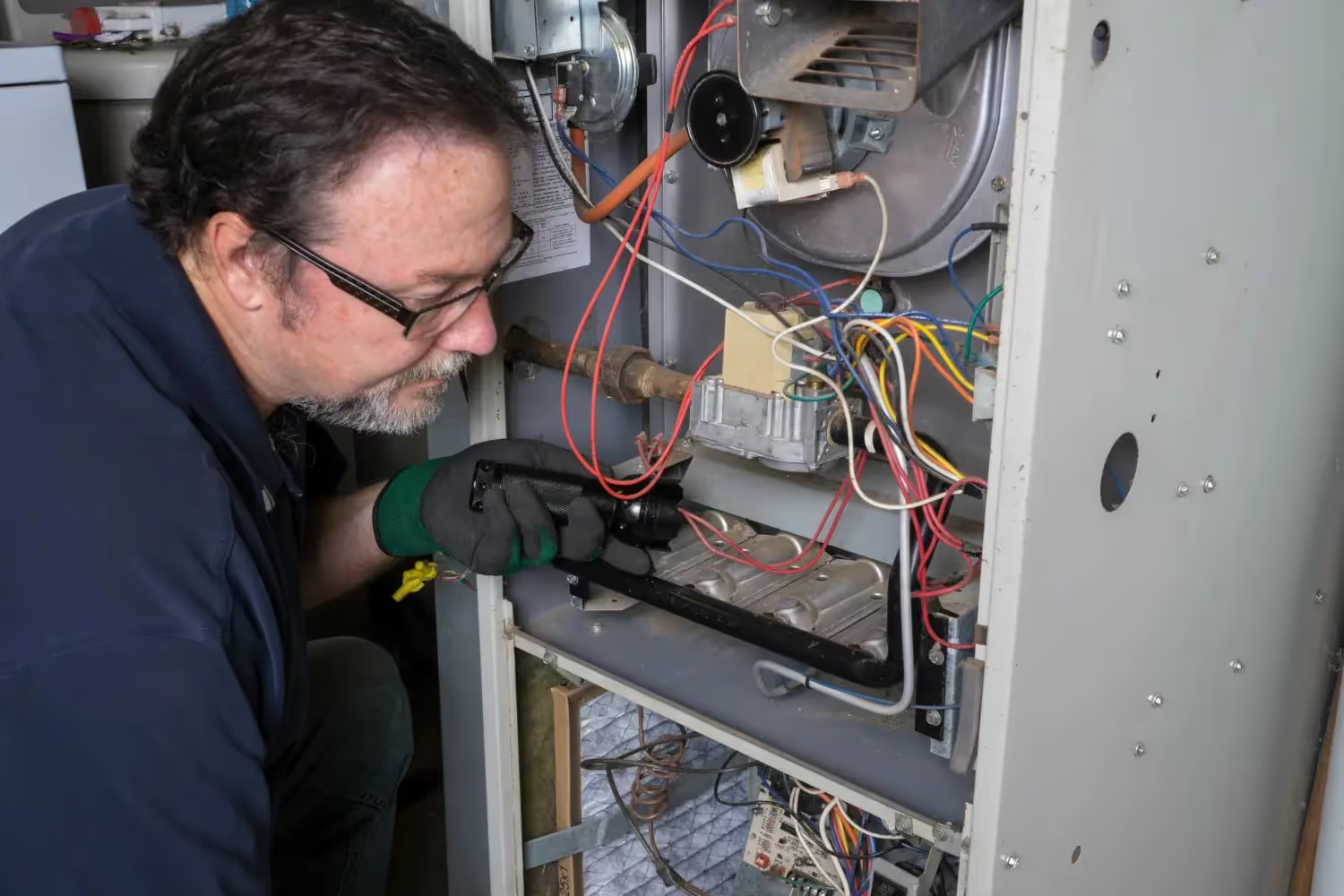
A proper tune-up goes far beyond changing a filter. It involves a systematic examination of the entire heating envelope. The goal is to maximize the Annual Fuel Utilization Efficiency (AFUE) rating of the unit, ensuring that the fuel you pay for is actually converted into heat for your living space rather than being wasted up the flue.
Comprehensive Safety Inspection
Safety is the primary objective of any furnace service. Gas furnaces involve combustion, which produces heat and exhaust gases.
- Technicians inspect the heat exchanger for cracks or corrosion. A compromised heat exchanger is a serious safety hazard that can allow carbon monoxide to leak into the home.
- The venting system is checked for blockages, leaks, or signs of backdrafting to ensure all exhaust gases are safely piped outside.
- Safety switches and limits, such as the high-limit switch and rollout switch, are tested to verify they will shut the unit down instantly if an unsafe condition is detected.
- Gas lines and connections immediately surrounding the unit are tested for leaks to prevent fire hazards.
Deep Cleaning and Component Care
Accumulated dust and debris are the enemies of efficiency. They act as insulators on heating elements and restrict airflow.
- Burners are removed and cleaned to ensure proper ignition and a clean, blue flame. Dirty burners can cause delayed ignition or incomplete combustion, leading to soot buildup.
- The blower motor and wheel are inspected. If accessible, the blower wheel is cleaned to ensure the fan moves the correct volume of air across the heat exchanger.
- The flame sensor is polished. Oxidation on this sensor is a common cause of furnace lockouts, where the system shuts down because it cannot detect a flame.
- The pilot light or hot surface igniter is examined for signs of wear or fragility.
Calibration and Performance Testing
Once the unit is safe and clean, the focus shifts to performance.
- The thermostat is calibrated to ensure it reads the indoor temperature accurately and cycles the furnace effectively.
- Gas pressure is measured at the manifold. If the pressure is too high, the unit overheats; if it is too low, it creates condensation issues and poor heating. This is adjusted to manufacturer specifications.
- The temperature rise is measured. This is the difference in air temperature between the supply and return ducts. It must fall within the range specified on the unit’s rating plate to prevent overheating or short-cycling.
- Electrical components, including capacitors and amp draws on the motor, are measured to identify parts that are near failure.
The Systematic Maintenance Process
Understanding how a professional technician approaches a tune-up helps homeowners appreciate the value of the service. The process is methodical, ensuring no component is overlooked.
- First, the technician performs an initial assessment of the system's operation. This involves turning the thermostat up to call for heat and listening to the startup sequence. Unusual noises, smells, or delays in ignition provide immediate clues regarding the system's health.
- Next, power to the furnace is turned off to allow for safe internal inspection. The cabinet represents the core of the work, where panels are removed to access the blower, burners, and controls.
- Then, the cleaning phase begins. Vacuuming out the cabinet and cleaning the internal components removes the buildup that causes overheating. This step also involves checking the air filter and recommending a replacement if it is clogged.
- Following the cleaning, the electrical analysis is conducted. Technicians tighten all electrical connections. Loose wires can cause resistance, heat, and eventually burnt-out components.
- Subsequently, the combustion analysis is performed. This may involve using specialized tools to analyze the flue gas, ensuring the fuel-to-air ratio is correct for optimal efficiency.
- Finally, the system is powered back on for a complete operational cycle. The technician monitors the system as it runs to ensure the airflow is steady and the temperature rise is correct. A final report is generated, detailing exactly what was done and noting any parts that may need replacement in the near future.
Recognizing When Maintenance vs. Repair is Needed
While a tune-up is designed to prevent repairs, the inspection often reveals issues that go beyond standard maintenance. It is vital to distinguish between a system that needs a cleaning and a system that requires significant repair or replacement.
Signs You Need Immediate Repair
If the furnace is making loud banging, screeching, or rattling noises, this usually indicates a mechanical failure that a tune-up alone cannot fix. For example, a screeching sound often points to a failing blower motor bearing. Similarly, if the furnace is blowing cold air or cycling on and off rapidly (short-cycling), a specific part like the flame sensor, thermostat, or limit switch likely needs replacement. Carter Heating and Cooling technicians will identify these issues during the maintenance visit and provide a quote for the necessary repairs.
The Age Factor and Efficiency
Furnaces typically last between 15 and 20 years. If a unit is approaching this age range and requires frequent repairs, continuing to invest in maintenance and minor fixes may yield diminishing returns. Older units generally have lower AFUE ratings, meaning they cost more to run regardless of how well-tuned they are. If the cost of a required repair approaches 50% of the value of a new system, or if the unit is over 15 years old, replacement is often the more financially sound decision — apply for financing to help with costs.
Uneven Heating and Airflow
If certain rooms in your Smiths Grove home are perpetually cold while others are hot, this may be an issue with ductwork design or a failing blower motor rather than a simple tune-up issue. While a tune-up ensures the furnace creates heat efficiently, distributing that heat requires intact ductwork. Technicians can assess if the issue lies with the furnace generation of heat or the distribution system.
Local Considerations for Heating in Smiths Grove
The climate in Smiths Grove, Kentucky, presents specific challenges for HVAC systems. Being in a humid subtropical zone, the region experiences four distinct seasons, but the transition from fall to winter can be sharp.
Handling Humidity and Temperature Fluctuations
Winters here are generally mild but are punctuated by cold snaps and significant precipitation. The high humidity levels in the region can affect how a furnace operates. Humidity can lead to condensation issues within the flue if the system is not venting properly. Furthermore, the fluctuation in temperature means the furnace must be capable of handling low loads (mild days) and high loads (freezing nights) effectively. A properly tuned variable-speed furnace is excellent for this climate, but even single-stage units need precise gas pressure adjustments to handle these shifts without stress.
Utility Costs and Efficiency
Heating accounts for a massive portion of annual energy expenses in Kentucky. Because the winters can drag on, efficiency is paramount. A furnace that hasn't been tuned up can lose up to 5% of its efficiency every year. Over five years, that is a 25% drop in performance, directly translating to higher utility bills. Local utility providers often recommend annual check-ups to keep consumption low. Ensuring your system runs at its rated efficiency helps mitigate the impact of rising energy costs in the area.
Venting and Safety Protocols
Local building codes and safety standards regarding gas appliances are strict for a reason. Improperly vented furnaces are a leading cause of carbon monoxide poisoning. In older homes in Smiths Grove, masonry chimneys were often used for venting. Over time, these can deteriorate or become oversized for modern, high-efficiency furnaces, leading to condensation damage. During a tune-up, the venting configuration is reviewed to ensure it meets current safety standards and effectively removes exhaust from the home.
Why Professional Maintenance Outperforms DIY
In an era of online tutorials, some homeowners attempt to perform furnace maintenance themselves. While changing a filter is a task every homeowner should do, the rest of the furnace tune-up requires professional training and specialized tools.
Specialized Diagnostic Tools
Professional technicians utilize multi-meters, manometers, combustion analyzers, and gas leak detectors. These tools allow them to see what is happening inside the system that is invisible to the naked eye. For instance, a manometer measures gas pressure to the fraction of an inch of water column; without this tool, adjusting the gas valve is impossible and dangerous. A combustion analyzer reads the oxygen and carbon monoxide levels in the flue, providing definitive proof of safe operation.
Manufacturer Warranty Compliance
Most furnace manufacturers include a clause in their warranty terms requiring proof of annual maintenance by a licensed professional. If a major component like a heat exchanger or compressor fails and the homeowner cannot prove the system was maintained, the manufacturer may void the warranty. Professional service provides the documentation needed to keep these valuable warranties active — check our HVAC FAQs for more warranty tips.
Comprehensive System Knowledge
A furnace does not operate in a vacuum; it is part of a larger HVAC system including the thermostat, ductwork, and often a central air conditioning unit. A professional understands how these systems interact. For example, a restricted A-coil (part of the AC system) will block airflow for the furnace, causing it to overheat. A DIY approach focused solely on the furnace burners would miss this critical airflow restriction. Professionals look at the holistic health of the HVAC system to ensure total home comfort.
Secure Your Comfort This Winter
Your heating system is the heart of your home during the winter months. Neglecting it invites risk, higher costs, and discomfort. A professional tune-up is a proactive investment that pays dividends through lower energy bills, extended equipment life, and the peace of mind that comes from knowing your home is safe from carbon monoxide and fire hazards.
We are committed to providing thorough, technically superior maintenance services that prepare your home for whatever the Smiths Grove weather brings. Do not wait for a breakdown to think about your heating system.
Ensure your family stays warm and safe all winter long—schedule your comprehensive furnace tune-up now.

Great Service at a Fair Price
Veterans Discount


Senior Discount

Law Enforcement

Fire fighters/ems

Hear From Your Neighbors!
Hear from your neighbors to see how our commitment to dependable service and lasting comfort has made a difference in their homes.