

How can we help today?
Choose an option to see quick actions and get help faster.Evaporative Humidifier installation in Smiths Grove, KY
Evaporative Humidifier installation in Smiths Grove, KY
Expertly manage indoor air quality with whole-home evaporative humidifier installations in Smiths Grove. Combat dry air and maintain optimal comfort. Contact us today!
Combat Dry Indoor Air in Kentucky with Expert Humidifier Installation
Dealing with cracked skin, static electricity, and respiratory irritation during the winter months often indicates that your heating system is stripping essential moisture from your Smiths Grove home. Carter Heating and Cooling specializes in integrating whole-home evaporative humidifiers directly into your HVAC infrastructure to maintain optimal humidity levels without the hassle of portable units. Contact us today to verify your system compatibility and schedule installation.
During the heating season, relative humidity indoors can drop to desert-like levels, damaging wood furnishings and affecting your health. An evaporative humidifier works with your furnace to reintroduce water vapor naturally and efficiently:
- Experience immediate improvement in air quality, reducing dust movement and static shock.
- Tailored solutions are sized specifically for your home’s square footage and furnace capacity.
- Professional installation ensures water lines and drainage meet all local plumbing codes with minimal disruption to your daily routine.
All installations are fully insured and comply with local building codes, with flexible financing options available for comprehensive air quality upgrades.
Restore Comfort with Professional Evaporative Humidifier Solutions
When you invest in a whole-home evaporative humidifier, you are purchasing a permanent solution to indoor aridity. Unlike portable units that treat a single room and require daily refilling, an evaporative system connects directly to your water supply and HVAC ductwork. This creates a "set it and forget it" environment where humidity regulation happens automatically whenever your heat runs.
The core function of an evaporative humidifier involves a water panel, also known as a wick or pad, and a distribution tray. Water flows over this panel, and air from your furnace is directed through it. As the warm air passes over the saturated panel, it evaporates the water, absorbing moisture before circulating it back into your living spaces. This process is self-regulating; because the air can only absorb a certain amount of moisture based on its temperature, evaporative units rarely over-humidify or cause condensation issues on windows, provided they are set correctly.
Upon installation, homeowners can expect a system that manages itself. The installation includes the mounting of the unit on the supply or return plenum, connection to a water source (typically a cold or hot water line depending on the specific model and preference), and the installation of a dedicated drain line to carry away unevaporated water. This flow-through design prevents stagnant water, which significantly reduces the risk of mold or bacterial growth common in older reservoir-style units.
Furthermore, proper humidification protects the physical structure of your home. Hardwood floors, crown molding, and wooden instruments are susceptible to cracking and warping in extremely dry conditions. By maintaining a consistent relative humidity level between 35% and 45%, you preserve the integrity of these materials. You also improve the efficiency of your heating system. Moist air holds heat better than dry air, meaning you can often lower your thermostat by a few degrees while maintaining the same level of perceived comfort, leading to potential energy savings.
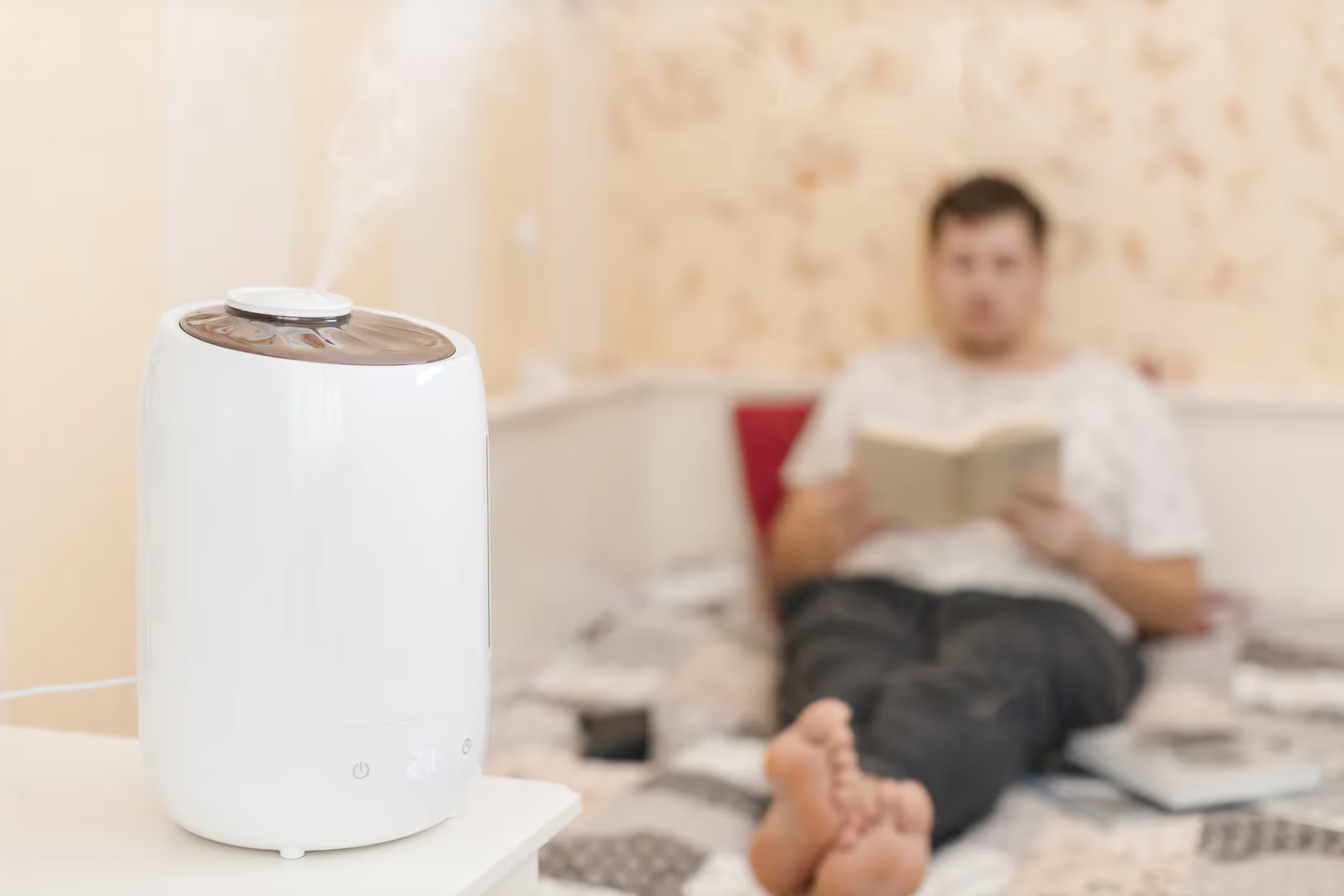
Our Installation Process for Whole-Home Humidifiers
A successful installation relies on precise placement and secure connections to prevent leaks and ensure maximum evaporation rates. We follow a strict protocol to ensure your new system functions seamlessly with your existing equipment in Smiths Grove:
- System Sizing and Selection: The process begins with evaluating your home's total volume and the type of heating system you possess. We determine whether a bypass unit, which uses the pressure differential between the supply and return ducts, or a fan-powered unit is more appropriate for your ductwork configuration.
- Plenum Preparation and Cutting: Technicians identify the optimal location on the supply or return plenum. We use templates to cut a precise opening in the sheet metal, ensuring a tight seal. Metal edges are treated to prevent injury or damage to the unit's gasket.
- Mounting and Leveling: The humidifier assembly is secured to the ductwork. Leveling is critical for evaporative units because the water must flow evenly across the distribution tray to saturate the entire water panel. An unlevel unit results in dry spots on the pad and reduced efficiency.
- Water Line Connection: We tap into an adjacent water line to provide a continuous water source. While saddle valves were common in the past, we assess your plumbing to see if a dedicated tee fitting is necessary to meet current code requirements and ensure long-term reliability. We install a shut-off valve for maintenance purposes.
- Drain Line Installation: Evaporative humidifiers are "flow-through" systems, meaning they flush minerals down the drain rather than letting them build up on the pad. We run a drain line to your floor drain, condensate pump, or utility sink, ensuring proper slope to prevent backing up.
- Bypass Ductwork (If Applicable): For bypass units, we install a 6-inch round duct connecting the supply and return plenums. This duct includes a damper that must be opened in winter and closed in summer. We label this clearly for the homeowner.
- Electrical and Controls Integration: The solenoid valve, which controls water flow, is wired to the furnace control board or a dedicated 24-volt transformer. We install a humidistat—either a manual wall-mount unit or by integrating controls into your existing smart thermostat—to monitor indoor humidity levels and trigger the system only when necessary.
- Testing and Calibration: Once installed, the system is engaged to verify water flow, drainage, and airflow. We check for leaks at all connection points and calibrate the humidistat to the recommended winter setting based on the current outdoor temperature.
Determining When to Upgrade Your Indoor Air Quality System
Many homeowners rely on older drum-style humidifiers or inefficient portable units before realizing an upgrade is necessary. Understanding the distinction between a unit that needs repair and a system that needs replacement is vital for long-term air quality management:
- Persistent Mineral Buildup: If you have an older system that accumulates massive amounts of scale and calcium despite regular maintenance, the internal components may be degraded. Newer flow-through evaporative models are designed to minimize this buildup by constantly flushing the pad, making them a superior choice for areas with hard water.
- Water Leaks and Corrosion: Signs of rust on your furnace jacket or water pooling around the base of the HVAC unit indicate that your current humidifier has failed. Solenoid valves can stick open, or plastic housings can crack over time. If a unit has leaked into the furnace components, immediate replacement is safer than attempting a patch repair.
- Inconsistent Humidity Levels: If your home still feels dry despite the humidifier running, the unit may be undersized for your square footage, or the bypass damper may be malfunctioning. Upgrading to a higher-gallon-per-day (GPD) capacity unit ensures your system can keep up with the demands of the driest winter days.
- Noise Issues: Bypass evaporative humidifiers are nearly silent as they have no moving parts other than water. If you currently have a fan-powered unit that is vibrating or making grinding noises, the motor bearings may be failing. Replacing it with a passive bypass unit or a new fan-powered model eliminates this noise pollution.
- Integration with Modern Thermostats: Older units often rely on analog humidistats located in the basement, requiring you to go downstairs to adjust settings as the weather changes. New installations can be tied into smart thermostats, allowing you to control humidity from your phone and enabling features like "window frost protection," which automatically lowers humidity when outdoor temperatures plummet to prevent window condensation.
Local Considerations for Smiths Grove Homeowners
Installing a humidifier in this region requires specific attention to local environmental factors and building standards. The climate and infrastructure in Smiths Grove influence how these systems should be configured and maintained:
- Managing Fluctuating Winter Temperatures: The local climate brings winters that fluctuate between mild and freezing. This variability requires active management of humidity settings. When the temperature drops significantly, humidity levels must be lowered to prevent condensation on cold windows. We recommend automatic humidistats that use an outdoor temperature sensor to adjust these levels for you, preventing moisture damage to window sills and drywall.
- Hard Water and Maintenance: The local water supply can contain minerals that accumulate on the humidifier's water panel. In an evaporative system, the water panel acts as a filter for these minerals. Homeowners in this area typically need to replace the water panel once per heating season to maintain optimal airflow and evaporation rates. Failure to change the panel can result in clogged pores and reduced performance.
- Plumbing and Electrical Codes: Connecting a humidifier involves both plumbing and low-voltage electrical work. Local regulations dictate how water lines are tapped and how drain lines are routed to prevent cross-contamination. We ensure that the installation of the transformer and solenoid wiring meets all National Electrical Code (NEC) and local municipal standards to ensure safety and insurance compliance.
- Ductwork Configuration: Many homes in the area have specific ductwork layouts in basements or crawlspaces. The physical space available on the plenum often dictates whether a bypass or fan-powered unit is feasible. We assess tight mechanical rooms to find the most efficient airflow configuration that does not interfere with air filter access or furnace maintenance.
Why Choose Professional HVAC Installation
While some homeowners consider indoor air quality a DIY project, the complexities of integrating water and electricity with a gas or electric furnace require professional expertise. A humidifier is not a standalone appliance; it is a component that alters the thermodynamics of your entire HVAC system. Incorrect installation can lead to back-drafting, water damage to the heat exchanger, or significant air pressure imbalances in the ductwork.
We prioritize the "whole-home" approach. This means we calculate the necessary gallons per day (GPD) based not just on square footage, but on the tightness of the home's envelope. A drafty home loses humidity faster than a sealed, energy-efficient home. Carter Heating and Cooling technicians are trained to identify these variables, ensuring the unit selected is capable of maintaining the target humidity even on the coldest days of the year.
Our service includes a comprehensive walkthrough of the system. We demonstrate how to change the water panel, how to operate the bypass damper for summer and winter modes, and how to read the humidistat. We believe that an informed homeowner gets the best performance out of their equipment. We also ensure that the drain line is routed in a way that does not create tripping hazards or block access to other equipment.
Schedule Service Today
Professional installation also safeguards your equipment warranty. Most manufacturers of high-quality evaporative humidifiers require proof of professional installation to honor parts warranties. By choosing a licensed contractor, you ensure that if a component fails prematurely, the replacement is covered. We use high-grade copper or synthetic tubing for water lines rather than the prone-to-cracking plastic kits often found in retail boxes, providing an extra layer of security against leaks.
Ready to eliminate dry air and protect your home comfort? Schedule your humidifier installation now

Great Service at a Fair Price
Veterans Discount


Senior Discount

Law Enforcement

Fire fighters/ems

Hear From Your Neighbors!
Hear from your neighbors to see how our commitment to dependable service and lasting comfort has made a difference in their homes.