

How can we help today?
Choose an option to see quick actions and get help faster.Air Conditioning Installation in Smiths Grove, KY
Air Conditioning Installation in Smiths Grove, KY
Need fast, reliable air conditioning installation in Smiths Grove? Contact us today for quick scheduling, clear pricing, and a 1-year labor warranty. Get your AC installed promptly!
Stay Cool: Fast and Reliable Air Conditioning Installation
The humid subtropical climate in Smiths Grove often pushes older cooling systems past their breaking point, leaving homeowners dealing with uncomfortable indoor temperatures and rising humidity levels during the peak summer months. When your system fails to keep up with the heat or stops working entirely, you need a solution that restores comfort immediately without administrative delays. Contact us to schedule an assessment or financing discussion today.
Carter Heating and Cooling provides comprehensive installation services designed to address the specific cooling loads required for homes in this region. We move quickly from the initial assessment to the final system test, ensuring your home returns to a safe and comfortable temperature.
Here is what you can expect from our installation service:
- Experience cool comfort with our efficient same-day or next-day installation scheduling options.
- Enjoy long-term peace of mind with a robust 1-year labor warranty on all new installations.
- Access flexible financing options available to fit your specific budgetary requirements.
- All installations are fully compliant with local codes and come with comprehensive manufacturer and service warranties.
What You Get With Your Installation Service
Choosing to install a new air conditioning system is a significant investment in your property and your daily comfort. We structure our service to provide clarity, precision, and efficiency from the moment our technicians arrive. You are not just buying a piece of equipment; you are purchasing a calibrated system integration that includes proper sizing, ductwork assessment, and performance testing — read our reviews.
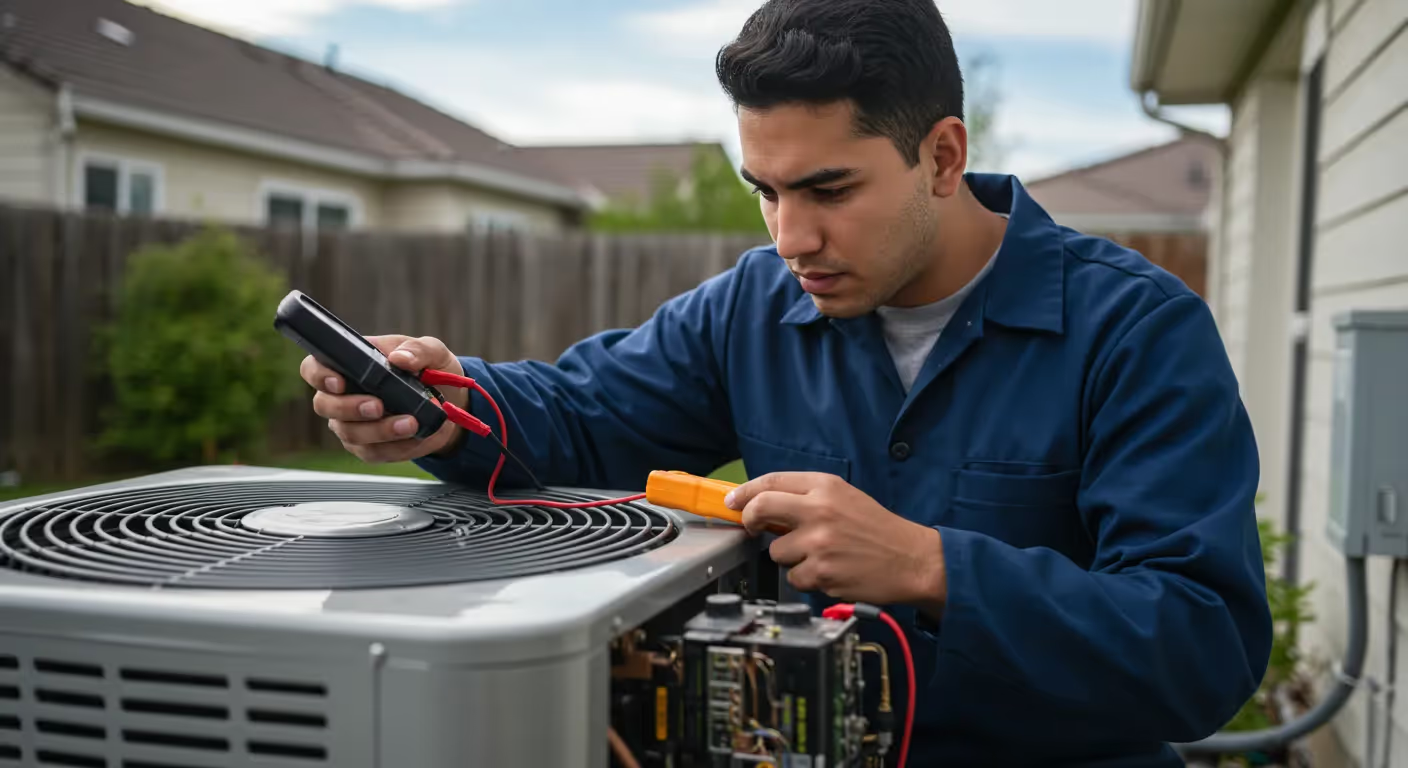
Immediate Assessment and Load Calculation
The process begins with a technical evaluation of your home’s thermal characteristics. We do not simply swap the old unit for a new one of the same size. Factors such as insulation levels, window placement, square footage, and the orientation of your home relative to the sun all impact the cooling load. Our technicians perform a detailed calculation to ensure the new unit is perfectly sized. An undersized unit will run constantly and fail to cool, while an oversized unit will short-cycle, leading to high humidity and premature wear.
Clear Timelines and Scope
You receive a transparent project roadmap before any work begins. This includes a specific arrival window, an estimated duration for the installation—typically completed within a single day for standard replacements—and a breakdown of the equipment being installed. You will know exactly what is happening at every stage, from the removal of the old condenser to the integration of the new evaporator coil.
Site Protection and Preparation
Respecting your property is a core part of the service. Technicians use drop cloths and shoe covers to protect flooring and clear the workspace around the installation site. We handle the disconnection and eco-friendly disposal of the old unit, ensuring that refrigerant is reclaimed according to EPA standards rather than vented into the atmosphere.
How The Installation Process Works
A high-quality air conditioner will only perform as well as its installation allows. Even the highest-rated SEER equipment will suffer in efficiency if the installation lacks technical precision. We follow a strict, step-by-step protocol to ensure the system operates at peak performance for years to come.
Removal and Site Inspection
The first step involves safely disconnecting the existing electrical supply and refrigerant lines. The old outdoor condenser and indoor evaporator coil are removed. Once the equipment is out, we inspect the existing plenum and ductwork connections. If there are air leaks or structural issues in the immediate connection area, these are addressed to prevent air loss that would undermine the new system's efficiency.
Positioning and Equipment Setting
For the outdoor unit, we ensure the pad is level and provides adequate clearance for airflow. Improper leveling can cause compressor failure due to oil imbalance. For the indoor unit, we verify that the evaporator coil fits snugly within the air handler or furnace setup to prevent airflow bypass.
Refrigerant Line Installation and Brazing
Connecting the copper refrigerant lines is a critical phase. We use nitrogen purging during the brazing process. This technique prevents oxidation and scale build-up inside the copper pipes. If scale forms, it can eventually break loose and clog the expansion valve or compressor oil ports, leading to system failure.
Electrical and Thermostat Integration
High-voltage wiring is connected from the disconnect box to the unit, adhering strictly to safety codes. Low-voltage control wiring is then routed to the thermostat. If you are upgrading to a smart thermostat or a zoning system, we configure the settings to communicate correctly with the new AC unit, optimizing for humidity control and variable fan speeds if applicable.
Vacuuming and Charging
Before releasing refrigerant into the system, we pull a deep vacuum on the lines to remove all moisture and non-condensable gases. Moisture in the lines is the enemy of an AC system, as it can freeze or mix with oil to create acid. Once the vacuum holds, we charge the system with the precise amount of refrigerant specified by the manufacturer.
Final Commissioning and Testing
The installation concludes with a full system startup. We measure static pressure, temperature splits (the difference between supply and return air), and amperage draw on the compressor and fan motors. This data confirms the system is running within factory specifications.
When Replacement Beats Repair
Deciding between repairing an aging unit and investing in a new installation is a common dilemma for homeowners. While repairs can resolve immediate issues, there is a mathematical tipping point where replacement becomes the more improved financial decision.
The 50% Rule
A standard industry benchmark is the 50% rule. If the cost of the repair approaches or exceeds 50% of the value of a new system, replacement is generally the wiser choice. Additionally, if you multiply the age of the unit by the repair cost and the number exceeds $5,000, replacement is often recommended.
Refrigerant Considerations
Older systems typically utilize R-22 refrigerant (Freon), which has been phased out due to environmental regulations. As supplies dwindle, the cost of R-22 has skyrocketed. If your older unit has a refrigerant leak, simply topping it off is a temporary and expensive fix. Upgrading to a modern system uses widely available, more environmentally friendly refrigerants like R-410A or newer alternatives, reducing long-term maintenance costs.
Efficiency Gains (SEER2 Ratings)
Air conditioning technology has advanced significantly in the last decade. A unit installed 15 years ago likely has a SEER (Seasonal Energy Efficiency Ratio) rating of 10 or 12. Modern standards and the new SEER2 ratings require higher efficiency. Replacing a 10 SEER unit with a 16 SEER2 unit can reduce cooling energy consumption by a substantial margin, resulting in lower monthly utility bills that help offset the installation cost over time.
Frequency of Breakdowns
If you find yourself calling for repairs multiple times a year, the system has likely reached the end of its reliable service life. Frequent component failures—capacitors, contactors, fan motors—are symptoms of a system that is struggling to operate. Continued repairs on a dying system result in throwing good money after bad.
Local Notes: Installing in Smiths Grove
Local conditions in Smiths Grove dictate specific installation requirements to ensure safety, efficiency, and code compliance.
Climate-Specific Tuning
The humidity in our region creates a specific latent load on cooling systems. We prioritize systems and installation configurations that excel at dehumidification. This often involves setting airflow at specific rates to ensure the air passes over the evaporator coil slowly enough to remove moisture effectively. Without this calibration, a home may reach the target temperature but still feel clammy and uncomfortable.
Electrical and Utility Coordination
Installations often require coordination regarding electrical capacity. We ensure that your electrical panel can handle the amperage requirements of the new unit. We also keep local energy providers, such as the Warren Rural Electric Cooperative Corporation, in mind regarding efficiency standards. High-efficiency units may not only lower your bill with the utility provider but also reduce the overall strain on the local grid during peak summer usage.
Permits and Inspections
Replacing an HVAC system is a major home improvement that requires adherence to local building codes. Permitting ensures that the installation meets safety standards regarding electrical connections, gas lines (if applicable for furnace combinations), and refrigerant handling. Professional installation guarantees that all necessary permits are pulled and that the work passes any required municipal inspections, protecting the value of your home and your insurance coverage.
Seasonality and Timing
The demand for air conditioning installation peaks sharply from June through August. While emergency replacements are always a priority, planning a replacement during the shoulder seasons (spring or early autumn) can often result in more flexible scheduling. However, if your system fails during a heatwave, our processes are built to handle urgent turnaround times to restore safety to your home.
Differentiators: Technical Precision and Certification
The longevity of your air conditioning system depends heavily on the expertise of the installers. We differentiate our services through technical rigor and certification. Carter Heating and Cooling employs technicians who are rigorously trained in modern HVAC protocols.
Ductwork Analysis
We do not ignore the distribution system. A new AC unit connected to leaking or undersized ductwork will never perform efficiently. Our installation process includes a review of the accessible ductwork to identify disconnects or major leaks that would compromise the new system. We ensure the static pressure is correct so that the blower motor is not overworking, which is a common cause of premature failure in high-efficiency systems.
Factory-Authorized Procedures
Manufacturers have strict guidelines for how their equipment must be installed to maintain warranty validity. This includes specific requirements for line set length, electrical grounding, and clearance distances. We adhere strictly to these factory-authorized procedures. This compliance ensures that if a warranty claim is ever needed in the future, there is no question regarding the quality of the installation.
Advanced Tooling and Diagnostics
Our teams utilize digital manifolds and micron gauges to measure system performance with decimal-point accuracy. We do not rely on "rule of thumb" charging methods. This use of advanced diagnostic tools ensures that every system we install is tuned to the exact specifications required for the home, resulting in quieter operation and better temperature consistency.
Comprehensive Post-Installation Support
The relationship does not end when the truck drives away. We register your equipment warranties on your behalf and provide clear instructions on how to operate your new thermostat and maintain the system (such as filter changes). We ensure you have all documentation regarding the installation, permits, and warranty terms before we consider the job complete.
Investing in a professional AC installation ensures reliable cooling when the Kentucky heat is at its worst. Our approach combines technical expertise, local climate knowledge, and adherence to strict codes to deliver a system that lasts.
Schedule Your AC Installation With Carter Heating and Cooling
When your cooling system can no longer keep up with Smiths Grove’s heat and humidity, a fast, precise installation from Carter Heating and Cooling is the most reliable way to restore comfort and protect your home. From careful load calculations and code-compliant installs to flexible HVAC financing options, current HVAC specials, and ongoing protection through our HVAC maintenance plan, we make it easy to upgrade with confidence.
Secure your comfort for the season ahead by scheduling your installation consultation with our team today.

Great Service at a Fair Price
Veterans Discount


Senior Discount

Law Enforcement

Fire fighters/ems

Hear From Your Neighbors!
Hear from your neighbors to see how our commitment to dependable service and lasting comfort has made a difference in their homes.