
How can we help today?
Choose an option to see quick actions and get help faster.Heating Tune-up in Smiths Grove, KY
Heating Tune-up in Smiths Grove, KY
Heating Tune-up in Smiths Grove, KY
Eliminate Cold Spots and Rising Energy Bills Before Winter Hits
As temperatures in Smiths Grove, KY begin to drop toward freezing, relying on a neglected furnace or heat pump is a gamble that often results in discomfort and emergency service calls. An unchecked heating system struggles to maintain consistent warmth, driving up energy consumption while leaving your home vulnerable to sudden failure during the coldest nights of the year. For immediate scheduling and to secure your system's reliability, contact us to book your service or inquire about financing options.
Carter Heating and Cooling provides comprehensive heating maintenance designed to restore your system to factory specifications before the heavy workload of winter begins.
- Reduce the likelihood of unexpected breakdowns and expensive emergency repairs.
- Optimize system efficiency to potentially lower monthly utility costs.
- Extend the operational lifespan of your heating investment through meticulous care.
We back every service with licensed professional expertise and robust warranty support to ensure your long-term peace of mind.
What a Comprehensive Heating Tune-Up Includes
A heating tune-up is not merely a quick visual check; it is a rigorous restoration of your system’s efficiency and safety protocols. Over months of inactivity or heavy use, internal components degrade, shift, or become coated in debris. A professional maintenance service addresses these issues systematically to ensure the unit performs as well as it did on the day of installation.
Safety and Combustion Analysis
The most critical aspect of heating maintenance is ensuring the safe operation of gas or electric components.
- Heat Exchanger Inspection: Technicians examine the heat exchanger for hairline cracks or corrosion. A compromised heat exchanger is a primary cause of carbon monoxide leaks, posing a severe health risk to the household.
- Burner Assembly Cleaning: Dirty burners produce improper combustion, leading to soot buildup and inefficiency. Cleaning these ensures a clean, blue flame that generates maximum heat.
- Ignition System Testing: Whether your system uses a pilot light or a hot surface igniter, these components are tested for reliable functionality to prevent "no-heat" scenarios.
- Safety Control Verification: Limit switches and safety interlocks are tested to ensure the system shuts down automatically if unsafe conditions, such as overheating, are detected.
Electrical and Mechanical Calibration
Electrical connections loosen over time due to vibration and thermal expansion, while moving parts succumb to friction.
- Blower Motor Inspection: The blower motor is inspected for amp draw and proper operation. If applicable, bearings are lubricated to reduce friction and prevent motor burnout.
- Capacitor Testing: Run capacitors are measured to ensure they hold the correct charge. A weak capacitor forces the motor to work harder, shortening its life.
- Electrical Connection Tightening: All wiring and terminal connections are tightened to prevent arcing, voltage drops, and potential electrical fires.
- Thermostat Calibration: The thermostat is checked to ensure it reads the indoor temperature accurately and communicates effectively with the heating unit.
Airflow and Efficiency Optimization
Proper airflow is the lifeblood of any heating system. Restricted air causes the system to overheat and consume excessive energy.
- Filter Replacement or Cleaning: A clogged filter restricts air, forcing the blower to work harder. Replacing standard filters is part of the protocol.
- Ductwork Visual Check: Accessible ductwork is checked for obvious leaks or disconnections that might be dumping heated air into crawl spaces or attics.
- Fan Belt Adjustment: For belt-driven motors, the belt tension is adjusted, and worn belts are noted for replacement to prevent slippage and loss of airflow.
Our Thorough System Inspection Process
When we arrive at your home in Smiths Grove, we follow a strict, step-by-step protocol to ensure no component is overlooked. This systematic approach guarantees consistent results and verifiable improvements in system performance.
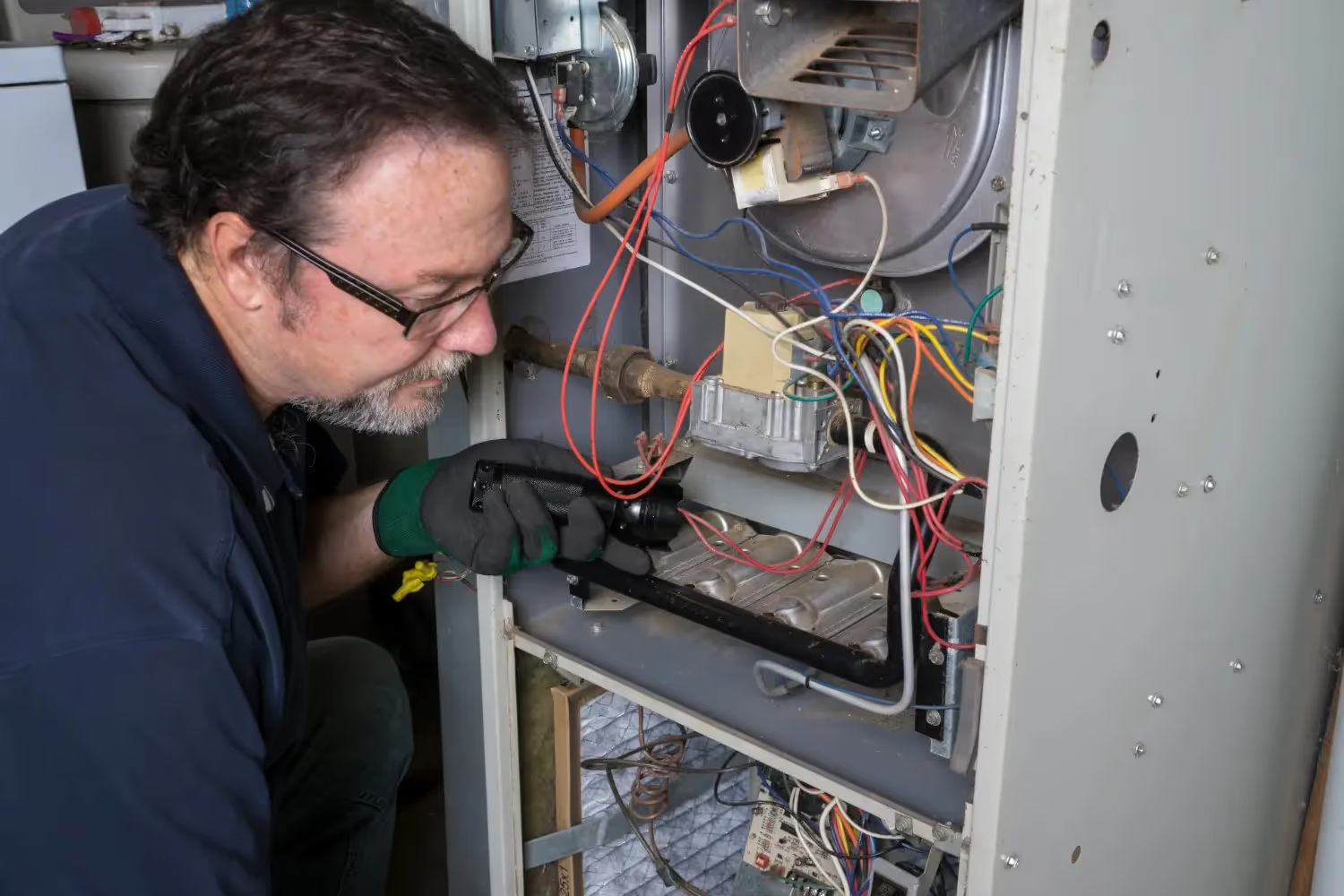
- Initial Assessment: The technician begins by operating the system to listen for unusual noises, such as rattling or grinding, and to smell for any odd odors that indicate burning dust or electrical issues. This baseline operation test helps pinpoint immediate concerns.
- Power Down and Disassembly: Power to the unit is cut for safety. Access panels are removed to expose the internal components. This allows for a deep clean that homeowners cannot achieve on their own.
- Deep Cleaning: Using specialized brushes and vacuums, the technician removes dust, soot, and debris from the cabinet, blower wheel, and burner assembly. Keeping these areas clean prevents overheating and improves air quality.
- Component Testing: Using multimeters and combustion analyzers, the technician tests the electrical values and gas pressure. These readings are compared against the manufacturer's specifications. Any deviation indicates a part that is nearing failure.
- Reassembly and Final Test: Once cleaning and adjustments are complete, the system is reassembled. The power is restored, and the system is run through a full heating cycle. The technician measures the temperature rise (the difference between the air entering and leaving the furnace) to confirm the unit is heating effectively.
- Reporting: You receive a detailed report of the findings. If a part is worn but still functional, you are advised on its remaining life so you can plan for future repairs rather than being surprised by a breakdown.
Carter Heating and Cooling technicians prioritize transparency throughout this process, ensuring you understand exactly what was done and the current health of your heating system.
Deciding Between Heating Repair and Replacement
During a tune-up, issues may be discovered that require more than just adjustments. Homeowners often face the difficult decision of whether to invest in repairs or proceed with a full system replacement. Making the right choice depends on a combination of technical factors and financial logic.
- The 50% Rule: If the cost of the repair approaches 50% of the value of the system, replacement is generally the smarter financial move. Investing heavy capital into an aging asset rarely yields a good return.
- System Age: Most gas furnaces last between 15 and 20 years, while heat pumps typically last 10 to 15 years. If your unit is nearing the end of this window and requires a significant repair, a tune-up or minor fix may only be a temporary bandage.
- Frequency of Breakdowns: If you find yourself calling for service multiple times a year, the cumulative cost of repairs will quickly outpace the monthly cost of financing a new, high-efficiency unit. A reliable system should not require constant intervention.
- Energy Bill Trends: Compare your energy bills from this year to previous years. If usage is spiking despite similar weather conditions and regular tune-ups, the internal components have likely degraded to the point where efficiency cannot be restored.
- Comfort Consistency: Uneven heating, cold spots, or a house that never quite reaches the set temperature suggest the system is undersized or failing. If a tune-up does not resolve these comfort issues, replacement with a properly sized unit is the only permanent solution.
Special Considerations for the Local Climate
The weather patterns in this region of Kentucky dictate specific maintenance needs. Smiths Grove experiences a distinct four-season climate, but the transition into winter can be particularly taxing on HVAC hardware.
- Handling Freezing Lows: With winter temperatures frequently dropping into the mid-20s, heat pumps often struggle to extract heat from the outside air. During a tune-up, the defrost board and auxiliary heat strips (emergency heat) must be rigorously tested. If these backup systems fail, the heat pump will freeze over, leaving the home without heat during the coldest snap of the year.
- Humidity and Moisture Management: March and April are historically the wettest months in the area. A heating system that has been running all winter often accumulates dust and debris in the condensate lines (for high-efficiency furnaces) or near the intake. If not cleaned during the tune-up, this moisture can lead to mold growth or sensor corrosion as the humidity rises in spring.
- Freeze-Thaw Cycles: The region often sees temperature fluctuations where days are mild and nights freeze. This constant expansion and contraction puts stress on gas piping and exhaust flues. Technicians pay special attention to venting integrity to ensure that as the materials expand and contract, no dangerous gases are allowed to leak back into the living space.
- Local Utility Costs: Energy rates fluctuate. A system operating at peak efficiency is your best defense against rising utility costs. By ensuring the air-to-fuel ratio is precise, you minimize waste and keep operational costs predictable regardless of how severe the winter becomes.
Why Homeowners Choose Professional Maintenance
There is a significant difference between a cursory check-up and a professional maintenance service. The goal of a tune-up is to reset the system’s reliability, ensuring it performs when the weather is at its worst.
- Technical Expertise: Licensed technicians understand the specific load calculations and code requirements for Kentucky homes. They are trained to spot subtle signs of wear—like a frayed wire or a hairline fracture—that an untrained eye would miss.
- Warranty Preservation: Most HVAC manufacturers require proof of annual professional maintenance to keep the parts warranty valid. Skipping this service can void the warranty, leaving the homeowner responsible for the full cost of replacement parts.
- Comprehensive Tooling: Professionals utilize industrial-grade combustion analyzers, manometers, and leak detectors. These tools provide precise data on system performance that goes far beyond simply checking if the air feels warm.
- Safety Assurance: The primary byproduct of gas heating is carbon monoxide. Professional maintenance is the only way to definitively verify that the venting system is clear and the heat exchanger is intact, protecting your household from invisible dangers.
- Long-Term Savings: A well-tuned system runs fewer hours to achieve the same temperature. This reduction in runtime saves electricity and gas, while also reducing the mechanical wear and tear on the blower and compressor.
Secure Your Comfort for the Season
Waiting for the first freeze to test your heating system is a strategy that often leads to cold nights and high service fees. Preventative maintenance is the most effective way to ensure your furnace or heat pump operates safely and efficiently throughout the winter. By addressing minor issues now, you avoid the disruption of a mid-season breakdown.
Carter Heating and Cooling is ready to help you prepare your home for the months ahead. Our detailed inspection and adjustment process provides the reliability you need for Smiths Grove winters.
Don't wait until the temperature drops—schedule your heating tune-up today.

Great Service at a Fair Price
Veterans Discount


Senior Discount

Law Enforcement

Fire fighters/ems

Hear From Your Neighbors!
Hear from your neighbors to see how our commitment to dependable service and lasting comfort has made a difference in their homes.