
How can we help today?
Choose an option to see quick actions and get help faster.AC Inspection in Smiths Grove, KY
AC Inspection in Smiths Grove, KY
Need your air conditioner inspected? Our certified technicians in Smiths Grove offer detailed AC diagnostics, immediate service, and expert advice. Contact us today!
Is Your Cooling System Failing to Keep Up with the Heat?
Experiencing uneven cooling or unexpected rises in your energy bills indicates that your air conditioner is operating under stress. A professional AC inspection can diagnose and resolve hidden issues before they escalate into a total system failure during the peak of summer. For immediate scheduling or to discuss financing options for necessary repairs, Contact Us or call our office directly.
Residents in Smiths Grove know that the humid subtropical climate requires a cooling system that runs at peak efficiency. When airflow is restricted or components wear down, your comfort suffers, and your wallet takes a hit. Ignoring these early warning signs often leads to emergency breakdowns when you need relief the most.
Our inspection service delivers immediate clarity and results:
- Complete diagnostic and performance checks conducted by certified technicians.
- Same-day service availability to ensure minimal disruption to your daily routine.
- A detailed inspection report with actionable recommendations and transparent findings.
- Backed by industry-leading warranties and flexible financing options for any required repairs.
Comprehensive AC Inspection: What We Check and Why
A proper air conditioning inspection goes far beyond a quick visual check. It is a deep dive into the thermodynamics and electrical integrity of your HVAC system. The goal is to identify inefficiencies that are currently costing you money and safety hazards that could endanger your home.
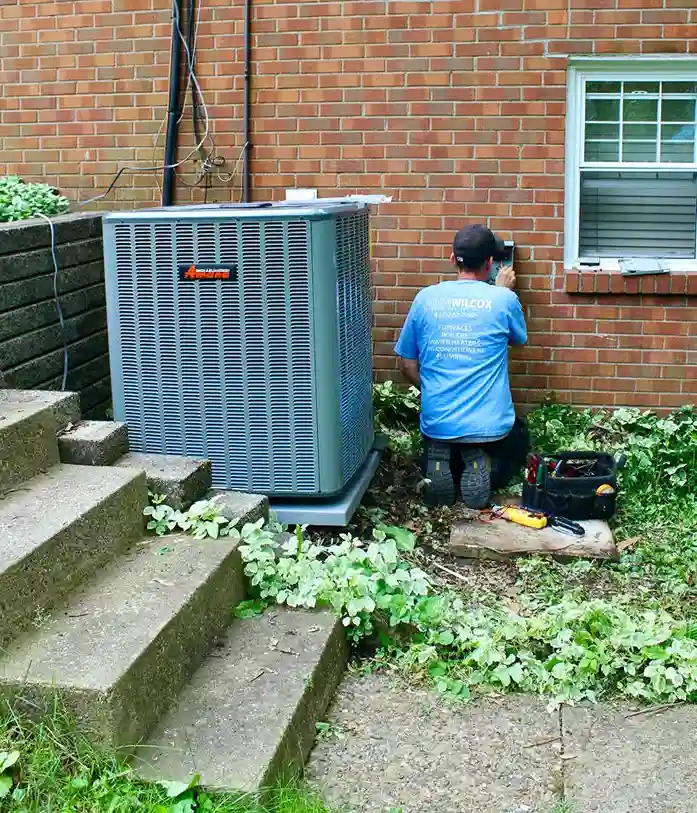
Electrical Component Analysis
Electrical failure is a leading cause of AC breakdowns. Loose connections or worn contacts create resistance, leading to heat buildup and eventual component failure.
- Thermostat Calibration: We verify that your thermostat is reading the indoor temperature accurately and communicating correctly with the condenser and air handler.
- Capacitor Testing: Capacitors start the compressor and fan motors. We test their microfarad ratings to ensure they are within the manufacturer's specified range. A weak capacitor can ruin a compressor.
- Contactor Inspection: We check for pitted or burned contactor points which can cause voltage drops or stuck compressors.
- Amperage and Voltage Checks: We measure the voltage and amperage draw on all motors to ensure they are not overworking, which signals internal wear or friction.
Refrigerant and Airflow Evaluation
The lifeblood of your cooling system is the refrigerant, and the delivery method is airflow. If either is compromised, efficiency plummets.
- Refrigerant Charge Verification: We measure superheat and subcooling levels to determine if the refrigerant charge is accurate. Low refrigerant suggests a leak, while high levels indicate an overcharge; both damage the compressor.
- Coil Condition: We inspect both the evaporator coil (indoor) and condenser coil (outdoor) for dirt and debris. Even a thin layer of dust acts as an insulator, preventing heat transfer and forcing the unit to run longer cycles.
- Static Pressure Testing: This measures the resistance against the blower motor. High static pressure indicates ductwork issues or dirty filters, which can reduce equipment lifespan by half.
- Blower Wheel Inspection: We check the blower wheel for dust buildup, which unbalances the fan and reduces air volume.
Safety and Drainage Checks
Your AC unit removes humidity, which creates condensate water. If this water is not managed, it causes water damage.
- Condensate Drain Line: We clear the drain line to prevent clogs that lead to water backing up into your home or tripping overflow safety switches.
- Safety Controls: We test high and low-pressure switches to ensure they will shut the unit down to protect the compressor during fault conditions.
The Inspection Process: From Arrival to Diagnosis
Understanding the workflow helps you prepare for the service visit. Carter Heating and Cooling technicians follow a systematic approach to ensure no component is overlooked.
- Arrival and Site Protection: The technician arrives within the scheduled window. Before entering your home, shoe covers are applied, and drop cloths are used around the work area to protect your flooring.
- Initial Assessment: The process begins with a discussion about any specific noises, smells, or performance issues you have noticed. The technician then runs the system to listen for mechanical irregularities.
- System Deactivation: Power is safely disconnected to the unit to allow for the physical inspection of internal components. This ensures safety while checking wiring and capacitors.
- Component Testing: The technician moves through the electrical, mechanical, and airflow checks listed above, using calibrated gauges and multimeters.
- System Restoration and Testing: Once the physical checks are done, the system is powered back on. The technician monitors the system through a full cooling cycle to verify temperature splits (the difference between supply and return air temperature).
- Reporting and Consultation: Finally, you receive a comprehensive status report. If issues are found, the technician explains the severity, the cost to repair versus the risk of waiting, and provides a clear quote for any recommended work.
Determining When to Repair vs. Replace
During an inspection, significant issues may be uncovered. Deciding whether to invest in a repair or opt for a full system replacement is a financial calculation based on age, condition, and efficiency.
Repair is generally the correct path when:
- The system is under 10 years old.
- The cost of the repair is less than 50% of the cost of a new system.
- The unit has been well-maintained and has no history of major failures.
- The warranty is still active, covering major parts like the compressor.
Replacement becomes the smarter financial move when:
- The 50% Rule: The cost of repairs approaches or exceeds 50% of the value of a new unit.
- Age and Refrigerant Type: The unit is over 15 years old or uses R-22 (Freon) refrigerant. R-22 is phased out, making refills extermely expensive and scarce.
- Frequent Breakdowns: If you have required multiple repairs in the last two years, the unit has likely reached the end of its reliable service life.
- Efficiency Gains: Modern SEER2 standards offer significantly higher efficiency than units made just a decade ago. Replacing an old unit can often lower monthly utility bills enough to offset the monthly cost of financing a new system.
Local Climate Factors Affecting Your AC
Operating an air conditioner in this region requires specific attention to humidity control and seasonal shifts. The distinct seasons in this part of Kentucky mean your system sits idle for months before being thrust into high-demand operation, which is a primary cause of early-season failure.
- Humidity Management: The humid subtropical climate means your AC is not just cooling air; it is dehumidifying it. If the evaporator coil is dirty or the fan speed is set incorrectly, humidity levels in the home will rise, leading to mold growth potential in ductwork and a clammy indoor feel.
- Debris and Vegetation: Local flora grows rapidly in the spring and summer. Inspections often reveal condenser units choked by vines, grass clippings, or cottonwood seeds. This blockage raises head pressure and electricity consumption.
- Seasonal Transitions: Switching from heating to cooling requires a specific check of the reversing valve (in heat pumps) and ensuring the drainage system is primed and not dried out from winter disuse.
- Electrical Reliability: Summer storms can cause power surges. Verifying the grounding of the unit and the condition of the disconnect box is vital for protecting the electronics during storm season.
Why Professional Maintenance Matters
Attempting DIY maintenance often leads to overlooked issues. While changing a filter is a task for the homeowner, analyzing superheat and subcooling requires EPA certification and specialized tools. Professional oversight ensures compliance with manufacturer warranty requirements. Most manufacturers require proof of annual maintenance to keep parts warranties valid. Without this record, a compressor failure in year four might not be covered, leaving you with a massive bill.
Furthermore, professional technicians have access to OEM (Original Equipment Manufacturer) parts. Generic universal parts often do not fit perfectly or meet the exact specifications of your unit, leading to efficiency losses. A certified inspection ensures that if a part is weak, the replacement recommended is the exact match for your specific model.
Restoring Comfort and Efficiency
An air conditioner is a complex ecosystem of pressure, voltage, and airflow. When one variable is off, the entire system suffers. Routine inspections are the only way to ensure that your home stays cool without inflating your energy costs. By identifying worn parts before they break, you avoid emergency service calls during the hottest weeks of the year.
Ensure your home remains a sanctuary from the heat this season. Do not wait for a breakdown to give your cooling system the attention it needs.
Take control of your indoor climate today. Contact us to schedule your comprehensive AC inspection.

Great Service at a Fair Price
Veterans Discount


Senior Discount

Law Enforcement

Fire fighters/ems

Hear From Your Neighbors!
Hear from your neighbors to see how our commitment to dependable service and lasting comfort has made a difference in their homes.