
How can we help today?
Choose an option to see quick actions and get help faster.UV Coil Purifier Service in Scottsville, KY
UV Coil Purifier Service in Scottsville, KY
Explore the benefits of UV Coil Purifiers with Carter Heating and Cooling. Ensure optimal air quality and HVAC efficiency in Scottsville, KY. Contact us today!
Ensure Fresh Air and Efficiency with UV Coil Purifiers
Are concerns about indoor air quality and HVAC efficiency causing you stress? Discover the benefits of our UV Coil Purifiers in combating allergens and microbes swiftly. Carter Heating and Cooling provides comprehensive installation and service solutions for homeowners in Scottsville, KY who need reliable pathogen control within their ductwork. Call us or contact us online immediately to secure your indoor air quality solution.
- Instantly improve air quality by eliminating up to 99.9% of pathogens directly at the source.
- Extend the life of your HVAC system with less maintenance by preventing organic buildup.
- Reduce energy costs through increased HVAC efficiency and improved heat transfer.
All installations are fully warranted and adhere to local HVAC regulations, ensuring peace of mind.
Comprehensive UV Light Solutions for HVAC Systems
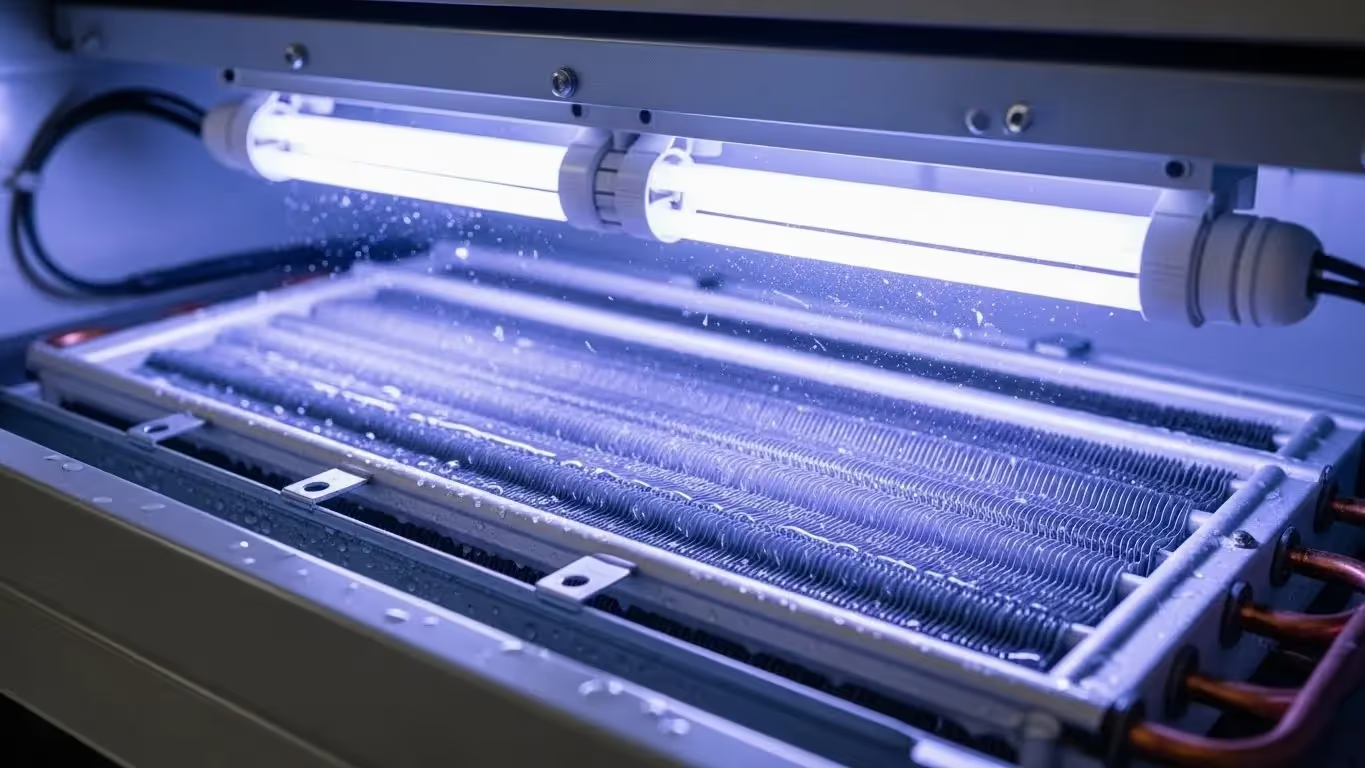
Installing a UV coil purifier is a strategic move to sanitize the damp, dark environment of your air conditioning coil. This component is the heart of your cooling system, but it is also a prime breeding ground for mold, bacteria, and biofilm due to the constant presence of condensation. When we provide this service, the focus is on integrating a germicidal UV-C light directly into the air handler or furnace. This is not merely a filtration system; it is an active sterilization process that disrupts the DNA of microorganisms, rendering them unable to reproduce or infect.
The scope of service includes a full evaluation of the air handler's internal geometry to determine the optimal mounting position. The goal is to bathe the evaporator coil in UV light continuously. By doing so, we prevent the accumulation of "sludge" that restricts airflow and insulates the metal fins, which otherwise forces the system to work harder to cool the home. Service includes the high-output UV fixture, the ballast, safety interlocks, and professional wiring into the existing electrical framework of the HVAC unit.
Homeowners receive a system that operates silently in the background. Unlike portable air purifiers that only treat air in a single room, a coil purifier works at the central hub of your ventilation system. Every time air cycles through the return and passes over the coil, it is exposed to the purifying light. This ensures that the air distributed to every room in your house has been treated, significantly lowering the total particulate count of mold spores and viral agents circulating in your living space.
The Installation Process: From Assessment to Activation
Professional installation of a UV coil purifier follows a rigorous protocol to ensure safety, effectiveness, and system integrity. This is a technical procedure involving high-voltage electricity and radiation-producing equipment, requiring precision at every stage.
Initial System Inspection and Cleaning
First, the technician inspects the existing HVAC unit to ensure it is compatible with a UV add-on. Crucially, the evaporator coil must be inspected. If the coil is already heavily coated in debris or mold, physically cleaning the coil is a mandatory step before installation. UV light maintains a clean coil, but it cannot penetrate thick layers of existing grime. The surface is prepped to ensure the light can reach the metal fins effectively.
Strategic Mounting and Placement
Next, the mounting location is selected. The light must be positioned to provide maximum surface area coverage of the coil and the drain pan. The drain pan is often where standing water accumulates, making it a hotspot for algae and microbial growth. The technician drills precise access holes and mounts the bracket, ensuring the bulb will not touch any plastic components or wiring that could degrade under UV exposure. Shielding is installed if necessary to protect non-UV-resistant internal parts.
Electrical Integration and Safety Controls
The electrical ballast is mounted outside the ductwork for heat dissipation and easy access. The unit is wired directly into the HVAC system’s power supply, usually through a dedicated transformer. Safety is paramount; a sight glass is installed so you can verify the bulb is lit without opening the unit. Furthermore, a safety interlock switch is wired in. This switch automatically cuts power to the UV light if the access door is removed, protecting the user and technician from accidental eye exposure to harmful UV-C rays.
Final Testing and Verification
Once physically installed, the system is powered on. The technician verifies that the light activates correctly and that the safety switches function as intended. We check for any light leakage from the ductwork and seal gaps if found. The final step involves a review of the system operation with the homeowner, explaining how to check the status indicator and what to expect regarding air quality improvements.
Deciding Between Bulb Replacement and System Repair
UV coil purifiers are robust, but like any lighting technology, they require maintenance to remain effective. Determining whether to simply replace a bulb or repair the ballast mechanism is a common decision point for homeowners.
Bulb replacement is the most frequent service requirement. UV-C bulbs have a finite effective lifespan. While a bulb may still emit visible blue light, its germicidal output degrades over time. Typically, manufacturers recommend replacement every 12 to 24 months. If you notice a return of musty odors or if the system’s efficiency seems to dip, it is likely time for a swap. We recommend adhering to a strict schedule rather than waiting for the bulb to burn out completely to maintain continuous protection.
Ballast or unit repair becomes necessary when a new bulb fails to ignite or if the unit creates a buzzing noise. If the system trips the breaker or shows physical signs of heat damage on the power supply, replacing the bulb will not solve the issue. In older units, if the mounting hardware has corroded due to the humid environment inside the coil plenum, a full unit replacement might be more cost-effective than attempting to salvage rusted brackets. Apply for financing today.
Consider the age of your current UV system. If the technology is more than ten years old, newer models offer higher intensity output and lower energy consumption. Upgrading the entire assembly rather than repairing an obsolete ballast often provides better sterilization rates and longer warranty coverage on the new components.
Navigating Local Climate and Infrastructure
In Scottsville, KY, the local climate plays a significant role in how HVAC systems—and specifically UV purifiers—are utilized. The region experiences a humid subtropical climate with four distinct seasons. The hot, humid summers are the primary driver for UV coil purifier adoption. High humidity levels mean that air conditioning coils are constantly wet with condensation. Without intervention, this moisture, combined with summer heat, creates the perfect incubator for mold and bacterial slime.
Humidity Management
The excessive moisture load in this region makes the drain pan and coil highly susceptible to blockages caused by biological growth. Local homeowners often face "dirty sock syndrome," a distinct musty smell caused by bacteria on the coil. UV lights are the most effective countermeasure for this specific regional issue, preventing the growth that thrives in Kentucky summers.
Electrical Considerations
Local infrastructure and electrical codes dictate how add-on accessories like UV lights must be wired. The system must not overload the existing HVAC circuit. In some older homes in the area, the transformer supplying the furnace or air handler may not have enough amperage to support the UV system. In these cases, installing a dedicated transformer or upgrading the electrical components is part of the service to ensure code compliance and safety.
Seasonal Maintenance
While the cooling season is the peak time for microbial growth, the moderate winters and wet springs also contribute to indoor air quality challenges. Pollen and mold spores entering the home during the spring rainy season can settle on the coil. Keeping the UV light active year-round is recommended in this climate to prevent colonization during the swing seasons when the HVAC system runs less frequently but moisture remains present.
Why Professional Installation is Essential
While some homeowners may consider DIY options for home improvements, UV coil purifier installation requires professional expertise to ensure safety and efficacy. Dealing with UV-C radiation involves significant risks if not handled correctly. Direct exposure to the light can cause severe eye injury and skin burns within seconds. Carter Heating and Cooling ensures that all installations are completely contained within the ductwork with redundant safety measures in place to prevent accidental exposure.
Beyond personal safety, the effectiveness of the system relies heavily on placement. A UV light simply placed in the ductwork without calculating the "kill distance" and exposure time will not be effective. The light must be mounted at a specific distance from the coil to ensure the radiation intensity is high enough to penetrate the cell walls of pathogens. If the light is too far away, it will not sterilize the surface; if it is too close or angled incorrectly, it may degrade plastic drain pans or wiring insulation, leading to costly HVAC repairs down the line.
Professional technicians also have the tools to verify proper electrical load. Incorrect wiring can damage the HVAC control board, a sensitive and expensive component. We ensure that the addition of the UV system works harmoniously with your heating and cooling equipment, maintaining the manufacturer's warranty on your main HVAC unit. Many HVAC manufacturers void warranties if accessories are installed improperly or by unlicensed individuals. Read our reviews.
Improving Efficiency and Lowering Operational Costs
The installation of a UV coil purifier is often viewed primarily as a health upgrade, but the financial and operational benefits are equally compelling. The primary mechanism for cost savings is the maintenance of the heat transfer surfaces.
Heat Transfer Optimization
An air conditioner works by absorbing heat from the indoor air into the refrigerant inside the evaporator coil. The metal fins of the coil are designed to maximize surface area for this exchange. Even a thin layer of biofilm (a matrix of bacteria and mold) acts as an insulator. This insulation prevents the refrigerant from absorbing heat efficiently. Consequently, the compressor must run longer and work harder to achieve the desired temperature setpoint. UV lights keep these fins bare and clean, maintaining factory-level efficiency.
Airflow Restoration
Biological growth on the coil narrows the spaces between the fins. This increases the static pressure within the system, forcing the blower motor to draw more amperage to push air through the blockage. By eliminating this growth, airflow remains unrestricted. This reduces the electrical load on the blower motor and ensures that the volume of air circulating through the home is adequate for conditioning the space.
Reduced Chemical Cleanings
Without UV protection, coils in humid climates often require frequent chemical cleanings to remove mold buildup. These cleanings involve labor costs and the use of harsh chemicals that can eventually corrode the aluminum or copper of the coil. By preventing the growth in the first place, the need for deep chemical cleaning is drastically reduced, lowering the long-term maintenance costs and extending the physical lifespan of the coil itself.
Frequently Asked Questions About UV Coil Purifiers
Q. Do UV lights really kill mold in the HVAC system?
A. Yes. UV-C light at a specific wavelength (typically 253.7 nanometers) is germicidal. It penetrates the cell walls of mold spores, bacteria, and viruses, damaging their DNA or RNA. This prevents them from reproducing and effectively kills them. When focused on the coil, it prevents the mold from establishing a colony on the wet surfaces.
Q. Does the UV light run 24/7?
A. In most coil sterilization applications, the UV light is wired to run 24/7. This is because mold and bacteria can grow on a damp coil even when the air conditioner is not currently cycling air. Continuous exposure ensures that the coil remains sterile at all times. Some air-stream treatment models may be wired to cycle with the blower, but for coil maintenance, continuous operation is the industry standard.
Q. Will the UV light produce ozone?
A. This depends on the model selected. We prioritize the installation of ozone-free UV lamps. While ozone can neutralize odors, it is a lung irritant and is generally not recommended for residential indoor environments. The UV-C lamps we utilize are coated to filter out the ozone-generating wavelengths, focusing purely on the germicidal wavelengths that are safe for occupied homes.
Q. How do I know if the light is working?
A. Because you cannot look directly at the bulb safely, and the unit is sealed inside the duct, we install a sight glass or use models with LED indicator lights on the ballast. If the indicator light is green or the sight glass glows blue, the system is active. If the indicator changes color or goes out, it is time for service.
Q. Can a UV light replace my air filter?
A. No. UV lights and air filters perform two different functions. Air filters trap physical dust, dander, and large particles. UV lights neutralize microscopic pathogens and biological growth. They work best in tandem. A clean air filter ensures that dust does not coat the UV bulb, which would reduce its intensity, while the UV light handles the microscopic threats that are small enough to pass through standard filters.
Secure Your Home's Air Quality Today
Investing in a UV coil purifier is a decision to prioritize the health of your household and the longevity of your HVAC investment. The invisible threats of mold and bacteria in your ductwork can compromise comfort and efficiency, but the solution is proven and effective. By keeping your system's critical components free of biological growth, you ensure cleaner air and lower energy bills.
Carter Heating and Cooling is ready to assist you with expert installation and reliable service. Don't let humidity and hidden growth dictate your indoor environment. Take control of your air quality now.
Call our team immediately to schedule your UV coil purifier service.

Great Service at a Fair Price
Veterans Discount


Senior Discount

Law Enforcement

Fire fighters/ems

Hear From Your Neighbors!
Hear from your neighbors to see how our commitment to dependable service and lasting comfort has made a difference in their homes.