
How can we help today?
Choose an option to see quick actions and get help faster.Furnace Inspection in Scottsville, KY
Furnace Inspection in Scottsville, KY
Furnace Inspection in Scottsville, KY
Is Your Heating System Delivering Inconsistent Warmth or Rising Energy Bills?
Facing unexpected furnace breakdowns during Scottsville's chilly winters can be frustrating, especially when your home refuses to stay warm despite the thermostat setting. Quick, professional inspections ensure your heating stays reliable in every season, so contact us today to schedule your service or ask about our financing options.
When your furnace acts up, you need a solution that addresses the root cause immediately, not a temporary patch. Carter Heating and Cooling focuses on restoring safety and efficiency to your home with a systematic approach to heating maintenance.
- Same-day service availability keeps your home warm without the wait.
- Transparent pricing with no hidden fees adds peace of mind to every service call.
- Certified technicians ensure high-quality maintenance and swift resolution.
All services are backed by a comprehensive warranty and clear, upfront pricing.
Comprehensive Furnace Inspection: Scope and Safety Checks
A professional furnace inspection goes far beyond a quick visual glance. It involves a deep dive into the mechanical, electrical, and safety systems of your heating unit to ensure it operates at peak performance. When a technician arrives at your property in Scottsville, the primary goal is to identify potential failure points before they result in a mid-winter breakdown.
The scope of a proper inspection covers the critical components that dictate the longevity of your system. This includes a thorough examination of the heat exchanger. This component is responsible for separating the combustion process from the air you breathe. Over time, the expansion and contraction caused by heating cycles can create hairline cracks. A compromised heat exchanger not only reduces efficiency but also poses a serious risk of carbon monoxide leakage.
Electrical components are also a major focus. Loose connections, frayed wires, or a failing capacitor can cause intermittent shutting down or total system failure. The inspection includes tightening all electrical connections, measuring the voltage and amperage on motors, and testing the thermostat calibration to ensure that the temperature you set is exactly the temperature you get.
Airflow analysis is another critical aspect of the service. Restricted airflow places unnecessary strain on the blower motor and heat exchanger, leading to overheating and premature failure. Technicians check the static pressure within the ductwork and inspect the condition of the air filter, ensuring that air moves freely throughout the system.
- Combustion Analysis: Technicians measure the efficiency of fuel burning to ensure no energy is wasted and no dangerous gases are released.
- Safety Switch Testing: Limit switches and rollout switches are tested to confirm they will automatically shut the unit down in the event of overheating or obstruction.
- Ignition System Review: Whether you have a pilot light or a modern hot surface ignitor, this component is tested for reliability to prevent "no heat" calls.
- Blower Motor Inspection: The motor is checked for bearing wear, dust accumulation, and proper amperage draw.
How the Inspection Process Works
Understanding the sequence of a service call helps you prepare for the visit and ensures you know exactly what is happening with your equipment — read our FAQs. The process is designed to be non-intrusive while providing a complete picture of your furnace's health.
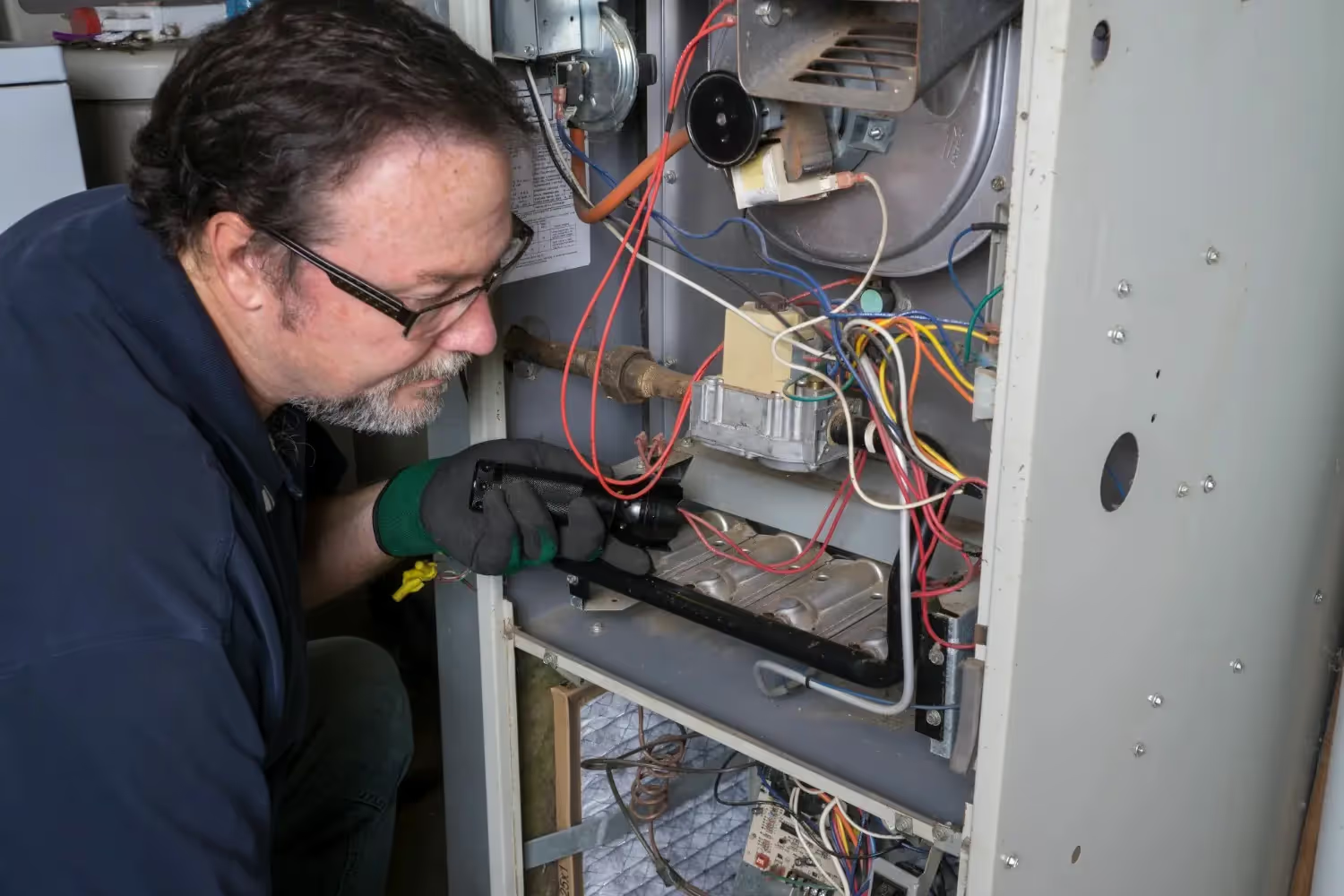
The service begins with a discussion about any specific issues you have noticed, such as strange noises, cold spots in the home, or recent spikes in utility bills. Following this consultation, the technician performs a complete system run cycle. This involves turning the thermostat up to call for heat and observing the startup sequence. The inducer motor should spin up, the ignitor should glow (or pilot light engage), the gas valve should open, and the burners should light smoothly without delay or "woofing" noises.
Once the system is running, the technician moves to the internal diagnostics. Panels are removed to access the interior cabinet. This is where the physical cleaning and testing of sensors occur. The flame sensor, a small metal rod that confirms fire is present, is often cleaned of carbon buildup. If this sensor is dirty, the furnace will shut down repeatedly as a safety precaution.
After the mechanical and electrical checks are complete, the technician evaluates the ventilation system. In Scottsville, where humidity can fluctuate, ensuring the flue pipe is free of corrosion and obstructions is vital for safely venting exhaust gases outside.
Finally, you receive a detailed health report of the system. This report outlines the current status of the furnace, highlights any immediate repairs needed, and provides recommendations for proactive part replacements if components are nearing the end of their lifecycle.
- First, the technician conducts a diagnostic run to observe the startup cycle and operational sounds.
- Next, power is cut to the unit to safely inspect internal wiring, capacitors, and safety switches.
- Then, the heat exchanger and burner assembly are visually inspected for cracks, rust, or corrosion.
- Afterward, the blower wheel is inspected for debris buildup that could hamper efficiency.
- Finally, the system is reassembled, tested again, and a comprehensive condition report is provided to the homeowner.
Deciding Between Repair and Replacement
Determining whether to invest in another repair or opt for a full system replacement is a common decision for homeowners. There are specific criteria that help clarify this choice, moving it from a guess to a calculated financial decision.
The age of the unit is the primary factor. Furnaces generally last between 15 and 20 years. If your unit is approaching or has surpassed the 15-year mark, finding replacement parts may become difficult and expensive. Furthermore, older units operate at significantly lower efficiency levels compared to modern standards. A furnace from the early 2000s may only be 70% to 80% efficient, meaning 20 to 30 cents of every dollar spent on heating is wasted.
The frequency of breakdowns is another key indicator. If you find yourself calling for service multiple times in a single season, the cumulative cost of these visits often outweighs the monthly cost of a new, warrantied system. This is often referred to as the "50% Rule": if the cost of the repair is 50% or more of the value of a new system, replacement is the smarter financial move.
Safety concerns should never be ignored. If an inspection reveals a cracked heat exchanger, replacement is almost always the only safe option. Repairing a heat exchanger is rarely feasible or approved by manufacturers due to the high risk of carbon monoxide poisoning.
- Rising Energy Bills: If your usage hasn't changed but your bills have spiked, the system is losing efficiency and struggling to keep up.
- Uneven Heating: If some rooms are freezing while others are hot, the distribution system or blower motor may be failing.
- Excessive Noise: Squealing, banging, or rattling sounds often indicate severe mechanical wear that repair may not permanently fix.
- Yellow Pilot Light: A healthy flame should be blue; a yellow flame indicates a combustion problem and potential carbon monoxide issues.
Local Considerations for Heating Systems
Operating a heating system in Scottsville, KY, requires attention to specific regional factors. The humid subtropical climate means that your HVAC system deals with significant moisture loads during the summer, which can lead to rust and corrosion within the furnace cabinet if not properly maintained. When the system sits idle during the humid months, condensation can form on the heat exchanger or inside the burner compartment, accelerating wear.
Carter Heating and Cooling understands these local variables. Winter temperatures in the region frequently dip into the upper 20s, meaning your furnace must transition from being completely off to running at high capacity very quickly. This thermal shock can break weak components that haven't been inspected. Ensuring your system is ready for this rapid shift is critical for uninterrupted comfort.
Utilities and codes also play a role. Whether your home is powered by the Scottsville Electric Company or relies on natural gas, ensuring your equipment meets current Kentucky HVAC safety codes is mandatory. Technicians verify that all gas lines are up to code and that electrical disconnects are easily accessible.
Furthermore, Kentucky licensing requirements dictate that only certified professionals should handle the manipulation of gas lines and high-voltage electrical connections found in furnaces. Unauthorized work can void manufacturer warranties and, more importantly, endanger your household.
- Humidity Management: Inspections look for rust caused by Kentucky’s humid summers to prevent winter failure.
- Utility Compliance: Checks ensure your system draws power and gas safely according to local utility standards.
- Licensing Adherence: All work is performed in strict accordance with Kentucky state HVAC regulations.
- Venting Requirements: Local codes regarding flue pipe clearance and materials are verified to prevent exhaust hazards.
Why Professional Maintenance is Non-Negotiable
Skipping an annual inspection is often viewed as a way to save money, but it frequently results in higher costs down the road. The primary value of professional maintenance lies in risk mitigation. A furnace is a controlled fire inside your home; ensuring that fire stays contained and burns efficiently is paramount for the safety of your family.
Efficiency is the second major benefit. A clean, tuned-up furnace uses less fuel to generate the same amount of heat. Issues like a dirty flame sensor or a clogged blower wheel force the system to work harder, driving up energy consumption. Regular tuning restores the system to factory specifications, keeping utility costs predictable.
Warranty preservation is also a critical factor. Most major furnace manufacturers require proof of annual maintenance to keep the warranty valid. If a major component like the compressor or heat exchanger fails and you cannot prove the system was maintained, you may be liable for the full replacement cost.
Professional inspections also provide a timeline for future expenses. Instead of being blindsided by a system failure on the coldest night of the year, a technician can alert you to parts that are showing wear. This allows you to budget for repairs or replacement on your own terms, rather than in a panic.
- Extended Lifespan: Regular maintenance significantly extends the operational life of the unit, maximizing your initial investment.
- Improved Air Quality: Cleaning internal components reduces the amount of dust and allergens circulated through the home.
- Safety Assurance: Verification of safety switches and gas connections prevents fire hazards and gas leaks.
- Priority Service: Customers with maintenance records often receive priority scheduling during peak demand times.
Ready to Enjoy Reliable Warmth All Winter Long?
When the temperature drops, your confidence in your heating system should remain high. By addressing small issues before they become major repairs, you ensure a warm, safe environment for your home. For reliable, thorough inspections that prioritize your safety and budget, trust Carter Heating and Cooling to deliver results.
Take the proactive step to secure your home's comfort this season. Schedule your comprehensive furnace inspection now.

Great Service at a Fair Price
Veterans Discount


Senior Discount

Law Enforcement

Fire fighters/ems

Hear From Your Neighbors!
Hear from your neighbors to see how our commitment to dependable service and lasting comfort has made a difference in their homes.