

How can we help today?
Choose an option to see quick actions and get help faster.Air Filter Replacement in Scottsville, KY
Air Filter Replacement in Scottsville, KY
Schedule professional air filter replacement and airflow analysis in Scottsville. Ensure optimal indoor air quality and HVAC efficiency. Contact us today!
Speedy Air Filter Replacement Solutions
Struggling with a struggling HVAC system due to old or clogged air filters? Quick and reliable air filter replacements are right around the corner. Contact us today to schedule your filter replacement and airflow analysis. Carter Heating and Cooling provides comprehensive maintenance services for homeowners in Scottsville, ensuring your indoor air quality is optimized and your system runs without restriction.
- Get your air filter replaced as soon as tomorrow.
- Enjoy free airflow testing and professional installation—no appointments necessary for simple pickups, or scheduled service for full checks.
- Choose from top brands carried locally at competitive prices.
No-hassle service with immediate results is our standard.
What You Get With Professional Filter Service
Replacing an air filter seems like a simple task, but professional service goes beyond swapping out a piece of cardboard. The efficiency of your heating and cooling equipment depends entirely on proper airflow. When you engage a professional service for this task, you are purchasing guaranteed system performance and air quality control — read our reviews to see why.
We provide a comprehensive assessment of your current filtration setup. Many homes in the region are equipped with standard one-inch filter slots that restrict airflow when high-efficiency filters are forced into them. Our service includes an evaluation of your ductwork sizing relative to your furnace or air handler’s blower capacity. We determine exactly which Minimum Efficiency Reporting Value (MERV) rating your system can handle without causing static pressure buildup.
- Custom Sizing and Fitment: We ensure the filter fits the rack perfectly. Gaps as small as a fraction of an inch allow unfiltered air to bypass the media, depositing dust directly onto your evaporator coils.
- Static Pressure Verification: We check to ensure the new filter does not suffocate your system, which can lead to frozen coils in the summer or overheated heat exchangers in the winter.
- Debris Removal: Before the new filter goes in, we vacuum and wipe down the return air drop and filter grill to prevent immediate contamination.
- Proper Disposal: We handle the removal and disposal of the old, dust-laden filter so you do not have to handle the allergens it collected.
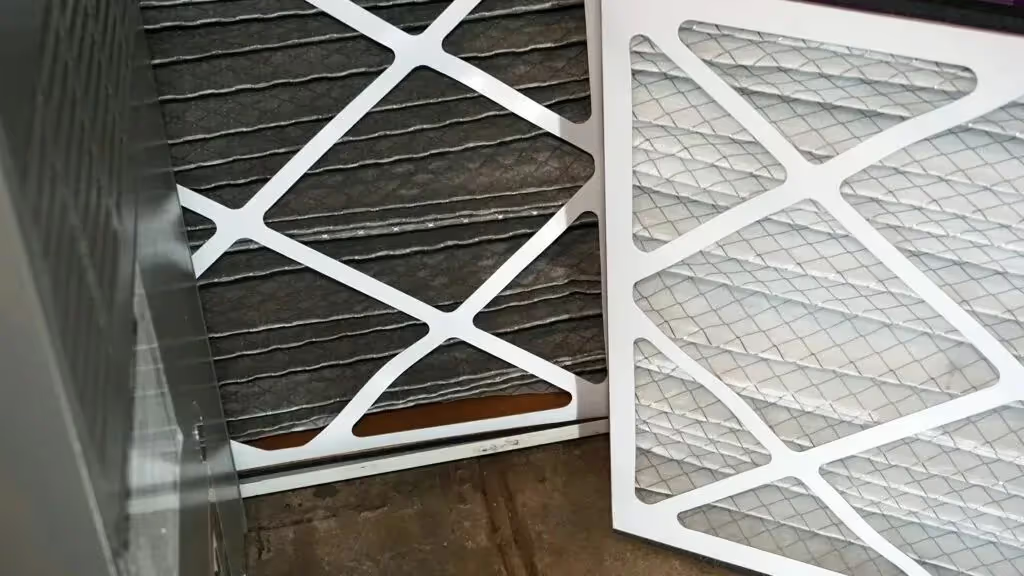
The Filter Replacement Process
Understanding how a professional technician approaches filter replacement helps highlight why this service is vital for the longevity of your HVAC unit. We follow a strict protocol designed to protect the equipment and improve indoor air quality.
- Initial System Shutdown: To prevent drawing dust into the blower motor during the change-out, the system is completely powered down at the thermostat and the service switch.
- Access and Inspection: The technician opens the filter cabinet or return grille. At this stage, we inspect the old filter for signs of abnormal system operation. A filter that is clogged in a specific pattern may indicate duct issues, while a wet filter indicates a condensate drain blockage.
- Chamber Cleaning: Once the old filter is removed, the housing is cleaned. Dust bunnies and particulate matter often settle in the tracks of the filter rack. If left, these are sucked immediately into the new filter, reducing its lifespan instantly.
- Airflow Direction Check: Filters are directional. Installing one backward creates air resistance and can collapse the filter media into the blower fan. We verify the airflow arrow matches the system's intake direction.
- Installation and Sealing: The new media is inserted. If the fit is loose due to house settling or warped metal, we apply gaskets or magnetic tape to ensure a true air seal.
- Performance Test: The system is powered back on. We listen for whistling (indicating air leaks) and verify that the blower motor is not straining against the new resistance.
When to Replace vs. Repair or Retrofit
Homeowners often wonder if a simple filter change is enough to solve their comfort problems — view our FAQs for answers. While a fresh filter solves many airflow issues, there are distinct signs that indicate a need for system repair or a filtration retrofit.
Replace the Filter When:
- Light Test Fails: If you hold the filter up to a light source and cannot see light passing through the weave, it is impacted and must be changed immediately.
- Time Elapsed: For standard 1-inch fiberglass filters, 30 days is the maximum lifespan. Pleated filters may last 90 days. If you have pets or carpet, these timelines shorten drastically.
- Visible Dust Accumulation: If you see grey fuzz coating the intake grille, the filter behind it is likely fully saturated.
Repair or Retrofit the System When:
- Filter Buckling: If the old filter is pulled inward or bent in the direction of airflow, your system has high static pressure. A simple replacement will not fix this; you may need a media cabinet upgrade or ductwork modification.
- Moisture Presence: A wet or moldy air filter is a major red flag. This implies that the condensate drain is clogged or the coil is freezing and thawing. Changing the filter alone will not stop the water damage; a technician must clear the drain line and check refrigerant levels.
- Short Cycling: If the unit turns on and off rapidly even after a fresh filter is installed, the blower motor or control board may be overheating.
- Black Soot: Dark black deposits on a filter in a home with gas heating can indicate a cracked heat exchanger or back-drafting. This is a safety emergency requiring immediate professional attention.
Understanding MERV Ratings and Air Quality
The acronym MERV stands for Minimum Efficiency Reporting Value. It is a scale from 1 to 16 that rates the effectiveness of air filters. Selecting the highest number is not always the best choice for every home.
- MERV 1-4: These are typically fiberglass filters. They are designed to protect the HVAC equipment from large debris like carpet fibers and lint. They offer minimal improvement to indoor air quality and allow pollen and mold spores to pass through.
- MERV 5-8: These are standard pleated filters. They capture household dust, pollen, and dust mites. For most residential systems in Scottsville, a MERV 8 is the recommended balance between filtration and airflow.
- MERV 9-12: These filters are denser and trap pet dander, auto emissions, and fine powders. They are excellent for allergy sufferers but require a robust blower motor to push air through them.
- MERV 13-16: These are hospital-grade filters capable of trapping bacteria and virus carriers. Most standard residential furnaces cannot handle the restriction of a MERV 13 filter without modification to the return air ducting.
Carter Heating and Cooling helps you navigate these ratings. We cross-reference the manufacturer specifications of your furnace or air handler to ensure you do not inadvertently damage your compressor or heat exchanger by installing a filter that is too restrictive.
Local Notes: Seasonality and Environmental Factors
Living in this part of Kentucky presents specific challenges for HVAC filtration. The local climate significantly dictates how often you should be checking and changing your filters.
- Summer Humidity: The region experiences high humidity levels during the summer months. Your air conditioner acts as a dehumidifier. As air passes through the filter and over the cold coils, moisture is removed. If a filter is clogged, air moves too slowly, causing the moisture on the coils to freeze. When it melts, it can saturate the filter housing. In this climate, checking filters monthly during June, July, and August is critical to prevent mold growth.
- Pollen and Agriculture: The surrounding area has active agricultural activity. During planting and harvest seasons, the level of dust and organic particulate matter in the air increases. Homeowners may find their filters clogging much faster in the spring and fall than in deep winter.
- Winter Heating Loads: While winters are generally mild, cold snaps drive the furnace to run for long cycles. A clogged filter during a heating cycle causes the heat exchanger to retain too much heat. This thermal stress can lead to premature cracking. Ensuring a fresh filter in November is essential for safe winter operation.
- Utility Costs: Because our weather fluctuates, systems run frequently. A dirty filter can increase energy consumption by up to 15%. Keeping a clean filter is the easiest way to control utility bills in this specific climate zone.
The Hidden Costs of Neglected Filters
Ignoring air filter replacement is one of the most expensive mistakes a homeowner can make. The cost of the filter itself is negligible compared to the damage caused by neglect. The primary function of the air filter is to keep the internal components of your HVAC system clean.
When a filter is bypassed or clogged, dust coats the blower wheel blades. This added weight reduces the fan's ability to move air and unbalances the motor, leading to noisy operation and eventual bearing failure. Furthermore, dust accumulation on the evaporator coil acts as an insulator. This prevents the air conditioner from absorbing heat from your home, resulting in longer run times, higher electric bills, and a home that never quite feels cool enough.
In gas furnaces, restricted airflow is a safety hazard. The limit switch is a safety device designed to shut off the burners if the internal temperature gets too high. A clogged filter will cause the system to "ride the limit switch," constantly overheating and shutting down. This eventually causes the switch to fail or the heat exchanger to warp.
Why Professional Supply Beats Big Box Stores
It is common to see aisles of air filters at hardware and grocery stores. However, relying on retail filters often leads to sub-par performance. Retail filters are designed for "average" systems and often use marketing terms that do not reflect actual airflow performance.
- Construction Quality: Professional-grade filters typically have a higher number of pleats per foot. More pleats mean more surface area. More surface area allows for better filtration and better airflow simultaneously. Retail filters often have fewer pleats, meaning they clog faster and restrict air more aggressively.
- Frame Strength: Cheap filters use weak cardboard frames that can bend and collapse under the suction of a powerful modern furnace. We supply filters with reinforced frames and wire backing to prevent structural failure.
- Availability of Odd Sizes: Many older homes or custom installations in the area have non-standard filter grill sizes. We source custom-cut filters that ensure edge-to-edge coverage, eliminating the "bypass gap" common with one-size-fits-all retail products.
Specialized Filtration for Allergy Relief
For households with residents suffering from asthma or severe allergies, standard mechanical filters may not be enough. We offer advanced filtration solutions that work in tandem with your standard replacement schedule — apply for financing for new systems.
- Media Cabinet Retrofits: We can replace your standard 1-inch filter slot with a 4-inch or 5-inch media cabinet. These deep-pleat filters last six months to a year and offer superior filtration without restricting airflow because of their massive surface area.
- Electronic Air Cleaners: These systems use an electrical charge to trap particles like magnets. They are highly effective for smoke and microscopic allergens that pass through paper filters.
- UV Light Integration: While filters trap dust, they do not kill biological growth. Installing a UV light near the filter rack sanitizes the air and the filter surface, preventing bacteria from colonizing on the collected dust.
Take Control of Your Indoor Air Quality
Maintaining a consistent schedule for air filter replacement is the single most effective way to extend the life of your heating and cooling system. It protects your equipment from catastrophic failure, keeps your energy bills manageable, and ensures the air you breathe is free from local allergens and dust. Whether you need a simple replacement, a high-efficiency upgrade, or a professional assessment of your ductwork’s static pressure, we have the solution.
Carter Heating and Cooling is committed to providing prompt, professional service to keep your home comfortable year-round. Don't let a clogged filter compromise your comfort or your wallet — contact us today. Take control of your indoor air quality today.

Great Service at a Fair Price
Veterans Discount


Senior Discount

Law Enforcement

Fire fighters/ems

Hear From Your Neighbors!
Hear from your neighbors to see how our commitment to dependable service and lasting comfort has made a difference in their homes.